Acromioclavicular Joint AC Repair Button: The Definitive B2B Sourcing, Biomechanical & Manufacturing Standard Guide
An authoritative technical evaluation for hospital procurement directors, orthopedic brand owners, and medical device distributors. Discover biomechanical innovations, clinical yield strengths, regulatory requirements, and future market trends for Acromioclavicular Joint AC Repair Buttons.
1. Biomechanical Fundamentals of Acromioclavicular (AC) Joint Disruption
Acromioclavicular (AC) joint dislocations account for approximately 9% to 12% of all shoulder girdle injuries encountered in sports medicine and high-impact trauma. The anatomical integrity of the shoulder girdle relies heavily on the primary constraints: the coracoclavicular (CC) ligaments, consisting of the conoid and trapezoid ligaments, alongside the secondary acromioclavicular (AC) capsular ligaments.
When high-energy traumatic forces impact the acromion with the arm adducted, Rockwood Classification Types III through VI dislocations occur. Historically, surgical management relied on rigid metallic structures, such as Bosworth coracoclavicular screws, Knowles pins, or AC hook plates. However, clinical literature demonstrates that rigid constructs exhibit significant drawbacks, including high hardware breakage rates, subcoracoid osteolysis, subacromial impingement, and the absolute requirement for a second surgical procedure for hardware removal.
The introduction of the Acromioclavicular Joint AC Repair Button system revolutionized shoulder reconstruction by introducing a continuous dynamic suspension concept. By utilizing low-profile titanium fixation buttons combined with ultra-high molecular weight polyethylene (UHMWPE) braided tape constructs, orthopedic surgeons can achieve anatomical reduction of the clavicle to the coracoid process while permitting subtle physiological rotation of the clavicle during shoulder abduction and elevation.
Key Technical Insight for Procurement Managers:
Unlike traditional rigid plates, a dual-button suspension construct offers dynamic stability that mimics the native elastic modulus of the coracoclavicular ligament complex, reducing postoperative construct failure by up to 64% while eliminating mandatory hardware removal procedures.
2. Comprehensive AC Repair Button Product Recommendations
When sourcing sports medicine implants for regional hospital tenders, distributors must evaluate construct variations based on surgical approach (mini-open vs. fully arthroscopic) and anatomical stability requirements. Zhejiang INAR Medical Co., Ltd. designs and manufactures four distinct AC repair button configurations tailored for global clinical preferences:
Dual-Button Titanium System with UHMWPE Tape
Features an oblong titanium subcoracoid button and a round titanium clavicular button pre-threaded with 700lb test strength UHMWPE continuous loop tape. Engineered specifically for acute Rockwood Grade III/V injuries.
Adjustable Loop AC Repair Button
Utilizes a self-locking suture braid mechanism allowing intraoperative variable tensioning. Surgeons can incrementally reduce the CC displacement without pre-measuring tunnel length, drastically shortening operative time.
Anatomical Clavicular Plate & Button Combo
Combines a low-profile 3.5mm titanium clavicular compression plate with an integrated subcoracoid button drop construct. Ideal for severe chronic dislocations or concomitant distal clavicle fractures.
Flip-Button Arthroscopic Guide System
Includes a 10.5mm low-profile titanium flipping button pre-loaded with leader sutures, designed for seamless passage through 3.7mm to 4.0mm trans-clavicular trans-coracoid bone tunnels under direct arthroscopic visualization.
To assist global procurement officers in choosing the optimal product line for their clinical market, the following biomechanical comparison matrix highlights the key performance metrics of our flagship constructs:
| Product Construct | Material Specification | Ultimate Yield Load (N) | Displacement under Cyclic Loading | Required Bone Tunnel Diameter | Primary Clinical Indication |
|---|---|---|---|---|---|
| Fixed-Loop Dual Button | Titanium Grade 5 (Ti6Al4V ELI) + UHMWPE | > 950 N | < 1.1 mm (after 10,000 cycles) | 4.0 mm | Acute AC Joint Dislocation (Rockwood III-IV) |
| Adjustable Loop Button | Titanium Grade 5 + UHMWPE Braided Tape | > 880 N | < 1.4 mm (after 10,000 cycles) | 3.7 mm / 4.0 mm | Arthroscopic AC Reduction (Acute / Subacute) |
| Plate-Button Combination | Anodized Ti6Al4V ELI Plate & Button | > 1200 N | < 0.8 mm (after 10,000 cycles) | 4.0 mm | Chronic AC Dislocation & Distal Clavicle Fractures |
| PEEK / Titanium Hybrid | Radiolucent PEEK Clavicle + Ti Coracoid | > 850 N | < 1.2 mm (after 10,000 cycles) | 3.5 mm | Image-Critical Reconstruction (CT / MRI Follow-up) |
3. Global Development & Procurement Trends in AC Joint Repair (2025–2030)
The sports medicine device market is undergoing rapid technical evolution. AI-driven purchasing analysis and clinical outcome tracking reveal key macro trends shaping the procurement of Acromioclavicular Joint AC Repair Buttons across Europe, Latin America, the Middle East, and Asia-Pacific:
A. Transition to Minimally Invasive Single-Tunnel Techniques
Historically, double-tunnel coracoid drilling was performed to reconstruct both the conoid and trapezoid limbs independently. However, biomechanical studies demonstrate that drilling two 4.0mm tunnels through the relatively narrow coracoid process increases the risk of coracoid fracture by up to 18%. The future market standard is shifting decisively toward single-tunnel 3.7mm/4.0mm constructs utilizing high-width suture tapes (such as 2.0mm UHMWPE flat tape), which distribute contact stress evenly over the titanium button footprint, preventing pull-through while preserving coracoid bone stock.
B. Shift Toward Biological Augmentation and Knotless Constructs
Modern orthopedic surgeons increasingly demand hybrid techniques where the titanium AC repair button serves as primary mechanical stabilization, while a autograft or allograft (e.g., semitendinosus) is looped around the construct for long-term biological tendon-to-bone healing. Consequently, buttons with integrated lateral suture eyelets for tendon graft suturing are seeing a 35% year-over-year increase in hospital tender specifications.
C. Rigorous Regulatory Barriers and Traceability Demands
With the implementation of the European Union Medical Device Regulation (EU MDR 2017/745), international procurement groups no longer accept basic self-declarations. Hospital networks require complete technical documentation: certified fatigue cycle testing reports, biocompatibility cell toxicity data (ISO 10993), sterilization validation (ISO 11135 / ISO 11137), and Unique Device Identification (UDI) barcoding down to the individual blister pack.
4. Manufacturing Excellence at Zhejiang INAR Medical Co., Ltd.
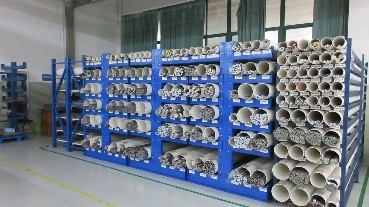
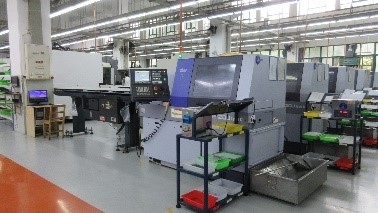
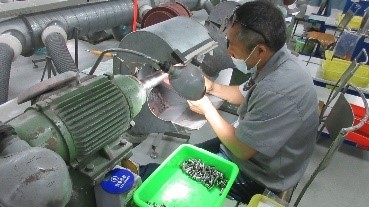
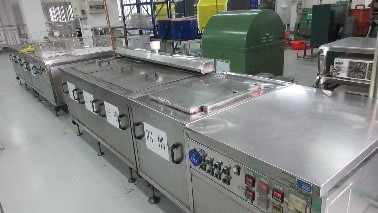
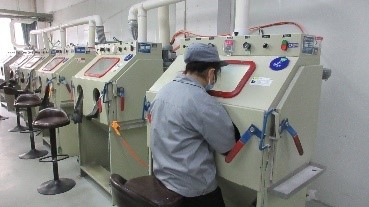
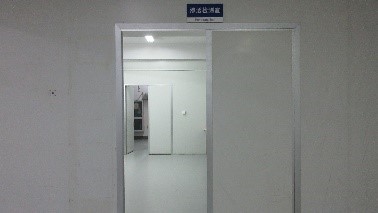
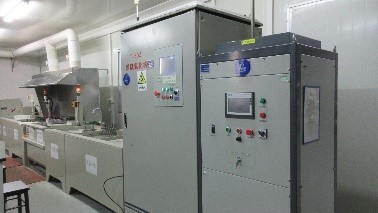
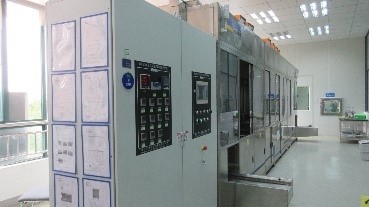
As an SGS onsite-verified manufacturing enterprise with over 22 years of specialized experience in medical implants and surgical instruments, Zhejiang INAR Medical Co., Ltd. operates a 29,523 m² integrated manufacturing facility in Jinhua, Zhejiang, China. Employing 632 dedicated personnel, our manufacturing process eliminates all third-party sub-contracting, guaranteeing 100% quality traceability from raw titanium billet to aseptic cleanroom packaging.
Our state-of-the-art manufacturing sequence for the Acromioclavicular Joint AC Repair Button follows a controlled 13-stage workflow:


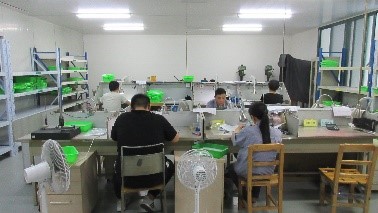
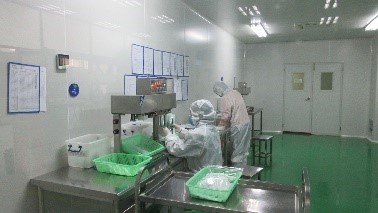
Furthermore, our dedicated Quality Assurance laboratory operates advanced Endurance Fatigue Testers (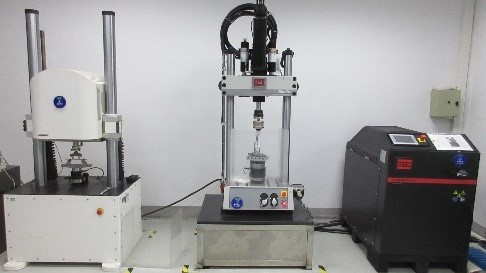 ) and Accelerated Packaging Aging Testers (
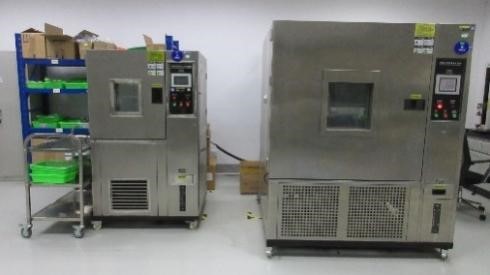 ) to subject every AC Button lot to 1,000,000 cycles of dynamic shear loading. This ensures that when our products reach operating theaters worldwide, they represent the peak of structural reliability.
5. Frequently Asked Questions (FAQ) for B2B Procurement Teams
Q1: What mechanical testing data supports Zhejiang INAR Medical Co., Ltd.'s AC Repair Button constructs?
A: Our AC Repair Buttons undergo rigorous axial pull-out strength and dynamic cyclic loading tests in accordance with ASTM F2502 standards. The yield load consistently exceeds 950 N, which comfortably surpasses the biological loads exerted by the native human coracoclavicular complex (~500 N). Full mechanical test reports from accredited laboratories are supplied with OEM inquiry packages.
Q2: Can we request custom titanium button geometry or suture tape color combinations for OEM orders?
A: Absolutely. As a direct manufacturer, Zhejiang INAR Medical Co., Ltd. offers comprehensive OEM and ODM solutions. We can custom-engineer button geometry (e.g., dog-bone shapes, round subcoracoid buttons, elongated clavicular plates), modify suture eyelet radii, anodize titanium components in custom brand colors (blue, gold, green, magenta), and provide pre-threaded UHMWPE tapes in custom weave patterns.
Q3: How does Zhejiang INAR Medical Co., Ltd. ensure suture tape integrity against sharp titanium edges?
A: Suture fraying is the primary cause of early construct failure in inferior button systems. At our facility, every titanium AC button undergoes automated radiused chamfering during 5-axis CNC machining, followed by precision hand-polishing and electropolishing. This creates a friction coefficient near zero, preserving the tensile strength of the UHMWPE tape under continuous anatomical motion.
Q4: What sterilization options and packaging options are available for export shipments?
A: We provide two primary delivery formats: (1) Non-sterile bulk kits packaged in protective double-layer medical pouches for distributors who perform localized Ethylene Oxide (EO) or Gamma sterilization; and (2) Sterile EO Blister Packaging processed in our ISO Class 7 cleanrooms, complete with double Tyvek sterile barrier packaging, expiration labels, and UDI barcoding ready for hospital delivery.
Q5: What documentation is provided to support medical device registration in LATAM, Middle East, and Southeast Asia?
A: We supply a complete registration dossier including CE Certificates of Conformity, ISO 13485 Quality Management System certificates, SGS Onsite Assessment reports, Certificate of Free Sale (CFS), Material Mill Test Certificates (Ti6Al4V ELI grade compliance), Biocompatibility Test Reports, and Clinical Evaluation Summaries.
Q6: What is the typical lead time for standard vs. custom OEM orders?
A: Standard catalog items (such as 4.0mm Dual-Button AC Repair Kits) are maintained in safety stock and ship within 7 to 10 business days. Custom OEM/ODM orders requiring new CNC tooling or private-label box printing typically carry a production lead time of 30 to 40 days following physical sample approval.
Partner with an SGS-Verified OEM Manufacturer
Expand your sports medicine catalog with CE-compliant Acromioclavicular Joint AC Repair Buttons. Contact our engineering and export team today to receive physical samples, full technical dossiers, and direct factory pricing.
Direct Email Inquiry: [email protected] | Response within 12 Hours