How to Sourcing High-Performance Orthopedic Trauma Locking Plates: Biomechanical Engineering, Regulatory Compliance, and Supply Chain Excellence
In modern fracture management, the **Orthopedic Trauma Locking Plate** serves as a vital internal fixation construct, providing angular stability, preserving periosteal blood supply, and accelerating early patient mobilization. Designed specifically for medical device buyers, hospital procurement committees, and orthopedic distributors, this comprehensive technical and strategic guide explores material selection, clinical biomechanics, global regulatory shifts, future procurement trends, and certified OEM manufacturing standards.
Understanding Orthopedic Trauma Locking Plate Engineering
A deep dive into why fixed-angle locking constructs outperform traditional compression plates in complex osteoporotic and intra-articular fractures.
1. Fixed-Angle Stability Mechanics
Unlike conventional non-locking plates that rely on friction between plate and bone (which compresses the periosteum and disrupts blood flow), an **Orthopedic Trauma Locking Plate** functions as an internal fixator. The threaded screw head locks directly into the threaded plate hole, creating a rigid fixed-angle construct. This eliminates screw toggle and secondary loss of reduction, making it the clinical gold standard for metaphyseal and osteoporotic fractures.
2. Material Selection: Ti-6Al-4V ELI vs. CP Titanium
At **Zhejiang INAR Medical Co., Ltd.**, our trauma locking plates are manufactured from high-grade Titanium Alloy (Ti-6Al-4V ELI / Grade 23) and pure titanium. Ti-6Al-4V ELI offers superior fatigue strength, high fracture toughness, and a modulus of elasticity closer to human cortical bone compared to stainless steel. This significantly reduces stress shielding while preventing implant fatigue failure during early weight-bearing rehabilitation.
3. Anatomical Contour & Anodization
Anatomical pre-contouring minimizes intraoperative bending, preserving the mechanical structural integrity of the titanium lattice. Furthermore, our proprietary Type II Anodization process creates a bio-inert, corrosion-resistant surface coating that eliminates micro-fissures and allows intuitive visual color-coding for surgical scrub technicians and surgeons during complex trauma procedures.
Technical Specifications: Standard vs. Variable-Angle Locking Plate Systems
| Parameter | Standard Mono-Axial Locking Plates | Variable-Angle (VA) Locking Plates | Clinical Advantage |
|---|---|---|---|
| Screw Hole Trajectory | Fixed 90° Threaded Locking Hole | Polyaxial ±15° Trajectory Cone | Precise targeting around intra-articular fracture fragments. |
| Material Grade | ISO 5832-3 Titanium Alloy (TC4) | High-Strength Ti-6Al-4V ELI Grade 23 | Prevents cold welding and thread stripping during screw torque. |
| Anatomic Pre-Contour | Region-Specific Standard Contour | High-Definition Anatomical Fit | Reduces soft-tissue impingement and shortens OR surgical time. |
| Screw Diameters | 2.4mm, 3.5mm, 4.5mm, 5.0mm | 2.4mm, 2.7mm, 3.5mm Polyaxial | Versatile fixations for micro, small, and large fragment fractures. |
| Surface Finishing | Micro-Blasted & Electro-Anodized | Type II Deep Anodization + Passivated | Enhanced corrosion resistance and optimal biocompatibility. |
Recommended Orthopedic Trauma Locking Plate Systems
Engineered by Zhejiang INAR Medical Co., Ltd., these flagship locking plate systems meet rigorous international quality standards, delivering proven clinical reliability.
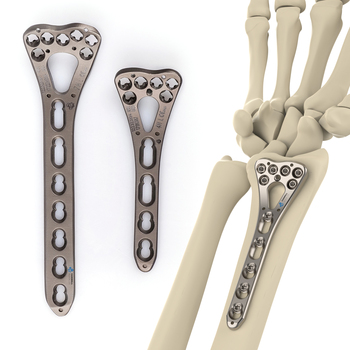
Titanium Distal Radius Variable-Angle Volar Locking Plate System
Designed for intra-articular and extra-articular distal radius fractures. Features a low-profile anatomical volar design to prevent flexor tendon irritation, combined with 2.4mm variable-angle locking holes that enable surgeons to direct screws away from the radiocarpal joint.
Get a Quote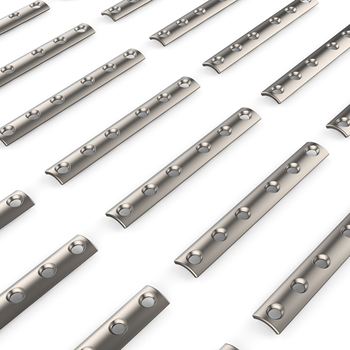
One-Third Tubular Titanium Locking Plate System
Essential trauma solution for lateral malleolus fibula fractures and ulna diaphysis stabilization. Combines dynamic compression slots with fixed-angle locking holes for versatile intraoperative compression and rigid fixation.
Get a Quote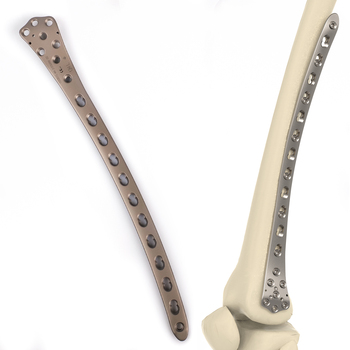
Distal Lateral Femoral Titanium Locking Compression Plate
Heavy-duty anatomical construct engineered for severe supracondylar and intercondylar femoral fractures. Features multi-planar distal screw trajectories to maximize bone purchase in metaphyseal bone.
Get a Quote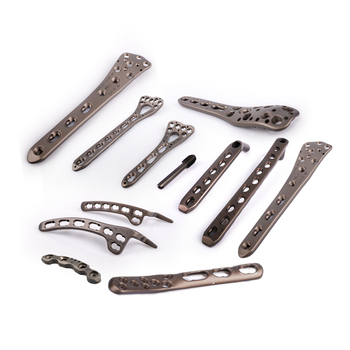
3.5mm Small Fragment Anatomic Locking Plate System
Multi-purpose small fragment system ideal for clavicle, humerus shaft, and distal fibula trauma. Precision CNC-machined from Ti-6Al-4V ELI to ensure zero micro-cracks and excellent fatigue resistance.
Get a Quote
Proximal Humerus Multi-Directional Titanium Locking Plate
Anatomically shaped for 3-part and 4-part proximal humerus fractures. Integrates specific calcar screw holes to support the humeral head and prevent post-operative varus collapse in geriatric patients.
Get a Quote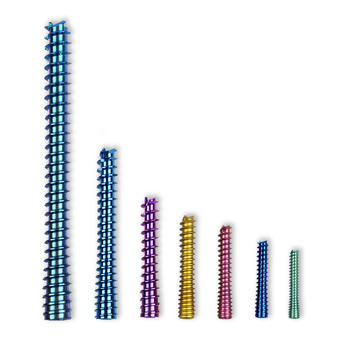
Titanium Headless Cannulated Compression Screw System
Complementary fixation implant for intra-articular micro-trauma, scaphoid fractures, and osteochondral reconstruction. Features differential pitch threads for powerful interfragmentary compression.
Get a QuoteFuture Sourcing & Development Trends in Orthopedic Trauma
Analyzing the technological shifts, regulatory developments, and procurement dynamics transforming the global $4.8B orthopedic trauma market.
1. Transition to Variable-Angle (VA) Locking Technology
Conventional fixed-angle plates force surgeons to follow pre-determined screw paths. The global market is rapidly shifting toward Variable-Angle Polyaxial Locking Systems that permit ±15° screw trajectory freedom. This enables custom screw trajectory orientation to secure small, osteoporotic, or displaced bone fragments without sacrificing fixed-angle construct strength.
2. Stringent Regulatory Compliance (EU MDR & FDA UDI)
Hospital procurement departments no longer tolerate unverified suppliers. Global markets require compliance with **EU MDR 2017/745**, full Unique Device Identification (UDI) laser marking, and complete biocompatibility testing (ISO 10993). B2B buyers must partner with manufacturers capable of delivering compliant technical documentation and lot-level traceability.
3. Modular Instrument Trays & Inventory Optimization
Distributors face high capital lock-up when maintaining excessive hospital consignment inventory. The procurement trend favors **Modular Trauma Instrument Sets** where single standardized trays support multiple locking plate shapes (e.g., small fragment, distal radius, and ankle plates) using standardized 2.7mm and 3.5mm screw drivers and drill guides.
4. OEM Supply Chain Consolidation & Direct Audit Access
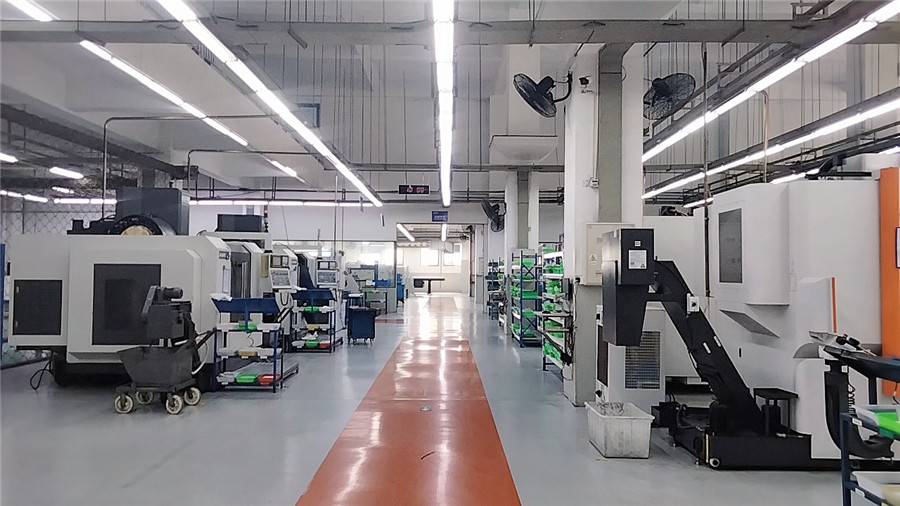
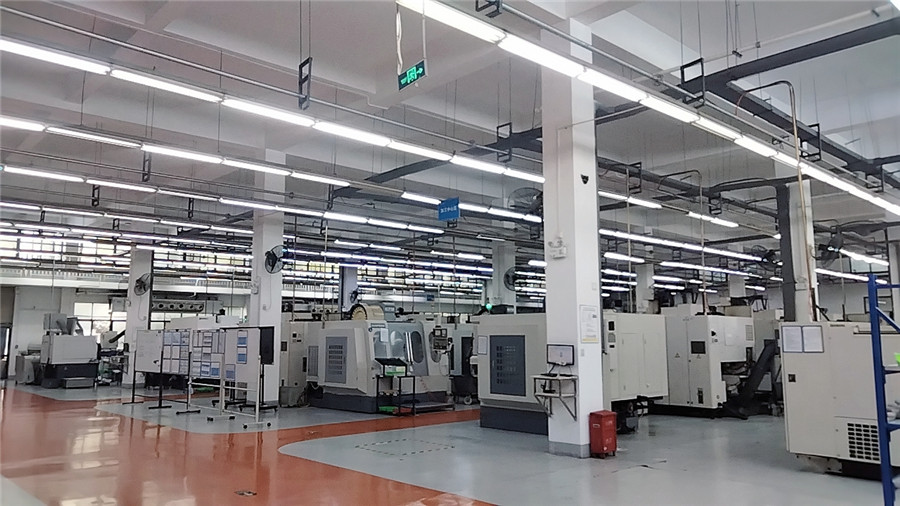
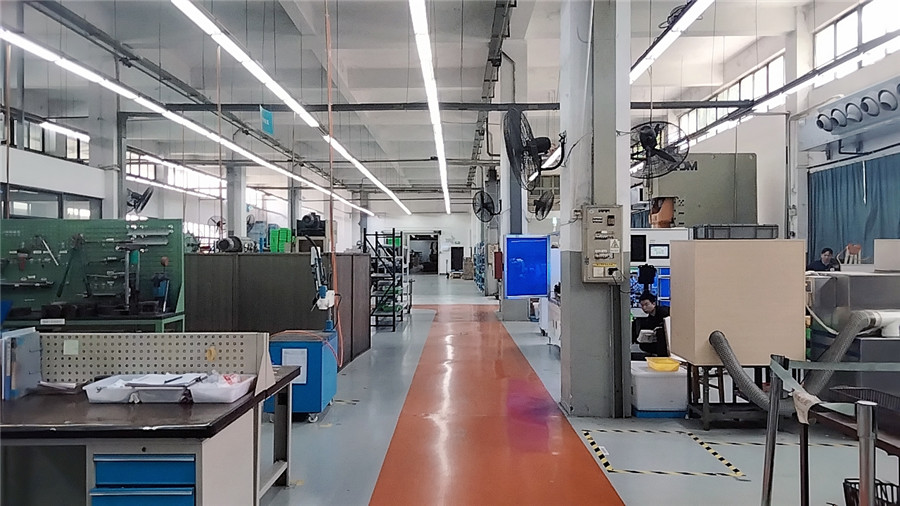
To reduce risk, international medical device importers are shifting away from trading intermediaries in favor of verified manufacturing facilities. Direct access to onsite SGS factory audits, raw material spectral reports, and automated 5-axis CNC machining centers ensures consistent implant quality and stable lead times.
End-to-End Orthopedic Manufacturing Excellence
With over 22 years of specialized manufacturing experience, 632 skilled staff, and a 29,523 m² state-of-the-art facility, Zhejiang INAR Medical Co., Ltd. delivers absolute reliability for global orthopedic OEM/ODM partners.
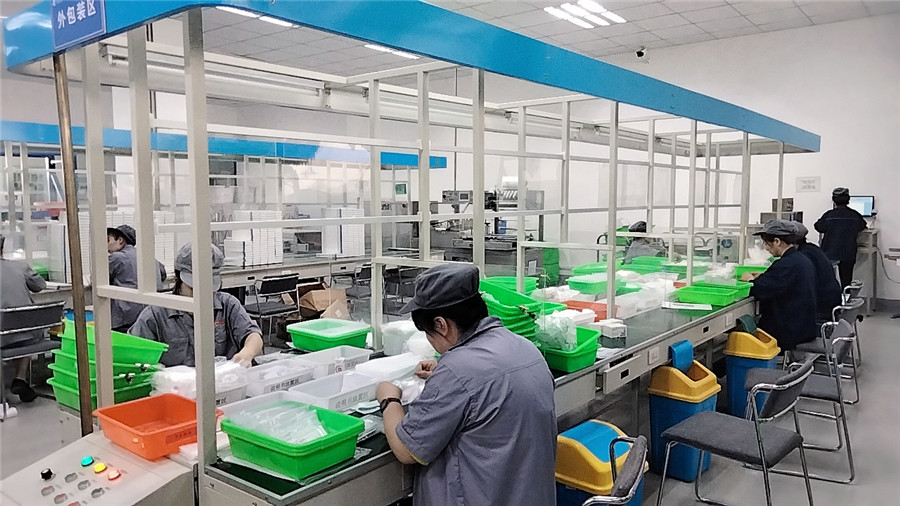
The 13-Step Precision Manufacturing & Quality Assurance Process
Every Orthopedic Trauma Locking Plate produced by Zhejiang INAR Medical Co., Ltd. follows an audited, 100% traceable 13-step production and quality control route:
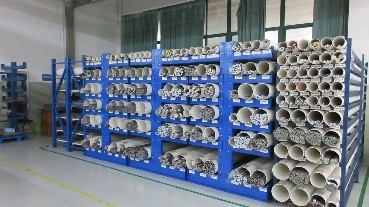
1. Raw Material Verification
Certified Ti-6Al-4V ELI bar stock undergoing spectral chemical and mechanical testing.
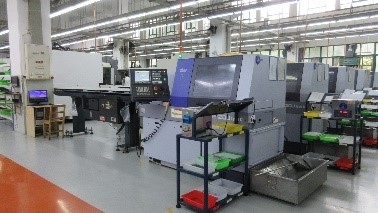
2. Longitudinal Cutting
Precision sizing of titanium blanks using Swiss longitudinal cutting lathes.

3. Multi-Axis CNC Milling
High-precision 5-axis CNC machining of anatomical contours and screw threads.
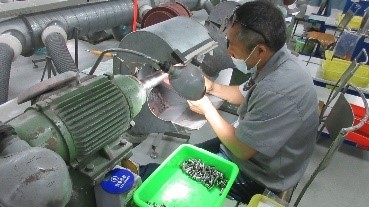
4. Precision Polishing
Automated and manual deburring to ensure smooth edges and zero tissue friction.
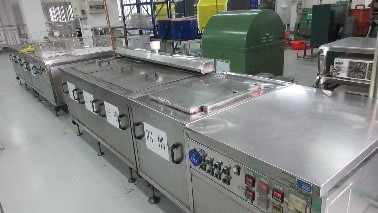
5. Ultrasonic Washing I
Multi-stage ultrasonic degreasing and particle removal.

6. Surface Grinding
Profile surface smoothing for tight dimensional tolerance compliance.
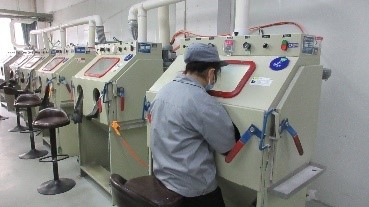
7. Controlled Sand-Blasting
Creating uniform matte surface finish to eliminate intraoperative reflection glare.
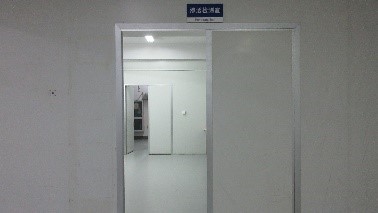
8. Dye Penetrant NDT
100% Non-Destructive Testing (NDT) to verify zero surface micro-fissures or flaws.
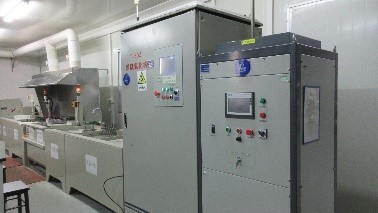
9. Electro-Anodizing
Type II anodization coating for enhanced fatigue strength and dynamic color coding.
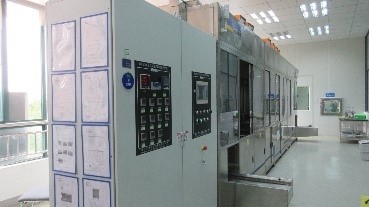
10. Ultrasonic Washing II
Purified RO water ultrasonic bath in controlled environment prior to packaging.
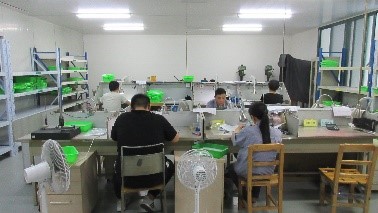
11. Outgoing Quality Control
Coordinate Measuring Machine (CMM) dimensional verification and optical inspection.
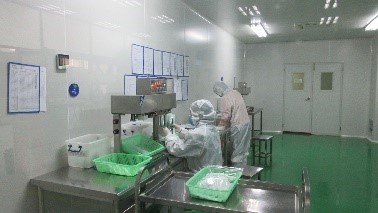
12 & 13. Aseptic Packing Line
Class 100,000 cleanroom sealing into Tyvek sterile blister packaging.
In-House Testing & Quality Assurance Infrastructure
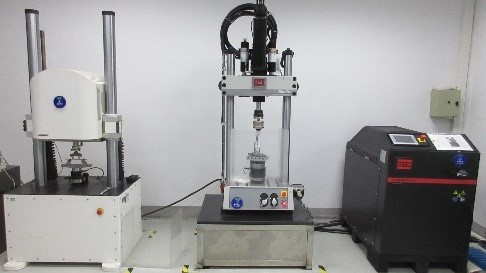
Biomechanical Endurance Fatigue Tester
Executes cyclic 4-point dynamic bending tests according to ASTM F382 & ISO 9585 specifications.
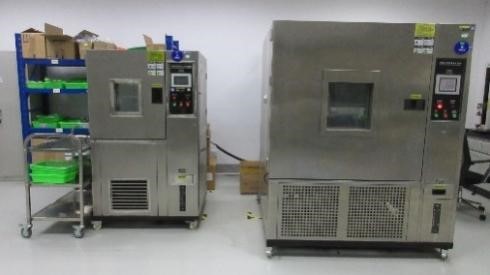
Accelerated Packaging Aging Chamber
Validates sterile barrier shelf life and package seal integrity over simulated 5-year periods.
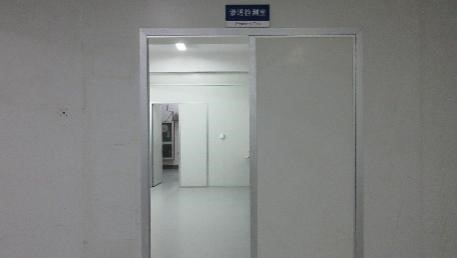
Penetrant Testing & NDT Suite
Dedicated darkroom facility for fluorescent dye penetrant detection of micro-cracks under UV light.
Frequently Asked Questions by Global Buyers
Clear, authoritative answers regarding material standards, OEM capabilities, regulatory files, and order logistics from Zhejiang INAR Medical Co., Ltd.