Global healthcare purchasers in 2025+ evaluate One-Third Tubular Locking Plates not merely by price per unit, but through rigorous biomechanical metrics: mechanical construct stiffness, resistance to fatigue failure, combi-hole cross-thread friction angles, surface oxide layer stability, and EU MDR regulatory certification. This guide delivers verified engineering insights directly from Zhejiang INAR Medical Co., Ltd., bridging clinical demand with scalable B2B manufacturing.
1. Biomechanical Fundamentals: Why the One-Third Tubular Locking Plate Remains Indispensable
The One-Third Tubular Locking Plate occupies a pivotal position in small-fragment trauma reconstruction. Specifically engineered for non-load-bearing or moderately loaded bone segments—such as the lateral malleolus, distal fibula, distal ulna, metatarsals, and metacarpals—the collar design corresponds geometrically to one-third of the circumference of a cylindrical bone shaft.
Historically, traditional non-locking tubular plates relied entirely on friction between the periosteum and the plate underside created by cortical screw torque. However, in osteoporotic bone or comminuted fractures, traditional screws frequently suffer from thread strip-out, leading to loss of fixation, biological non-union, or soft-tissue irritation due to bulky prominence. The evolution into a hybrid locking tubular construct integrates fixed-angle stability with a low-profile anatomical footprint.
Key Biomechanical Characteristics:
- Low-Profile Design (1.0 mm – 1.5 mm thickness): Minimizes subcutaneous soft-tissue tenting and hardware prominence over lateral malleolar fractures, significantly decreasing the rate of secondary hardware removal.
- Combi-Hole Versatility: Features combined thread/compression holes allowing surgeons to achieve dynamic interfragmentary compression with standard 3.5 mm cortical screws, or rigid fixed-angle stability using 3.5 mm titanium locking screws.
- Contourability vs. Fatigue Life Balance: Manufactured from cold-worked, high-ductility titanium alloy (Ti-6Al-4V ELI / ASTM F136), permitting precise intraoperative bending without creating stress risers or compromising micro-structural fatigue thresholds.
2. Engineering Specification Matrix: Material Science & Structural Parameters
To assist technical evaluation teams and OEM quality managers, Zhejiang INAR Medical Co., Ltd. provides the exact structural and metallurgical dimensions applied in our CNC precision machining centers:
| Technical Parameter | Specification / Standard | Clinical & Manufacturing Impact |
|---|---|---|
| Raw Material | Medical-Grade Titanium Alloy (Ti-6Al-4V ELI / ISO 5832-3 / ASTM F136) | Superior biocompatibility, radiolucency compatibility, high strength-to-weight ratio, non-magnetic for MRI safety. |
| Plate Profile Thickness | 1.2 mm – 1.5 mm ultra-low contour | Redifies periosteal compression, prevents skin sloughing over lateral malleolus. |
| Screw System Compatibility | 3.5 mm Locking Screws / 3.5 mm Cortical Screws | Dual-thread interface allows dual-mode surgical fixation (compression + angular stability). |
| Hole Configurations | 2-Hole through 12-Hole options (Length: 25mm – 145mm) | Covers simple transverse fractures to complex segmental diaphyseal/metaphyseal comminutions. |
| Surface Finish | Type II Hard Anodizing & Micro-Sandblasting | Enhances surface corrosion resistance, reduces fretting corrosion, color-coded for rapid identification. |
| Regulatory Compliance | CE Marked (MDR / 93/42/EEC), ISO 13485:2016 Certified | Guarantees complete technical documentation, clinical evaluations, and international export validity. |
3. Inside the Manufacturing Excellence: Zhejiang INAR Medical Co., Ltd.
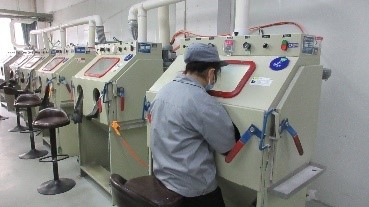
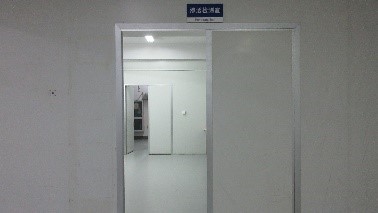
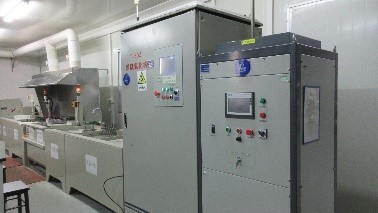
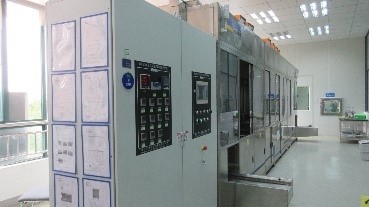
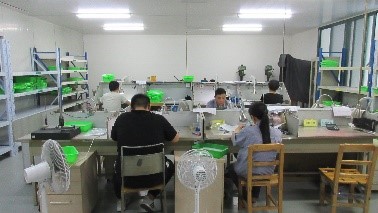
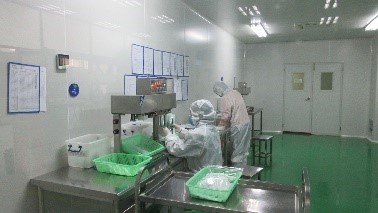
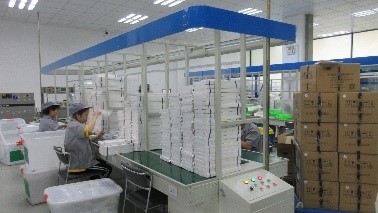
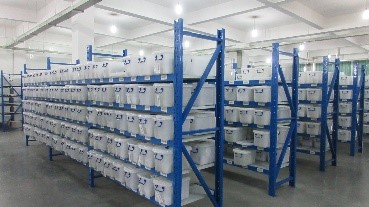
Quality assurance in orthopedic trauma devices requires complete control over the manufacturing lifecycle. Spanning a 29,523 m² state-of-the-art manufacturing campus with 632 skilled professionals, Zhejiang INAR Medical Co., Ltd. guarantees that every single One-Third Tubular Locking Plate meets strict international standards.
Below is our verified 13-stage manufacturing and quality assurance pipeline executed inside our plant:
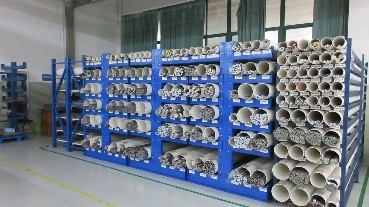
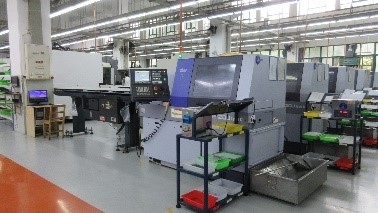

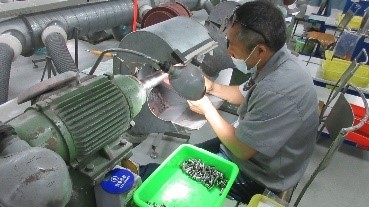
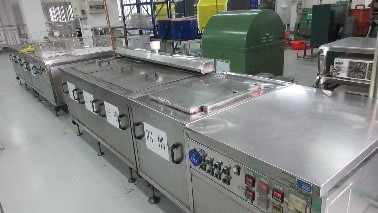

In-House Validation & Quality Infrastructure
Unlike trading intermediaries that outsource testing, Zhejiang INAR Medical Co., Ltd. maintains a dedicated testing facility featuring advanced mechanical equipment:
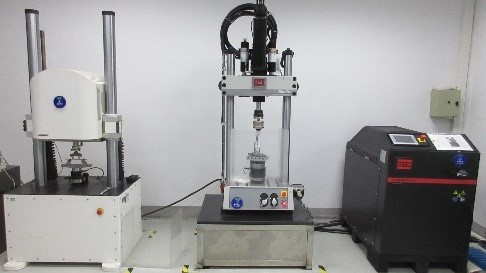 Endurance Fatigue Testers:
Executes 1,000,000-cycle dynamic bending and torsion tests according to ASTM F382 standards to evaluate fatigue limit curves under extreme cyclic load conditions.
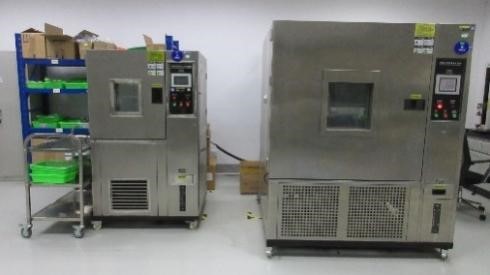 Accelerated Aging Chambers:
Simulates 5-year shelf-life stability for sterile packaging seal integrity, verifying Tyvek barrier protection against environmental degradation.
4. Future Global Procurement Trends (2025–2030)
As healthcare reimbursement frameworks (such as DRG systems in Europe and the Americas) tighten, hospital procurement departments and orthopedic importers are altering their purchasing behaviors. Key macro trends impacting the sourcing of One-Third Tubular Locking Plates include:
A. Demand for Pre-Contoured Anatomical Fit Over Flat Plates
Conventional flat tubular plates require extensive intraoperative manual contouring by the trauma surgeon. This increases operative time and risks inducing mechanical weakness at the bend apex. Future procurement specs increasingly request anatomically pre-shaped distal fibula plates with tapered distal ends that conform natively to the lateral malleolus, reducing fluoroscopy time and OR costs.
B. Shift Toward Complete Instrument & Implant Procedure Kits
International tenders are moving away from purchasing isolated plates. Global buyers now favor integrated modular systems: a single sterilized kit or graphic tray containing One-Third Tubular Locking Plates, 3.5mm cortex/locking screws, color-coded drill bits, torque-limiting screwdrivers, and depth gauges. Zhejiang INAR Medical Co., Ltd. offers turn-key OEM solution trays optimized for rapid field deployment.
C. Regulatory Traceability & EU MDR Harmonization
With the European Union MDR (Medical Device Regulation 2017/745) imposing strict requirements regarding clinical data, post-market surveillance (PMS), and Unique Device Identification (UDI), buyers are streamlining their supplier bases. Zhejiang INAR Medical Co., Ltd. supports global partners with full technical documentation, raw material mill test certificates, and complete lot-traceability from ingots to final sterile pouches.
5. Industry Development & Biomechanical Trends
Research in trauma biomechanics continues to reshape the design of small-fragment implants. Key engineering shifts include:
- Elastic Fixation & Stress Shielding Minimization: Modern locking mechanics emphasize controlled micro-motion to stimulate callus formation. Modern plate profiles balance longitudinal stiffness with axial micromotion elasticity.
- Advanced Anodization & Osseointegration Prevention: For trauma plates destined for eventual removal, Type II electrochemical passivation limits direct bone-implant adhesion, allowing clean extraction without bone damage.
- Polyaxial vs. Fixed-Angle Locking Options: While fixed-angle locking holes remain the gold standard for structural cost-efficiency, polyaxial (variable-angle) locking mechanisms are gaining traction in osteoporotic distal fibula fractures, allowing 15° off-axis screw trajectory.
6. Comprehensive FAQ for B2B Global Procurement Teams
Q1: What are the main advantages of a One-Third Tubular Locking Plate over a non-locking plate?
Q2: Does Zhejiang INAR Medical Co., Ltd. offer custom OEM/ODM branding and private labeling?
Q3: What raw materials are used for your One-Third Tubular Locking Plates?
Q4: How does INAR Medical ensure fatigue resistance in thin 1.2mm-1.5mm plates?
Q5: What are the standard order lead times and MOQs for international distributors?
Q6: What technical and regulatory files do you provide for product registration?
Partner with an SGS-Verified Orthopedic Manufacturer
Looking to optimize your trauma implant procurement, reduce supply chain volatility, or launch a private-label locking plate line? Speak with our engineering and export team today.