1. Clinical Intent & Biomechanical Rationale of the Pelvic C-Clamp Instrument Set
High-energy pelvic trauma—frequently resulting from motor vehicle collisions, industrial falls, or crush injuries—presents one of the most critical life-threatening emergencies in orthopedic trauma surgery. Unstable pelvic ring disruptions (specifically Tile Class C and Young-Burgess LC-III / VS fractures) lead to rapid retroperitoneal hemorrhage and severe hemodynamic instability. In these critical "golden hour" resuscitation scenarios, immediate stabilization of the posterior pelvic ring is required to control pelvic volume, tamponade venous bleeding, and prevent fatal shock.
The Pelvic C-Clamp Instrument Set is engineered specifically to provide rapid, dynamic, and rigid posterior pelvic stabilization directly at the emergency room or operating theater. Unlike anterior external fixators, which primarily addresspubic symphysis diastasis but provide inadequate leverage across the sacroiliac joint, the Pelvic C-Clamp applies direct, opposing compression forces across the iliac wings onto the posterior sacrum.
Technical Insight: Why Biomechanical Mechanics Matter
The posterior pelvic complex accounts for over 60% of pelvic ring stability. Standard anterior external fixation frameworks experience mechanical failure under high torsional loads. A precision-machined Pelvic C-Clamp directly aligns the compression vector along the axis of the sacroiliac joint, providing instant mechanical stability while remaining fully radiolucent under C-arm fluoroscopy when constructed with medical-grade titanium or carbon-fiber composites.
Key Anatomical Considerations & Pin Placement
Surgical safety and mechanical efficacy depend entirely on precise anatomical pin placement. The Pelvic C-Clamp pins are designed to anchor into the posterior iliac wing, specifically at the level of the sacroiliac joint (the junction of the posterior superior iliac spine and posterior inferior iliac spine). Precision depth limiters and Cannulated Stepped Nails within the instrument set prevent accidental penetration into the greater sciatic notch or iliac vessel bundles.
- Mechanical Rigidity: Designed to maintain up to 800 N of dynamic compression without structural deflection.
- Hemorrhage Tamponade: Reduces pelvic internal volume immediately, encouraging rapid clot formation in the retroperitoneal venous plexus.
- Minimally Invasive Application: Enables rapid percutaneous insertion through two small lateral incisions without compromising emergency resuscitation procedures.
2. Recommended Pelvic C-Clamp Instrument Set Configurations
A complete Pelvic C-Clamp Instrument Set manufactured by Zhejiang INAR Medical Co., Ltd. is engineered as a self-contained, modular emergency surgical kit. Every component is machined to strict tolerances using high-tensile Titanium Alloy (Ti-6Al-4V ELI) and Surgical Stainless Steel (316L), ensuring structural integrity under maximum mechanical compression.
| Component Name | Standard Specification / Size | Material | Primary Clinical Function |
|---|---|---|---|
| Main Telescopic C-Frame Arm | Span Width: 320mm – 580mm Adjustable | High-Grade Anodized Titanium / SS | Main compression arch applying opposing bilateral force |
| Threaded Pelvic Pin / Nail Set | Diameters: Ø 5.0mm, 6.0mm; Lengths: 180mm–240mm | Ti-6Al-4V / Surgical Steel | Anchors directly into posterior iliac wing cortical bone |
| Depth-Limiting Sleeves | Color-coded mm graduation markers | Medical Grade Anodized Aluminum | Prevents over-penetration into inner cortical wall |
| Compression Ratchet & Torque Wrench | Max Torque Limit: 12 Nm controlled | 316L Stainless Steel | Enables fine-tuned tactile control over compression force |
| Trocar & Percutaneous Protection Sleeves | Ø 8.0mm Outer Diameter Sleeve | 316L Stainless Steel | Protects soft tissue during percutaneous pin placement |
| Modular Sterilization Holding Container | Perforated Tray with Silicone Inserts | Aircraft-grade Aluminum / PEEK | Steam autoclaving, storage, and intraoperative organization |
Product Customization Options (OEM/ODM)
Global procurement teams can request customized kit configurations, including private label laser etching, custom anodized color-coding (gold, blue, green, black), custom tray layouts, and localized surgical technique manuals for regional hospital requirements.
3. Industry Development & Future Trends in Pelvic Trauma Stabilization
The global market for pelvic trauma stabilization devices is undergoing rapid technological updates driven by minimally invasive surgical (MIS) protocols, advanced intraoperative imaging, and robotic assistance. Procurement officers must align their inventory strategies with these three key technological shifts over the next decade:
A. Hybrid Carbon-Fiber & Radiolucent Material Integration
Traditional all-metal pelvic clamps, while structurally robust, create significant radiation shadows under intraoperative C-arm fluoroscopy and 3D CT reconstructions. The industry trend is moving towards carbon-fiber composite arms integrated with titanium connection joints. This hybrid construction drastically improves fluoroscopic clarity, enabling surgeons to confirm sacroiliac joint reduction without removing or adjusting the clamp structure.
B. Navigated & Robotic-Guided Pin Placement Integration
As trauma centers adopt optical navigation and robotic positioning systems, emergency instrument sets must feature integrated optical tracker mounts. Future Pelvic C-Clamp Instrument Sets will incorporate calibrated reference markers, allowing navigation cameras to guide pin trajectory with sub-millimeter precision, virtually eliminating iatrogenic nerve or vessel injury during acute resuscitation.
C. Dual-Purpose Stabilization (Emergency to Definitive Fixation)
Modern trauma protocols favor single-stage or streamlined two-stage procedures. Emerging pelvic clamp designs incorporate modular interfaces that allow seamless transition from emergency C-Clamp stabilization to anterior percutaneous ramus screw placement or definitive sacroiliac screw fixation without losing pelvic reduction.
4. Future Procurement Trends for Global B2B Buyers & Hospital Supply Networks
Procuring orthopedic emergency sets involves stringent regulatory evaluation, total cost of ownership (TCO) analysis, and supply chain auditability. For international distributors and hospital purchasing syndicates, several macroeconomic and regulatory dynamics are shaping procurement strategies:
- EU MDR Compliance & Traceability: Regulatory bodies worldwide now mandate unique device identification (UDI), material traceability certificates, and strict biological evaluation (ISO 10993). Purchasing managers must ensure their OEM partners possess full technical documentation.
- Modular Standardization: Hospitals are phasing out single-use or isolated emergency kits in favor of multi-functional modular trays that reduce central sterile supply department (CSSD) processing times and minimize capital expenditure.
- Direct-from-Manufacturer OEM Partnership: To combat rising healthcare costs, hospital networks are bypassing multi-tier broker networks to establish direct OEM/ODM contracts with verified manufacturing facilities equipped with complete CNC, finishing, and aseptic packing capacity.
5. Enterprise Advantages & Manufacturing Excellence at Zhejiang INAR Medical Co., Ltd.
Zhejiang INAR Medical Co., Ltd. is an SGS-verified custom orthopedic implant and surgical instrument manufacturer with over 22 years of industry experience, operating a state-of-the-art 29,523 m² facility with 632 dedicated employees. We maintain absolute control over every stage of the production life cycle, guaranteeing that every Pelvic C-Clamp Instrument Set meets the highest international medical device standards.
13-Step In-House Manufacturing & Quality Workflow
Nothing critical is outsourced. Our vertically integrated production chain guarantees total traceability from raw material bar stock to sterile or aseptic packaging:
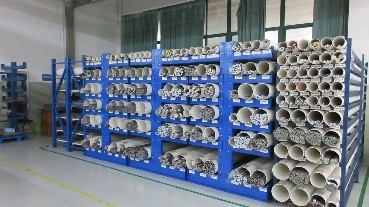
1. Raw Material Inspection
Certified medical-grade Titanium (Ti-6Al-4V) and 316L Stainless Steel with full chemical heat lot traceability.
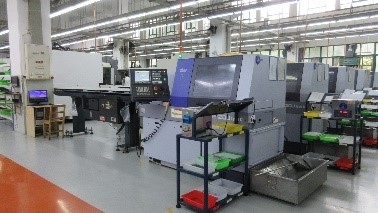
2. Longitudinal Cutting
High-precision automated bar slicing to prepare standardized structural blanks for secondary machining.

3. Precision CNC Machining
Multi-axis CNC milling machines carving complex clamp geometries and threaded adjustment mechanisms.
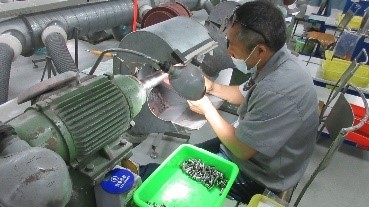
4. Surface Polishing
Manual and robotic polishing ensuring smooth ergonomic surfaces and elimination of micro-burrs.
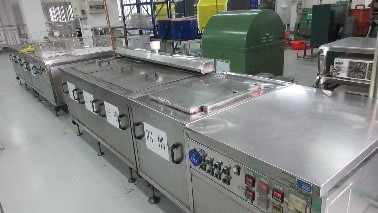
5. Ultrasonic Washing I
Multi-stage automated ultrasonic degreasing and particulate removal prior to thermal treatment.

6. Precision Grinding
Surface grinding to achieve micron-level dimensional tolerances on sliding telescopic arms.
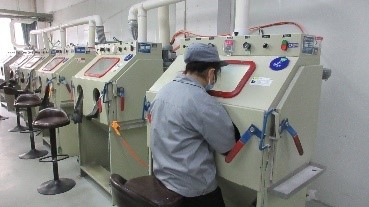
7. Sand-Blasting
Controlled micro-bead blasting for uniform matte anti-glare finish required in surgical suites.

8. Penetrant Testing
Dye penetrant inspection room detecting any micro-fractures or surface flaws under UV light.
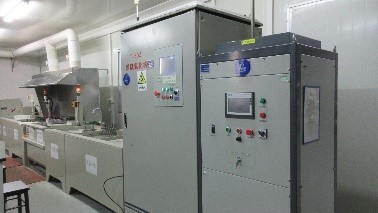
9. Titanium Anodizing
Type II hard anodizing for corrosion resistance and vibrant color-coding of surgical instruments.
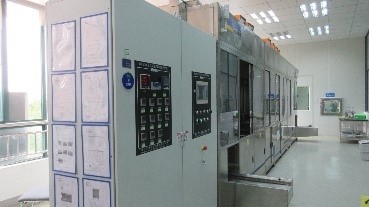
10. Ultrasonic Washing II
Final high-purity deionized water rinsing inside controlled cleanroom environments.
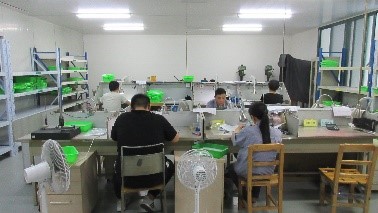
11. Outgoing Quality Control (OQC)
100% optical and dimensional measurement inspection against CAD master blueprints.
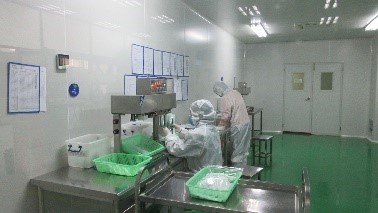
12. Aseptic Packing Room
ISO Class 7 cleanroom packaging ensuring sterile pouch sealing and contamination prevention.
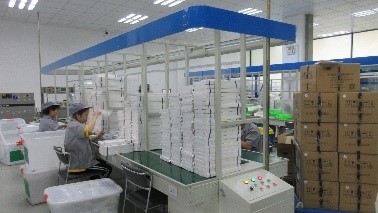
13. Packing Line & Warehouse
Final labeling, barcode serialization, and secure storage in climate-controlled facilities.
Advanced In-House Testing Laboratory Equipment
To guarantee uncompromising reliable performance during emergency resuscitation, Zhejiang INAR Medical Co., Ltd. operates dedicated testing equipment within our internal research and quality laboratories:
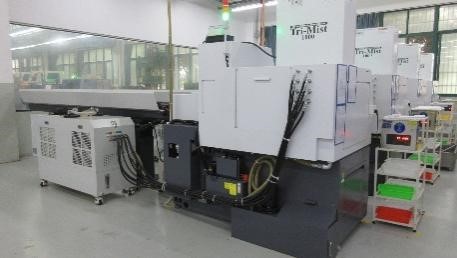
Longitudinal Cutting Lathe
High-torque Swiss-type automatic lathes for ultra-precise pin and screw machining.
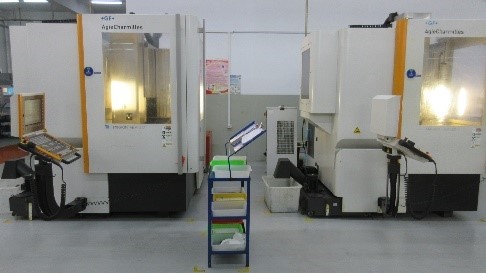
Multi-Axis CNC Machining
High-speed milling centers dedicated to complex titanium trauma components.

Penetrant Testing Room
Certified NDT non-destructive testing facility for structural integrity verification.
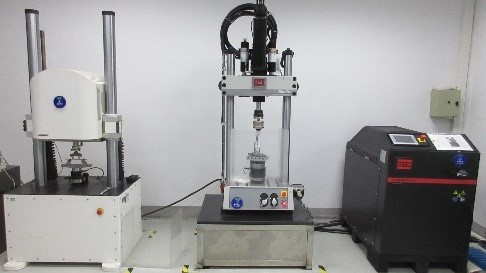
Mechanical Endurance Tester
Simulates continuous cyclical loading to test dynamic fatigue limits under extreme compression.
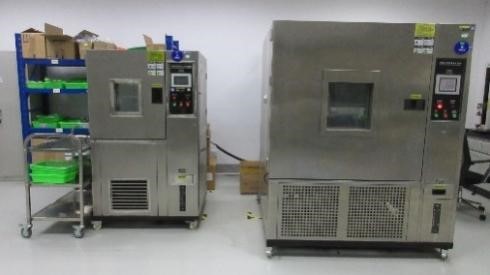
Accelerated Aging Tester
Accelerated shelf-life and environmental exposure chambers for packaging sterilization validation.
6. Frequently Asked Questions (FAQ) for Global B2B Procurement Officers
Below are authoritative responses to the most common queries submitted by hospital purchasing teams, medical device importers, and OEM brand partners:
Q1: What certifications and compliance documents accompany the Pelvic C-Clamp Instrument Set?
Every Pelvic C-Clamp Instrument Set produced by Zhejiang INAR Medical Co., Ltd. is manufactured under ISO 13485 quality management systems. We provide CE Mark documentation (under EU MDR / 93/42/EEC), SGS Onsite Assessment reports, Material Test Certificates (MTC with heat number traceability), and biocompatibility test reports (ISO 10993) required for international product registration.
Q2: Can Zhejiang INAR Medical Co., Ltd. customize the instrument set for our brand (OEM/ODM)?
Yes. We offer complete OEM and ODM customization services. This includes private label laser etching on all instruments, custom anodized color schemes, custom-designed sterilization trays with custom silicone positioning inserts, and branded outer packaging adapted to your regional market specifications.
Q3: What materials are utilized to balance clamp weight and mechanical strength?
Our Pelvic C-Clamp frame is constructed using aircraft-grade anodized aluminum alloy or medical-grade titanium alloy (Ti-6Al-4V ELI) to keep the device lightweight for emergency handling while eliminating structural flex. Threaded pins, trocar sleeves, and load-bearing drive screws are precision-machined from high-strength 316L surgical stainless steel or titanium alloy.
Q4: How does Zhejiang INAR Medical Co., Ltd. ensure pin sharping and insertion consistency?
All threaded pelvic pins undergo precision CNC grinding and 100% optical inspection. Sharp trocars feature tri-faceted points designed for rapid cortical bite into the posterior iliac wing, reducing insertion slipping and minimizing soft tissue trauma.
Q5: What is the typical production lead time and Minimum Order Quantity (MOQ) for B2B orders?
For standard non-customized sets, standard inventory is available for rapid dispatch. Custom OEM orders typically require a lead time of 25 to 35 calendar days depending on packaging and custom laser requirements. We offer flexible MOQs tailored for emerging distributors as well as large tender-based hospital supply agreements.
Partner with Zhejiang INAR Medical Co., Ltd. for Your Trauma Sourcing Needs
Request a factory-direct quotation, complete technical specifications, or schedule an online virtual facility audit with our engineering team today.
Direct Technical Email: [email protected]