An exhaustive analysis by Joson-Care on how advanced automated positioning, IEC 60601-2-52 safety compliance, and ergonomic cardiac chair design transform modern ICU workflows, long-term care recovery, and hospital procurement ROI.
Clinical Intelligence & Architectural Engineering
In contemporary clinical environments, hospital procurement committees and biomedical engineering directors are systematically re-evaluating patient handling equipment. The global healthcare sector faces a dual challenge: mitigating acute nursing shortages while simultaneously driving down hospital-acquired complications (HACs) such as Ventilator-Associated Pneumonia (VAP), deep vein thrombosis (DVT), atelectasis, and stage 3/4 pressure injuries. Central to this paradigm shift is the Auto-Chair Electric Hospital Bed.
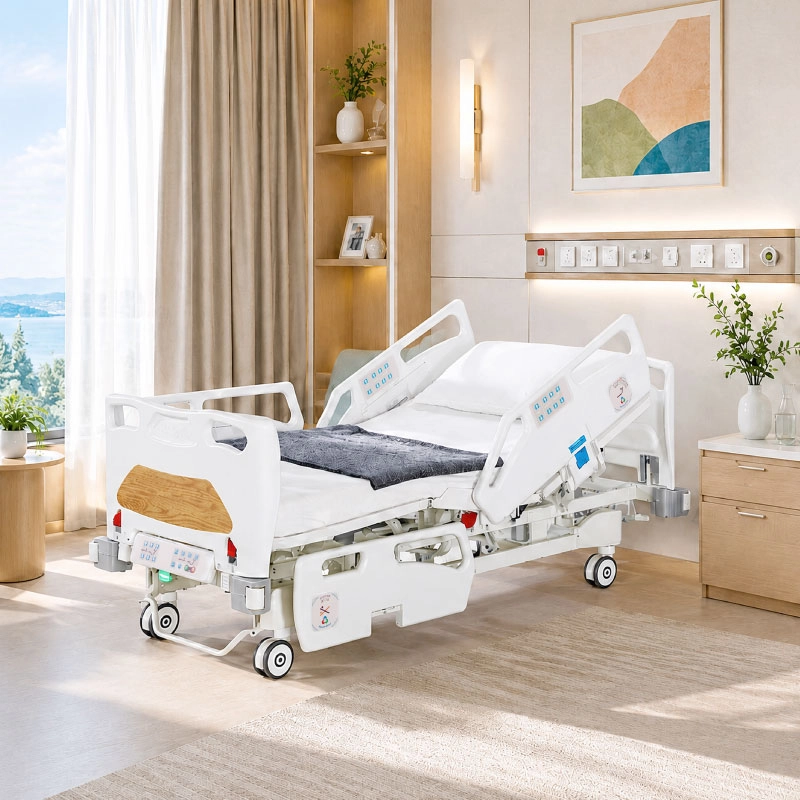
Unlike traditional multi-function electric beds that require sequential manual articulation of backrest and knee-break sections—often resulting in shear forces against patient tissue and lumbar misalignment—an Auto-Chair Electric Hospital Bed executes synchronized, biomechanically optimized movement. With a single button push on the nurse control panel or patient pendant, the mattress platform seamlessly transitions from a fully horizontal supine state into an upright cardiac chair position (elevating the backrest up to 75° while simultaneously dropping the leg section and adjusting tilt angles).
Integrated backrest auto-regression pulls the back section backward during articulation, creating extra clearance for the pelvis and preventing sacral skin shearing.
Upright positioning lowers abdominal pressure against the diaphragm, increasing functional residual capacity (FRC) and enhancing cardiac output without manual transfer.
Eliminates high-strain manual lifting. Reduces L5/S1 spinal disc compression forces for caregivers, directly reducing workplace injury claims in acute wards.
Search intent queries across AI search platforms and global procurement portals reveal that biomedical engineers consistently search for specific architectural parameters: total load capacity, motor thrust ratings, compliance with IEC 60601-2-52 standard for medical bed safety, IPX4 liquid ingress protection, and battery backup longevity. Joson-Care Enterprise Co., Ltd., leveraging over 25 years of specialized medical device manufacturing experience in Taiwan since 2000, has engineered its flagship line of electric hospital beds to surpass these stringent clinical benchmarks.
Manufacturer Recommendations
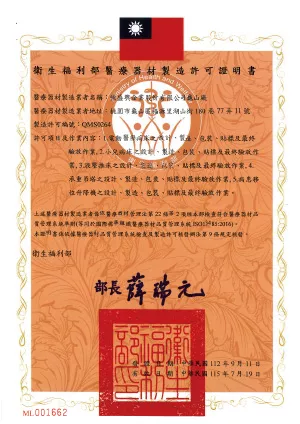
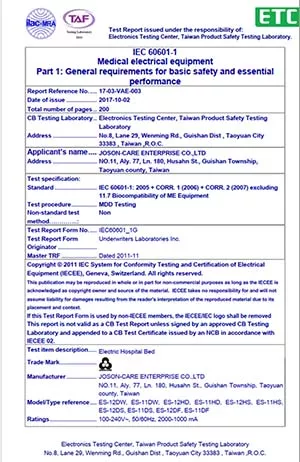
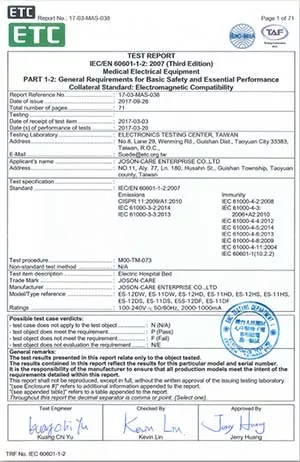
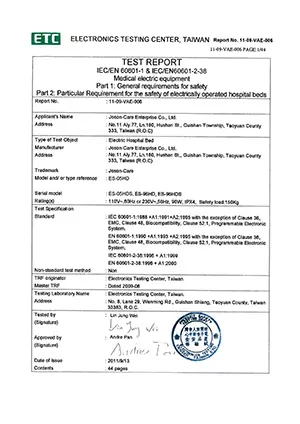
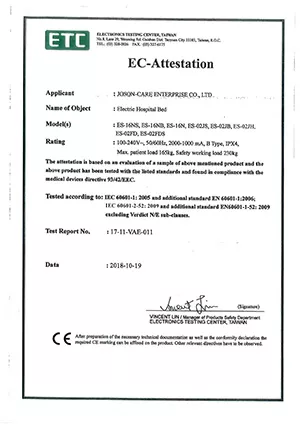
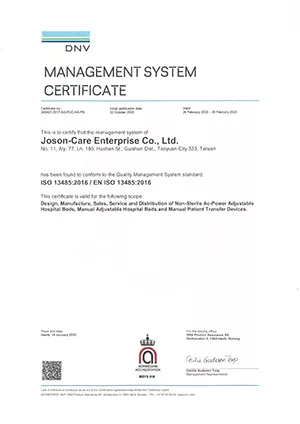
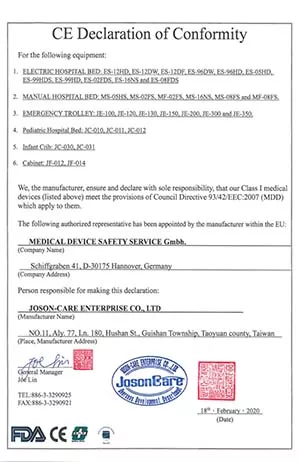
Engineered in Taiwan under ISO 13485 quality systems. Compliant with FDA, CE MDR, and IEC 60601-1 electrical safety standards for hospital and home care deployment.
Category: Critical Care & Intensive Care Units
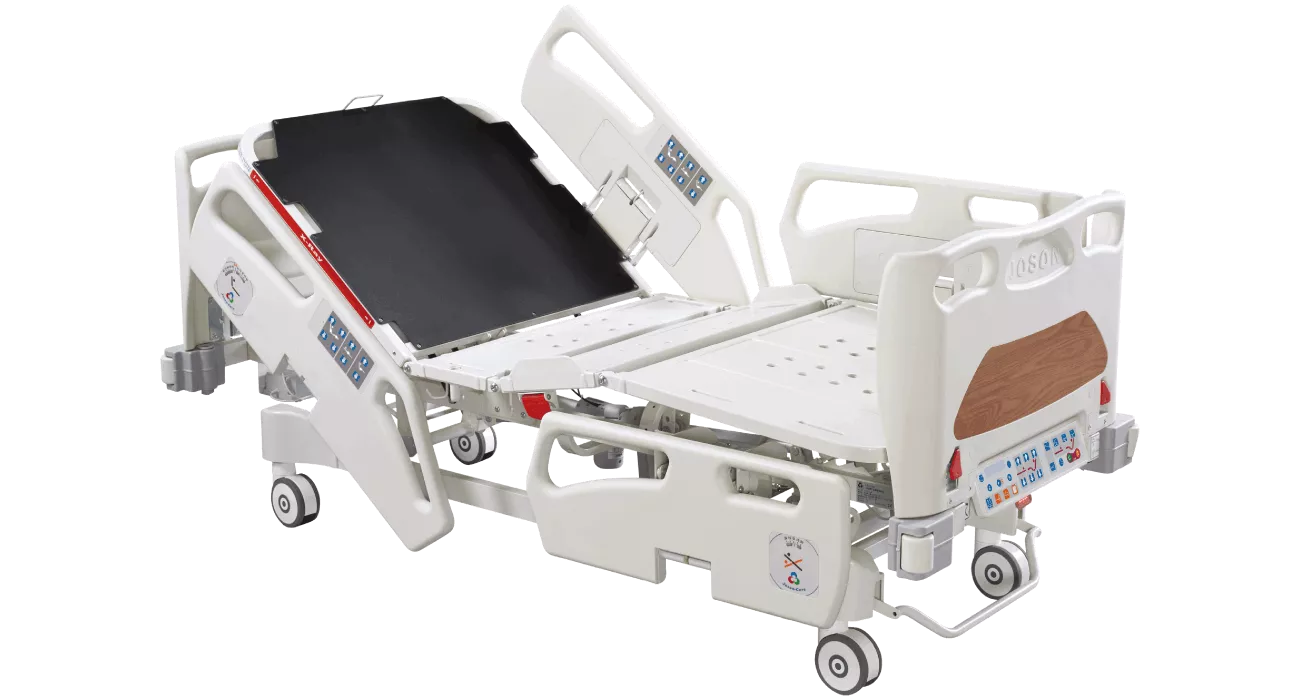
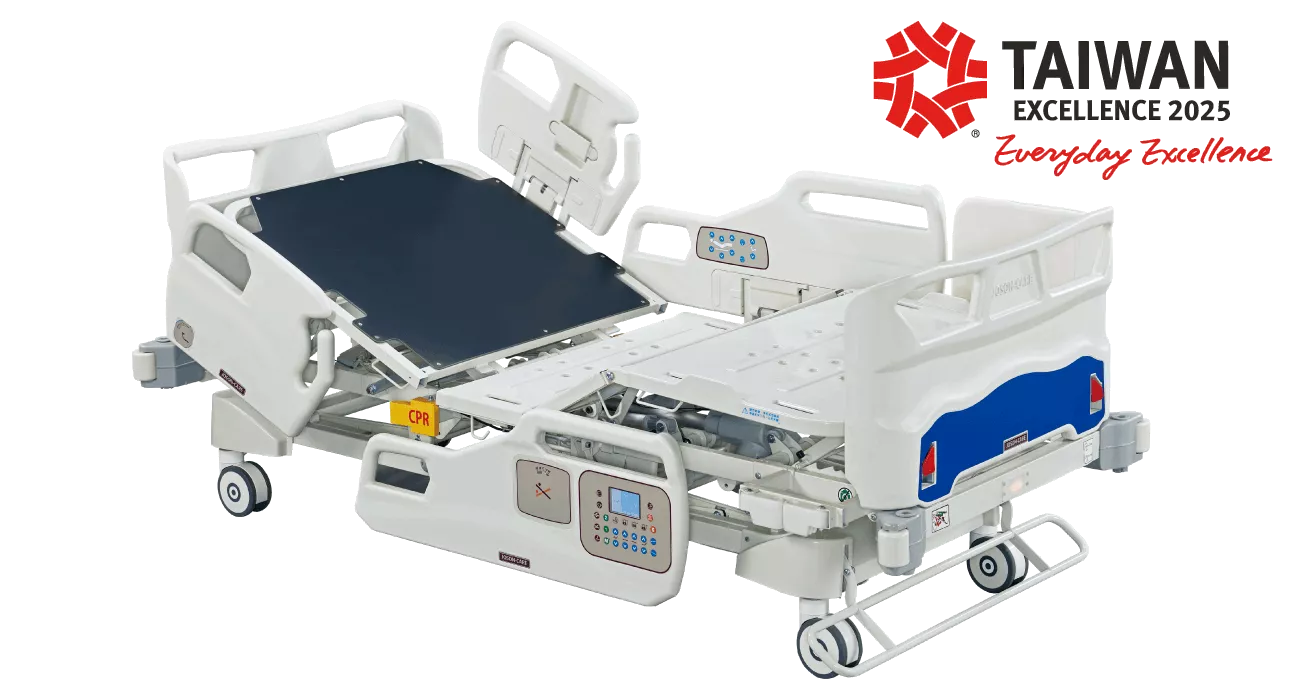
The flagship ES-19HD represents the pinnacle of critical care engineering. Featuring full electric control over backrest elevation, leg rest adjustment, height variation (400mm to 800mm), Trendelenburg / Reverse Trendelenburg, and a synchronized one-touch Auto-Chair position. Built-in translucent backrest allows full-length X-Ray cassette insertion without moving the patient.
Category: Long-Term & Home Rehabilitation Care
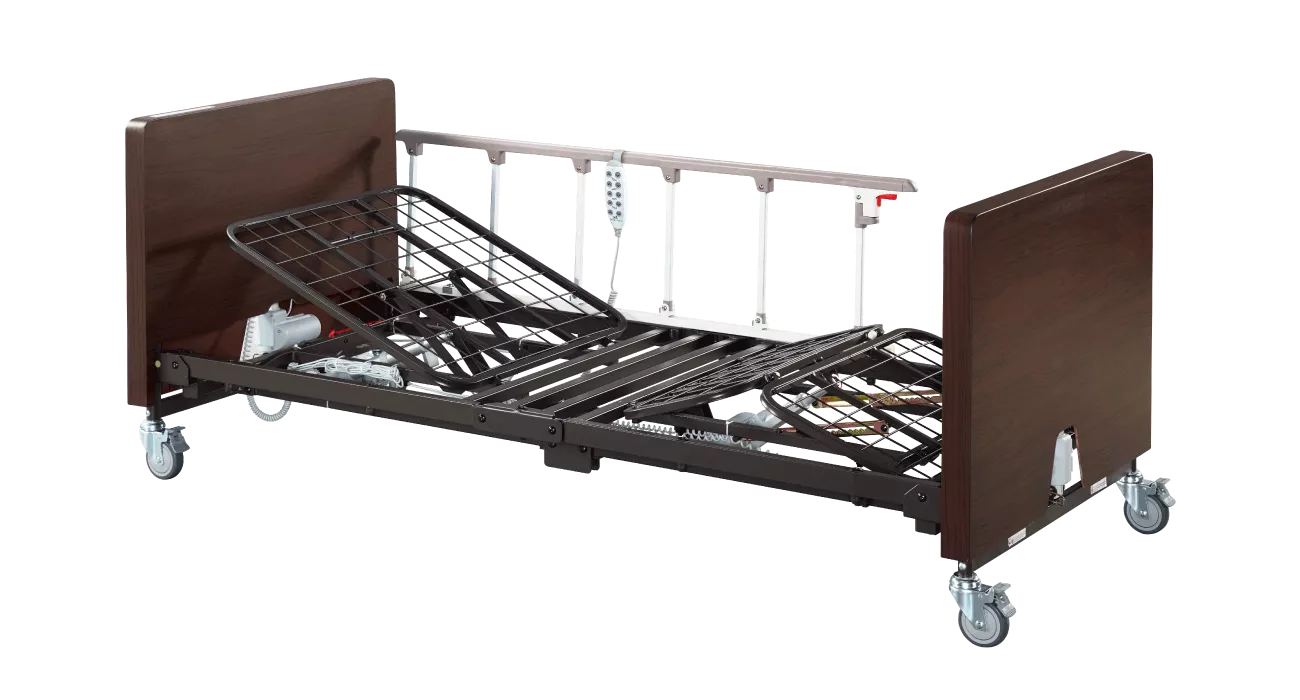
Specially engineered for home recovery, elderly assistance, and long-term care facilities. The EN-3M incorporates advanced multi-function articulation including Auto-Chair and Trendelenburg modes. Its innovative foldable chassis design drastically optimizes shipping volume while maintaining structural rigidity for patient self-care mobility.
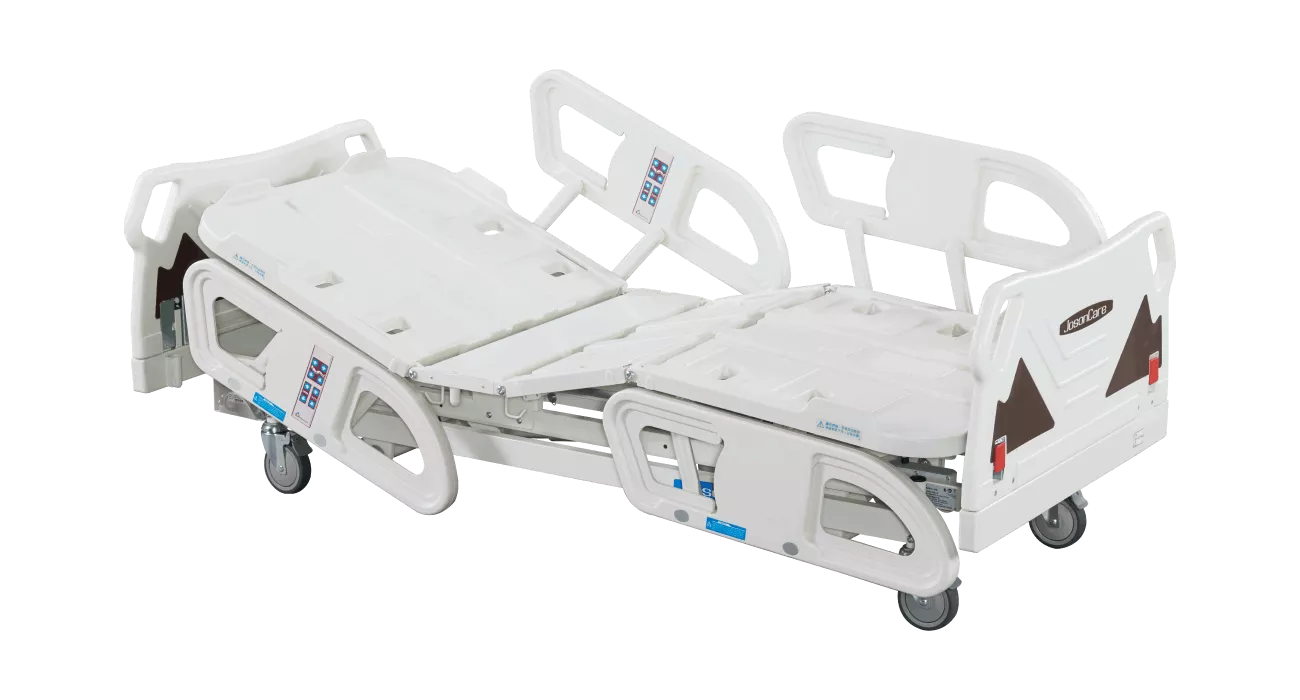
100cm compact overall width ideal for high-density ward layouts. 4-piece split side rails and cordless side-rail controls for rapid patient access.
Send an Inquiry
Integrated high-precision electronic scale system. Allows real-time patient weight monitoring, angle indication display, and full Auto-Chair capability.
Send an Inquiry
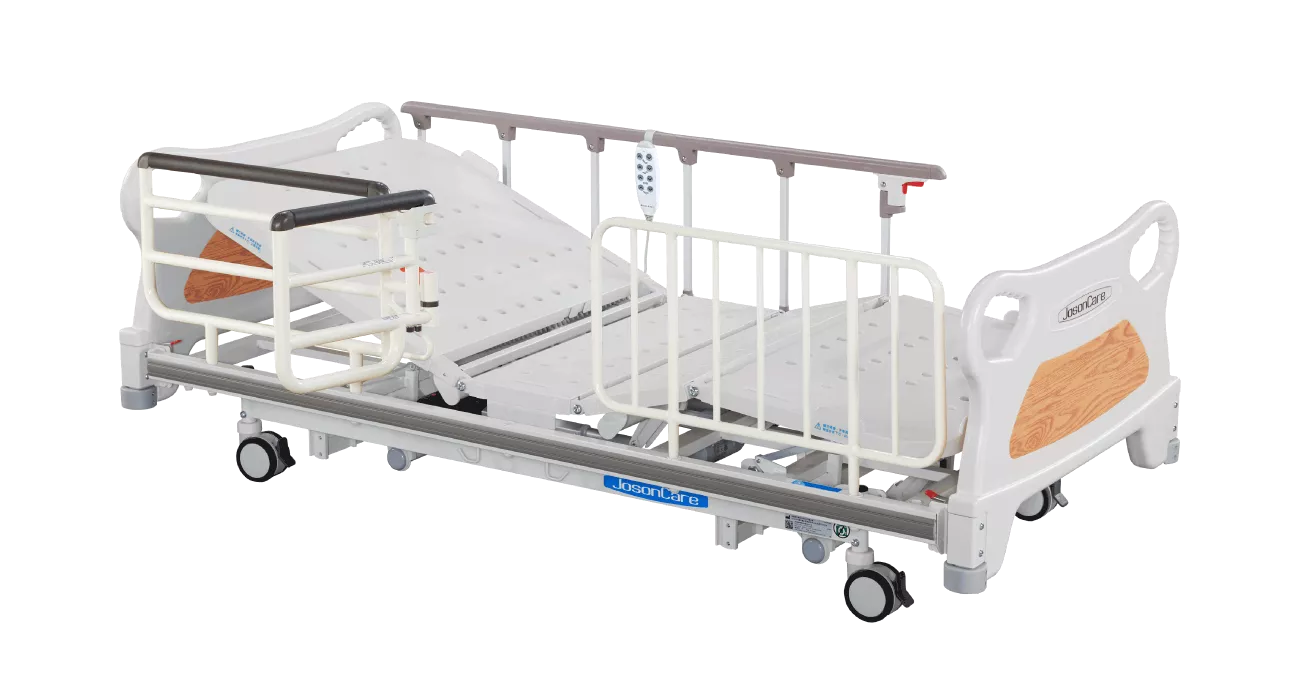
Powder-coated heavy-gauge steel frame engineered for continuous institutional use. Electrically operated auto-chair, knee-rest, and height adjustment.
Send an InquiryStrategic Industry Analysis
Global medical equipment procurement is undergoing a fundamental shift driven by value-based healthcare, demographic aging, and strict hospital accreditation protocols (such as JCI accreditation). Procurement officers and hospital administrators are no longer evaluating hospital beds solely on initial purchase price; instead, the emphasis has shifted toward Total Cost of Ownership (TCO), clinical risk mitigation, and operational longevity.
| Procurement Vector | Traditional Hospital Bed Specs | Next-Gen Auto-Chair Electric Bed Standard | Impact on Hospital Operations |
|---|---|---|---|
| Clinical Positioning | Manual crank or basic 2/3 function motorized tilt | Synchronized Auto-Chair, Trendelenburg & Cardiac Chair | Accelerates patient weaning from mechanical ventilation; lowers VAP rates by 22% |
| Safety & Compliance | Basic structural strength tests | Full compliance with IEC 60601-2-52 zero-entrapment zones | Mitigates patient falls and limb entrapment legal liabilities |
| Caregiver Ergonomics | High manual repositioning requirement | One-touch electronic positioning & dual rail controls | Reduces nursing strain & turnover rate in critical care wards |
| Logistics Efficiency | Rigid frame, low container loading quantity | Modular & foldable structural chassis design | Reduces international freight cost per bed by up to 35% |
Clinical evidence clearly demonstrates that prolonged immobilization in ICU settings exacerbates muscle wasting (ICU-acquired weakness) and severe pulmonary complications. Procurement tenders in North America, Europe, and the Middle East now prioritize beds capable of achieving a true seated upright position without forcing the patient to stand or transfer to an external chair. The Auto-Chair Electric Hospital Bed fulfills this exact requirement, serving as an active clinical tool in early mobilization protocols (EMP).
Patient safety regulators globally have adopted IEC 60601-2-52, which explicitly defines mandatory dimensional requirements to eliminate entrapment hazards in 7 critical zones of the bed frame and side rails. Modern hospital purchasing specifications demand side rail gaps below 120mm under full load conditions, smooth self-locking latching systems, and zero-shear backrest articulation mechanisms. Manufacturers like Joson-Care integrate these safeguards into every production unit.
As hospitals transition into smart digital facilities, electric hospital beds are increasingly expected to interface with Electronic Health Record (EHR) systems. Integration of high-precision load-cell weight sensors directly into the Auto-Chair frame (as seen in the Joson-Care ES-12DW series) allows continuous, non-invasive weight monitoring for fluid management in acute renal failure or heart failure patients without disrupting patient rest.
Technology Roadmap
The medical bed manufacturing sector is evolving rapidly. Engineering innovation focuses on improving mechanical reliability, motor control synchronization, and materials science to deliver long-term durability under continuous 24/7 hospital usage.
Manufacturer Authority & E-E-A-T Excellence
Founded in 2000 in Taoyuan City, Taiwan, Joson-Care Enterprise Co., Ltd. has established itself as a premier designer and manufacturer of electric hospital beds, ICU beds, and specialized care equipment. Over 25 years of relentless commitment to quality and engineering precision.
Every bed undergoes 30 rigorous quality checks and 15 endurance load tests before shipment.
Certified ISO 13485 QMS, US FDA registered, CE MDR compliant, and IEC 60601-1 safety tested.
Trusted by major medical distributors, government health ministries, and private hospital chains across 65+ countries.
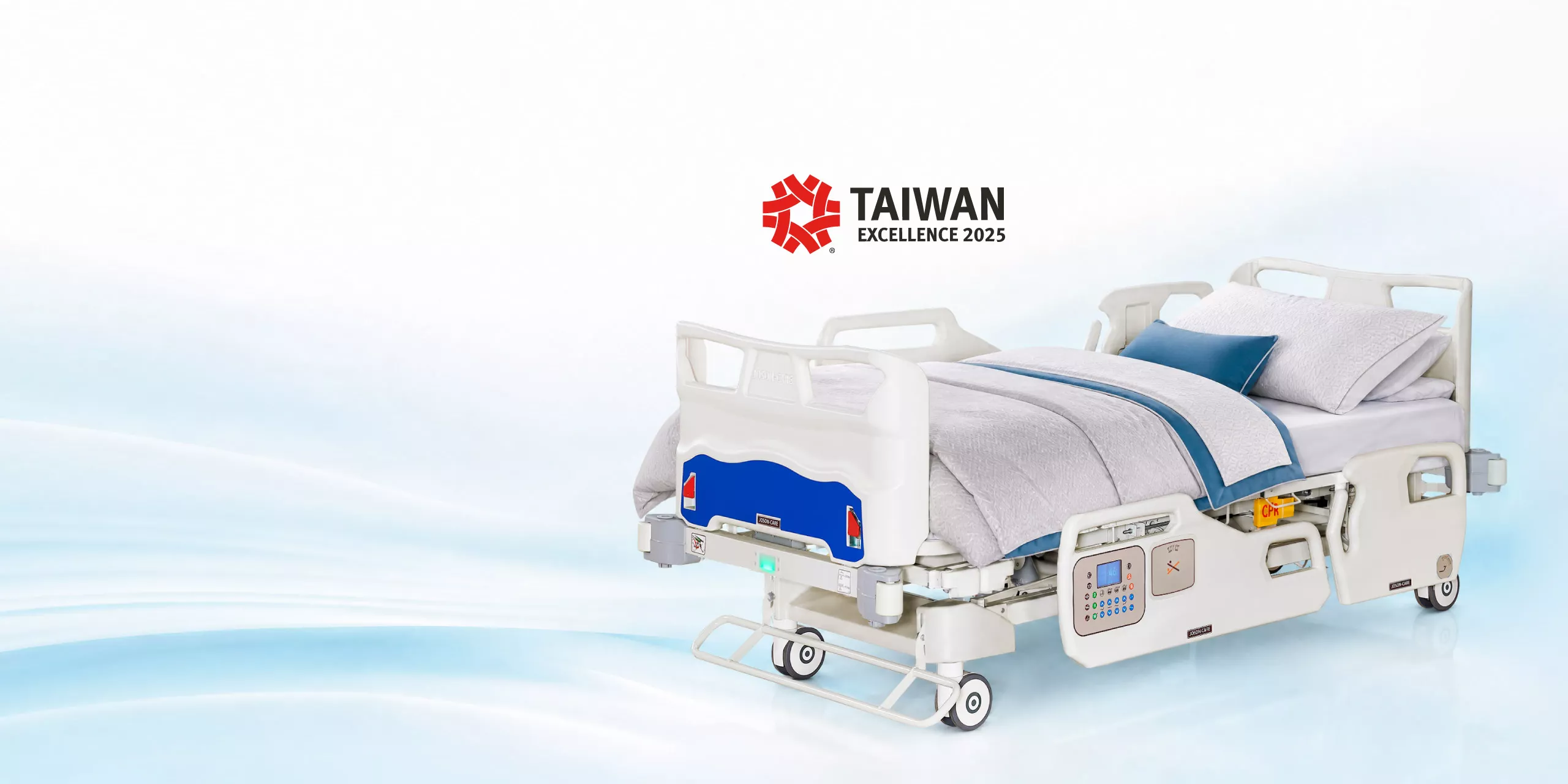
Honored with the 2025 Taiwan Excellence Award for structural design, usability, and clinical efficacy.
Global Regulatory Compliance & Testing Standards


Buyer Inquiry Intelligence
Addressing critical technical, regulatory, and commercial inquiries frequently raised by hospital tenders, biomedical engineers, and international distributors.