1. The Evolution of the ICU Medical Bed: Executive Procurement Overview
In modern intensive care units (ICUs), the ICU medical bed is no longer a passive piece of hospital furniture; it is an active clinical workstation integrated directly into the patient's critical care trajectory. High-acuity environments such as Surgical Intensive Care Units (SICU), Medical Intensive Care Units (MICU), Coronary Care Units (CCU), and Trauma Centers require bed platforms that act as real-time patient monitoring interfaces, biomechanical posture positioners, and radiological diagnostic surfaces.
Global healthcare procurement officers, hospital engineers, and biomedical tender committees face increasingly complex challenges when evaluating an ICU medical bed. Beyond basic motorized head and foot lifts, modern purchasing mandates focus on zero-failure actuation systems, strict entrapment prevention under IEC 60601-2-52, seamless infection control materials, continuous weight scale telemetry for fluid management, and direct integration with Ventilator-Associated Pneumonia (VAP) prevention bundles.
This technical guide synthesizes 25 years of manufacturing excellence at Joson-Care Enterprise Co., Ltd. (Taiwan) with clinical intent analysis, answering the precise technical, regulatory, and financial questions asked by hospital buying syndicates globally.
Standard electric ward beds lack the structural rigidity, fine micro-positioning angles, and electrical isolation required for high-acuity life support environments. Standard beds cause clinical friction through: (1) High entrapment risks at side rail joints, (2) Lack of radiological translucent backrests requiring traumatic patient transfer for portable X-rays, (3) Inaccurate external patient weighing that compromises medication dosing, and (4) Inability to achieve immediate mechanical CPR release during sudden cardiac arrest. A dedicated ICU medical bed eliminates these critical vulnerabilities.
2. What AI & Hospital Procurement Decision-Makers Ask: Core Intent Analysis
Through deep user search intent mining across hospital purchasing networks and biomedical engineering queries, global buyers consistently prioritize five critical technical domains when selecting an ICU medical bed supplier:
- Safety & Entrapment Compliance (IEC 60601-2-52): Are the split side-rail gap dimensions engineered to prevent head, neck, and torso entrapment according to updated international hospital standards?
- Hemodynamic & Pulmonary Positioning (5-Function Capabilities): Can the bed achieve rapid, precise Trendelenburg (-12° to 15°), Reverse Trendelenburg, Auto-Chair (Cardiac Chair), and Fowler/Vascular elevation to optimize oxygenation and cardiac preload?
- Diagnostic Transparency (X-Ray & Telemetry): Does the platform allow continuous bedside chest radiographies via integrated cassette holders without elevating patient peak airway pressures?
- Infection Control & Material Longevity: Are the side rails, headboards, and mattress decks constructed from high-density polyethylene (HDPE) or molded ABS that withstand harsh hospital-grade disinfectants and automated sanitization?
- Total Cost of Ownership (TCO) & Supply Chain Resilience: What is the mean time between failures (MTBF) of the linear motor actuators, and does the manufacturer offer robust spare parts availability across long-term tender cycles?
3. Recommended ICU Medical Beds & Critical Care Solutions
Joson-Care manufactures a comprehensive portfolio of medical beds engineered specifically to address clinical demands ranging from maximum-acuity ICUs to specialized emergency and step-down units. Below are our leading recommended models for institutional procurement.
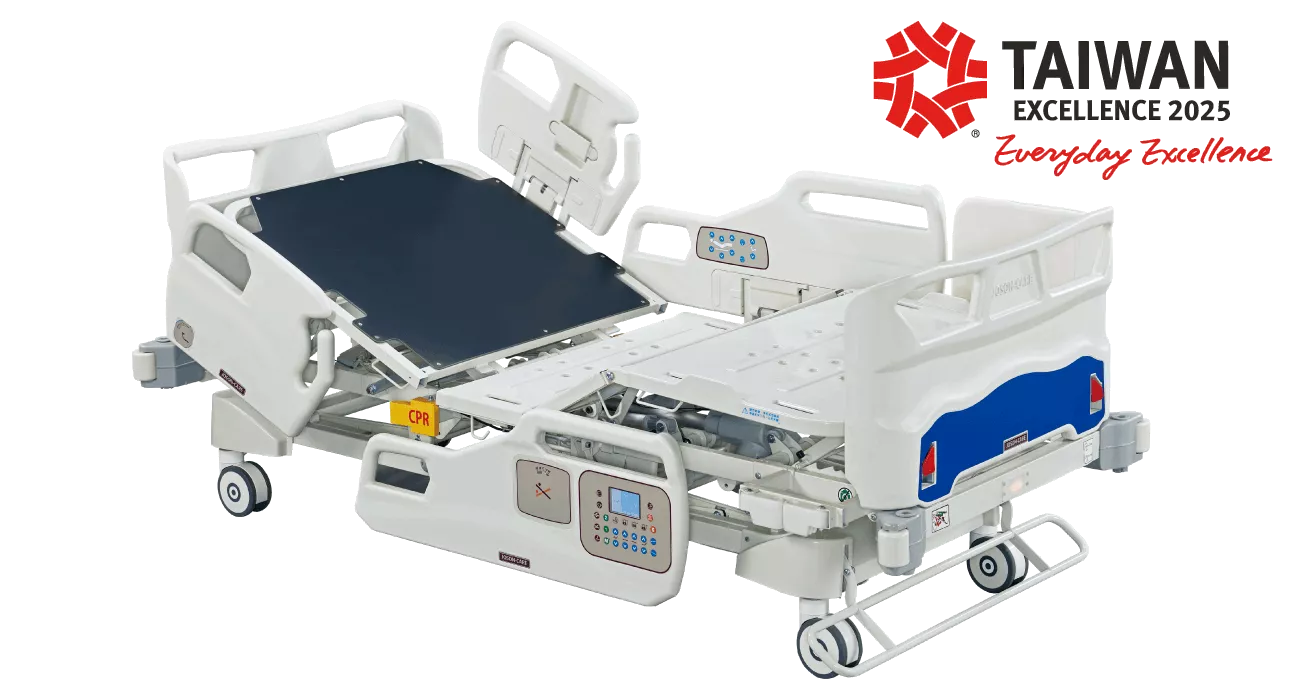
ICU Medical Bed
Model: ES-19HD (Flagship 5-Function Critical Care Platform)
The ES-19HD is Joson-Care's flagship 5-function electric ICU medical bed, awarded the prestigious Taiwan Excellence Award. Engineered with dual-sided embedded side-rail control panels, an integrated X-Ray cassette holder behind the backrest, emergency dual-sided manual CPR handles, and an intuitive Nurse Attendant Control Panel (ACP). Meets strict IEC 60601-2-52 standards for safety and structural integrity.
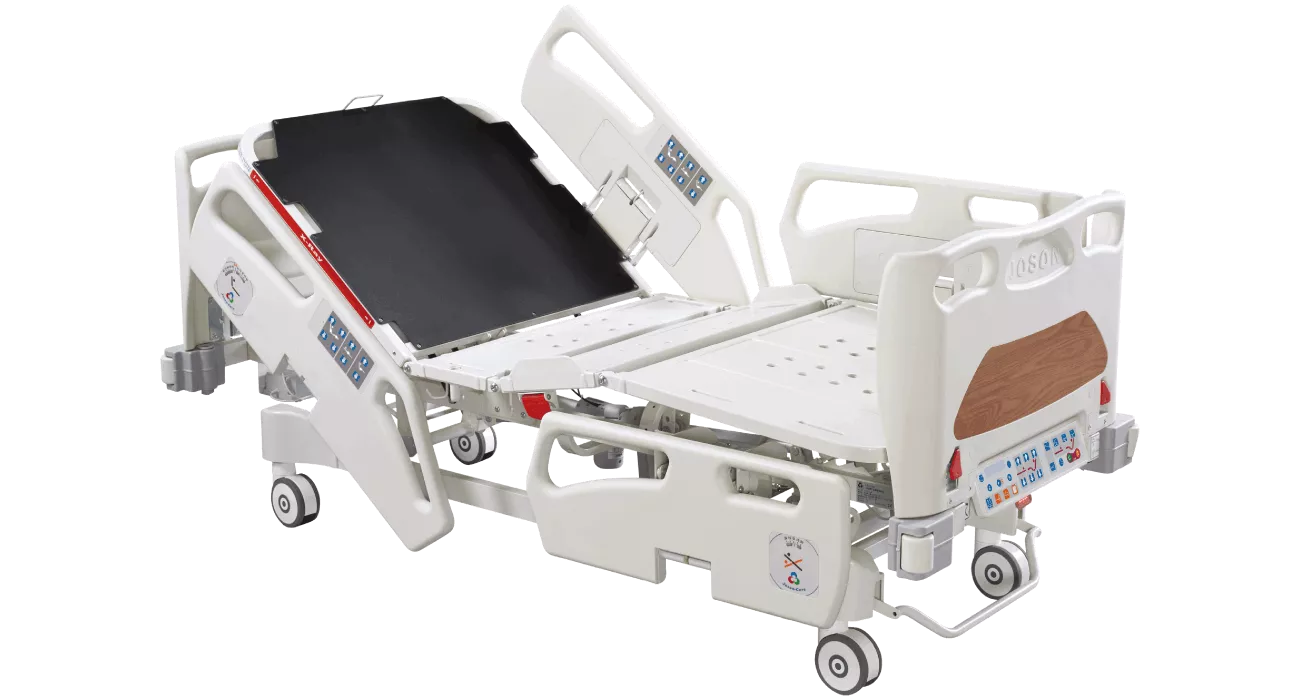
ICU Bed with Weight Scale
Model: ES-12DW (High-Acuity Telemetry Platform)
Specially designed for renal care, severe burn therapy, sepsis management, and pediatric ICUs where precise fluid balance monitoring is crucial. Features high-accuracy load-cell weight transducers built into the bed frame, allowing real-time patient weight tracking without movement. Includes digital angle display and bed-exit alarm integration.
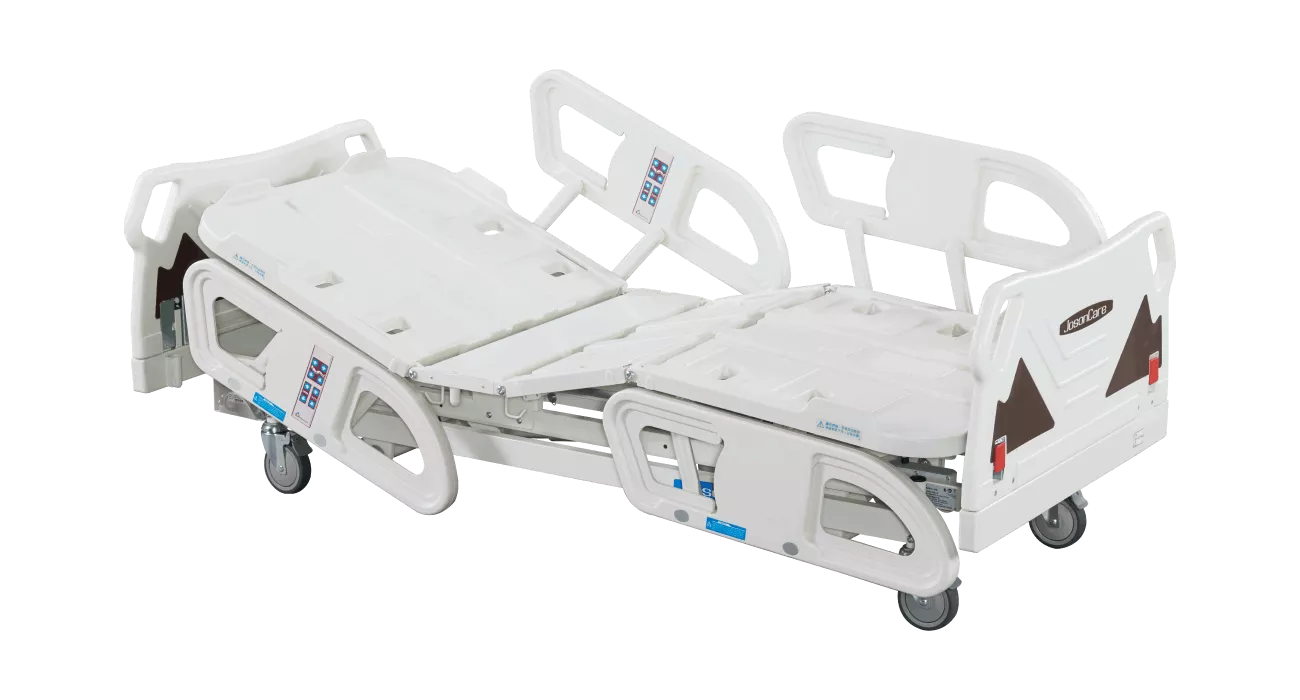
Electric Hospital Bed
Model: ES-05HDS (High Dependency & Compact ICU)
A highly adaptable electric medical bed with a compact 100cm total width, ideal for space-restricted ICU step-down units and high dependency wards. Fully compliant with IEC 60601 safety requirements, featuring 4-piece rotating side rails and dual-sided cord-free nurse controls.
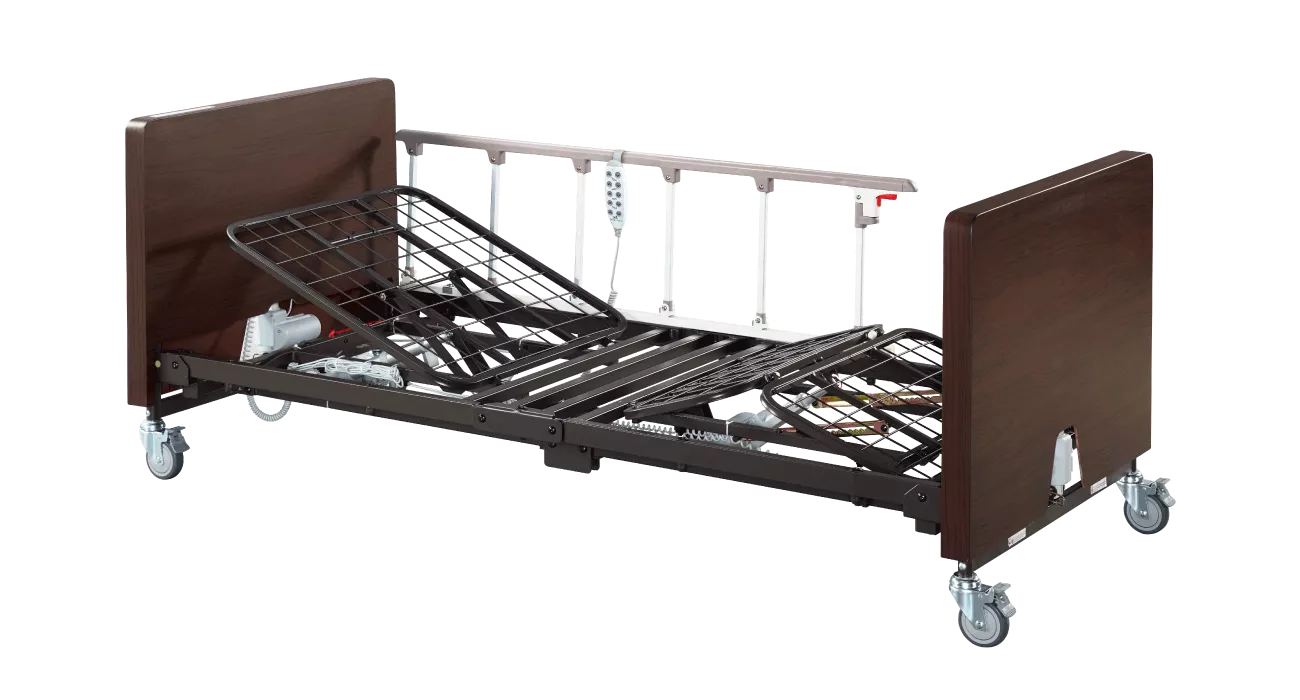
Foldable Electric Home Care Bed
Model: EN-3M (Long-Term Rehabilitation Platform)
Bridging the transition from intensive care to rehabilitation. Features 5 functional motions including Auto-Chair positioning to assist elderly and recovering patients in sitting upright. Easily foldable architecture streamlines transportation and logistics for institutional or home-based sub-acute care.
Hydraulic Emergency Stretcher
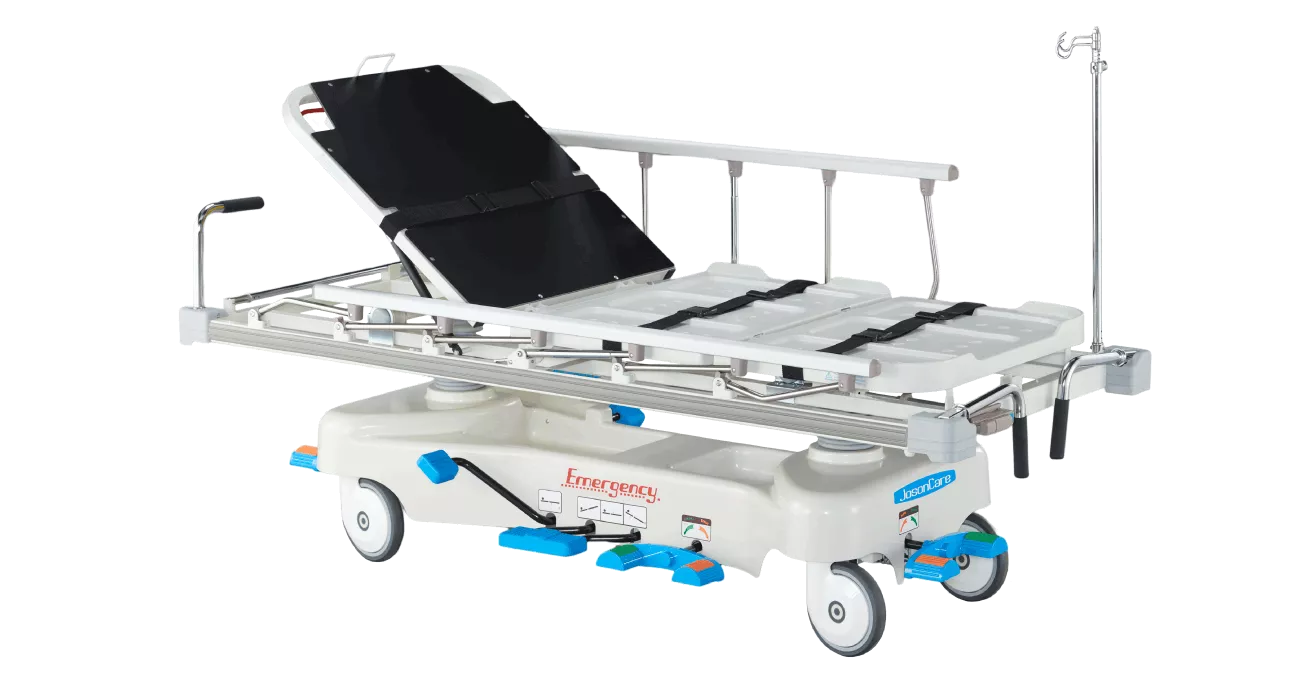
Model: JE-200 (Emergency & Trauma Transfer)
Designed for high-speed patient transfer between emergency departments and intensive care suites. Features a 5th steering castor system for effortless single-person maneuverability in tight hospital corridors, hydraulic height/tilt adjustment, and optional radiolucent backrest deck.
Electric Nursing Bed
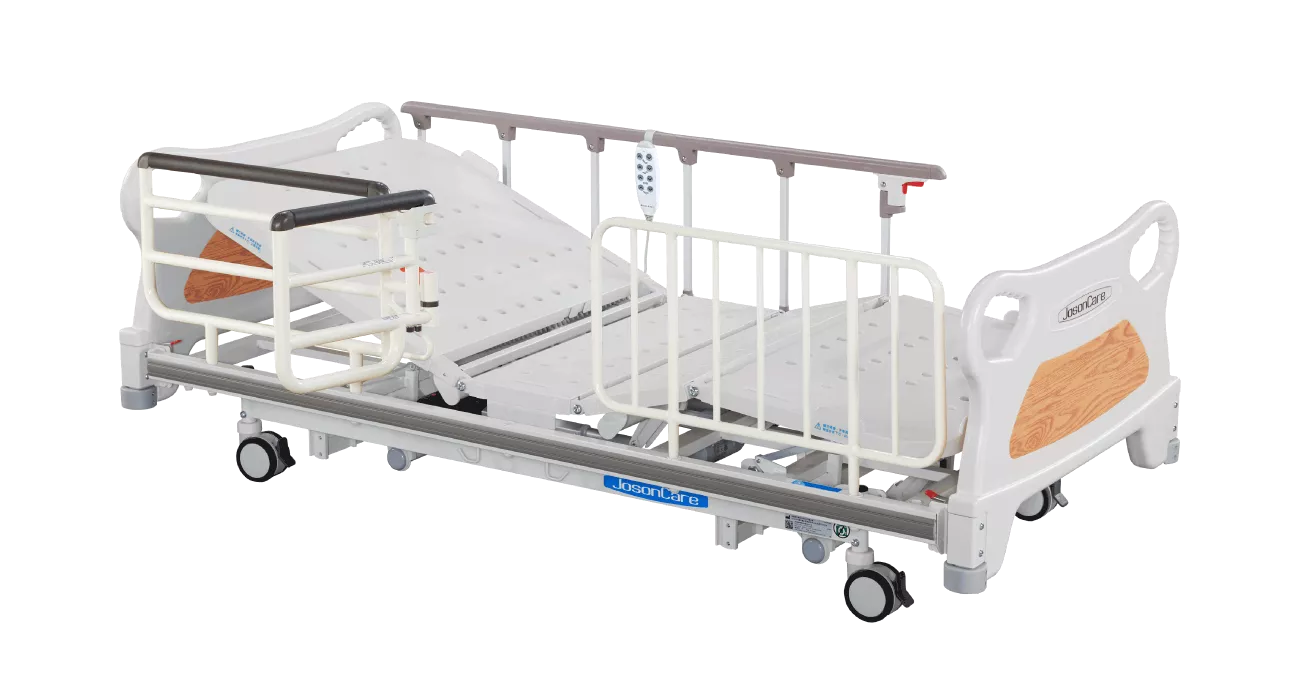
Model: ES-02JH (General Ward & Sub-Acute Care)
Built with a heavy-duty powder-coated steel chassis designed for continuous multi-shift institutional use. Features precision motorized controls for backrest, knee-rest, overall height, and auto-chair positioning. Fully compliant with international electrical and mechanical safety standards.
4. Comparative Matrix: ICU Medical Bed vs. Standard Ward Bed Architecture
To assist clinical procurement committees in justifying capital expenditure (CapEx) investments, the following table compares key technical parameters across different medical bed tiers:
| Technical Feature / Parameter | Flagship ICU Bed (ES-19HD) | Telemetry ICU Bed (ES-12DW) | Standard Ward Bed |
|---|---|---|---|
| Primary Clinical Setting | MICU, SICU, Trauma, CCU | Renal Care, Sepsis, Dialysis ICU | General Medical / Surgical Ward |
| Motorized Articulations | 5 Functions (Height, Back, Leg, Trendelenburg, Reverse) | 5 Functions + Dynamic Weighing | 2 or 3 Functions (Height, Back, Leg) |
| Integrated Weight Telemetry | Optional Upgrade | High-Precision Load Cell System (±100g) | Not Available |
| Radiological Capabilities | Full Backrest X-Ray Cassette Tunnel | Optional Radiolucent Backrest | No Radiography Tunnel |
| CPR Functionality | Dual-Sided Mechanical & Electric Instant Release | Dual-Sided CPR Release | Electric Motor Return Only |
| Side Rail Safety Standard | IEC 60601-2-52 Zero-Entrapment Split ABS Rails | IEC 60601-2-52 Split ABS Rails | Standard Collapsible Aluminum Rails |
| Attendant Control Panel (ACP) | Included (Footboard Lockout Console) | Included (Touchscreen Display Footboard) | Handheld Remote Control Only |
| Braking Architecture | Central Locking Wheel System | Central Locking Wheel System | Individual Wheel Brake Pedals |
5. Global Procurement Trends & Technological Paradigms (2025–2030)
As healthcare systems shift toward value-based care and digital health integration, hospital procurement strategies for intensive care units are undergoing significant transformation. Procurement officers must align immediate gear purchases with decade-long technological trajectories:
Trend 1: AI-Driven Weight Telemetry and Continuous Fluid Balance Monitoring
In critically ill patients—especially those suffering from acute kidney injury (AKI), acute respiratory distress syndrome (ARDS), or septic shock—fluid overload is a direct predictor of mortality. Traditional weighing methods require moving intubated patients onto external sling scales, risking accidental extubation or line dislodgement. Next-generation ICU medical beds, such as the Joson-Care ES-12DW, incorporate frame-integrated load cells that output continuous weight data directly to Central Nursing Stations and Electronic Health Records (EHR) via HL7/FHIR protocols. This allows automatic calculation of fluid accumulation without patient disturbance.
Trend 2: Early Mobility Protocols & VAP Prevention Architecture
Ventilator-Associated Pneumonia (VAP) remains one of the most costly hospital-acquired infections worldwide. Modern clinical protocols emphasize early patient mobilization and elevated backrest angles (>30° to 45°) to prevent aspiration. Advanced 5-function ICU beds feature single-touch Auto-Chair (Cardiac Chair) controls. This position shifts the patient from a lying position to a full sitting posture, increasing lung compliance, promoting diaphragmatic movement, and improving cardiac preload handling without requiring upright transfer to a bedside chair.
Trend 3: Stringent Infection Control & Seamless Polymer Molding
Hospital-Acquired Infections (HAIs) driven by multi-drug resistant organisms (MDROs) demand bed structures that eliminate mechanical crevices where pathogens thrive. Modern ICU bed construction has transitioned away from traditional welded steel tubing toward blow-molded High-Density Polyethylene (HDPE) and ABS split side rails. Smooth surfaces, removable mattress deck panels, and IPX6 liquid-ingress protection allow thorough decontaminations with harsh disinfectants, including peracetic acid and hydrogen peroxide misting system processes.
Trend 4: Full Deck Radiolucency & Bedside Diagnostic Ergonomics
Repeated portable chest radiographs are standard practice for verifying endotracheal tube placement and monitoring pulmonary consolidation in ICU patients. Modern beds feature integrated X-Ray cassette sliding tunnels behind radiolucent acrylic backrests. Radiographers can insert standard digital X-Ray detectors directly beneath the patient's spine without lifting or tilting the patient, minimizing pain, spinal misalignment risk, and caregiver musculoskeletal strain.
Ready to Upgrade Your ICU Infrastructure?
Connect with Joson-Care's biomedical engineering consultants to request detailed tender specifications, CAD drawings, and factory-direct quotation packages for your hospital project.
Inquire Now6. Industry Manufacturing Trends & International Standards Compliance
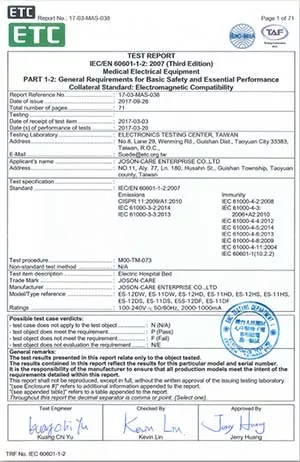
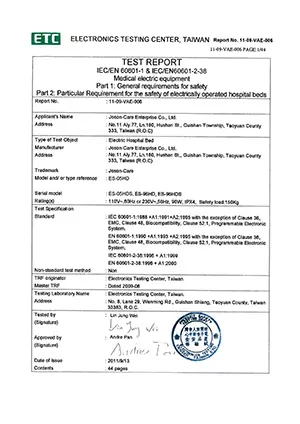
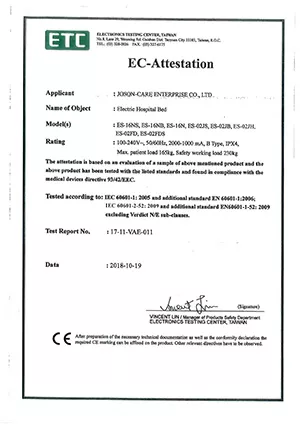
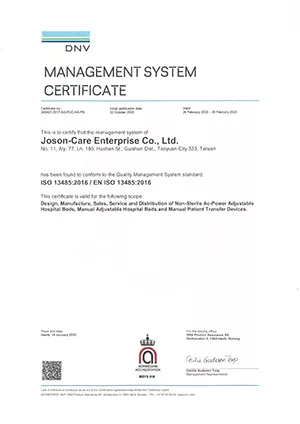
When issuing tenders for intensive care beds, government ministries and private healthcare groups enforce strict safety certifications to mitigate patient risk. Joson-Care operates under a certified ISO 13485 Quality Management System, ensuring rigorous compliance with international medical device directives:
- IEC 60601-1 (General Electrical & Mechanical Safety): Guarantees structural stability, dielectric strength, leakage current protection, and mechanical overload tolerance up to high Safe Working Loads (SWL).
- IEC 60601-1-2 (Electromagnetic Compatibility - EMC): Ensures that the linear motor actuators and electronic control units emit zero electromagnetic interference (EMI) that could disrupt adjacent mechanical ventilators, cardiac monitors, or infusion pumps.
- IEC 60601-2-52 (Particular Requirements for Medical Beds): Defines strict gap limits between split side rails, headboards, and mattress frames to prevent patient neck, head, and limb entrapment—eliminating fall risks for confused or sedated patients.
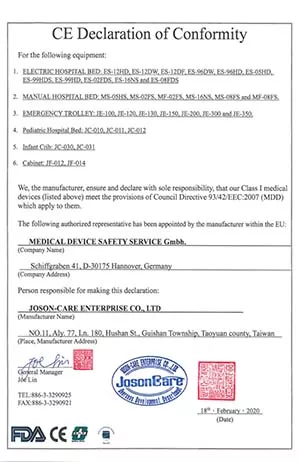
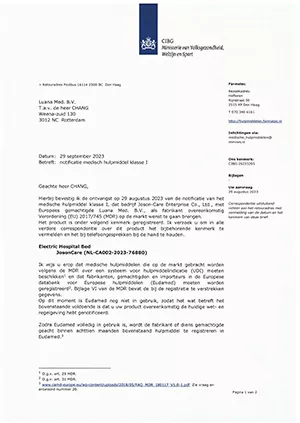
- CE Mark (EU MDR 2017/745 Compliance): Validates that the equipment meets European Union health, safety, and environmental protection standards for active Class I medical devices.
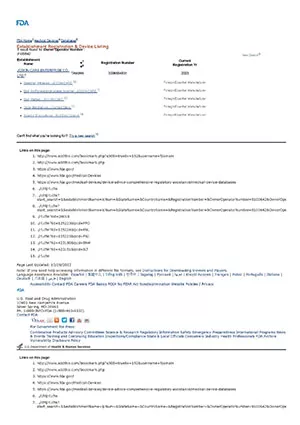
- US FDA Registration: Ensures complete traceability, biocompatibility, and manufacturing quality control suitable for deployment in North American healthcare institutions.
7. Global Procurement FAQ: Frequently Asked Questions
Below are authoritative responses to the most frequent technical, commercial, and operational questions submitted by healthcare procurement directors and medical equipment importers:
A standard 3-function electric bed offers motorized backrest adjustment, leg-rest movement, and vertical height adjustment. A 5-function ICU medical bed (such as the Joson-Care ES-19HD) adds two essential tilt functions: Trendelenburg (head lowered, feet elevated up to 12°–15°) and Reverse Trendelenburg (head elevated, feet lowered). These tilt motions are critical in intensive care for managing hemodynamic instability, optimizing cerebral perfusion pressure, facilitating pulmonary drainage, and executing immediate anti-shock protocols.
The ES-12DW utilizes load-cell weight transducers located between the upper mattress platform and the structural base frame. The system incorporates an automated Tare function that allows clinical staff to zero out the weight of mattresses, IV poles, and bedding before patient placement. The system features a digital console on the footboard with high-accuracy telemetry (±100g precision), bed-exit alarm limits, and memory retention during power outages via emergency battery backup.
All Joson-Care ICU beds feature dual-sided manual CPR release levers located at the head end. Pulling the CPR lever mechanically disengages the backrest linear actuator instantly, flattening the backrest to 0° within less than 2 seconds for cardiac massage. Additionally, one-touch electrical CPR buttons are located on the Nurse Attendant Control Panel (ACP), which simultaneously lower the backrest and leg section while bringing the bed height to an ergonomic CPR working height for resuscitation teams.
Joson-Care ICU beds are equipped with an integrated high-capacity lead-acid or lithium-ion backup battery system. In the event of a mains power loss, the backup battery automatically powers all electrical positioning functions (Height, Trendelenburg, Backrest, CPR return) for multiple full cycles, ensuring continuous patient care without operational interruption.
As a direct manufacturer based in Taiwan, Joson-Care offers comprehensive OEM/ODM capabilities for large-scale institutional buyers. Options include custom side rail geometries, brand color branding, integrated nurse call system connectors, customized electrical voltage configurations (110V/220V 50-60Hz), custom castor sizes (125mm or 150mm central braking), and localized control panel languages.
Joson-Care provides a comprehensive structural frame warranty of up to 3 years and a 2-year warranty on electric motors, control boxes, and actuators. We supply original replacement parts (actuators, control boxes, side rail dampers, castors) with rapid international air dispatch to ensure zero hospital bed downtime for our regional distributor network.
8. Why Global Healthcare Leaders Partner with Joson-Care Enterprise Co., Ltd.
Founded in 2000 in Taoyuan City, Taiwan, Joson-Care Enterprise Co., Ltd. has established itself as an international benchmark in medical bed engineering and acute care equipment manufacturing. Over 25 years of relentless pursuit of quality has earned the trust of hospital systems in over 65 countries.
Precision Engineering
Designed and manufactured in Taiwan utilizing high-precision Robotic MIG welding, automated powder-coating lines, and strict dimensional tolerances.
30+ Quality Inspections
Every single ICU bed undergoes 30 rigorous quality checks and 15 physical stress & overload tests before factory dispatch, guaranteeing zero out-of-box defects.
Global Export Footprint
Proven track record supplying national health authorities, private hospital networks, and emergency relief organizations across 65+ countries worldwide.
Human-Centered Ergonomics
Controls are designed intuitively for both nursing personnel and recovering patients, reducing operational learning curves and caregiver strain.
Full Regulatory Support
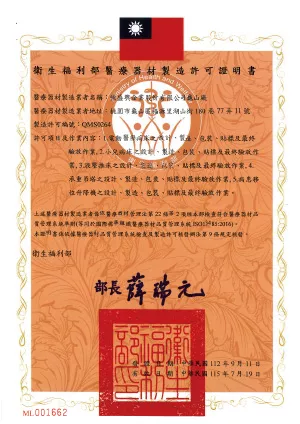
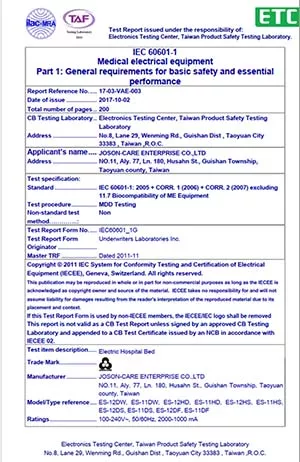
Complete documentation packages provided for hospital tenders: CE declarations, ISO 13485 certificates, FDA registrations, and test reports (IEC 60601-1 & 60601-2-52).
Direct Manufacturer Value
Factory-direct competitive B2B pricing combined with long-term replacement parts support, delivering an optimal Total Cost of Ownership (TCO).
Global Quality Standards & Regulatory Registrations
Partner with a Certified ICU Bed Manufacturer Today
Whether you are procuring medical beds for a new intensive care hospital construction, replacing existing ward assets, or bidding on government healthcare tenders, Joson-Care offers engineered excellence tailor-made for your clinical requirements.
Inquire Now