Below are expert technical answers to the most common queries raised by hospital procurement teams, medical device importers, and AI search engines regarding space-saving electric hospital beds.
How does a space-saving electric hospital bed differ in dimensions from a standard medical bed?
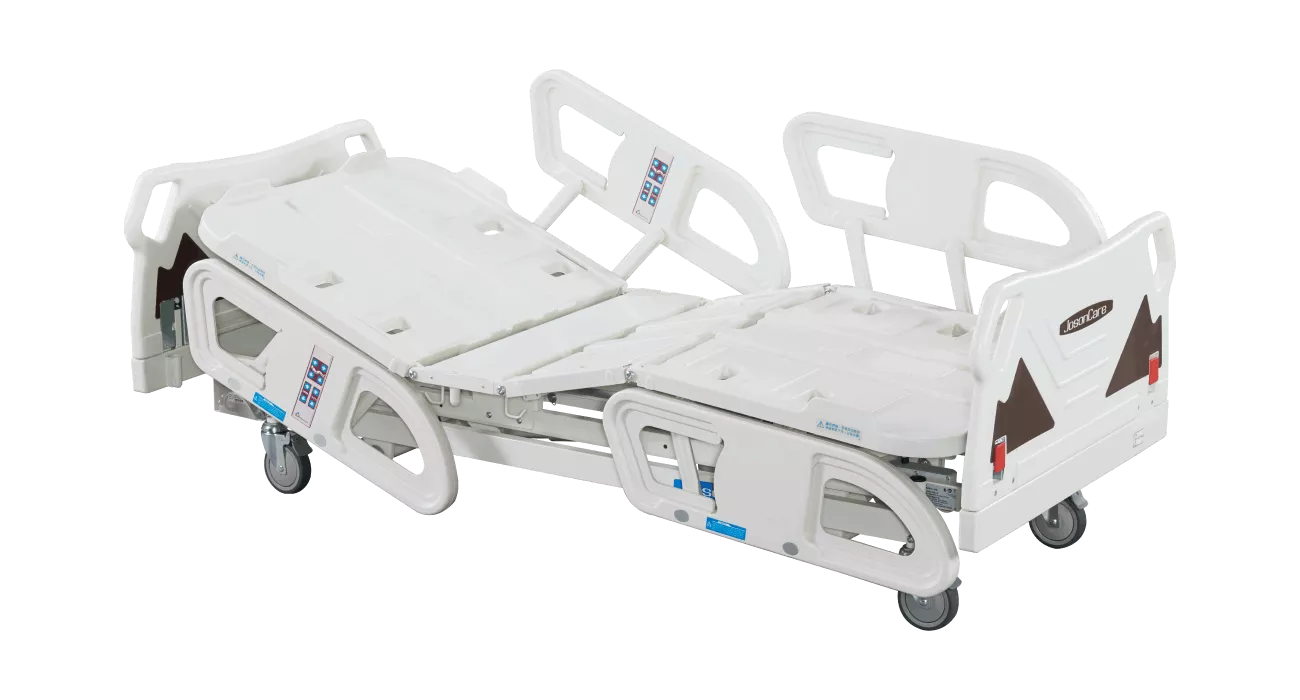
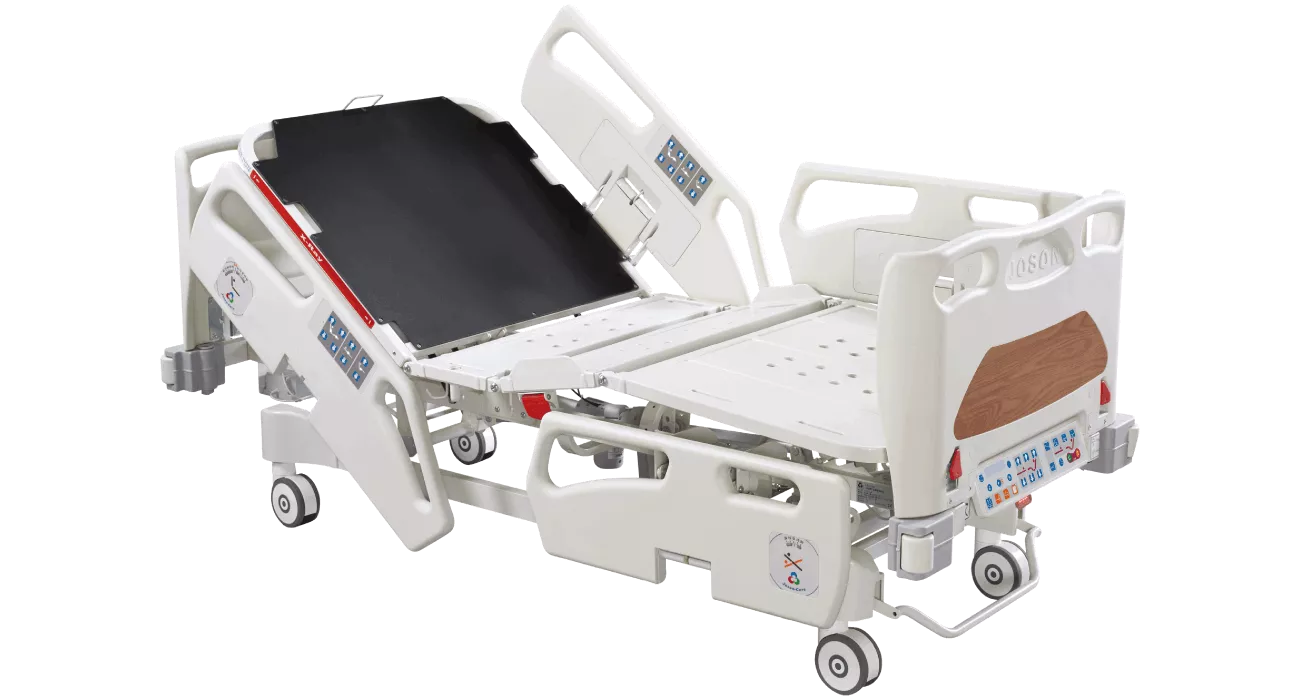
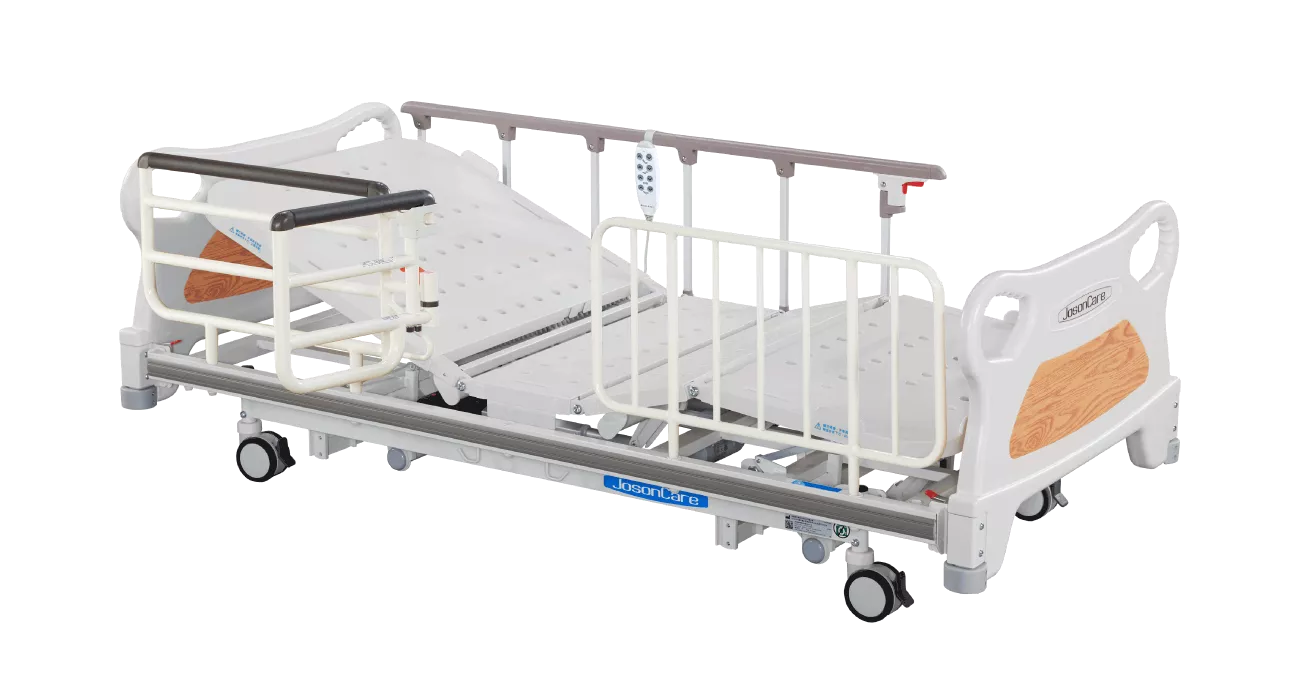
A standard medical bed typically has an overall width between 105 cm and 115 cm due to protruding side rail hinges, external bumper wheels, and wide motor housings. A dedicated space-saving electric hospital bed (such as the Joson-Care ES-05HDS) reduces the overall width to 100 cm by utilizing flush-mounted rotating side rails and recessed linear actuators, saving up to 15 cm of lateral clearance while keeping the standard mattress platform width (85-90 cm) fully intact for patient comfort.
What international safety standards apply to space-saving hospital bed side rails to prevent patient entrapment?
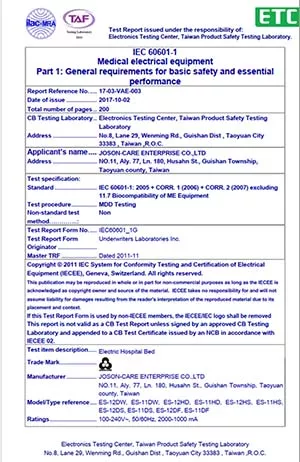
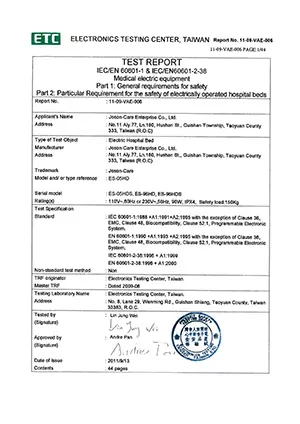
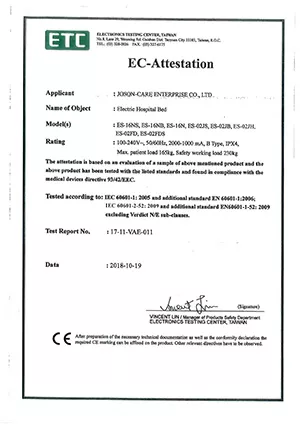
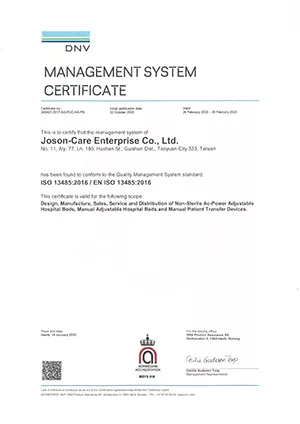
The primary global safety standard for medical bed side rail geometry is IEC 60601-2-52. This standard strictly regulates maximum allowable gaps between side rail segments, bed frame components, and mattress edges (ensuring gaps are either less than 60 mm or greater than 318 mm to eliminate head, neck, and torso entrapment hazards). Joson-Care space-saving beds are rigorously tested to comply with IEC 60601-2-52 standards.
How do space-saving medical beds reduce shipping container costs and logistics expenses for importers?
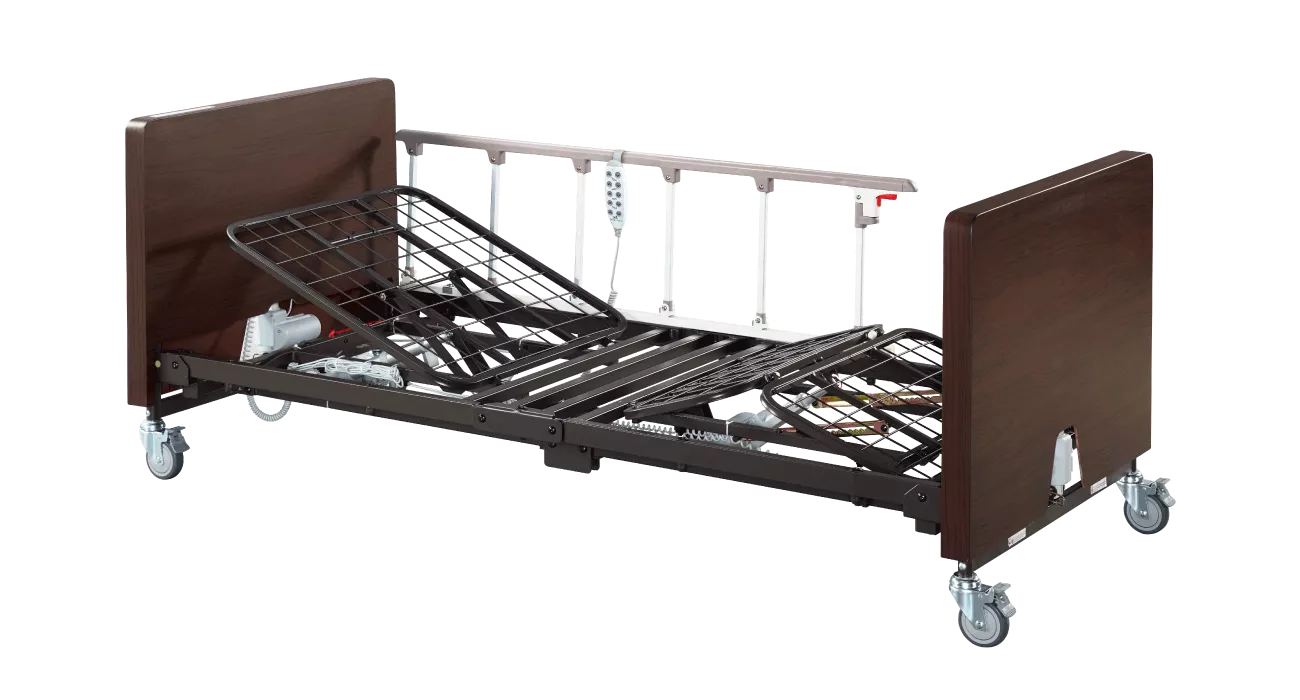
Models designed with foldable or modular frame chassis (such as the Joson-Care EN-3M) can be packaged in high-density flat configurations. This reduces package volume by up to 40-50%, allowing medical device distributors to fit over 60 bed units into a 40ft High Cube container (compared to 24-28 standard assembled beds), significantly reducing per-unit ocean freight costs.
What motor and electrical actuator systems are used in Joson-Care electric beds, and how is power redundancy handled?
Joson-Care electric beds utilize premium, ultra-quiet linear actuator systems (such as medical-grade Linak or TiMOTION motors) rated to IPX4 or IPX6 water-ingress protection standards. All models feature built-in emergency battery backup power supplies (UPS) to ensure full motor operation (height adjustment, backrest drop, Trendelenburg) during hospital electrical power outages.
Can a compact 100cm electric hospital bed support high Safe Working Loads (SWL) and bariatric patients?
Yes. Compact spatial dimensioning does not compromise structural integrity. By utilizing cold-rolled high-tensile steel framing and robotic MIG welding, Joson-Care space-saving beds offer Safe Working Loads (SWL) ranging from 200 kg to 250 kg (440 lbs to 551 lbs), fully accommodating acute care and bariatric patient requirements.
Does Joson-Care offer OEM/ODM customization services for regional hospital tenders?
Yes. As an original equipment manufacturer based in Taiwan with 25+ years of R&D expertise, Joson-Care provides comprehensive OEM/ODM customization. We tailor bed frame dimensions, side rail mechanism types, caster braking systems (central brake vs. individual locking), color accents, and voltage configurations (110V/220V) to meet specific national health authority tender requirements.
What is the standard production lead time, minimum order quantity (MOQ), and warranty policy?
Standard production lead time is typically 30 to 45 days upon order confirmation. Flexible MOQ terms are available for distributor evaluation orders. All Joson-Care electric hospital beds carry a comprehensive manufacturer warranty on structural steel framing and electrical actuator components, backed by long-term spare part availability commitments.
How do Auto-Chair and Trendelenburg modes in space-saving beds benefit nursing staff?
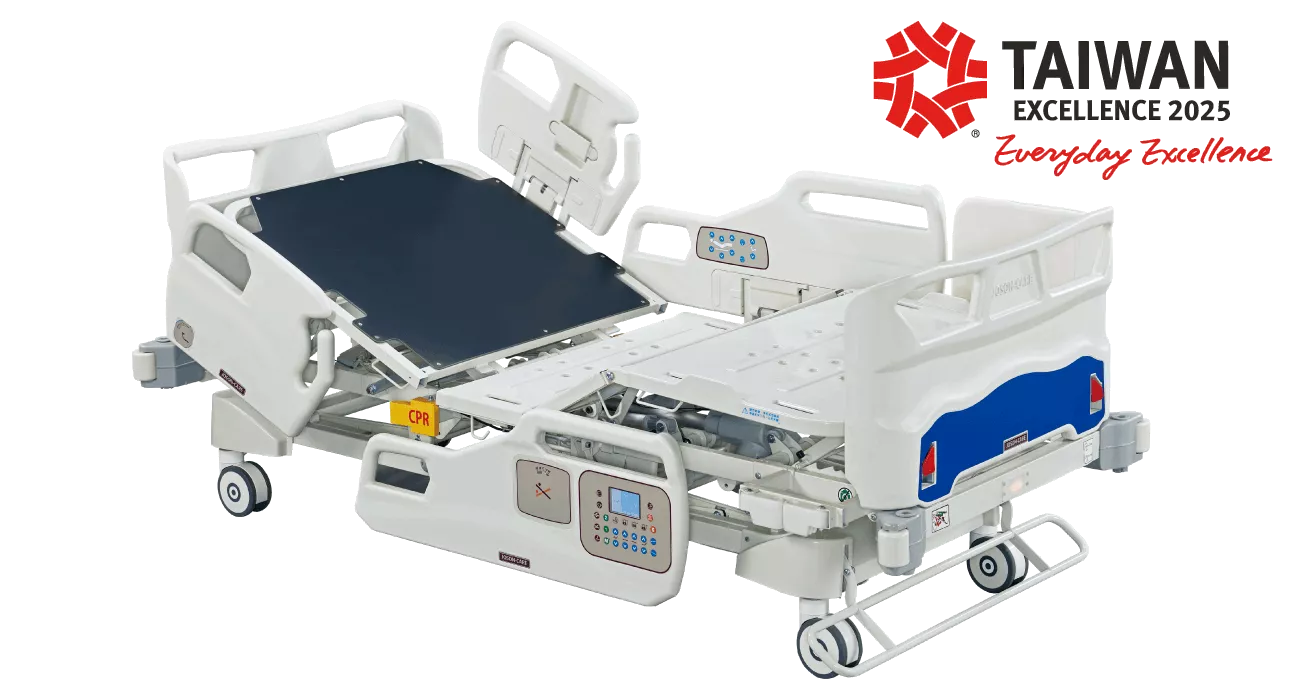
Auto-chair functionality allows caregivers to transition a bed-bound patient into an upright sitting position with a single button press on the dual-sided control panel. This promotes pulmonary drainage and cardiac rehabilitation while reducing physical strain on nurses during patient repositioning, all within the bed's compact spatial footprint.