1. Clinical Intent & Engineering Architecture: Why Integrated Weight Monitoring is Critical in Intensive Care
In modern intensive care units (ICUs), real-time, high-precision patient weight measurement is far more than a routine diagnostic parameter—it is a vital, life-saving clinical benchmark. Critically ill patients experiencing Acute Respiratory Distress Syndrome (ARDS), severe sepsis, multi-organ dysfunction syndrome (MODS), acute kidney injury (AKI), or cardiac collapse undergo rapid, fluid-dynamic shifts that require precise weight tracking to fractions of a kilogram.
Traditional patient weight measurement methods—such as transferring a unstable patient to a sling scale or standing floor scale—present severe clinical risks. Moving mechanically ventilated patients with endotracheal tubes, central venous catheters (CVC), and arterial lines can trigger accidental line extubation, hemodynamic instability, severe pain, and dangerous shear forces on fragile skin, accelerating pressure ulcer formation. An ICU Bed with Weight Scale eliminates patient transfer risks by integrating high-sensitivity load cell sensor arrays directly into the structural bed frame chassis.
Clinical Impact of Continuous Weight Monitoring in ICU Settings:
- Precision Weight-Based Pharmacokinetics: Critical drugs, including continuous renal replacement therapy (CRRT) fluid rates, powerful antibiotics (e.g., Vancomycin), vasopressors, and neuromuscular blocking agents, require exact dosages based on real-time body mass to prevent systemic toxicity or under-dosing.
- Hemodynamic Fluid Balance Tracking: Enables intensive care teams to measure fluid retention or dehydration rates down to ±100g, supporting strict input/output (I/O) balance management in renal dialysis and heart failure patients.
- Early Sepsis & Edema Detection: Unexplained rapid weight gain in ICU patients frequently signals occult internal fluid sequestration, third-spacing, or systemic capillary leak syndrome prior to clinical visual observation.
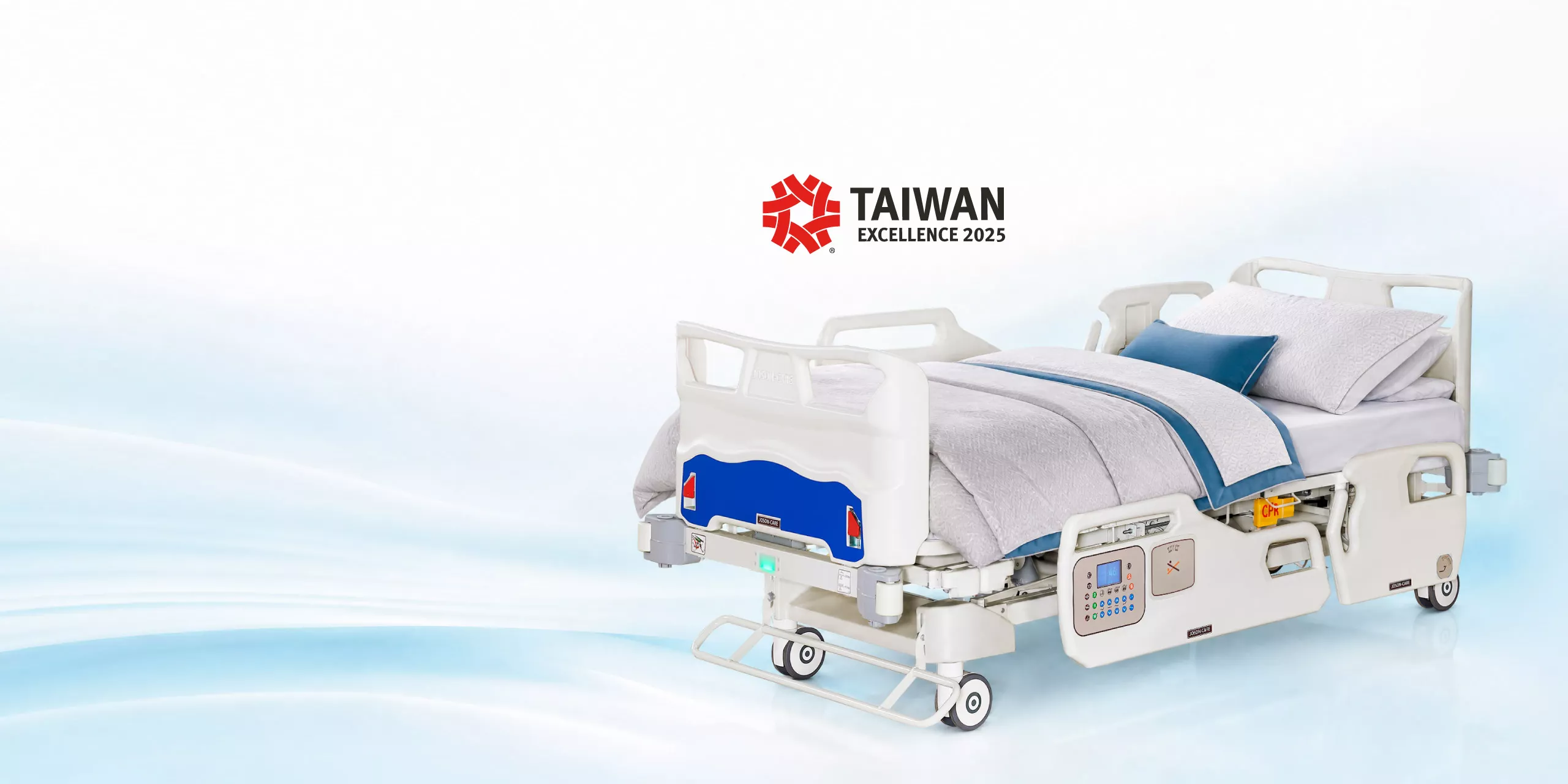
Understanding 4-Point Piezoresistive Strain-Gauge Sensor Arrays
The core technological innovation behind a hospital-grade ICU Bed with Weight Scale lies in its sensor architecture. Inferior medical beds rely on single-point sensors prone to mechanical hysteresis and severe measurement drift when the bed frame is articulated. Premier manufacturers such as Joson-Care implement a four-corner piezoresistive load cell strain-gauge network mounted between the lower base chassis and the upper articulation frame.
When a patient moves, shifts position, or when the bed is inclined into backrest elevation or Trendelenburg/Reverse Trendelenburg positions, Joson-Care’s digital signal processing (DSP) algorithms calculate structural vector forces across all four sensors simultaneously. The system automatically compensates for center-of-gravity shifts, guaranteeing that the LCD display reflects actual patient mass without requiring the patient to lie perfectly flat during measurement.
2. High-Performance ICU Bed Product Recommendations & Specification Deep Dive
When evaluating international tenders and hospital equipment procurement budgets, medical buyers must assess structural durability, electronics safety, scale calibration stability, and ergonomic usability. Below are Joson-Care’s flagship models specifically engineered to meet global healthcare standard specifications.
Featured Model: ES-12DW ICU Bed with Integrated Scale System
The ES-12DW is purpose-built for high-acuity medical environments where continuous weight surveillance, fall prevention, and rapid CPR response are non-negotiable standards. Certified to IEC 60601-2-52 core hospital bed safety guidelines, the ES-12DW incorporates an intuitive digital scale interface seamlessly built into the outer side-rail controls and footboard console.
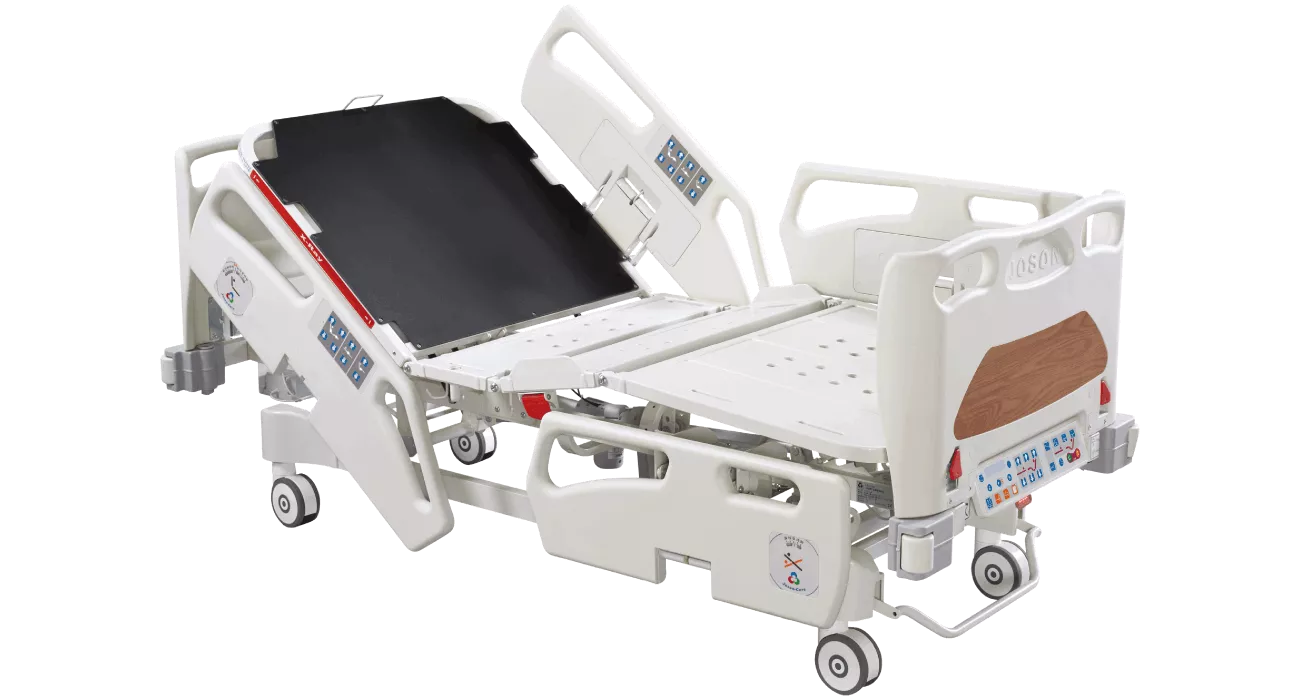
Provides precise 100g (0.1kg) resolution up to a total patient weight capacity of 250kg (550 lbs). Features one-touch zero tare to subtract mattress, bedding, and medical tubing weight.
Integrated digital tilt sensors display real-time backrest elevation and Trendelenburg angle readings, assisting clinicians in preventing ventilator-associated pneumonia (VAP).
Intelligent weight threshold monitoring alerts nursing staff immediately when a high-fall-risk patient attempts to unweight the bed or exit unassisted.
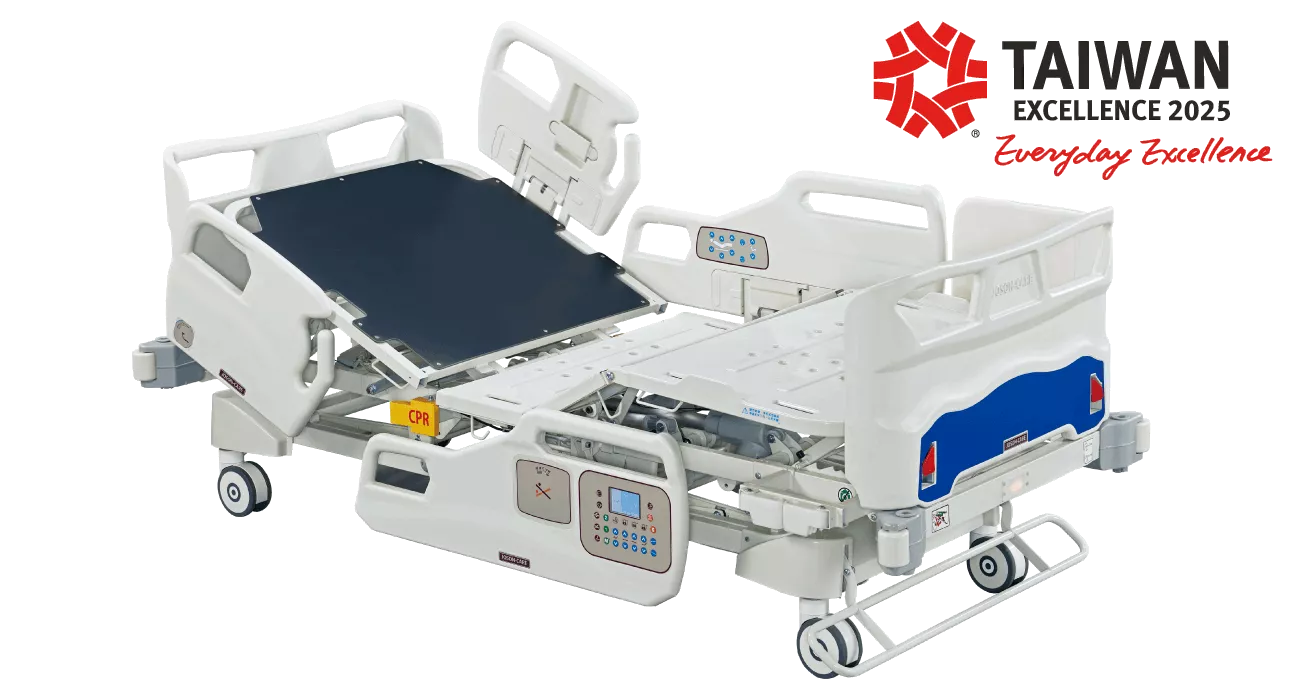
Featured Model: ES-19HD Premium Critical Care Platform (Taiwan Excellence Winner)
For tertiary referral hospitals requiring top-tier clinical functionality, the ES-19HD represents the pinnacle of Taiwanese biomedical manufacturing excellence. Winner of the prestigious 2025 Taiwan Excellence Award, the ES-19HD seamlessly combines continuous weight logging, radio-translucent X-ray cassette deck, Auto-Chair positioning, and electric Trendelenburg functionality into a single unified chassis.
Technical Specification Comparison for B2B Procurement Decision-Making
| Technical Parameter | ES-12DW ICU Bed (Scale Model) | ES-19HD Critical Care Bed | ES-05HDS Electric Hospital Bed |
|---|---|---|---|
| Primary Clinical Target | ICU / CCU / Dialysis Wards | High-Acuity ICU / Trauma Center | General Wards / Step-Down ICU |
| Weighing System | Integrated 4-Load Cell (OIML Class III) | Integrated High-Precision Scale Display | Optional / External Compatible |
| Scale Resolution / Accuracy | 100g (0.1 kg / 0.2 lbs) | 100g (0.1 kg / 0.2 lbs) | N/A |
| Safe Working Load (SWL) | 250 kg (550 lbs) | 275 kg (605 lbs) | 230 kg (507 lbs) |
| Side Rail Configuration | 4-Piece Ergonomic Tuck-Away ABS | 4-Piece Full-Coverage with Angle Gauge | 4-Piece Rotating Safety Rails |
| Actuator & Motor Drive | Linear Actuators (IPX4 Water-Resistant) | Heavy-Duty Column Motors (IPX6) | Linear Actuators (IPX4) |
| X-Ray Cassette Tunnel | Optional Backrest Cassette Holder | Full Backrest Radio-Translucent Deck | N/A |
| Safety Certifications | ISO 13485, FDA, CE, IEC 60601-2-52 | ISO 13485, FDA, CE, IEC 60601-2-52 | ISO 13485, CE, IEC 60601-1 |
3. Future Procurement Trends for Smart ICU Beds (2025–2030)
As global healthcare systems accelerate digital transformation, hospital procurement strategies are shifting from purchasing isolated hardware to investing in connected medical IoT ecosystem assets. Importers, government health ministries, and private hospital networks must align their 5-year equipment purchasing plans with the following key industry trends:
Trend 1: AI-Driven Predictive Weight Analytics & Hemodynamic Monitoring
Next-generation ICU beds with weight scales are evolving from passive measurement platforms into active diagnostic assistance tools. Embedded microprocessors continuously sample weight data at high frequencies, using artificial intelligence algorithms to filter out patient movement artifacts, respiratory chest rises, and nurse contact forces. By analyzing weight fluctuation curves over 24 to 72 hours, AI algorithms can alert clinicians to acute fluid accumulation hours before clinical manifestation of pulmonary edema.
Trend 2: Seamless EHR / HIS Interoperability via HL7 and FHIR Protocols
Manual transcription of patient weight from bed displays into Electronic Health Records (EHR) introduces human transcription errors and consumes valuable nursing time. Modern B2B procurement specifications increasingly mandate Ethernet, Wi-Fi, or Bluetooth Low Energy (BLE) connectivity supporting HL7 (Health Level Seven) and FHIR (Fast Healthcare Interoperability Resources) protocols. Joson-Care's smart bed communication modules allow real-time automated data push directly into hospital central monitoring systems.
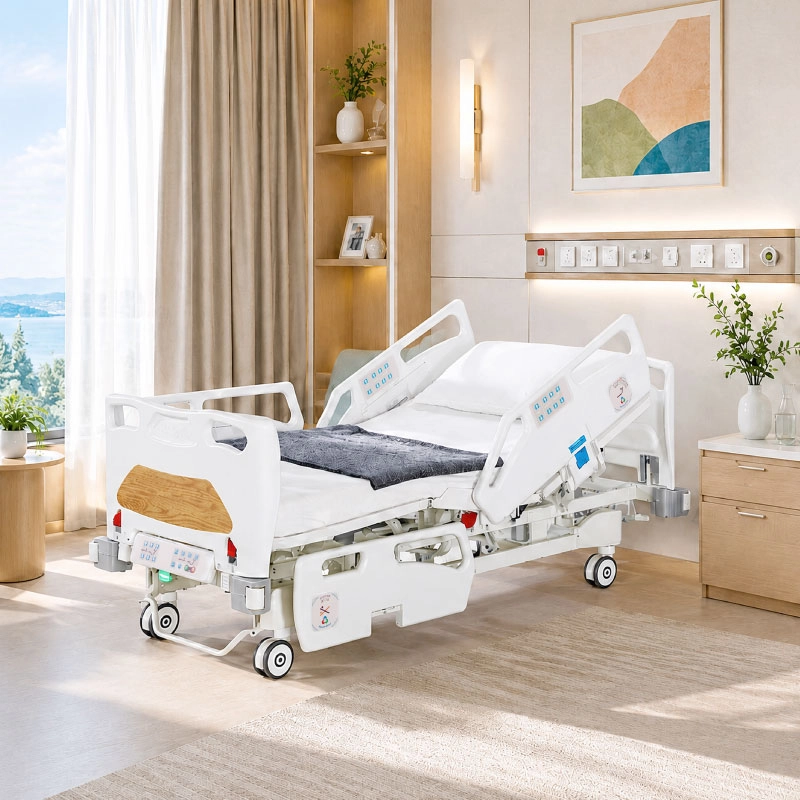
Trend 3: Infection Prevention & Washable IPX6 Engineering Standards
Hospital-Acquired Infections (HAIs) place multibillion-dollar burdens on global health systems. Future ICU bed tenders demand smooth, seamless ABS/polyethylene mattress platforms with anti-microbial additive coatings, combined with IPX6 liquid ingress protection. This enables thorough chemical disinfection and automated spray-wash protocols without damaging delicate scale load cell electronics embedded within the frame.
Trend 4: Modular Upgradability and Lifecycle Sustainability
With healthcare institutions aiming for carbon-neutral operations, medical equipment longevity is paramount. Sustainable procurement frameworks favor modular bed architectures where scale electronics, load cell sensors, control boxes, and side-rail membrane keypads can be individually serviced or upgraded without discarding the structural steel chassis.
4. Technological Innovations in Bed-Integrated Scale Design
Historical medical bed weighing scales suffered from significant operational limitations—most notably zero-point drift, susceptibility to electromagnetic interference (EMI) from surgical equipment, and calibration loss during transport. Engineering innovations over the past five years have solved these technical bottlenecks:
- Dynamic Tare Memory & Accessory Compensation: Modern scales allow nurses to add or remove heavy clinical equipment (such as IV pumps, fluid bags, or traction frames) and hit "Add/Subtract Accessory" without losing the patient's baseline initial dry weight reading.
- Multi-Axis Inclination Calibration: In older models, elevating the head-of-bed to 45 degrees altered the load cell pressure vector, creating errors of up to 1.5 kg. Advanced strain-gauge controllers now cross-reference digital inclinometer data in real time, automatically compensating for mathematical vector shifts during backrest or Trendelenburg tilting.
- Low-Power High-Precision A/D Converters: Modern 24-bit Analog-to-Digital converters allow load cell systems to operate reliably on internal backup battery power during inter-departmental transport (e.g., moving an ICU patient to a CT scan suite) without losing calibrated baseline zero.
5. Why Choose Joson-Care: Enterprise Excellence & E-E-A-T Credentials
When procuring medical equipment for critical hospital infrastructure, selecting a reliable manufacturer with documented international compliance, proven quality assurance, and decades of engineering experience is paramount. Joson-Care Enterprise Co., Ltd. stands as a benchmark of Taiwanese medical engineering rigor.

Key Enterprise Advantages of Partnering with Joson-Care:
- 25+ Years of Dedicated Biomedical Manufacturing (Since 2000): Over a quarter-century of focused expertise in designing electric hospital beds, critical care ICU beds, and emergency stretchers.
- Global Reach in 65+ Countries: Trusted by hospital groups, Ministries of Health, and medical device distributors across Europe, the Americas, the Middle East, and Asia-Pacific.
- Comprehensive Regulatory Certifications:
- ISO 13485: Medical Devices Quality Management System certification governing all design, development, and production processes.
- FDA Registration & CE Mark: Fully compliant with European Medical Device Regulation (MDR 2017/745) and United States FDA requirements.
- IEC 60601 Electrical Safety Compliance: Certified to IEC 60601-1, IEC 60601-1-2 (EMC), IEC 60601-2-38, and IEC 60601-2-52 (Medical Bed Safety Standards).
- 30 Quality Control Checks & 15 Rigorous Tests: Every single bed undergoes multi-stage structural load testing, electrical insulation testing, water ingress testing, and scale recalibration verification before leaving the facility.
- Award-Winning Engineering: Recipient of the prestigious Taiwan Excellence Award, highlighting innovative human-centered healthcare design.
- OEM & ODM Customization Capabilities: Custom motor configurations, regional voltage adaptability, tailored side-rail membrane graphics, and bespoke scale system integrations for international government tenders.
6. Frequently Asked Questions (FAQ) for Global B2B Medical Equipment Buyers
Below are authoritative, direct answers to the most common technical, regulatory, and purchasing questions asked by global hospital buyers and biomedical engineers when evaluating an ICU Bed with Weight Scale.
Joson-Care’s integrated ICU bed weight scales meet OIML Class III medical standards, achieving a high precision accuracy of ±100g (0.1 kg). Because critically ill patients cannot be moved safely to standalone floor scales, an integrated 4-point piezoresistive load cell scale provides identical clinical accuracy while protecting the patient from risk of catheter dislodgement or shear injury during transfer.
Our beds feature a one-touch "Tare Zero" function. Prior to patient placement, nurses zero out the weight of the specialized mattress, bedding, and initial accessories. If additional equipment (such as an IV infusion pump) is added later, the nurse can press the "Equipment Add/Subtract" key, allowing the system to update the accessory tare weight without disrupting the historical record of the patient's baseline body mass.
No. Joson-Care ICU scale systems incorporate dynamic digital inclinometer sensors connected to a 24-bit DSP microprocessor. When the bed frame tilts into backrest elevation, Fowler's position, or Trendelenburg angles, the microprocessor mathematically recalculates force vectors across all four corner load cells, maintaining accurate weight readings within strict tolerances regardless of bed position.
For international hospital tenders, an ICU bed with scale must comply with IEC 60601-1 (General Electrical Safety), IEC 60601-1-2 (Electromagnetic Compatibility), and specifically IEC 60601-2-52 (Particular requirements for basic safety and essential performance of medical beds). Joson-Care products possess full ISO 13485, CE Medical Device Regulation (MDR), and FDA compliance documentation.
Yes. Joson-Care offers optional digital telemetry interfaces (RS232, Wi-Fi, or Ethernet connectivity) supporting HL7 data communication standards. This allows patient weight, backrest angle, and bed-exit alarm status to sync automatically into hospital Electronic Health Records (EHR), streamlining nurse documentation workflows.
Biomedical engineering departments are recommended to perform calibration checks annually using certified standard test weights. Joson-Care provides biomedical technicians with an intuitive electronic calibration menu accessible directly through the nurse control panel, allowing fast 3-point calibration without needing specialized external programming tools.
Standard manufacturing lead time for container orders is typically 30 to 45 days upon order confirmation. Joson-Care offers a comprehensive 2-year warranty on structural frames and electrical actuator systems, backed by readily available spare parts dispatch and direct technical engineering support for global distributors.
Partner with a Certified Medical Bed Manufacturer
Contact our biomedical engineering and sales team today to request detailed technical datasheets, CAD drawings, tender compliance documentation, or factory-direct pricing for your regional market.
Send an Inquiry