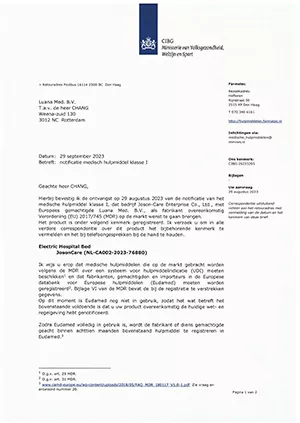
1. Executive Summary: The Evolving Role of Critical Care ICU Beds in Modern Healthcare
In high-acuity healthcare environments, a Critical Care ICU Bed is no longer a passive resting platform; it is an active clinical intervention system. Modern intensive care units demand equipment that directly impacts clinical outcomes, reduces length of stay (LOS), mitigates ventilator-associated pneumonia (VAP), prevents pressure injuries, and protects clinical staff from occupational musculoskeletal disorders.
For global hospital procurement directors and B2B medical supply chains, selecting the right ICU medical bed involves balancing rigorous regulatory frameworks (such as IEC 60601-2-52 and ISO 13485) against technical reliability, clinical versatility, and long-term financial viability. This guide provides an in-depth technical breakdown of critical care beds, offering actionable information gain for procurement officers evaluating vendor proposals globally.
Clinical Information Gain: Early Mobility & VAP Prevention
Studies in critical care medicine demonstrate that continuous lateral rotation therapy (CLRT) and automatic cardiac-chair positioning directly assist in alveolar recruitment. Utilizing advanced 5-function electric ICU beds reduces ventilator-associated complications by up to 24% while reducing manual nurse handling incidents by over 40%.
2. Anatomy and Engineering Specifications of High-Acuity ICU Beds
When drafting tender specifications for a Critical Care ICU Bed, engineering teams must evaluate structural engineering, drive systems, position articulation range, and patient safety mechanisms. Below is an anatomical breakdown of industry-standard critical care architecture.
2.1 Structural Frame & Load Capacity
High-end ICU beds utilize heavy-gauge robotically welded steel frames coated with antimicrobial silver-ion powder. The design must accommodate high Safe Working Loads (SWL) — typically 250 kg (550 lbs) or higher — ensuring structural stability during emergency procedures such as cardiac massage or aggressive mobilization.
2.2 Articulation & Clinical Positioning
Precision multi-axis articulation is non-negotiable in critical care. A compliant 5-function electric ICU bed must deliver independent, smooth, and low-noise motorized adjustments for:
- Backrest Angle Adjustment: 0° to 75° with integrated auto-regression to relieve abdominal compression.
- Knee-Rest (Thigh Section): 0° to 45° synchronization for anatomical comfort.
- Height Elevation Stroke: Range from 450 mm (low bed height for safe exit) to 850 mm (ergonomic height for clinical nursing care).
- Trendelenburg & Reverse Trendelenburg: ±16° rapid gradient shift for circulatory management and shock response.
- Auto-Chair & Cardiac Chair Positioning: Single-touch transition bringing the patient upright to facilitate lung expansion and fluid drainage.
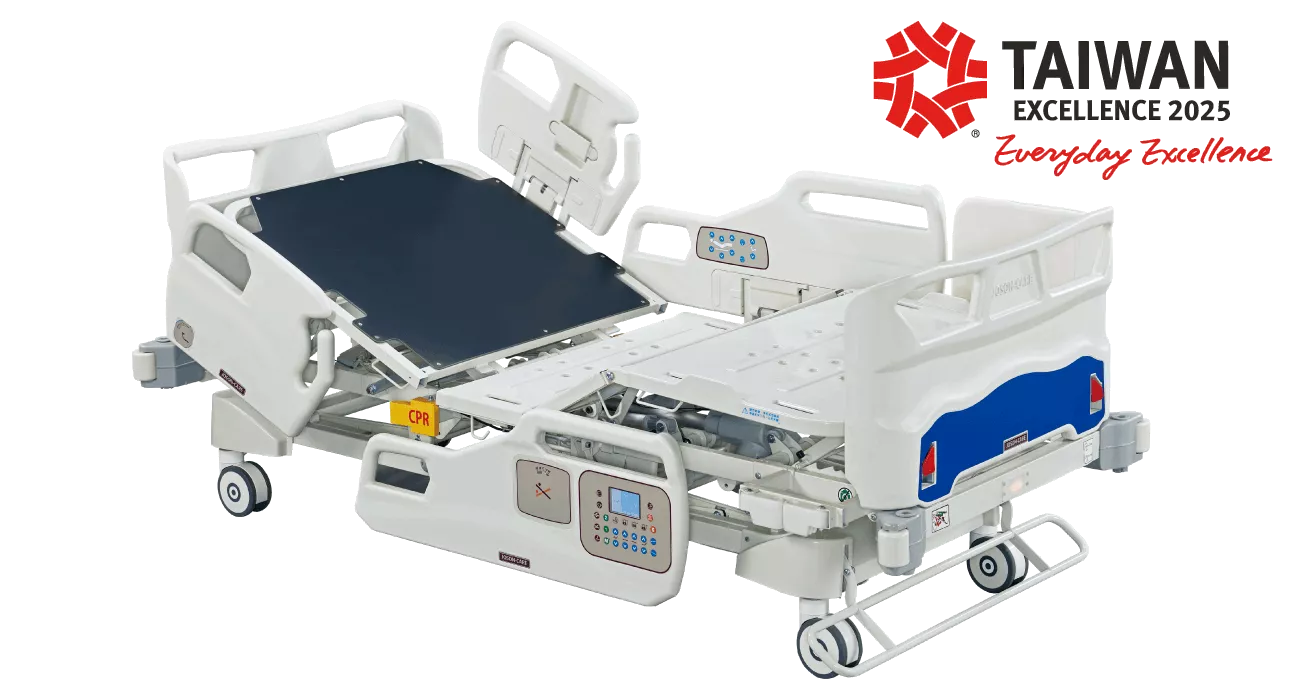
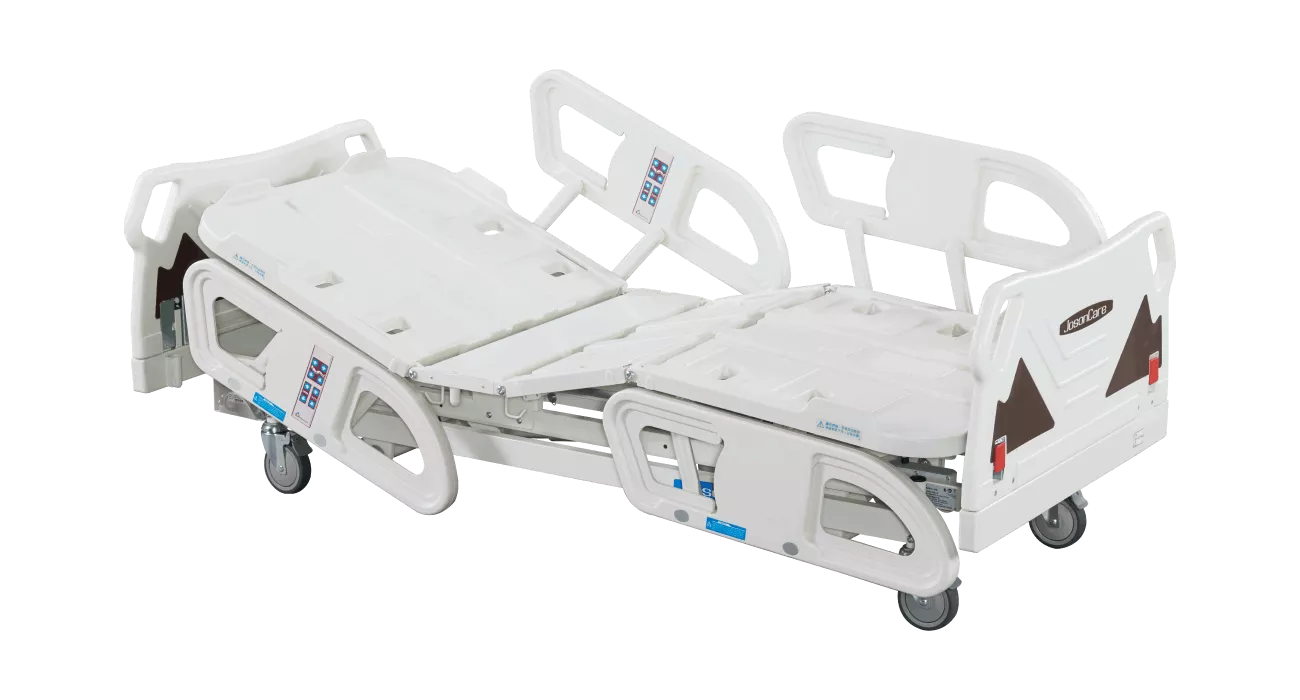
Figure 1: Joson-Care ES-19HD Critical Care ICU Bed — Winner of the 2025 Taiwan Excellence Award, featuring integrated X-Ray cassette slot and IEC 60601-2-52 structural compliance.
2.3 Entrapment Prevention & Side Rail Ergonomics
The global standard IEC 60601-2-52 mandates strict dimensional clearances across 7 distinct entrapment risk zones (headboard, side rail gaps, mattress platform transitions). Modern ICU beds implement 4-piece split ABS or PP fold-down side rails equipped with gas spring dampers, enabling quiet, smooth lowering without disturbing patients.
2.4 Radiographic & Diagnostic Compatibility
Transporting unstable ICU patients to radiology suites carries high clinical risk. Advanced critical care beds integrate full-length radiolucent backrest platforms crafted from High-Pressure Laminate (HPL) or acrylic resins, coupled with an integrated X-Ray cassette holder track. This structure allows bedside pulmonary radiography without requiring patient lifting or manual transfer.
3. Technical Specification Matrix: Critical Care ICU Bed Evaluation
To assist global procurement officers and hospital engineering teams in technical side-by-side benchmarking, the table below outlines essential technical parameters across core ICU bed configurations:
| Technical Parameter | Standard ICU Bed Specification | Advanced ICU Bed w/ Scale (ES-12DW) | Award-Winning ICU Platform (ES-19HD) |
|---|---|---|---|
| Safe Working Load (SWL) | 220 kg - 250 kg | 250 kg (550 lbs) | 250 kg (550 lbs) |
| Drive Actuators | 3 or 4 Linear Actuators | 4 Low-Voltage DC Actuators (LINAK) | 4 Heavy-Duty Silent Actuators |
| Safety Certification | IEC 60601-1, ISO 13485 | IEC 60601-1, IEC 60601-2-52, CE MDR | IEC 60601-1, 60601-2-52, FDA, CE |
| Weight Monitoring | External Scale (Optional) | Integrated 4-Point Load Cell System (±0.1 kg) | Modular Scale Unit Available |
| X-Ray Radiography Slot | Not Standard | Optional HPL Backrest Slot | Integrated Full-Length Radiolucent HPL Deck |
| Emergency Release | Manual CPR Lever | Dual Manual & Electric Quick CPR | Dual Manual & Electric Quick CPR |
| Control Interface | Hand Remote + Nurse Panel | Nurse Control Terminal + Side Rail Controls | Dual-Sided Inner/Outer Rail Controls + Nurse Terminal |
| Caster & Braking | 125mm Central Locking | 150mm Dust-Proof Central Brake Casters | 150mm Central Locking System w/ Steering Caster |
4. Recommended Critical Care & Hospital Bed Portfolio
Joson-Care manufactures an extensive catalog of medical beds designed for varying acuity levels, from critical intensive care units to high-volume emergency trauma rooms.
4.1 ES-19HD ICU Medical Bed (Taiwan Excellence Award Winner 2025)
The ES-19HD represents the pinnacle of critical care engineering. Built to meet stringent European and US standards, it combines robust structural integrity with intuitive clinical controls.
- Integrated Radiographic System: Slide-in X-Ray cassette slot behind the radiolucent HPL backrest allows seamless bed-side diagnostic imaging.
- 5-Function Motorized Articulation: Precise control over Backrest, Knee-rest, Height, Trendelenburg, and Reverse Trendelenburg positioning.
- Advanced Fall Prevention: Ergonomically shaped 4-piece split side rails featuring integrated angle indicators for precise Trendelenburg monitoring.
- Emergency CPR Readiness: Bilateral manual quick-release CPR handles positioned at the head section for immediate cardiac resuscitation.
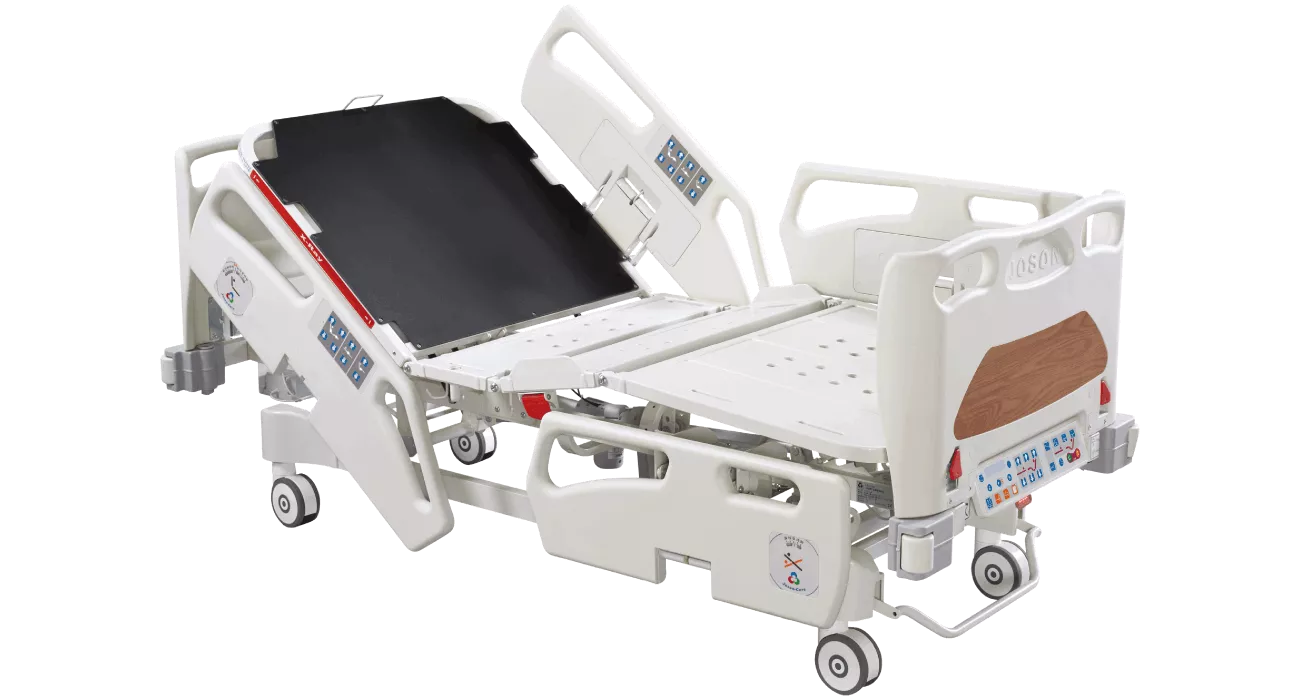
Figure 2: Joson-Care ES-12DW ICU Bed — Equipped with 4-point electronic load cell sensors and nurse control console for real-time patient weight tracking.
4.2 ES-12DW ICU Bed with Integrated Weight Scale
Accurate fluid dynamic monitoring is paramount for septic, renal, or post-cardiac surgical patients in the ICU. The ES-12DW integrates a high-precision 4-point electronic load-cell weighing system directly into the bed frame chassis.
- Continuous Weight Tracking: High-resolution digital display panel located on the nurse footboard control station.
- Tare & Patient Zero Function: Allows addition or removal of equipment (intravenous lines, drainage bags, extra blankets) without distorting patient baseline weight data.
- OIML Compliance Ready: Designed to satisfy international metrological accuracy guidelines in clinical environments.
4.3 Auxiliary Critical Care Assets: JE-200 & ES-05HDS
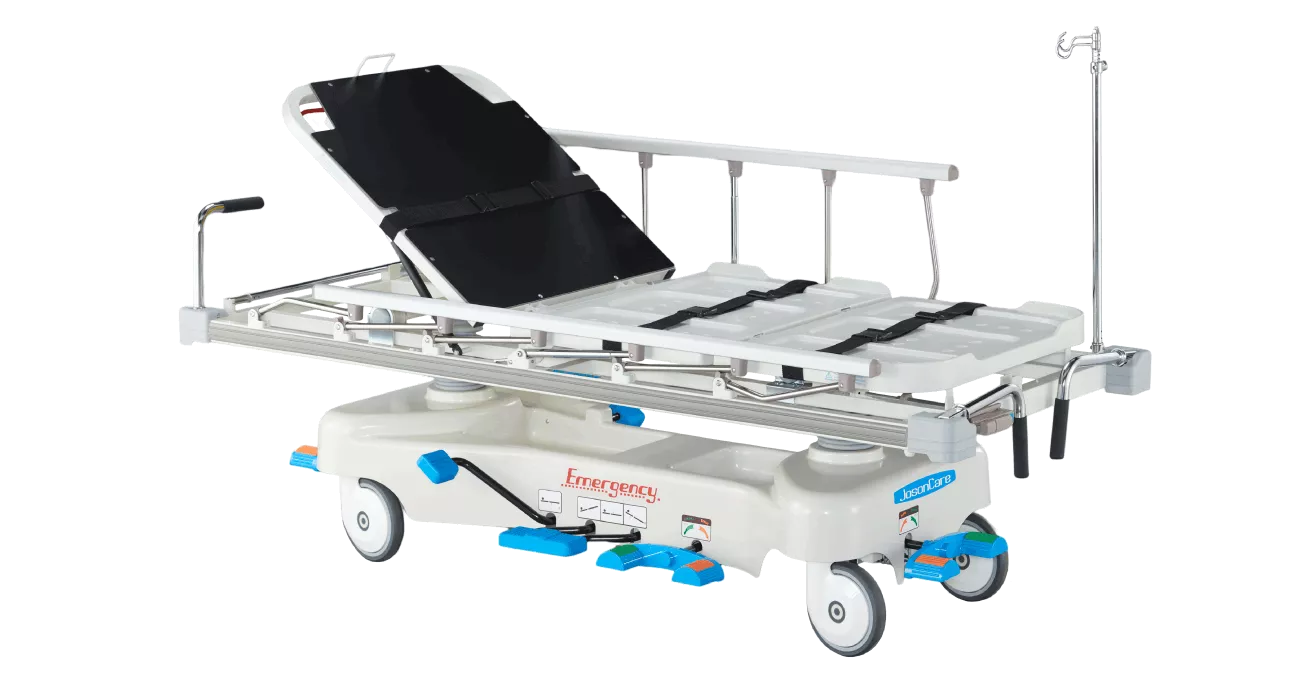
JE-200 Hydraulic Emergency Stretcher
Engineered for fast patient transport in emergency wards. Features a retractable 5th wheel steering mechanism for effortless maneuvering through tight hospital corridors, hydraulic height control, and optional X-Ray translucency.
ES-05HDS Electric Hospital Bed
Compact 100cm-width electric hospital bed designed for high-density ward layouts. Complies fully with IEC 60601-2-52, offering dependable 4-piece side rails and dual-sided cord-free control systems.
5. Future Procurement Trends & Technological Innovations in Critical Care Beds (2025–2035)
Hospital purchasing committees must look beyond immediate acquisition costs and evaluate how medical beds will integrate into future digital health ecosystems. Key global market trends include:
5.1 Integration with Hospital Information Systems (HIS) & Telemetry
Next-generation ICU beds are evolving into data-generating IoT nodes. Through ethernet or secure Wi-Fi interfaces, bed parameters — including patient weight, tilt angles, bed exit alerts, and side rail positions — stream directly into the Electronic Health Record (EHR) and central nursing stations, eliminating manual logging errors.
5.2 Predictive Fall-Prevention & Patient Out-of-Bed Detection
Accidental patient falls in ICUs lead to severe trauma, prolonged stays, and potential legal liabilities. Advanced bed platforms now incorporate weight-distribution algorithm sensors that alert nursing personnel immediately when a patient attempts to exit the bed or shifts dangerously close to the side rail edge.
5.3 Antimicrobial Surface Engineering & Hygiene Standards
Nosocomial infections (HAIs) pose severe threats in critical care settings. Modern manufacturing techniques prioritize seamless platform decks, removable ABS mattress panels that withstand high-pressure steam decontamination, and powder coatings infused with silver micro-particles to inhibit bacterial growth.
Request Technical Tender Specifications & Factory-Direct Pricing
Partner directly with Joson-Care — Taiwan's premier ISO 13485 & FDA-certified medical bed manufacturer. Elevate your hospital tender proposals with our award-winning ICU bed engineering.
Get a Quote6. Total Cost of Ownership (TCO) & Vendor Risk Mitigation for Buyers
When procuring hospital beds at scale, capital expenditure (CapEx) accounts for only a fraction of total lifecycle expenses. Operating expenditure (OpEx), spare parts availability, motor failure rates, and compliance risks constitute the true total cost of ownership.
6.1 Component Quality & Actuator Reliability
Linear actuators represent the heart of an electric medical bed. Subpar motors suffer high failure rates under continuous clinical stress. Quality manufacturers utilize linear motors from industry-proven brands (e.g., LINAK) boasting high IP ratings (IPX4 to IPX6 water resistance), thermal overload protection, and high duty-cycle resilience.
6.2 Regulatory Compliance Audit Checklist
Before issuing purchase orders, hospital procurement teams must verify vendor certification documentation:
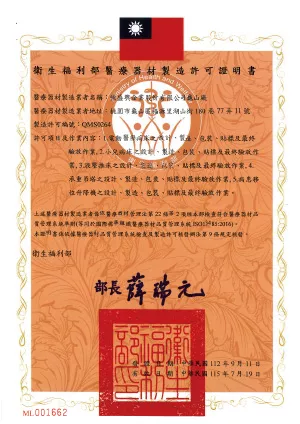
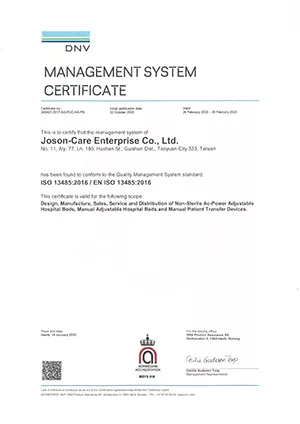
- ISO 13485:2016 Certification: Verifies that the manufacturing facility operates under a comprehensive quality management system dedicated specifically to medical devices.
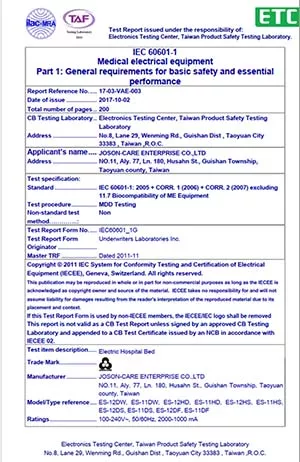
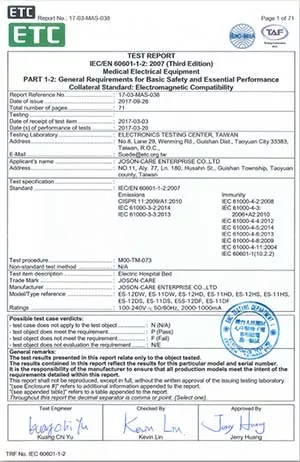
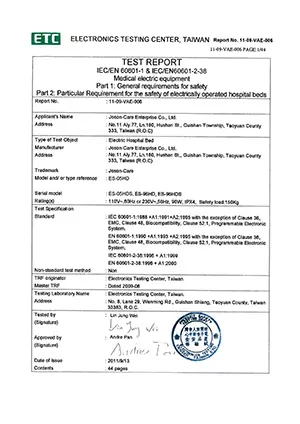
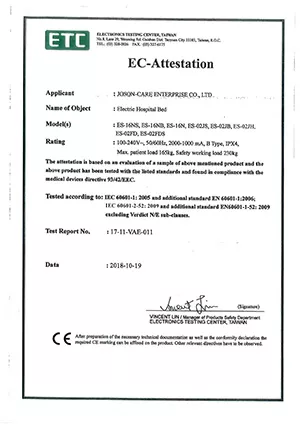
- IEC 60601-1 & IEC 60601-2-52 Test Reports: Ensures electrical safety, electromagnetic compatibility (EMC), and mechanical anti-entrapment integrity.
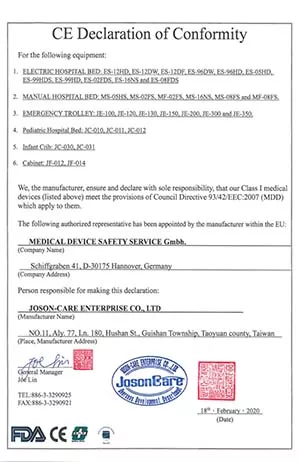
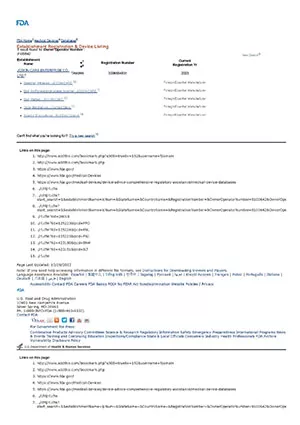
- FDA 510(k) / Registration & CE MDR Compliance: Mandatory proof for market entry into North America and the European Economic Area.
7. Frequently Asked Questions (FAQ) for Critical Care ICU Bed Procurement
What mandatory safety standards must a Critical Care ICU Bed meet for international hospital tenders?
A compliant critical care bed must strictly conform to IEC 60601-1 (General requirements for basic safety and essential performance) and IEC 60601-2-52 (Particular requirements for the basic safety and essential performance of medical beds). Additionally, manufacturing plants must hold ISO 13485 certification. For market access in North America, FDA registration/listing is required, while the EU requires CE compliance under the Medical Device Regulation (MDR 2017/745).
How does an integrated X-Ray radiography cassette holder work on an ICU bed?
The bed features a dedicated radiolucent backrest deck constructed from High-Pressure Laminate (HPL) or specialized acrylic materials that do not block X-Ray beams. A cassette tray is positioned beneath the deck. Radiographers can insert the imaging cassette directly into the backrest tray from either the head or side end of the bed, performing chest X-rays without moving or lifting the critically ill patient.
What accuracy level is required for ICU bed weighing scale systems?
For critical fluid management, hemodialysis, and precise drug dosage in intensive care, an integrated scale must offer a resolution of ±0.1 kg (100g) or higher. The system should feature a "Tare" or "Zero" function that allows clinical staff to calibrate out the weight of additional medical equipment, mattresses, or tubing attached to the frame.
What is the difference between an Auto-Chair function and standard head-rest elevation?
Standard head elevation only tilts the upper backrest plate, which can cause patient slippage, pelvic pressure, and abdominal shear stress. An Auto-Chair (or Cardiac Chair) position automatically coordinates the backrest, thigh rest, knee tilt, and overall bed pitch simultaneously, bringing the patient into a comfortable, natural seated position. This optimizes pulmonary ventilation and reduces nurse strain during patient mobilization.
How does Joson-Care ensure product durability during long-term continuous hospital use?
Joson-Care subjects all medical bed models to over 30 distinct quality inspection checkpoints and 15 mechanical stress tests, including dynamic load cycling, side-rail impact testing, emergency brake stability, and moisture ingress protection tests. Our frames are built from high-tensile steel treated with electro-deposition primer and silver-ion powder coating for long-lasting corrosion protection.
What customization and OEM/ODM services does Joson-Care offer to medical equipment distributors?
Joson-Care provides global partners with tailored customization options, including specific voltage/plug configurations, custom side rail branding, tailored nurse control panel languages, customized caster locking systems, and color-coded bumper wheels to align with regional tender requirements.
How can I obtain factory-direct quotes and e-catalogs for large-scale healthcare procurement?
You can request immediate price estimates, commercial catalogs, and technical tender documentation directly by clicking the Get a Quote button on this page, or by submitting an inquiry through our direct contact portal.