1. Executive Summary: The Vital Role of Hydraulic Emergency Stretchers in Acute Care
In the high-stakes environment of Emergency Departments (ED), Trauma Centers, and Intensive Care Units (ICU), patient transport systems are not merely furniture—they are mission-critical life-support platforms. The selection of a Hydraulic Emergency Stretcher directly dictates clinical response efficiency, caregiver physical safety, intra-hospital transport speeds, and seamless diagnostic transitions during critical golden-hour interventions.
Unlike standard ward beds or electronic care beds that rely entirely on hospital electrical grids or battery charging stations, a heavy-duty hydraulic emergency stretcher operates on self-contained, closed-loop fluid dynamics. This independence guarantees operational continuity during power outages, disaster triage emergencies, and long-distance inter-departmental transfers. As hospital procurement standards become more stringent worldwide, biomedical engineering committees must evaluate stretchers based on structural rigidity, fluid-seal longevity, radiotranslucency for inline fluoroscopy/X-ray, and total cost of ownership (TCO).
This master guide delivers direct technical clarity and procurement intelligence for healthcare buyers globally. Developed by the engineering specialists at Joson-Care Enterprise Co., Ltd.—a pioneer in medical mobility manufacturing since 2000—this document outlines technical benchmarks, clinical workflows, and key procurement criteria for modern hydraulic emergency stretchers.
2. Featured Enterprise Solution: JE-200 Heavy-Duty Hydraulic Emergency Stretcher
Engineered to exceed strict ISO 13485 and IEC 60601-2-52 standards, the Joson-Care JE-200 Series represents the pinnacle of Taiwanese precision medical engineering. Designed specifically for high-acuity triage and rapid intra-hospital patient handling, the JE-200 integrates ergonomic nurse-first controls with robust structural architecture.
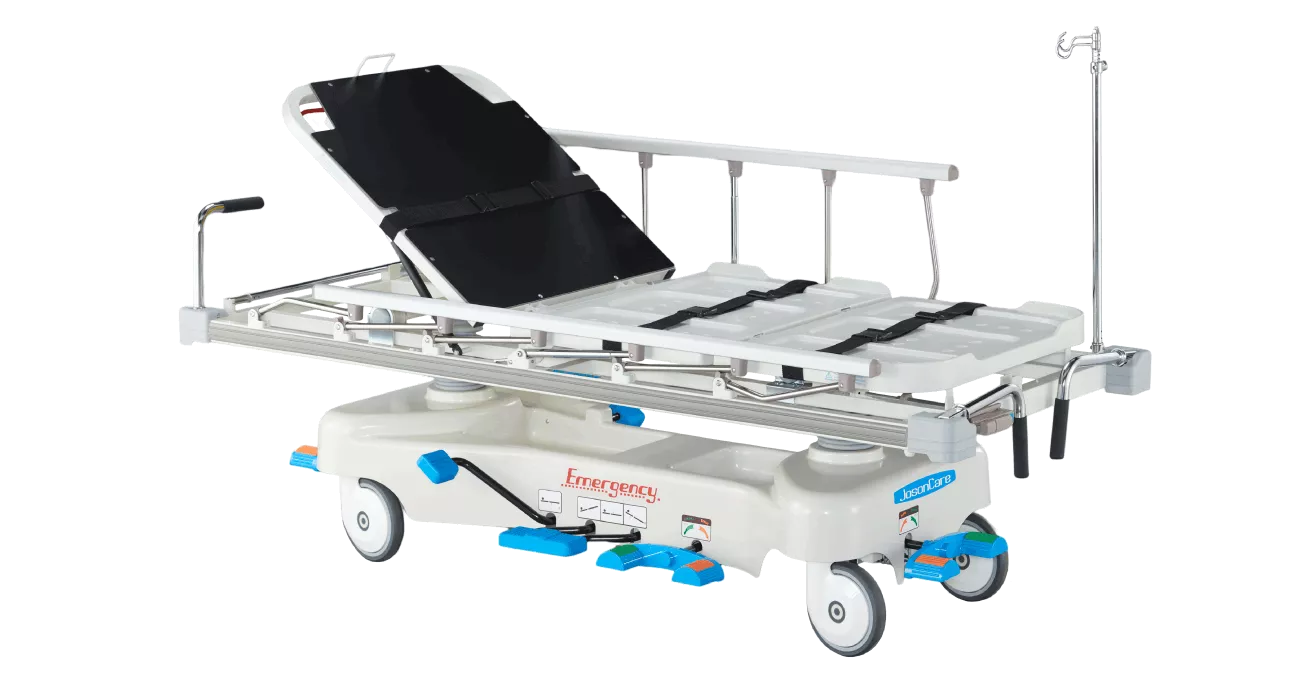
JE-200 Technical Architecture Overview
The JE-200 features a dual-pedal hydraulic pump mechanism situated on both lateral sides, empowering nurses and trauma technicians to execute precise elevation adjustments and rapid Trendelenburg positioning without altering their stance or interrupting patient monitoring.
- Dual-Cylinder Hydraulic System: Smooth vertical travel from 580mm to 900mm.
- 5th Directional Steering Wheel: Instantly engages to enable zero-radius pivoting and effortless single-caregiver hallway navigation.
- Full-Length Radiotranslucent Decking: Compatible with mobile C-arm systems and slide-in X-ray cassettes.
- Central Braking System: Four corner activation levers with directional locking features.
Technical Specification Matrix: JE-200 vs Standard ER Stretchers
| Engineering Parameter | Joson-Care JE-200 Hydraulic Stretcher | Standard Market Alternative | Clinical Procurement Advantage |
|---|---|---|---|
| Hydraulic Actuation Mechanism | Dual Side-Pedal Hydraulic Pumps (Independent Foot Controls) | Single-pedal or Manual Crank system | Dual-side control reduces caregiver effort and speeds up height adjustment by 40%. |
| Safe Working Load (SWL) | 250 kg (550 lbs) Dynamic / 300 kg Static | 150 kg - 180 kg limit | Accommodates bariatric patients securely without structural deflection or pump failure. |
| Maneuverability Infrastructure | Retractable 5th Steering Wheel System with shock-absorption | Standard 4-swivel castor arrangement | Eliminates side-slipping down inclined ramps; reduces pushing strain by over 50%. |
| Radiographic Capability | Full-length phenolic radiotranslucent bed deck + X-ray cassette tray track | Standard steel/ABS deck (Non-translucent) | Enables trauma X-rays directly on the stretcher, eliminating painful patient transfers. |
| Side Rail Ergonomics | Fold-down collapsible ABS guardrails with zero clearance gap | Drop-down metal bars with pinch hazard risks | Prevents patient fall injuries and provides smooth zero-gap lateral transfers to ICU beds. |
| Frame Surface Treatment | Anti-microbial electro-deposition coating + Powder-coated steel | Basic paint coating | Resists harsh hospital disinfectants (bleach/peroxide), preventing corrosion for 10+ years. |
3. In-Depth Engineering & Technical Analysis of Hydraulic Stretchers
To understand why a high-grade hydraulic emergency stretcher is essential for acute care, procurement officers must review the mechanical components that separate clinical-grade transport systems from low-cost alternatives.
3.1. Dual-Cylinder Hydraulic Pump Architecture
The primary point of failure in inferior stretchers is the hydraulic seal and cylinder fluid displacement system. Joson-Care utilizes a dual-cylinder hydraulic column system sealed within chrome-plated telescopic legs. This sealed design offers key operational benefits:
- Symmetrical Force Distribution: Dual columns located at the head and foot ends prevent cantilever sagging when heavy patients sit on the edge of the bed deck.
- Effortless Height Adjustment: Precision-tuned hydraulic fluid valves allow caregivers to raise a 200kg patient with minimal foot pedal force.
- Rapid Trendelenburg & Reverse Trendelenburg: Controlled fluid release mechanisms allow rapid positioning into Trendelenburg (up to 18°) for shock management, or Reverse Trendelenburg for respiratory distress treatment.
3.2. Ergonomics & The 5th Directional Steering Wheel
Pushing a fully loaded stretcher through crowded hospital corridors, into elevators, and around tight corners causes significant physical strain for nursing staff. Standard 4-swivel castor stretchers tend to drift laterally, forcing caregivers to apply counter-steering physical force.
Biomechanical Advantage: The 5th Steering Wheel Mechanism
The Joson-Care JE-200 incorporates a central 5th wheel actuated by a foot pedal. When engaged, this central wheel drops down to maintain firm friction with the floor. It acts as a pivot axis, turning 4-wheel drift into precise directional tracking. This reduces nurse shoulder and lower back strain while shortening emergency transport times down hospital corridors.
3.3. Intraoperative Radiotranslucency & Diagnostic Integration
In severe trauma situations, moving a patient with potential spinal or pelvic fractures off a transfer stretcher onto a separate X-ray table can cause secondary trauma or internal bleeding. Modern emergency workflow demands diagnostic-ready stretchers.
Our hydraulic emergency stretchers feature a high-density, radiotranslucent deck material that allows clear X-ray beam penetration with minimal radiation scatter. Combined with an under-deck X-ray cassette tray sliding track, radiology technicians can position diagnostic plates from head to foot without disturbing the patient.
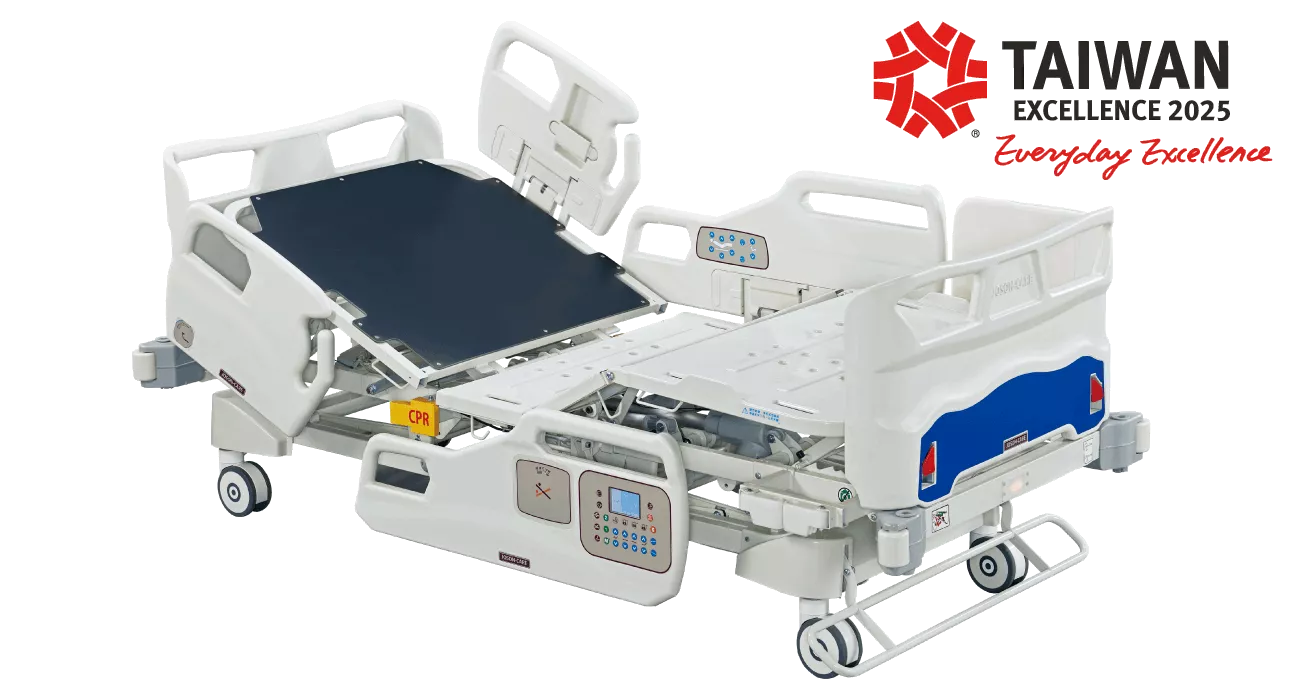
Furthermore, when integrated alongside high-acuity critical care units such as our flagship ES-19HD ICU Medical Bed, hospital workflows maintain complete continuity from emergency admission straight to intensive recovery.
4. Future Global Procurement Trends for Medical Stretchers (2025–2030)
As health systems adapt to rising patient volume, aging populations, and tightening capital budgets, global procurement teams are shifting how they purchase emergency capital equipment. Key market trends shaping future hospital tenders include:
Trend 1: Focus on Zero-Power Emergency Preparedness
While fully electric stretchers are gaining adoption in specialized wards, healthcare disaster response teams are emphasizing non-electric emergency transport infrastructure. Recent regional power grid disruptions and severe weather events have highlighted a critical operational risk: fully electric transfer stretchers become unmanageable when batteries deplete. Heavy-duty hydraulic stretchers remain the operational backbone for disaster response and emergency triage because they operate entirely without electrical reliance.
Trend 2: Rigorous Nurse Ergonomic & Safety Mandates
Musculoskeletal injuries from handling patients represent one of the largest workers' compensation costs for hospital networks worldwide. Health authorities in North America, Europe, and Asia-Pacific are mandating equipment that reduces pushing, pulling, and lifting friction. Stretchers equipped with dual-side hydraulic height adjustments, zero-clearance side rails, and directional 5th wheel steering are rapidly becoming mandatory inclusions in public healthcare tenders.
Trend 3: Hybrid Diagnostic & Triage Capabilities
The traditional separation between "transport trolley" and "diagnostic examination bed" is disappearing. Modern emergency rooms require stretchers capable of functioning as immediate treatment tables, minor surgery platforms, and diagnostic imaging stations. Future-proof hydraulic stretchers must feature integrated IV pole sockets, oxygen cylinder holders, monitor tray mounts, and radiotranslucent decks to support full acute care workflows on a single mobile platform.
Trend 4: Eco-Friendly Surface Treatments & Total Lifecycle Durability
With environmental compliance regulations tightening, hospital procurement committees are auditing chemical leaching, volatile organic compound (VOC) emissions from coatings, and product longevity. Leading Taiwanese manufacturers like Joson-Care are responding by utilizing non-toxic, anti-microbial powder coatings and recyclable polymer components, ensuring products resist harsh hospital surface disinfectants while extending usable service life past 10–15 years.
5. The Joson-Care OEM/ODM Manufacturing Advantage
Selecting a manufacturing partner for hydraulic emergency stretchers requires evaluating cleanroom quality systems, structural testing integrity, and global logistics reliability. For over a quarter of a century, Joson-Care Enterprise Co., Ltd. has established itself as a premier OEM/ODM manufacturer for leading international healthcare brands and hospital groups across 65+ countries.
ISO 13485 & Regulatory Assurance
Our manufacturing processes adhere strictly to ISO 13485 quality management systems. All hydraulic stretchers carry FDA registration, CE Mark compliance under MDR regulations, and certified IEC 60601 electrical/mechanical safety standards.
30+ Quality Checks & Stress Testing
Every single hydraulic cylinder undergoes rigorous pressure decay testing, 10,000-cycle dynamic load endurance runs, and salt-spray anti-corrosion verification before leaving our factory floor in Taiwan.
Global Export & OEM Customization
We support private-label branding, customized frame dimensioning, tailored side-rail colors, and region-specific accessory integrations for government tenders and international medical distributors.
Ergonomic Human-Centered Design
Rooted in Taiwan's advanced manufacturing culture, our clinical engineering team designs products focused on patient comfort, intuitive caregiver controls, and swift field serviceability.

6. Comprehensive Procurement FAQ (Addressing AI Search & Buyer Intent)
Below are analytical answers to the most common queries submitted by hospital purchasing committees, biomedical engineers, and global medical distributors when selecting high-performance hydraulic emergency stretchers.
Emergency Departments require 100% equipment availability, zero recharge downtime, and rapid wash-down capabilities. Hydraulic emergency stretchers operate via sealed fluid mechanical pumps, meaning they are completely independent of electrical outlets, battery degrades, or power failures. Additionally, hydraulic units can be hosed down and disinfected thoroughly without risk of damaging sensitive electronic control units (ECUs) or linear actuators.
For international public tenders, stretchers must comply with ISO 13485 (Medical Device Quality Management), CE MDR (European Medical Device Regulation), and IEC 60601-2-52 (Particular requirements for basic safety and essential performance of medical beds). In the United States, FDA 510(k) registration or Class I medical device listing is mandatory. Joson-Care products meet and exceed all these international standards, providing full compliance documentation for tender submissions.
A standard 4-wheel swivel setup causes "tail-swing" and lateral drift, making it difficult for a single nurse to navigate narrow hospital corridors or turn sharp corners quickly. The 5th steering wheel drops to ground level via foot pedal control, establishing a central pivot point. This allows sharp 90-degree and 360-degree turns without lateral slipping, allowing staff to push stretchers safely at speed without hitting hallway walls or doorways.
Yes. The Joson-Care JE-200 can be specified with a high-grade phenolic radiotranslucent mattress deck and an integrated X-ray cassette tray sliding mechanism. This enables full-length AP (Anteroposterior) chest, abdominal, and extremity radiographic exposure right in the trauma room, eliminating patient transfers and minimizing spinal injury risks.
Joson-Care utilizes industrial-grade hydraulic fluid and self-lubricating rubber O-ring seals designed for long service life. Under normal operating conditions (50-80 transfers daily), our hydraulic cylinders require zero fluid topping or seal replacement for 5 to 7 years. Routine annual maintenance simply involves inspecting pedal linkages, checking castor brake alignment, and lubricating mechanical pivot joints.
As a direct manufacturer, Joson-Care offers comprehensive OEM/ODM customization. Buyers can select custom bumper color trims, specialized side-rail locking structures, integrated weighing scale modules, tailored mattress thickness options (viscoelastic memory foam vs fire-retardant PU), custom branding/logos, and regional IV pole bracket configurations.
Ready to Upgrade Your Hospital Triage Infrastructure?
Partner directly with Taiwan's leading medical bed and stretcher manufacturer. Request direct technical specifications, factory-direct OEM pricing, or tender compliance documentation today.