Choosing Orthopaedic Implants in 2026 means weighing clinical needs, product evidence, and dependable supply. For global buyers, a polished catalogue is only a starting point. The real questions emerge in the details: implant materials, design options, instrument compatibility, and clear product documentation. A knee system may look straightforward on paper, yet sizing and surgical workflow can shape its practical value.
This guide examines major implant categories, including hip and knee replacements, trauma fixation devices, spinal systems, and selected dental applications. It considers how materials such as titanium alloys, stainless steel, and polyethylene serve different design purposes. These examples are not recommendations for individual patients. Suitability depends on clinical assessment, the intended procedure, and the professional judgment of qualified healthcare teams.
Evidence matters. Buyers should review technical specifications, available clinical data, quality controls, and manufacturer support rather than relying on broad performance claims. Requirements also differ across markets, so regulatory status and documentation need verification in each destination country. That work can be tedious. It is still important.
No single implant is best for every hospital, surgeon, or patient. Even familiar products can present trade-offs in cost, availability, and training needs. Some comparisons remain difficult because public evidence may vary in scope and quality. This overview offers a practical starting point, not a final verdict, for making more informed purchasing decisions in a changing global market.
Orthopaedic Implants: Definition and Main Categories
Orthopaedic implants are medical devices used to support, stabilize, or replace structures in the musculoskeletal system. Surgeons may place them inside the body or attach them to bone. They can help maintain alignment after an injury or support a joint affected by disease. They do not heal tissue by themselves. Outcomes also depend on surgical planning, patient health, and follow-up care.
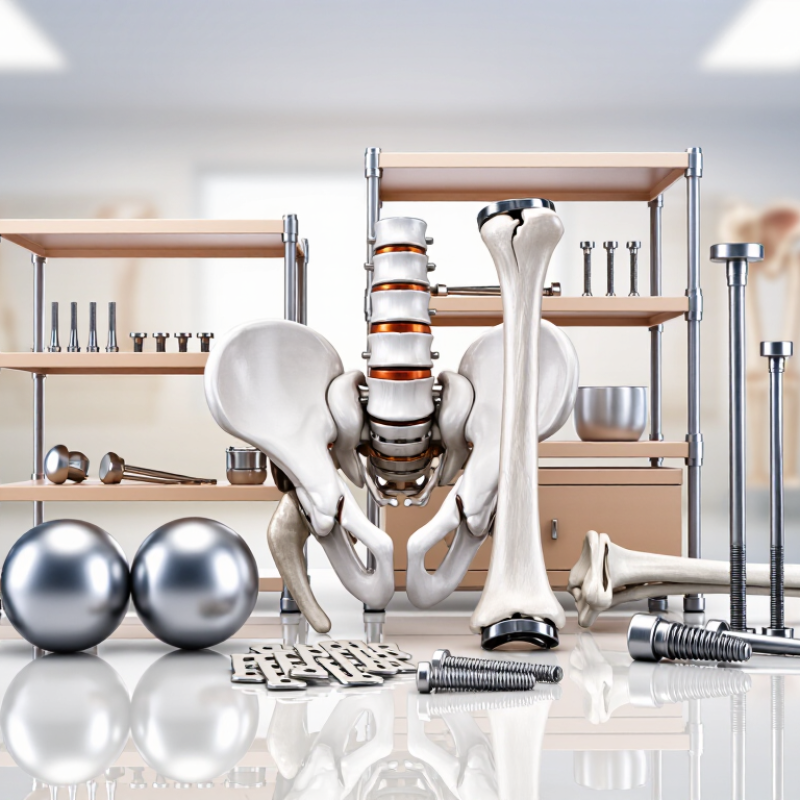
Common categories include fracture-fixation devices, joint replacements, spinal implants, and small devices for specific bones or soft tissues. Plates and screws hold bone fragments in position; rods and wires can provide additional support. Hip and knee replacements substitute damaged joint surfaces with engineered components. Spinal implants may stabilize selected segments. Materials often include titanium alloys, stainless steel, or medical-grade polymers, chosen for properties such as strength and compatibility. Details matter.
The categories can overlap. A device’s name alone does not explain its intended use, dimensions, or surgical requirements. Buyers should review technical specifications, material information, sterilization details, and evidence supporting the stated use. They should also confirm that documentation and product registration meet requirements in the destination market. A tidy comparison table may miss practical differences, such as instrument compatibility or available sizes. That deserves a closer look. Clinicians, not catalog descriptions, determine whether an implant suits an individual patient.
| Implant Category | Definition and Common Examples | Typical Clinical Use | Common Materials | Key Buyer Considerations |
|---|---|---|---|---|
| Joint replacement implants | Components that replace or resurface a damaged joint, including hip, knee, shoulder, and partial-joint systems. | Advanced joint disease, certain fractures, and joint damage that has not responded adequately to non-surgical treatment. | Titanium alloys, cobalt-chromium alloys, stainless steel in selected components, ceramic, and ultra-high-molecular-weight polyethylene (UHMWPE). | Confirm the intended joint and component compatibility; review material specifications, sizing range, fixation options, sterilization status, and applicable regulatory documentation. |
| Trauma fixation implants | Devices used to stabilize fractures, such as plates, screws, intramedullary nails, wires, and pins. | Fracture fixation and stabilization of selected bone injuries while healing occurs. | Titanium alloys and stainless steel are commonly used; specific material depends on device design and intended application. | Assess the range of fracture patterns and anatomical sizes covered, instrument requirements, implant compatibility, packaging, and traceability. |
| Spinal implants | Devices used in spinal procedures, including interbody cages, pedicle screw-and-rod systems, plates, and selected motion-preserving devices. | Stabilization, alignment, or support of the spine in appropriately selected surgical procedures. | Titanium alloys, commercially pure titanium, cobalt-chromium alloys, and polyether ether ketone (PEEK), depending on device type. | Check anatomical indication, system compatibility, imaging and material information, instrument sets, and the evidence and regulatory status relevant to the target market. |
| Sports medicine and soft-tissue fixation implants | Anchors, interference screws, and related devices used to secure soft tissue to bone or support ligament and tendon procedures. | Selected ligament, tendon, and soft-tissue repair or reconstruction procedures. | Titanium alloys, bioabsorbable polymers, and high-strength polymer materials; composition varies by device. | Review intended tissue and procedure, fixation method, material and absorption characteristics where applicable, delivery instruments, and compatibility with the surgical technique. |
| External fixation systems | Frames and connecting components positioned outside the body, typically attached to bone with pins or wires. | Temporary or definitive stabilization of selected fractures, deformities, and complex bone conditions. | Metal alloys are commonly used for frame components and pins; materials vary by system design. | Consider modularity, adjustability, pin and wire options, ease of assembly, cleaning and reprocessing instructions, and availability of compatible components. |
| Bone fixation screws and specialty devices | Standalone or procedure-specific fixation devices, including selected cannulated screws, compression screws, and bone staples. | Fixation of selected fractures, osteotomies, or bone fragments according to the device’s intended use. | Titanium alloys, stainless steel, and—in some applications—bioabsorbable polymers. | Confirm dimensions, thread and drive design, required instruments, material details, and suitability for the intended anatomy and procedure. |
| Definition: Orthopaedic implants are medical devices placed in or on the body to support, stabilize, replace, or help repair bones, joints, or related structures. Categories and materials shown are general examples, not a product ranking or a substitute for device-specific labeling, clinical judgment, or local regulatory requirements. | ||||
FAQS
They are medical devices placed inside the body or attached to bone. They support, stabilize, or replace parts of the musculoskeletal system.
No. They can help maintain alignment or support a joint, but they do not heal tissue. Surgical planning and follow-up matter too.
Common types include fracture-fixation devices, joint replacements, spinal implants, and devices for specific bones or soft tissues. The categories can overlap.
Plates and screws hold bone fragments in position. Rods and wires can provide added support. The right design depends on the procedure.
Implants may use titanium alloys, stainless steel, or medical-grade polymers. Material choice relates to strength and compatibility. Details matter.
Review technical specifications, design drawings, material information, and evidence supporting the intended use. Check dimensions across production batches. Small differences can affect fit.
Check sterilization information, packaging seals, shelf life, labels, and lot numbers. Ask how complaints and quality issues are investigated. Keep records.
Not by itself. Suitability depends on the procedure, patient needs, clinical setting, and compatibility with instruments. Price is only one factor.
Review the evidence and note limits, such as small study sizes or short follow-up. Some uncertainty remains. Discuss decisions with qualified clinicians and procurement specialists.
Conclusion
Orthopaedic Implants are medical devices used to support, replace, or stabilize bones and joints. Major categories include joint replacements, fracture-fixation devices, spinal implants, and bone-supporting components. They serve a wide range of clinical needs, from treating fractures and correcting deformities to restoring mobility after joint damage. In 2026, implant selection may involve considering materials such as titanium alloys, stainless steel, ceramics, and medical-grade polymers, alongside design features intended to support strength, fit, and function.
For global buyers, evaluating an implant means looking beyond its specifications. Product quality, compatibility with clinical needs, available evidence, manufacturing consistency, and suitability for local care settings all matter. Buyers should also assess applicable regulatory documentation, supply reliability, traceability, delivery timelines, and after-sales support in their intended markets. A careful procurement process helps healthcare providers compare options transparently and make decisions that align with patient needs, clinical practice, and local requirements.
