Expert perspectives on clinical trends, medical device standards, patient safety, and home care solutions.
Stay informed on ISO 13485 compliance, IEC standards, ergonomic design, and medical equipment maintenance.
Choosing the right Space-Saving Electric Hospital Bed requires more than comparing prices or motor counts. In 2026, hospitals, home-care providers, and assisted-living facilities face tighter rooms, higher care demands, and stricter purchasing expectations. A compact bed must fit through doorways, leave room for caregivers, and support safe patient transfers. Small details matter. Measure the room, elevator, hallway, and storage area before contacting suppliers.
A dependable model should offer smooth height adjustment, reliable back and leg elevation, secure casters, and an accessible emergency release. Check its maximum patient weight, mattress dimensions, side-rail design, and battery backup. Ask for service records, warranty coverage, replacement-part availability, and documented testing. Certifications can support trust, but they should never replace practical verification. Speak with nurses, therapists, maintenance staff, and experienced caregivers. Their daily observations often reveal problems that brochures hide.
No bed is perfect. A narrow frame may improve circulation but reduce sleeping comfort. A lighter design may move easily but feel less stable on uneven flooring. Electric controls can reduce lifting injuries, yet they require routine inspection and clear user training. Some advertised features may add cost without improving care. This guide examines those trade-offs with a practical buyer’s perspective. It also considers cleaning access, noise levels, power failure performance, and long-term ownership costs. Specifications can change between suppliers, so confirm every critical detail in writing. The safest choice is not always the most advanced one; it is the bed that matches the patient, room, staff, and care plan.
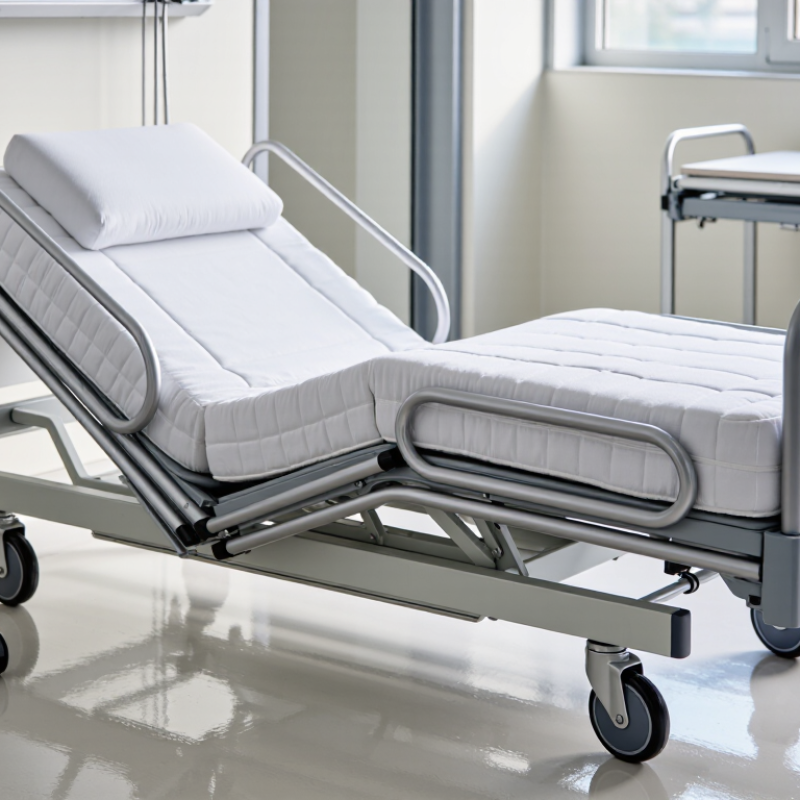
A space-saving electric hospital bed is designed to support essential clinical functions within a smaller room footprint. It usually combines powered height adjustment, backrest elevation, knee positioning, and adjustable side rails. Some models also use retractable frames or reduced under-bed clearance. The label can mislead. A narrower bed may save floor space but restrict transfers, caregiver movement, or emergency access.
Its value becomes clearer in compact wards, home-care rooms, and rehabilitation facilities. A 2024 Grand View Research analysis identified rising demand for adjustable hospital beds as healthcare providers improve patient comfort and room efficiency. The report also linked market growth to ageing populations and increased long-term care needs. These trends do not prove that every small bed is suitable. Clinical workflow still matters more than advertised dimensions.
Buyers should compare the bed’s maximum width, lowest height, turning radius, caster design, and clearance beside the mattress. A 90-centimetre corridor can feel much tighter when staff move equipment around a raised bed. Electric movement should follow applicable medical-device safety requirements, including IEC 60601-2-52 where relevant. In practice, test the bed with a mattress, monitor stand, and transfer chair. That honest trial often exposes problems that product drawings hide.
How Space-Saving Electric Hospital Beds Work
Space-saving electric hospital beds use linked motors, hinged platforms, and locking casters to provide clinical movement within a smaller footprint. A handset raises the backrest, bends the knee section, or adjusts overall height. Some models also use split side rails and compact under-bed frames. These parts reduce unnecessary clearance around the bed, especially in shared rooms and home-care spaces.
The World Health Organization’s Global Patient Safety Report 2024 identifies patient falls as a major preventable care concern. A controlled low position can reduce transfer risk, while a raised position supports safer nursing tasks. IEC 60601-2-52 also addresses safety requirements for medical beds, including stability, movement, and entrapment risks. Yet “space-saving” does not mean automatically safe. A narrow frame may limit caregiver access or complicate emergency repositioning. That trade-off deserves closer review.
Tips: Measure the room, doorways, and turning radius first. Leave clearance for oxygen equipment and caregiver movement. Test every electric function with a real mattress. Listen for motor strain. Check the lowest height and caster locks. A 2023 healthcare facilities review found that workflow design strongly affects safety and staff efficiency, although room layout evidence remains uneven. That matters. Product dimensions alone cannot predict practical performance.
When comparing a 2026 space-saving electric hospital bed, measure the room, not only the bed. Record clearance beside both rails, at the foot, and beneath the frame. The WHO projects that one in six people worldwide will be aged 60 or older by 2030. This makes simple transfers and caregiver access practical priorities. Small rooms expose poor design quickly.
Compare the lowest and highest platform positions, then check the safe working load. A low entry height can reduce transfer effort, while a raised position supports nursing procedures. Examine the turning radius, caster locks, and under-bed clearance for cleaning equipment.
AHRQ’s National Healthcare Quality and Disparities Report tracks falls with injury as a hospital safety concern. Therefore, compare split-rail coverage, gap protection, alarm options, and control placement. I would not trust a “compact” label alone.
Check whether the bed follows applicable IEC 60601-2-52 requirements and request test documentation. Review battery runtime, charging time, emergency CPR release, and handset durability. These details matter during a power interruption or an urgent repositioning. Ask for the decibel rating, because a loud motor can disturb nighttime recovery. Also inspect removable surfaces and sealed controls; dried disinfectant collects around seams. My practical mistake was focusing on footprint first. A narrow frame is not useful if its rails restrict transfers or its casters fight every turn. Compare the complete working footprint, including mattress, cables, and caregiver movement.
A compact electric hospital bed should save room without reducing clinical safety. Measure the room, doorway, transfer area, and caregiver walking path before purchasing. A narrow frame can still create danger when side rails, cables, or bedside equipment block movement. AHRQ reports that 700,000 to 1 million hospitalized patients fall each year in the United States. Low-height positioning, reliable brakes, and clearly marked controls deserve close attention.
Comfort also affects recovery and daily care. Look for independent back and knee adjustments, quiet motors, and a pressure-redistributing mattress platform. The bed should support safe repositioning without forcing nurses or family caregivers to lift manually. Check weight capacity, mattress compatibility, emergency lowering, and the distance between the mattress and rails. Small gaps matter. They may increase entrapment risk.
Professional buyers should verify compliance with IEC 60601-2-52 and request maintenance records, load testing, and cleaning instructions. WHO identifies about one in ten patients as being harmed during healthcare delivery, with more than half of harm considered preventable. That figure makes convenience a secondary concern. I would also test the bed with real equipment beside it, not only in an empty showroom. Space-saving designs often look efficient on paper. In practice, one awkward transfer can expose the weakness. Safety checks need repetition, because even a well-designed bed can become unsafe when staff training, room layout, or servicing is overlooked.
Choosing the best space-saving electric hospital bed starts with your facility, not the product brochure. Measure room width, doorways, lift access, and the clearance beside each bed. A compact frame may save space, but it can restrict staff movement during transfers. Leave enough room for emergency access, cleaning, and equipment storage.
Check the bed’s working height, backrest range, and mattress platform length. Nurses need controls that are easy to reach, even while wearing gloves. Lockable casters should move smoothly across your actual flooring. Test them in a quiet corridor and a crowded ward. Small details matter.
Ask for clear load limits, battery information, cleaning instructions, and service records. A reliable supplier should provide technical documents and responsive maintenance support. Confirm that the bed fits your mattresses and patient-monitoring equipment. Do not judge durability from appearance alone.
I would also test noise levels during overnight adjustment. A loud motor can disturb a whole room. One common mistake is choosing the narrowest frame without checking patient comfort. Space savings are useful, but safety and dignity cannot be reduced to measurements. A short trial with nurses, caregivers, and maintenance staff may reveal problems that specifications hide. Their feedback can challenge your first choice.
| Evaluation Dimension | Common Specification Range | Recommended Target for Space-Saving Use | Why It Matters |
|---|---|---|---|
| Overall Bed Width | 34–40 in (86–102 cm) | 34–36 in (86–91 cm), while maintaining the required mattress width | A narrower frame can improve circulation in small patient rooms, corridors, and treatment areas. |
| Overall Bed Length | 80–90 in (203–229 cm) | 80–84 in (203–213 cm), with an extendable platform if needed | A compact length saves floor space, while extension capability supports taller patients. |
| Mattress Platform Width | 32–36 in (81–91 cm) | At least 35 in (89 cm) for general adult care | The mattress platform must provide adequate support without making the complete bed unnecessarily wide. |
| Electric Adjustment Functions | 3–5 powered functions | Backrest, knee break, height adjustment, and Trendelenburg functions | Independent electric positioning can support patient comfort, transfers, examinations, and caregiver ergonomics. |
| Height Adjustment Range | Approximately 15–30 in (38–76 cm) from floor to deck | Low position below 16 in and working height near 28–30 in | A low position may help reduce fall consequences, while a higher position can reduce bending during care. |
| Safe Working Load | 450–600 lb (204–272 kg), including patient, mattress, and accessories | At least 500 lb (227 kg), or according to facility risk assessment | The safe working load must cover the patient and all equipment placed on or attached to the bed. |
| Bed Weight | 250–400 lb (113–181 kg), depending on configuration | Preferably below 330 lb (150 kg) without compromising stability | Lower weight makes repositioning and storage easier, but excessive weight reduction may affect durability and stability. |
| Caster Diameter | 4–6 in (10–15 cm) | At least 5 in (12.5 cm) with central locking and directional steering | Larger casters generally improve movement over thresholds and reduce the effort required to steer the bed. |
| Minimum Doorway Clearance | Common healthcare doorways are approximately 36 in (91 cm) wide | Verify that the fully equipped bed passes through the narrowest doorway | The bed, side rails, accessories, and mattress must be measured together rather than relying on frame width alone. |
| Turning and Maneuverability | Depends on caster design, bed length, floor surface, and steering system | Test the bed in the facility’s narrowest corridor and smallest room | A compact footprint is useful only if staff can safely turn, park, and reposition the bed. |
| Battery Backup | Rechargeable backup is common on electric models | Battery status indicator and enough capacity for emergency positioning and transport | Backup power maintains essential adjustments during patient transfer or a temporary power interruption. |
| Side Rail Configuration | Full-length, split, or quarter-length options | Split folding rails with secure locking and clear visibility | Split rails can support access and transfers while using less clearance than fixed full-length rails. |
| Under-Bed Clearance | Varies with the lowest bed position and frame design | Enough clearance for cleaning equipment and facility-approved storage accessories | Adequate clearance simplifies housekeeping and reduces unused space around the bed. |
| Mattress Compatibility | Usually a manufacturer-specified mattress size and thickness | Use a compatible pressure-redistributing mattress with the correct dimensions | An incorrectly sized mattress can create gaps, interfere with rails, and affect patient safety. |
| Cleaning and Infection Control | Powder-coated metal, sealed controls, removable panels, and cleanable surfaces are common features | Smooth, sealed surfaces with minimal gaps and compatibility with facility-approved disinfectants | Simple cleaning access can reduce turnaround time between patients and support infection-control procedures. |
| Controls and Safety Lockouts | Hand control, caregiver control panel, and selected function lockouts | Clearly labeled controls with caregiver lockout for selected movements | Lockouts help prevent unintended adjustments and allow staff to control clinical functions. |
| Electrical Safety | Low-voltage motors with grounded power systems are commonly used | Select a bed certified for the intended care environment and local electrical requirements | Electrical certification and maintenance procedures should match the facility’s regulations and policies. |
| Accessory Compatibility | IV poles, drainage-bag holders, overbed tables, trapeze supports, and oxygen-tank holders may be available | Choose only accessories approved for the specific bed and safe working load | Accessories can increase width, weight, and collision risk, so compatibility must be checked before use. |
| Warranty and Serviceability | Coverage and replacement-part availability vary by supplier and region | Documented preventive maintenance, accessible parts, and local technical support | Service access affects downtime, total ownership cost, and the useful life of the bed. |
| Best-Fit Facility Applications | Small patient rooms, rehabilitation areas, assisted-living settings, clinics, and overflow spaces | Match the bed configuration to patient acuity, room size, transport frequency, and staff workflow | The most compact bed is not always the safest choice for intensive-care, bariatric, or high-acuity applications. |
It is a powered medical bed designed for smaller rooms. It adjusts height, backrest angle, knee position, and side rails.
They suit compact wards, home-care rooms, and rehabilitation spaces. They can improve movement around the bed.
Not necessarily. A narrow frame may restrict transfers, emergency access, or caregiver movement.
Measure bed width, lowest height, doorway size, turning radius, caster position, and side clearance. Measure twice.
Test it with a mattress, transfer chair, monitor stand, and nearby equipment. Empty showrooms can hide practical problems.
Check reliable brakes, low-height positioning, clear controls, emergency lowering, and stable side rails. Small gaps matter.
Independent back and knee adjustments can improve positioning. Quiet motors and pressure-redistributing mattresses may reduce discomfort.
Verify applicable medical-device safety requirements, weight capacity, mattress compatibility, cleaning instructions, and maintenance records.
It may help by adjusting height for care tasks. Poor room layout can still force awkward lifting.
Do not judge the bed by advertised dimensions alone. One difficult transfer may reveal the real weakness.
A Space-Saving Electric Hospital Bed is designed to provide essential patient support while using less room than a conventional hospital bed. Its compact structure, adjustable frame, and electric controls allow caregivers to change the bed’s height, backrest, leg position, and overall configuration with minimal effort. These functions can improve patient comfort, simplify transfers, and make better use of limited space in hospitals, clinics, rehabilitation centers, and home-care environments.
Before buying, facilities should compare dimensions, weight capacity, motor performance, control options, caster design, and compatibility with mattresses and accessories. Safety features such as reliable brakes, side rails, emergency lowering, and stable construction are important for reducing risks. Comfort should also be considered through mattress support, positioning flexibility, and ease of cleaning. The best choice should match the facility’s room size, patient needs, care procedures, maintenance resources, and budget while meeting applicable safety and care requirements.

We use cookies to analyze and provide you with a better user experience. By continuing to use this website, you acknowledge and agree to our cookie policy.