Choosing the China Best Medical Bed with X Ray Holder requires more than comparing prices or polished product photos. A reliable Medical Bed with X-Ray Holder should support safe positioning, smooth imaging workflows, and repeated hospital use. The World Health Organization reports that around one in ten patients experiences harm during healthcare delivery. It also states that more than half of this harm may be preventable. These figures make bed design, stability, and clinical usability important purchasing issues.
Industry research points in the same direction. MarketsandMarkets identifies hospitals, diagnostic centers, and long-term care facilities as major users of advanced medical beds. Its market analysis also highlights demand for integrated equipment and improved patient handling. A practical bed should provide firm radiolucent support, secure X-ray cassette access, adjustable height, and dependable side rails. The details matter. A loose holder can shift beneath a patient. A difficult brake wastes time beside the imaging table.
Chinese manufacturers offer broad customization, competitive production capacity, and growing quality-management experience. However, “best” is not universal. A trauma ward may need stronger load capacity, while a radiology unit may prioritize rapid positioning. Buyers should review ISO 13485 certification, IEC 60601-related documentation, load testing, cleaning compatibility, and after-sales support. Product claims still need independent verification. That is the uncomfortable part. A catalog can look complete while real-world handling feels awkward. This guide compares key specifications, safety features, manufacturing evidence, and clinical practicality to identify which Chinese Medical Bed with X-Ray Holder can genuinely fit demanding healthcare environments.
What Is a Medical Bed with an X-Ray Holder?
What Is a Medical Bed with an X-Ray Holder?
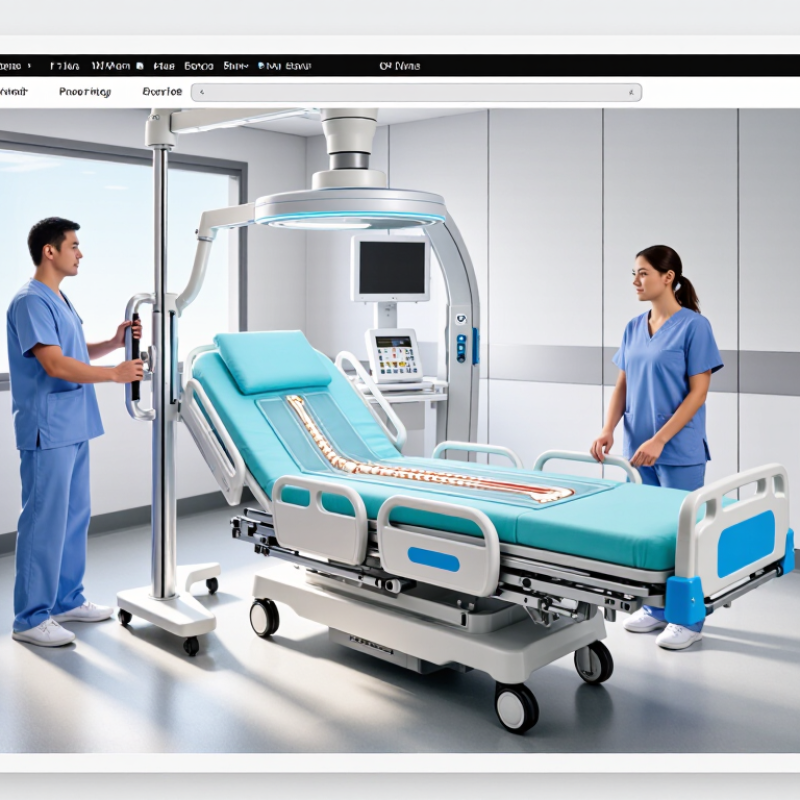
A medical bed with an X-ray holder supports bedside radiography when moving a patient is unsafe or impractical. The holder usually sits beneath the mattress platform or along a dedicated frame section. It keeps an imaging cassette or digital detector in a stable position during exposure. This design is useful in emergency rooms, intensive care units, recovery areas, and diagnostic departments.
The bed should provide firm support, smooth height adjustment, and enough clearance for the detector. Lockable casters help prevent movement. A radiographer may slide a detector beneath the patient while maintaining careful alignment with the X-ray tube. The mattress should not create excessive pressure or interfere with positioning. Small design details matter here. Poor clearance can delay imaging.
In daily clinical use, staff must check the holder, rails, brakes, and detector space before imaging. Cleaning access also matters, especially around narrow frame sections. A medical bed is not a replacement for a dedicated radiography table. Its stability and image quality may vary with patient weight, posture, and detector placement. That limitation deserves honest attention. Correct training, equipment inspection, and local clinical procedures remain essential for safe operation.
China Best Medical Bed with X-Ray Holder? - What Is a Medical Bed with an X-Ray Holder?
A medical bed with an X-ray holder is designed to support radiographic imaging while the patient remains on the bed. The specifications below describe common clinical requirements and typical configurations; actual measurements may vary by model and configuration.
| Data Dimension | Typical Specification or Requirement | Clinical Purpose | Important Selection Consideration |
|---|---|---|---|
| Medical Bed Type | Electric hospital bed, intensive-care bed, emergency bed, or imaging-compatible patient bed. | Provides patient positioning, nursing access, and compatibility with bedside diagnostic procedures. | Choose the bed category according to the intended setting, such as general wards, emergency departments, intensive care, or diagnostic rooms. |
| X-Ray Holder Function | Integrated cassette tray, detector holder, or slide-in imaging platform positioned beneath or beside the mattress deck. | Allows radiographic images to be taken without unnecessary patient transfer. | Confirm that the holder accepts the required detector or cassette size and can be positioned accurately for the intended examination. |
| Radiolucent Imaging Area | Radiolucent backrest or central deck section made from materials that minimize X-ray attenuation. | Improves image acquisition through the relevant body area. | The radiolucent area should align with the holder and provide adequate clearance for the imaging device. |
| Common Detector Compatibility | Often designed for commonly used digital radiography detectors, such as approximately 35 × 43 cm detectors, subject to the holder design. | Supports routine chest, abdominal, and skeletal examinations. | Detector dimensions, thickness, handle position, and cable routing must be checked before purchase. |
| Bed Width | Typical mattress platform width: approximately 90–105 cm. | Balances patient comfort, caregiver access, and maneuverability. | A wider platform may improve comfort but can reduce clearance in narrow rooms or during transport. |
| Overall Bed Length | Typical overall length: approximately 210–235 cm, with some models offering an extendable platform. | Accommodates adult patients while supporting transport and positioning. | Check room size, elevator dimensions, door clearance, and the length of the fully extended bed. |
| Adjustable Bed Height | Common electric height range: approximately 40–80 cm from the floor to the mattress platform, depending on configuration. | Low height supports safer patient entry and exit; higher height improves caregiver ergonomics. | Verify the actual minimum height, maximum height, and clearance required for the X-ray holder. |
| Backrest Adjustment | Electric or manual backrest adjustment, commonly reaching approximately 60–70 degrees. | Supports respiratory care, feeding, examination, and semi-Fowler positioning. | Ensure that backrest movement does not interfere with the detector holder or imaging area. |
| Leg Rest Adjustment | Adjustable knee or leg section, usually controlled independently or through linked positioning. | Improves comfort and helps achieve suitable clinical positions. | The frame should remain stable when the leg section is raised or lowered during imaging preparation. |
| Trendelenburg Function | Many advanced electric beds provide Trendelenburg and reverse Trendelenburg positioning, commonly up to approximately 12–16 degrees. | Supports selected clinical procedures and patient positioning requirements. | Only use these positions according to clinical protocols and the bed manufacturer’s instructions. |
| Safe Working Load | Common hospital-bed ratings range from approximately 180–250 kg, including the patient, mattress, and accessories. | Defines the maximum load that the bed can safely support during normal operation. | Do not confuse safe working load with patient weight capacity. Always review the product’s certified rating. |
| Side Rails | Foldable or split side rails with integrated controls on some electric configurations. | Helps reduce fall risk and supports patient repositioning. | Side rails are not a substitute for clinical observation or an individual fall-prevention assessment. |
| CPR Release | Manual or electric emergency backrest release, often available on beds intended for acute-care use. | Allows rapid access to a flatter position during resuscitation or emergency care. | Controls should be clearly marked, accessible, and tested according to the facility’s maintenance procedure. |
| Castors and Braking | Four hospital-grade castors with a central or individual locking system; common castor sizes are approximately 125–150 mm. | Supports movement over hospital flooring and stabilizes the bed during care and imaging. | Check directional-lock performance, brake access, castor clearance, and compatibility with thresholds. |
| Mattress Platform | Segmented platform with removable or radiolucent sections, depending on the imaging design. | Supports pressure redistribution, positioning, cleaning, and radiographic access. | The mattress must be compatible with the bed, radiolucent where required, and suitable for the patient’s risk profile. |
| Mattress Thickness | Common hospital mattresses are approximately 10–18 cm thick, although imaging-compatible systems may differ. | Provides patient support and comfort while maintaining appropriate working height. | Excessive mattress thickness may reduce detector clearance or affect image geometry. |
| Electrical System | Low-voltage electric actuators powered by a rechargeable battery and mains charger on many modern beds. | Enables adjustment of height, backrest, leg section, and other functions without manual lifting. | Confirm battery runtime, charging time, electrical protection, plug type, and compatibility with local requirements. |
| Cleaning and Infection Control | Sealed surfaces, removable mattress covers, smooth frames, and materials compatible with approved hospital disinfectants. | Helps reduce contamination risks and simplifies routine cleaning. | Review chemical compatibility, liquid ingress protection, seam design, and cleaning instructions. |
| Patient Transfer Requirement | Designed to reduce or eliminate transfer to a separate imaging table for selected bedside examinations. | Can reduce manual handling, discomfort, and the risk associated with moving medically fragile patients. | The bed is not automatically compatible with every mobile X-ray system; confirm clearance, access, and workflow requirements. |
| Safety and Compliance | Should be assessed against applicable medical-device, electrical-safety, mechanical-safety, and risk-management requirements in the target market. | Supports safe operation, procurement review, and facility compliance. | Request current test reports, declarations, user instructions, maintenance information, and local regulatory documentation. |
| Recommended Evaluation Method | Compare imaging clearance, detector compatibility, load rating, adjustment range, braking, cleaning, and service support. | Ensures that the bed matches both clinical needs and radiography workflow. | A practical demonstration with the intended detector, mattress, patient-transfer equipment, and mobile X-ray system is recommended before final approval. |
FAQS
Define the clinical purpose, patient weight range, imaging needs, and mattress dimensions. Price alone is not enough.
Use a real cassette or detector during testing. Check alignment, stability, cassette access, and movement clearance.
Request load tests, motor-cycle tests, electrical safety reports, material specifications, and component traceability. Certificates help, but they prove little alone.
Examine welds, castors, brakes, side rails, controls, and cable routing. A live factory video can reveal practical details.
Reliable brakes, secure rails, clear angle indicators, and controlled height adjustment reduce handling problems. Staff still need proper training.
Look for smooth surfaces, removable panels, sealed controls, and disinfectant compatibility. Test cleaning around joints and cable openings.
Nurses, imaging staff, biomedical engineers, and infection-control personnel should test the same sample. Different users notice different weaknesses.
It can expose poor transfer access, unstable holders, difficult controls, or slow emergency lowering. A perfect bed does not exist.
Ask about complaint response times, spare-part availability, warranty exclusions, and local technical support. Delays can become serious.
Not always. Small flaws may show engineering honesty, but every safety-related defect must be corrected before purchase.
Conclusion
A Medical Bed with X-Ray Holder is designed to support patient care while allowing radiographic imaging to be performed efficiently at the bedside. Its structure should provide stable positioning, smooth height and backrest adjustment, a secure X-ray cassette or detector holder, and enough clearance for imaging equipment. Important features include a strong frame, reliable locking systems, easy-to-clean surfaces, comfortable patient support, and controls that help caregivers work safely and efficiently.
When evaluating Chinese medical bed manufacturers, healthcare providers should consider product quality, manufacturing experience, customization capabilities, testing procedures, and after-sales support. The best choice should balance safety, adjustability, durability, imaging performance, and clinical practicality. A suitable bed must remain stable during examinations, protect patients and staff from unnecessary movement, and adapt to different departments and treatment needs. Careful comparison of specifications, certifications, service capacity, and total ownership cost can help hospitals select a dependable solution for daily clinical use.