Expert perspectives on clinical trends, medical device standards, patient safety, and home care solutions.
Stay informed on ISO 13485 compliance, IEC standards, ergonomic design, and medical equipment maintenance.
An ICU Medical Bed is more than a movable platform for critically ill patients. It is a carefully engineered support system used in intensive care environments. Its frame, mattress, controls, and safety features work together around the patient’s changing condition.
The bed can raise the head, knees, or entire body with electric motors. These adjustments help nurses provide care, reduce strain, and support breathing positions when clinically appropriate. Side rails, wheel locks, height controls, and weighing systems add practical protection. Some models also measure patient weight without moving the patient to another scale. That detail matters.
Small movements matter.
Many ICU beds connect with monitors, ventilators, infusion pumps, and patient-lifting equipment. However, the bed does not diagnose illness or replace clinical judgment. Nurses and physicians must assess each adjustment, especially for patients with unstable blood pressure, spinal injuries, or multiple lines. Manufacturer instructions and hospital protocols remain essential.
It is tempting to describe an ICU Medical Bed as intelligent. Some models include advanced sensors and automated positioning, but their abilities differ widely. Technology can support safer care, yet it can also create confusion when staff receive insufficient training. Regular cleaning, maintenance, inspection, and documented checks help preserve reliability. This article explains how ICU medical beds work, what their main features do, and where their practical limits deserve careful attention.
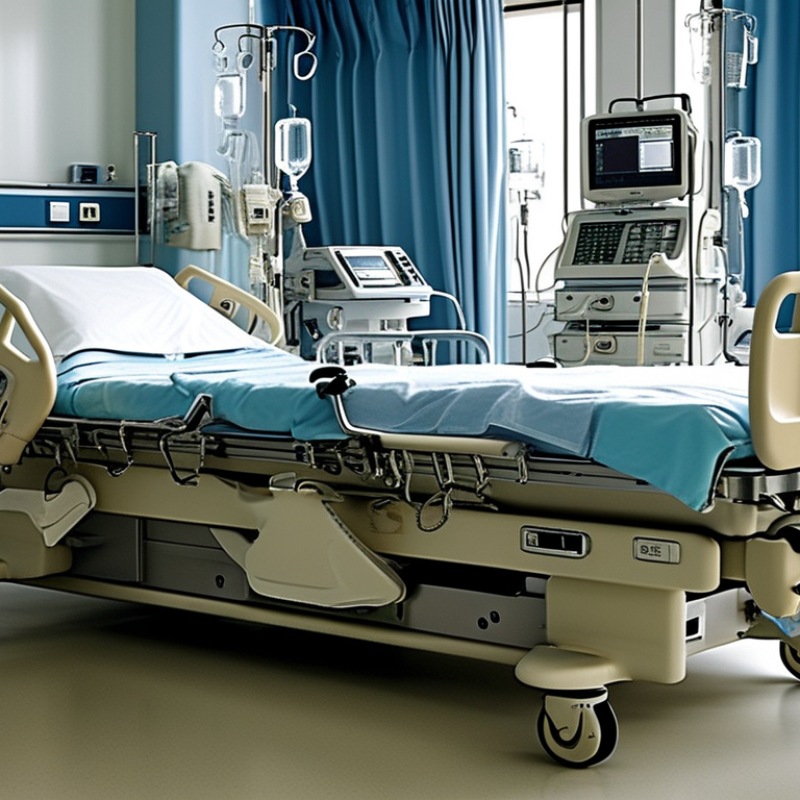
An ICU medical bed is a specialized hospital bed for patients needing continuous observation and intensive support. It is more than a mattress with wheels. Its adjustable frame helps clinicians position patients safely, while side rails reduce accidental falls. The surface usually supports pressure redistribution, which may help protect fragile skin during long periods of immobility. Many beds also include a built-in scale, emergency release, and lockable casters.
The bed works through electric motors controlled by buttons or a handheld panel. Staff can raise the backrest, bend the knees, adjust the height, or place the patient in a flat position. These changes support breathing care, transfers, examinations, and infection-control procedures. The bed’s design must also leave space for monitors, infusion lines, drainage tubes, and emergency equipment. A small movement can affect several connected tubes. Careful checking matters. It is easy to assume the highest position is always best, but each adjustment should match the patient’s condition and clinical plan.
Tips: Keep the brakes locked during care. Check that lines are not trapped before moving the frame. Use the lowest safe height when the patient is resting. Clean high-touch controls according to facility guidance. Staff should follow training and manufacturer instructions, because controls and safety features can differ between bed models.
ICU medical beds use powered actuators to raise or lower the mattress platform and adjust sections such as the backrest and leg support. These movements help clinicians provide treatment, improve patient positioning, and transfer patients safely. The measurements shown are representative dimensions commonly found in adult ICU beds; exact specifications vary by model and healthcare facility.
An ICU medical bed is a powered platform designed for unstable patients and frequent clinical care. Its frame usually includes electric actuators, a segmented mattress deck, lockable casters, and adjustable side rails. Staff can raise the backrest, bend the knee section, or change the overall height with a control panel. These movements support airway access, safer transfers, and more comfortable positioning. Small changes matter.
A five-section mattress platform can help maintain alignment while allowing clinicians to adjust the patient’s posture. Many beds include a CPR release that quickly lowers the backrest during an emergency. Integrated scales may record weight without moving the patient, although tubing, blankets, and equipment can affect accuracy. Pressure-redistributing surfaces reduce prolonged loading on the heels, sacrum, and shoulders. They do not remove the need for regular skin checks.
At the bedside, staff use brakes before procedures, transport, or repositioning. They also check rail clearance, cable routing, and the reach of oxygen or monitoring lines. Some controls can be locked to prevent accidental movement. This is useful, but it can also delay a needed adjustment if access is unclear. Even experienced teams may overlook a loose brake or hidden line beneath the frame. Bed functions should match the patient’s condition, local protocols, and the clinician’s assessment. The bed assists care. It does not replace observation, communication, or careful judgment.
What Is an ICU Medical Bed and How Does It Work?
How an ICU Bed Supports Patient Care
An ICU medical bed is a powered platform designed for critically ill patients. It supports positioning, monitoring, mobility, and safer bedside treatment. Its frame can rise, lower, tilt, and adjust the back and leg sections. These movements help nurses work at a safer height. They also support breathing comfort and clinical procedures.
During care, clinicians may raise the upper section to help a patient breathe more comfortably. A lower position can support transfers or reduce injury risks. Side rails offer a physical boundary, while lockable casters keep the bed stable. Many beds include weight measurement systems and alerts for unsafe positions. Staff must confirm readings through patient assessment. No sensor replaces professional judgment.
Pressure-relieving surfaces spread body weight across wider areas. They may reduce pressure injury risk, but they cannot prevent every wound. Repositioning remains essential. The bed may also provide a firm surface for emergency chest compressions. Clear controls and visible status indicators help teams respond quickly. Yet real situations are messy. A tired caregiver might select the wrong setting or overlook a loose cable. Small errors can matter. Regular equipment checks, cleaning, and staff training improve reliability. The bed supports care, but skilled observation still guides each decision.
| Bed Feature or Data Dimension | Typical Specification or Capability | How It Supports Patient Care |
|---|---|---|
| Primary Purpose | Designed for critically ill or closely monitored patients | Provides a stable platform for continuous observation, medical procedures, respiratory support, repositioning, and rapid emergency access. |
| Overall Bed Length | Approximately 210–230 cm (83–91 in), depending on configuration | Accommodates adult patients while leaving space for head-end equipment, infusion lines, drainage systems, and staff access. |
| Patient Support Width | Approximately 90–105 cm (35–41 in) in many adult ICU designs | Provides sufficient surface area for safe positioning, turning, pressure-injury prevention, and clinical procedures. |
| Height Adjustment | Commonly adjustable from approximately 41–81 cm (16–32 in), measured from the floor to the mattress platform | Raises the bed for procedures and clinical care, then lowers it to reduce the distance a patient could fall when entering or leaving the bed. |
| Backrest Adjustment | Usually adjustable from a flat position to approximately 60–70° | Supports breathing, feeding, communication, comfort, and clinical positions such as semi-Fowler’s positioning. |
| Knee and Leg Section Adjustment | Powered or manual articulation of the thigh and lower-leg sections | Helps maintain body alignment, improves comfort, supports positioning, and reduces sliding when the backrest is raised. |
| Trendelenburg and Reverse Trendelenburg | Powered tilt functions; the available angle is model-specific and commonly falls within approximately 10–15° | Allows clinicians to use prescribed body positions for selected procedures, circulation-related care, or respiratory management when clinically appropriate. |
| Patient Weight Capacity | Many adult ICU beds support approximately 250–320 kg (550–705 lb), including the patient and permitted accessories | Provides a defined safe working load for patient care. Staff must follow the exact capacity stated on the bed’s safety label and instructions. |
| Side Rails | Split or full-length rails that can be raised and lowered | Help reduce accidental falls, provide hand support, and assist with repositioning. Rails are not a substitute for individualized fall-risk assessment. |
| Mattress and Pressure Redistribution | Medical mattress systems may use high-resilience foam, air cells, or alternating-pressure technology | Distribute loading across the body and help manage pressure-injury risk as part of a complete turning, skin-inspection, nutrition, and mobility plan. |
| Emergency CPR Position | Rapid release or one-touch flattening of the backrest and bed platform | Creates a firm, accessible surface quickly during cardiopulmonary resuscitation and other time-critical interventions. |
| Electrical Controls | Bed controls may be located on the staff control panel, side rails, or a handheld control | Enable precise adjustment of height, backrest, leg section, and bed tilt while reducing manual lifting and repositioning effort. |
| Braking and Mobility | Lockable casters with a central or individual braking system | Keep the bed stable during treatment and allow controlled transport when the patient must be moved within the clinical area. |
| Integrated Patient Scale | Some ICU beds include an in-bed weighing system with a manufacturer-defined accuracy range | Allows weight measurements with fewer transfers, supporting medication dosing, fluid-balance assessment, and nutritional management. |
| Equipment and Line Management | Accessory sockets, IV-pole attachment points, drainage-bag hooks, oxygen-cylinder holders, and cable-management areas may be provided | Organizes essential equipment and reduces the risk of tangled lines, accidental disconnections, and obstructed access around the patient. |
| Radiographic Access | Some bed frames and mattress platforms allow imaging equipment to be positioned beneath or beside the patient | Can support selected bedside imaging procedures and reduce the need to transfer unstable patients, when compatible with the imaging system. |
| Power and Battery Backup | Electric beds generally use mains power and may include a rechargeable battery for temporary adjustment or transport functions | Maintains essential bed movement during short power interruptions or movement between care areas. Battery duration and supported functions vary by model. |
| Cleaning and Infection Control | Smooth, sealed surfaces and removable components are commonly used to support routine disinfection | Facilitates cleaning between patients and helps reduce contamination risks when staff follow the healthcare facility’s approved cleaning protocol. |
| Alarm and Safety Functions | Depending on the design, features may include low-bed indicators, brake warnings, position reminders, and patient-exit alerts | Provides additional safety information to staff and may help identify unsafe bed conditions or unassisted movement risks. |
Note: Dimensions, load limits, angles, functions, and alarm features vary by bed design. Always verify the specific medical bed’s labeling, technical documentation, and facility procedures before use.
An ICU medical bed is more than a powered frame. It supports positioning, emergency access, infection control, and continuous patient observation. Electric controls adjust the backrest, knee section, and overall height. These movements help clinicians protect airways, reduce strain, and perform procedures safely.
Safety systems work quietly but constantly. Lockable casters prevent unwanted movement during transfers. Split side rails reduce fall risks while allowing staff to reach the patient quickly. Many beds include a mechanical CPR release, firm emergency surface, and built-in weighing function. Pressure-redistributing surfaces can limit skin damage, but they cannot replace regular repositioning and skin checks.
Clinical monitoring may include heart rate, oxygen saturation, blood pressure, temperature, and breathing rate. Sensors connect to bedside displays or centralized observation systems. Clear alarms matter. A low oxygen reading should be noticed immediately, while repeated non-urgent alerts may cause alarm fatigue. Clinicians must verify cables, sensor placement, battery status, and alarm limits during each shift.
A misplaced sensor can create a frightening but inaccurate reading. The system is not flawless. Human assessment remains essential, especially when a patient’s symptoms do not match the numbers.
During transport or emergency care, staff also check brake engagement, rail position, tubing clearance, and access to oxygen and power. Small oversights can become serious quickly.
What Is an ICU Medical Bed and How Does It Work?
An ICU medical bed supports patients who need continuous observation and rapid clinical intervention. Its powered frame adjusts height, backrest, leg section, and mattress angle. These movements help nurses position a patient safely, protect breathing, and reduce pressure on the skin. A stable bed matters during transfers and urgent procedures.
Operating and Maintaining an ICU Medical Bed
Before use, staff should check the power connection, handset, brakes, side rails, and emergency controls. The bed should remain locked unless movement is necessary. Rails need careful handling because they protect patients but can also create hazards if left partly raised. Test the lowest position and emergency backrest release according to facility procedures. Keep cables away from wheels and moving joints. Small details matter.
Cleaning requires an approved disinfectant and attention to seams, handles, control panels, and mattress edges. Fluids can collect beneath the mattress. They should not. Maintenance staff should inspect casters, actuators, fasteners, battery condition, and weighing systems on a scheduled basis. Any unusual noise, uneven movement, or failed alarm needs prompt isolation and reporting. Do not improvise repairs. A practical weakness is rushed documentation; a bed may appear functional while its battery is failing. Clear records help teams identify repeated faults and confirm completed service. These routines should follow the bed’s instructions and the healthcare facility’s trained maintenance process.
It is a powered hospital bed for patients needing constant observation and intensive support. It is not just a mattress with wheels.
Electric controls raise the backrest, bend the knees, change height, or flatten the platform. Small movements can improve breathing care and transfers.
Common features include lockable casters, side rails, emergency release, and pressure-redistributing surfaces. These features reduce risks, but they are not perfect.
Brakes keep the bed steady during procedures, transfers, and repositioning. Staff should confirm the brakes are engaged.
Its surface can reduce pressure on the heels, shoulders, and sacrum. Regular repositioning and skin checks remain necessary.
It can measure weight without moving the patient. However, blankets, tubing, and attached equipment may affect the result.
Check brakes, side rails, cables, oxygen lines, drainage tubes, and monitor connections. A hidden tube can become trapped underneath.
Sensors may track oxygen levels, heart rate, blood pressure, temperature, and breathing rate. A misplaced sensor can create a worrying but inaccurate reading.
Alarms can be delayed, repeated, or inaccurate. Patient symptoms may not match the display, so human assessment still matters. The system can miss things.
An ICU Medical Bed is a specialized hospital platform designed to support critically ill patients while helping medical teams provide safe, efficient care. Unlike a standard hospital bed, it combines adjustable positioning, pressure-relieving surfaces, secure side rails, and integrated controls to meet the complex needs of intensive care. Its functions may include raising the head or legs, adjusting bed height, supporting patient transfers, and enabling access for examinations, procedures, and emergency treatment.
The bed also supports continuous patient monitoring by providing space and connections for essential clinical equipment, while safety systems help reduce falls, unintended movement, and positioning-related injuries. Proper operation requires trained staff to understand the controls, weight limits, locking mechanisms, and emergency features. Regular cleaning, inspection, and preventive maintenance are equally important to ensure reliable performance, protect infection control standards, and maintain patient comfort. Together, these features make the ICU Medical Bed an important part of coordinated critical care.

We use cookies to analyze and provide you with a better user experience. By continuing to use this website, you acknowledge and agree to our cookie policy.