Orthopedic Devices support the repair, replacement, or protection of bones, joints, and soft tissues. Some are implanted during surgery, while others are worn outside the body. A hip implant, a fracture plate, and a knee brace solve very different problems. Their value depends on the injury, the patient’s health, and the clinician’s treatment plan.
The phrase “top 10” can be helpful, but it does not describe one universal ranking. A device used for a complex fracture may be irrelevant to someone managing joint pain. This guide looks at ten widely used categories, including joint replacements, fixation plates and screws, spinal implants, braces, and external fixation systems. It considers what each device does, where it may be used, and what patients should ask about its limitations. Details matter: the implant’s fit, the surgeon’s assessment, and the recovery plan can all affect the experience. No device guarantees a particular result. Not always. Medical evidence and product designs also change, so readers should check current guidance with qualified healthcare professionals. The aim is practical understanding, not a substitute for personal medical advice. Some options may sound similar, yet differ in purpose and recovery demands. That distinction deserves a closer look.
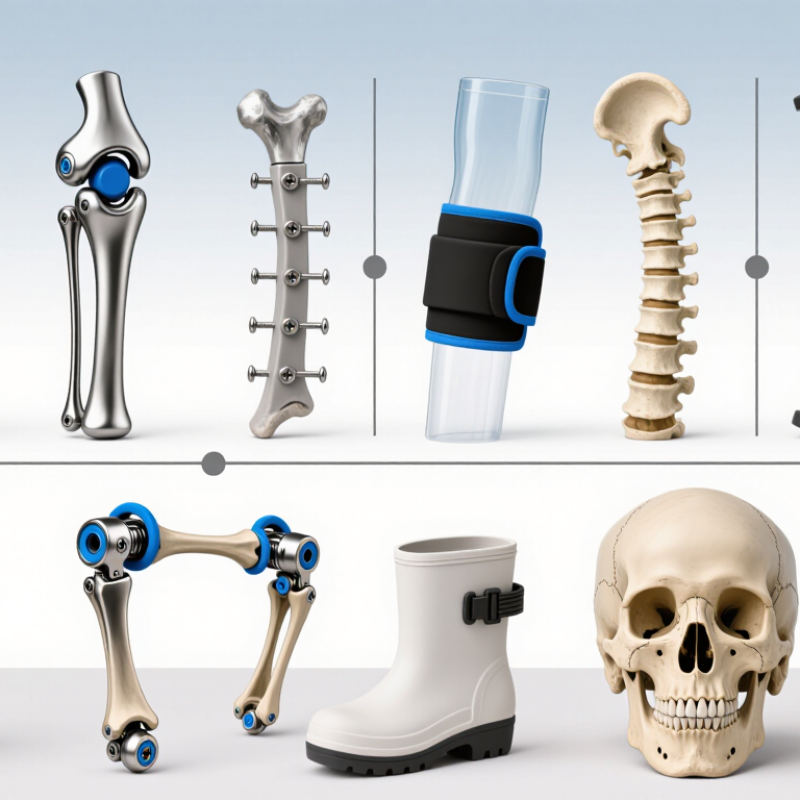
Orthopedic devices are tools that help bones, joints, muscles, and tendons work more safely after injury, surgery, or changes in movement. Some are worn outside the body, such as knee braces, wrist splints, shoe inserts, and walking boots. Others are implanted, including joint replacements, screws, plates, and rods that stabilize or replace damaged structures. They are not interchangeable. Each is selected for a particular body part, task, and stage of recovery.
Support can mean different things. A brace may limit a knee’s motion while healing, while an ankle-foot orthosis can help position the foot during walking. A cane or walker shifts some weight away from a painful leg and offers a steadier base. Inside the body, a plate and screws can hold a fracture in alignment as bone heals. Small details matter: the device’s fit, pressure points, and the user’s daily activities can affect comfort and function.
A device does not restore movement by itself. It works alongside appropriate care, practice, and follow-up, with the plan adjusted to the person’s progress. Even a well-chosen brace can rub against the skin or feel awkward at first. That is worth noticing. Clinicians may need to reassess fit or use, since too much restriction can also make ordinary movement harder.
Orthopedic devices are best grouped by the medical purpose they serve, rather than by how they look. For fracture stabilization, surgeons may use plates, screws, pins, intramedullary nails, or external fixators. A plate sits along the bone, while a nail runs inside it. External frames hold bone segments steady from outside the skin. The choice depends on the fracture’s location, pattern, and the patient’s health.
Other devices support or replace joints and the spine. Joint replacement components restore damaged joint surfaces, while spinal fixation systems use rods and screws to support selected vertebrae. Braces limit movement or provide support during recovery.
Arthroscopy instruments help clinicians examine and treat joints through small openings. Bone graft substitutes may help fill certain bone defects, and limb prostheses replace a missing limb. Each has a distinct role. Some categories overlap.
Purpose alone does not determine the right device. Bone quality, activity level, healing risks, and the need for future imaging can all matter. A brace may be enough for one injury, while another requires surgical fixation. Small details matter. Device selection and follow-up should be guided by qualified clinicians, and recovery can vary even when treatment plans look similar. The categories are useful, but not perfectly tidy.
Orthopedic devices support injured bones, unstable joints, and limited movement. Common examples include fracture plates and screws, which hold broken bone fragments in position; intramedullary nails, inserted inside long bones; and external fixators, which stabilize fractures using pins connected to an outside frame. Joint replacement implants replace damaged hips or knees. The American Joint Replacement Registry’s 2023 annual report analyzed more than three million hip and knee procedures, showing the scale of these operations in participating U.S. facilities.
Other widely used devices include spinal rods, screws, and cages for stabilization; suture anchors for attaching soft tissue during joint repair; bone graft materials that help fill defects or support healing; casts and splints that restrict movement after injury; braces and orthoses that support alignment or mobility; and orthopedic prostheses that replace a missing limb. Different designs suit different injuries. The fit is not always perfect. Comfort and function may change as swelling falls or activity increases, so clinicians often reassess fit and use. The WHO and UNICEF’s 2022 Global Report on Assistive Technology estimates that 2.5 billion people need one or more assistive products worldwide. That broad category includes mobility and orthopedic aids, though it is not limited to them.
Clinicians choose an orthopedic device around the person, not just the diagnosis. A hinged knee brace, for example, must suit the injury, activity goals, limb shape, and clothing habits. They check movement, swelling, skin condition, strength, and walking pattern before recommending support. Small details matter. An edge rubbing the kneecap can turn a useful brace into one left in a drawer. The World Health Organization’s 2022 Global Report on Assistive Technology estimates that 2.5 billion people need one or more assistive products worldwide. This broad category includes orthopedic supports and mobility aids. WHO projects that need may reach 3.5 billion people by 2050.
Fitting is hands-on. Clinicians measure the limb, align brace hinges with joints, and check pressure points while the patient sits, stands, and walks. They adjust straps so support feels secure without restricting circulation or movement. For a foot orthosis, they may assess shoe fit and observe how the foot loads during walking. Follow-up matters because swelling, pain, and daily routines can change. An early review can catch redness, numbness, slipping, or restricted movement. WHO’s report also highlights the need for trained personnel and services, not equipment alone. Measurements cannot capture every lived inconvenience. That is worth admitting.
A practical overview of common device types and the areas or functions they support.
How to read this chart: Bars count the selected examples in each category; they do not represent sales, popularity, or clinical effectiveness.
Devices included: wrist-hand orthosis, shoulder sling, knee brace, ankle-foot orthosis, walking boot, lumbar orthosis, cane, crutches, walker, and lower-limb prosthesis. Clinicians select and fit a device based on the diagnosis, anatomy, required support or mobility, skin condition, and the patient’s function.
Orthopedic devices range from hip and knee replacements to fracture plates, screws, spinal implants, and braces. Their materials must balance strength, weight, and compatibility with the body. Titanium alloys are commonly used for fixation because they are strong and relatively light. Cobalt-chromium alloys can resist wear in some joint components, while medical-grade polymers may reduce friction between moving surfaces. No material is perfect.
Safety depends on more than the implant itself. Surgeons consider bone quality, activity level, allergies, and the device’s fit. A poorly fitted plate can irritate nearby tissue; a joint component may loosen or wear over time. Patients should report persistent swelling, increasing pain, fever, or changes in movement to their care team. Follow-up imaging can help clinicians assess healing and device position. Details matter.
New developments include porous metal surfaces that encourage bone attachment, patient-specific implants made from medical imaging, and coatings designed to improve device performance. Some resorbable materials are also being studied for temporary fixation, though their suitability depends on the injury and healing needs. These advances are promising, not guarantees. A custom shape may fit precisely, yet manufacturing quality and surgical placement still matter. Evidence can also lag behind innovation, so asking how long a device has been studied is reasonable.
They support bones, joints, muscles, or tendons after injury, surgery, or movement changes. Some are worn outside the body; others are implanted.
A brace may limit knee movement during healing. A wrist splint can steady the joint. Fit matters.
They shift some weight away from a painful leg and provide a steadier base. The right height can matter.
Plates and screws hold bone fragments in position. A nail may run inside a long bone, while an external frame steadies it from outside.
A brace is worn outside the body and may support or restrict movement. An implant is placed inside the body to stabilize or replace a structure.
They replace damaged joint surfaces, such as in a hip or knee. Recovery still takes time and follow-up.
Swelling, pressure points, or increased activity can affect comfort. A brace rubbing against skin is worth mentioning to a clinician.
Clinicians consider the injury, bone quality, activity level, healing risks, and future imaging needs. The categories are useful, but not perfectly tidy.
No. It works alongside appropriate care, practice, and follow-up. Progress can vary, even with similar treatment plans.
Orthopedic Devices are tools designed to support, protect, stabilize, or improve the movement of bones, joints, and muscles. They serve different medical purposes, from limiting motion during healing to easing weight-bearing, correcting alignment, and helping people move more independently. Common examples include braces, splints, casts, shoe inserts, canes, crutches, walkers, wheelchairs, traction equipment, and artificial limbs. Each device addresses specific needs, whether they arise from injury, surgery, chronic joint problems, or mobility limitations.
Choosing and fitting an orthopedic device depends on the person’s condition, body shape, activity level, and treatment goals. Clinicians assess comfort, fit, stability, and how the device works during everyday movement, then adjust or replace it when needed. Materials should be durable, safe for skin contact, and appropriate for the intended use. New developments in lighter materials, customizable designs, and improved monitoring are making devices more adaptable, while careful professional guidance remains essential for effective support and safe use.