SGS onsite-verified orthopedic manufacturer · CE (MDR / 93/42/EEC) implants · OEM & ODM
Send Inquiry
0%

Why Do Global Buyers Choose Orthopedic Implants? The answer reaches beyond the implant itself. Hospitals and procurement teams weigh clinical evidence, manufacturing consistency, delivery reliability, and support after purchase. A titanium hip stem or a knee component must do more than look precise in a catalog. It must arrive with clear identification, intact sterile packaging, and documentation that buyers can verify. Details matter.

Sir John Charnley, a pioneer of modern hip replacement, is often credited with calling total hip replacement “the operation of the century.” His work helped establish a lasting expectation: implants should support dependable movement and relieve pain. Global buyers now compare Orthopedic Implants across materials, design options, quality systems, and supplier responsiveness. They also consider training, instrument availability, and how promptly a manufacturer addresses product questions. A low purchase price may look attractive, but it tells only part of the story.

No implant suits every patient or every care setting. That point is easy to overlook. Surgeons assess individual needs, while purchasing teams evaluate evidence and practical performance. Buyers should examine product specifications, clinical data, traceability, and service commitments rather than rely on broad claims. They should also confirm that products meet applicable requirements in their markets. Those checks take time. Yet they help buyers make informed choices and build safer, more reliable supply relationships. This outline explores the factors behind those decisions, including product quality, value, innovation, and trust.
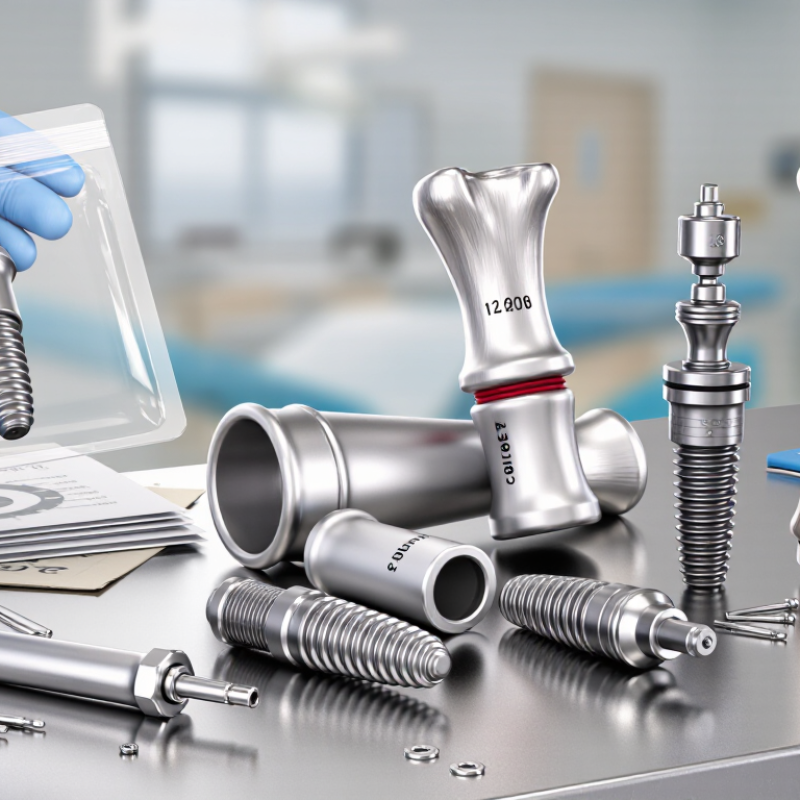
Why Do Global Buyers Choose Orthopedic Implants?

Global Disease Burden: 1.71 Billion People Affected by Musculoskeletal Conditions (WHO, 2022)

WHO’s 2022 musculoskeletal health report estimates that 1.71 billion people live with musculoskeletal conditions worldwide. These include osteoarthritis, fractures, and back pain, but the figure does not represent potential implant recipients. Many people manage symptoms without surgery. The number is vast, but also blunt.

The Global Burden of Disease Study 2019, published in The Lancet Rheumatology, estimated that musculoskeletal conditions caused about 149 million years lived with disability. That burden helps explain why hospitals and distributors assess orthopedic implants for local needs, not just market size. A hip replacement may restore mobility for one patient; for another, rehabilitation or non-surgical care may be more appropriate. Clinical judgment matters.

For global buyers, prevalence is only part of the decision. They also weigh evidence, material quality, sizing options, instrument compatibility, and dependable supply. Details become tangible in the operating room: a component must fit the patient, and the instruments must be ready when needed. There is no perfect forecast. WHO’s global estimate cannot show which region will need which implant next year, so procurement should pair broad health data with local clinical and service information.

Ageing Demand: 1 in 6 People Will Be Aged 60+ by 2030 (WHO)

The World Health Organization projects that one in six people worldwide will be aged 60 or older by 2030. This shift matters to orthopedic care because age can bring a higher risk of joint degeneration and fragility fractures. For some patients, an implant may help restore movement after a hip fracture or relieve severe joint pain. The need is real. But an ageing population does not mean every older person needs surgery.

Global buyers often assess implants alongside clinical evidence, material quality, traceability, and consistent manufacturing. Surgeons must match implant design and size to a patient’s anatomy, activity, and overall health. A clear surgical plan matters. So does rehabilitation, which can involve weeks of guided movement and gradual weight-bearing. Access to follow-up care also varies between health systems, and that difference can affect outcomes. Not every case. The WHO projection is useful context, not a forecast of implant sales or a reason to operate. Buyers and care teams still need to weigh expected benefits, risks, patient preferences, and the capacity to support recovery. That careful judgment is easy to overlook when population numbers dominate the discussion.

Clinical Evidence: How Registries Track Implant Survival and Revision Rates

Global buyers evaluating orthopedic implants need more than a promising brochure claim. National and regional joint registries provide long-term evidence by recording procedures, implant details, patient characteristics, and later revisions. A revision usually means another operation to replace or remove part of an implant. Registry teams can then estimate how often implants remain unrevised over time.

The numbers need context. A ten-year survival estimate describes revision risk, not whether every patient is pain-free or moving comfortably. Registries may also report why revisions occurred, such as infection, loosening, or instability. For a buyer, those details can help compare results across hospitals and patient groups. A careful comparison checks follow-up length, the number of patients still observed, and how outcomes were adjusted for age or diagnosis. Small differences can matter.

The record is useful, but not perfect. Some patients move, miss follow-up, or receive care outside the reporting network. Surgeons may also select different implants for patients with different needs, making simple comparisons misleading. The picture is rarely clean. A registry should therefore complement clinical studies and careful review of a device’s intended use, not replace them. When evidence is transparent about uncertainty, buyers can ask better questions about durability, revision patterns, and the patients most likely to benefit.

Why Do Global Buyers Choose Orthopedic Implants? — Clinical Evidence: How Registries Track Implant Survival and Revision Rates

Evidence Dimension Hip Replacement Knee Replacement How to Interpret the Evidence
Long-term implant survival 58.4% estimated survival at 25 years 82.3% estimated survival at 25 years These are pooled estimates reported in a 2019 systematic review and meta-analysis of long-term case-series and national registry data. They describe the studied historical cohorts, not a guarantee for an individual implant or a forecast for every contemporary design.
Primary outcome tracked Time from primary hip replacement to first recorded revision Time from primary knee replacement to first recorded revision Registries commonly use time-to-event methods to estimate cumulative implant survival. A revision is an operation to replace, remove, or add to an implant component; definitions can differ between registries.
Revision-rate reporting Revision counts may be reported as cumulative revision risk or as a rate per time at risk Revision counts may be reported as cumulative revision risk or as a rate per time at risk Check the measure, follow-up period, and denominator before comparing results. A percentage over a specified period is not directly interchangeable with a rate per implant-year.
Common reasons recorded for revision Examples include aseptic loosening, infection, dislocation, periprosthetic fracture, and pain or other reasons Examples include infection, aseptic loosening, instability, periprosthetic fracture, and pain or other reasons Registries classify reasons using their own coding systems. The listed categories are examples, not a ranking; rates vary by population, follow-up, and classification method.
Patient and treatment factors considered Age, sex, diagnosis, fixation method, and other recorded patient or procedure characteristics Age, sex, diagnosis, fixation method, and other recorded patient or procedure characteristics Risk-adjusted analyses can help account for differences between patient groups and procedures. Available variables and adjustment methods differ across registries.
What survival does not measure A retained implant does not necessarily mean the patient is pain-free, has normal function, or is fully satisfied. Registry survival is an important durability measure, but it should be considered alongside clinical outcomes, patient-reported measures, and safety information.

Source: Evans JT et al. Systematic reviews and meta-analyses of long-term hip and knee replacement survival. The Lancet. 2019;393:647–663. Estimates are pooled study findings and should be interpreted in the context of cohort, implant era, endpoint definitions, and follow-up.

Manufacturing Confidence: ISO 13485, Traceability, and Material Standards

An orthopedic implant’s assurance begins long before it reaches the operating room. ISO 13485 requires a documented quality-management system, including controls for suppliers, production, and corrective actions. The ISO Survey of Management System Standard Certifications reported 34,984 ISO 13485 certificates across 110 countries in 2022. That is a substantial global footprint, not proof that every implant or production batch is flawless. Certification matters, but the underlying records matter more.

Traceability should connect a finished implant to its material certificate, heat or lot number, machining history, sterilization record, and release inspection. The WHO’s Global Atlas of Medical Devices describes a field spanning more than two million device types, making consistent identification essential. That’s a lot to track. Buyers can ask how quickly a supplier retrieves a specific batch record, and whether changes in material source trigger documented review. Material specifications add another check: ASTM F136 covers titanium alloy used in implants, while ASTM F2026 addresses implant-grade PEEK. But a standard alone cannot show how a component was processed or inspected. There is a gap here. A tidy certificate may look convincing; buyers still need evidence linking that certificate to the actual implant, plus a clear explanation of exceptions and rework.

Market Access: Regulatory Approval, Total Cost, and Regional Availability

Global buyers choose orthopedic implants not only for design, but for reliable access in the markets where patients need them. Regulatory approval is a practical starting point. Requirements differ by country and may involve technical documentation, clinical evidence, quality-system records, and local registration. A product cleared in one market is not automatically approved elsewhere. Delays can affect hospital planning and procedure schedules.

Total cost goes beyond the purchase price. Buyers may need to account for shipping, import duties, instrument sets, staff training, storage, and replacement parts. A lower-priced implant can become more expensive if delivery is uncertain or compatible instruments are hard to obtain. Small details matter. For example, a hospital may need a specific component available before a scheduled operation. Comparing costs over the product’s expected use is more useful than comparing quotes alone, though those estimates are never perfect.

Regional availability also shapes decisions. Local distribution, dependable inventory, and responsive technical support can help reduce interruptions, especially when a facility serves patients across a wide area. Buyers should confirm expected lead times and how urgent requests are handled. Paperwork is easy to overlook. I would also question whether a supplier’s stated availability reflects stock on hand or simply a broad delivery estimate. Approval, cost, and access work together, but each should be checked against the needs of the local healthcare system.

FAQS

Does an ageing population mean more people need orthopedic surgery?

No. Age can raise the risk of joint problems and fractures, but surgery is not right for everyone. Each case needs careful review.

How are orthopedic implants matched to patients?

Surgeons consider anatomy, activity, and overall health when choosing an implant’s design and size. A clear plan matters.

What can joint registries tell buyers?

Registries track procedures, implant details, and later revision operations. They can estimate how often implants remain unrevised over time. Useful, but not complete.

Does a ten-year implant survival rate mean patients feel well?

Not necessarily. The figure concerns revisions, not pain-free movement. Check follow-up length and how many patients remained under observation.

Why can implant comparisons be misleading?

Patients may have different needs, and surgeons may choose implants accordingly. Some patients also leave the reporting network. The picture gets messy.

Does approval in one country cover other markets?

No. Requirements differ by country and may include technical records, clinical evidence, and local registration. Approval needs checking for each market.

What costs should buyers consider beyond the implant price?

Include shipping, duties, instruments, training, storage, and replacement parts. A low quote may not mean lower overall cost.

What should hospitals check about availability and support?

Ask about local stock, delivery times, urgent requests, and technical help. A scheduled operation may depend on one specific component.

What can affect recovery after implant surgery?

Rehabilitation may involve weeks of guided movement and gradual weight-bearing. Follow-up access varies, and that can affect outcomes. Worth considering early.

Conclusion

Orthopedic Implants are essential for addressing the growing global burden of musculoskeletal conditions, which affect an estimated 1.71 billion people, according to the World Health Organization’s 2022 figures. Demand is also expected to rise as populations age: by 2030, one in six people worldwide is projected to be aged 60 or older. For patients and healthcare providers, the value of an implant depends not only on its intended clinical use but also on reliable evidence about its performance. Registries help track implant survival and revision rates, supporting informed evaluation over time.

Confidence in manufacturing is strengthened by quality systems such as ISO 13485, device traceability, and adherence to material standards. Buyers also consider whether products have appropriate regulatory approval, are available in their region, and offer a suitable total cost over their expected use. Together, clinical evidence, manufacturing quality, and practical market access help explain why global buyers choose implants that meet patient needs and healthcare requirements.

Eleanor Hayes

Eleanor Hayes

Eleanor Hayes is a professional marketing specialist who helps translate the company’s products and expertise into clear, useful information for customers. With a strong understanding of the solutions the company offers, she regularly contributes expert articles to its website, covering product......