Certified Medical Bed & Patient Transport Systems
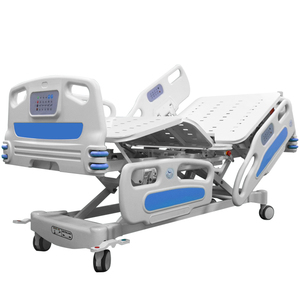
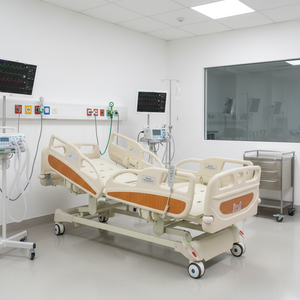
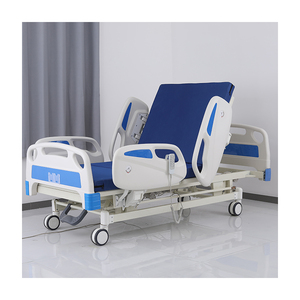
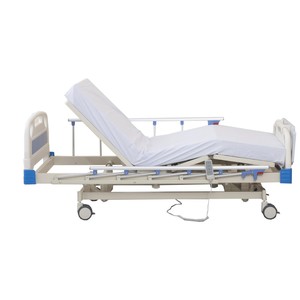
Explore our flagship international export portfolio, engineered for critical care, emergency response, hospital wards, and long-term nursing facilities.
Executive Whitepaper: Engineering Next-Generation Ambulance Stretchers
In pre-hospital emergency medical services (EMS), the ambulance stretcher is far more than a transport cot; it is an active clinical workspace, a mechanical load-bearing structure, and a safety-critical interface between emergency responders, vehicles, and high-acuity patients. Modern pre-hospital procurement teams operate under rigorous clinical efficacy and regulatory mandates. Selecting a reliable CE certified ambulance stretcher manufacturer and exporter requires evaluating engineering precision, dynamic safety testing compliance, material metallurgy, and total cost of ownership (TCO).
According to empirical studies published by emergency medicine institutes, over 65% of paramedic occupational injuries stem from repetitive manual lifting and loading operations during patient extraction. Furthermore, adverse events occurring during ambulance transit are frequently linked to mechanical structural failures or non-compliant locking mechanisms. As a leading manufacturer with over 25 years of ISO 13485 certified production experience, our design philosophy integrates advanced ergonomics, high-strength aluminum alloy metallurgy, and automated hydraulic elevation to address critical pre-hospital challenges.
Enterprise Manufacturing Excellence & Technical Core Competencies
Our manufacturing infrastructure combines automated robotic welding, CNC precision machining, and strict multi-stage quality control protocol tailored specifically for medical device manufacturing. Certified under ISO 13485 quality management systems, our facilities ensure every batch of emergency stretchers, hospital ICU beds, and patient transfer trolleys meets strict international standards including European MDR (EU 2017/745), CE Medical Device Directives, and US FDA requirements.
High-Tensile Aluminum Metallurgy
Constructed using hardened 6061-T6 aviation-grade aluminum alloys, offering superior strength-to-weight ratios, corrosion resistance, and complete structural integrity under dynamic stresses.
Full Regulatory Certification
Fully certified against CE, ISO 13485, IEC 60601-1, and EN 1865-1/2/3 standards, validating structural safety, biological compatibility, and electrical system isolation.
30+ Rigorous QC Inspections
Every production unit undergoes 30 physical quality checks and 15 functional strain tests, including static load testing at 1.5x safe capacity, dynamic drop tests, and salt spray anti-corrosion trials.
Future Industry Trends: Next-Gen Ambulance Stretcher Innovations
The pre-hospital care sector is transitioning rapidly from manual mechanical stretchers toward smart, powered patient loading systems and connected digital health ecosystems. OEM/ODM manufacturers who proactively integrate power-assist technologies, modular accessory compatibility, and lightweight composites are redefining operational safety standards worldwide.
1. Powered Electro-Hydraulic Loading Mechanisms
Manual loading stretchers require paramedics to lift the full combined weight of the patient and equipment during vehicle ingress and egress. Powered hydraulic stretchers utilize high-torque electric actuators and battery systems to raise and lower legs automatically. This single innovation reduces physical exertion during loading by over 80%, virtually eliminating acute lumbar strain among emergency personnel and enabling single-operator patient transfers.
2. Smart Telemetry & Integrated Vital Sign Docking
As pre-hospital telemedicine expands, ambulance stretchers are evolving into mobile connectivity nodes. Future-ready stretchers incorporate integrated battery power rails, wireless load cell weight scales, telemetry data interfaces, and universal mounting docks for defibrillators, mechanical ventilators, and IV infusion pumps. This design ensures uninterrupted monitoring during patient transfer from scene to ICU.
3. EN 1789 Vehicle Dynamic Crash Resistance Standards
International safety regulators are imposing strict crashworthiness standards on emergency vehicles and internal equipment. Under European Standard EN 1789, ambulance stretchers and their vehicle retention systems must withstand directional acceleration forces of up to 10G in forward, rearward, lateral, and vertical axes. Manufacturers are utilizing advanced finite element analysis (FEA) and high-yield alloy latching locks to guarantee patient retention during vehicle collision scenarios.
| Stretcher Classification | Primary Actuation | Load Capacity (SWL) | EN 1865 / EN 1789 Compliance | Target Clinical Application |
|---|---|---|---|---|
| Automatic Loading Stretcher | Mechanical Roll-In Legs | 180 kg – 220 kg | EN 1865-1 Compliant | Standard Type I / Type II Ambulance Fleets |
| Powered Hydraulic Stretcher | Electro-Hydraulic Actuators | 250 kg – 318 kg | EN 1865-2 & EN 1789 10G Verified | High-Acuity ICU & Bariatric EMS Response |
| Multi-Height Emergency Stretcher | Manual Hydraulic Foot Pedal | 160 kg – 200 kg | CE / ISO 13485 Certified | Emergency Department & Trauma Reception |
| Foldable Extraction Stretcher | Manual Folding Frame | 159 kg | CE Medical Class I | Disaster Rescue, Military & Field Transport |
Strategic Procurement Guide for Global Healthcare Suppliers & Distributorships
For hospital procurement officers, government ministry tenders, and medical equipment distributors, acquiring ambulance stretchers involves comprehensive technical evaluation beyond initial purchase cost. Evaluating total lifecycle costs, spare parts interchangeability, and supplier technical documentation is vital for long-term fleet viability.
Key Procurement Evaluation Checklist:
- Vehicle Dimension & Loading Height Compatibility: Verify that the stretcher loading wheel height precisely matches the ambulance rear bumper and interior floor height (ranging typically between 550mm and 750mm).
- Decontamination & Infection Control Integrity: Ensure mattresses feature seamless high-frequency welded TPU/PU covers resistant to blood penetration, chemical disinfectants, and fluid ingress.
- Structural Rigidity & Bariatric Capability: Select models engineered with reinforced cross-beam geometry capable of supporting bariatric patients without frame flexing.
- OEM/ODM Customization Capabilities: Partner with manufacturers capable of customizing side-rail configurations, castor wheel lock types, directional tracking locks, and vehicle mounting fasteners.
Frequently Asked Questions (FAQ) — B2B Procurement
Expert answers to common engineering, regulatory, and logistics queries from global medical equipment buyers.
Q1: What mandatory certifications are required to import ambulance stretchers into Europe and South America?
For European import, medical stretchers must comply with EU Medical Device Regulation (MDR 2017/745), carry valid CE marking, and adhere to EN 1865 for patient handling in ambulances. For Latin America (such as ANVISA in Brazil or COFEPRIS in Mexico), ISO 13485 certification, Free Sale Certificates (FSC), and full technical construction files are required. All our emergency stretchers provide complete regulatory dossiers for rapid customs and healthcare registry approvals.
Q2: What is the difference between an EN 1865 stretcher and an EN 1789 tested stretcher system?
EN 1865 specifies design, ergonomic, minimum dimensions, and static load requirements for stretchers used in road ambulances. EN 1789 specifies requirements for the ambulance vehicle as a whole, including the 10G dynamic crash testing of the stretcher retention system in all directions. Our premium export stretchers are engineered and tested in conjunction with certified vehicle locking tracks to meet full EN 1789 crashworthiness standards.
Q3: Can ambulance stretchers be customized for specific emergency vehicle models?
Yes. As a direct manufacturer, we offer comprehensive OEM/ODM customization. We adjust loading wheel heights, overall frame lengths, track locking pin configurations, side rail drop styles, and color schemes to align perfectly with Type I, Type II, Type III, or compact van-based ambulance conversions.
Q4: How do powered hydraulic stretchers perform under extreme outdoor temperatures?
Our powered stretchers utilize industrial-grade lithium-iron-phosphate (LiFePO4) battery units and sealed hydraulic power packs rated for operation between -20°C and +55°C. IPX6 water-resistant electrical housings ensure reliable performance during severe rainfall, snow, or high-humidity tropical conditions.
Q5: What is your typical production lead time for bulk government EMS tenders?
Standard production lead time for orders ranging between 50 and 200 units is typically 25 to 35 business days from L/C issuance or deposit approval. For large government tender deliveries, our scalable manufacturing plant can ramp up capacity to output over 1,500 medical beds and stretchers monthly.
Q6: How is after-sales technical support and spare parts supply managed internationally?
We provide comprehensive technical support including detailed exploded-view parts manuals, video maintenance guides, and direct engineer troubleshooting consultations. We maintain guaranteed 10-year spare parts availability for all certified stretcher platforms, shipping replacement actuators, castors, and hydraulic seals via express air delivery worldwide.
Partner with a Certified Ambulance Stretcher OEM/ODM Manufacturer
Whether you are seeking custom EMS fleet stretchers, ICU hospital beds, or regional distribution opportunities, our engineering team provides comprehensive technical consultations and competitive factory quotes.
Contact Us