Certified Medical & Automatic Bed Portfolio
Direct Factory Supply for ICU Wards, Clinical Care, and Advanced Home Healthcare Environments
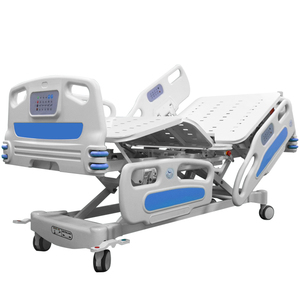
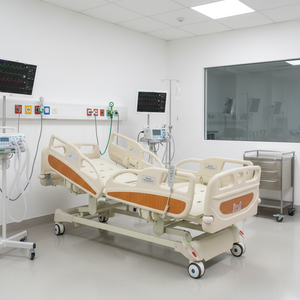
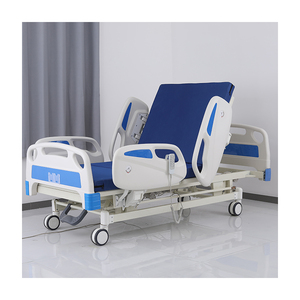
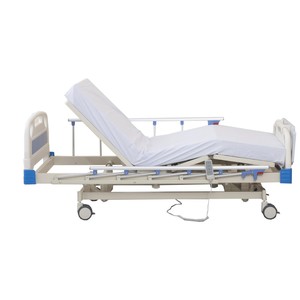
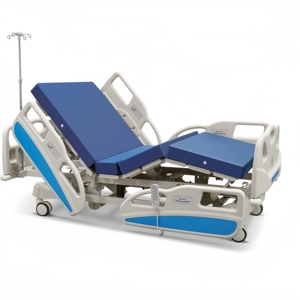
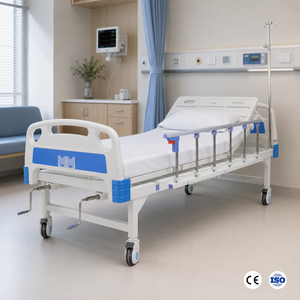
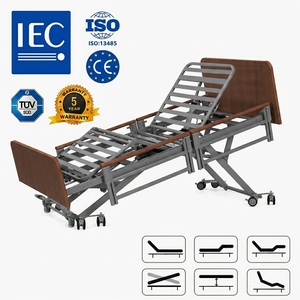
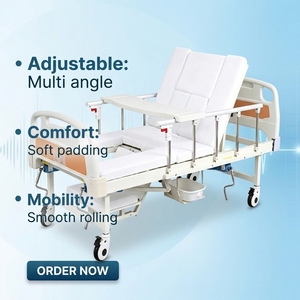
Enterprise Strengths & Global Manufacturing Footprint
Established Engineering Excellence Supporting Healthcare Infrastructures across 65+ Countries
ISO 13485 & CE Quality Assurance
Operates under rigorous ISO 13485 Medical Device QMS protocols. Products undergo full electromagnetic compatibility (EMC) testing, structural stress audits, and CE marking verification under EU MDR (2017/745) requirements.
Advanced OEM/ODM Capabilities
Equipped with modern laser tube cutting, automated robotic welding cells, and electrostatic powder coating lines. We deliver tailored dimensional modifications, motor system integration (Linak, L&K, Dewert), and customized side rail configurations.
Global Compliance & Logistics Support
Exporting to hospitals, government tenders, and institutional care distributors worldwide. Full compliance documentation including FDA 510(k) registrations, CB Test Certificates, RoHS compliance, and UN38.3 transport safety for backup batteries.
Industry Whitepaper: Technical Architecture & Procurement Standards for CE Certified Automatic Beds
The global healthcare industry is experiencing a paradigm shift driven by demographic aging, expanding clinical infrastructure, and the continuous need to lower caregiver physical strain while elevating patient safety protocols. Central to modern clinical infrastructure is the automatic medical bed—a complex mechatronic assembly designed to serve as both an acute care platform and a patient rehabilitation tool. When hospital procurement boards, OEM distributors, and medical equipment importers source from certified bed manufacturers, evaluating compliance with mandatory international standards such as CE Marking (EU MDR 2017/745), ISO 13485, and IEC 60601-2-52 forms the foundation for operational risk mitigation and clinical safety.
Information Gain Insight: Selecting a CE certified automatic bed factory requires evaluating structural fatigue limits, electro-mechanical actuator safety margins, anti-entrapment guardrail geometries, and real-time telemetry connectivity—far beyond basic price-per-unit metrics.
1. Critical Procurement Standards: Decoding Certification Compliance
Procuring medical furniture for clinical wards or long-term nursing care requires precise technical compliance to avoid regulatory friction, recall hazards, and patient safety incidents. Factories specializing in automatic beds must maintain comprehensive technical files demonstrating adherence to multi-tiered certification frameworks:
CE Marking under EU Medical Device Regulation (MDR 2017/745)
Under the European MDR framework, automatic hospital beds are categorized primarily as Class I or Class IIa medical devices depending on their active clinical functions (e.g., integrated weight scales, continuous micro-tilting therapy, or invasive treatment support). CE compliance ensures that the manufacturer has conducted systematic Risk Management (ISO 14971), Clinical Evaluation Reports (CER), and comprehensive post-market surveillance (PMS). Factories must issue a formal Declaration of Conformity supported by Notified Body oversight where applicable.
IEC 60601-2-52: The Gold Standard for Bed Safety
The primary safety standard governing electric and automatic medical beds is IEC 60601-2-52 (Particular requirements for the basic safety and essential performance of medical beds). This rigorous benchmark replaces older legacy standards and mandates specific mechanical, electrical, and ergonomic parameters:
- Prevention of Entrapment Zones: Defines strict dimensional limits between side rail gaps, headboard clearance, and mattress platforms to eliminate patient head, neck, and torso entrapment risks (specifically testing Zones 1 through 7).
- Safe Working Load (SWL) Verification: Requires mechanical stress testing at 1.5 times the maximum rated load (typically testing frames to withstand static loads exceeding 250 kg to 400 kg).
- Emergency CPR Mechanism: Demands manual quick-release actuators capable of leveling the backrest in under 3 seconds during cardiac arrest emergencies, functioning independently of main power.
- Ingress Protection (IP Rating): Mandates minimum IPX4 liquid ingress protection across electric motors, control boxes, and hand pendants to withstand hospital-grade chemical disinfection protocols.
ISO 13485 Quality Management System
A manufacturing plant certified to ISO 13485 demonstrates that every stage of production—from raw high-tensile steel procurement and robotic MIG welding to final hi-pot electrical isolation testing—is subject to traceable traceability and quality auditing. This guarantees lot-to-lot consistency and minimizes total cost of ownership (TCO) for healthcare facilities.
Standard Technical Specifications Benchmark Matrix
| Technical Parameter | Standard Ward Electric Bed | Advanced ICU Automatic Bed | Home / Long-Term Nursing Bed |
|---|---|---|---|
| Safe Working Load (SWL) | 200 kg – 250 kg | 265 kg – 350 kg (Bariatric option >400kg) | 175 kg – 220 kg |
| Functional Actuation | 2 to 3 Motors (Back, Knee, Height) | 4 to 5 Motors + CPR + Trendelenburg | 3 Motors (Auto-Chair feature) |
| Linear Actuator Brand | Standard CE Certified / L&K / Jiechang | Linak / DewertOkin / Medical Grade L&K | Low-noise DC Actuators (<45dB) |
| Castor & Braking System | Individual 125mm Castors w/ Brakes | Central Locking System w/ 5th Steering Wheel | Individual Bumper Castors 100-125mm |
| Safety Certifications | CE, ISO 13485, IEC 60601-1 | CE MDR, IEC 60601-2-52, FDA 510(k) | CE, IEC 60601-1-11 (Home Care) |
| Infection Control | Powder Coated Steel / ABS Panels | Seamless Molded PP / Anti-Microbial ABS | Wood-Grain Laminate / Metal Frame |
2. Global Procurement & Manufacturing Development Trends
As hospital networks upgrade aging assets and international nursing care providers expand home care models, the demand for high-performance automatic medical beds is accelerating. Key technological and supply chain developments include:
A. Integration of Smart IoT Telemetry & Patient Monitoring
Modern automatic beds are evolving from passive mechanical supports into active data-collection nodes within the hospital's digital ecosystem. Leading manufacturers are incorporating load-cell sensor arrays directly into the bed frame. These integrated weight scale systems allow continuous mass tracking without transferring fragile ICU patients. Furthermore, smart bed telemetry integrates seamlessly with Nurse Call Systems and Electronic Health Record (EHR) platforms, triggering real-time alerts for out-of-bed movements, bed exit risk assessment, and patient position change logging to prevent pressure ulcer development.
B. Advanced Ergonomics & Auto-Chair Positioning
Caregiver musculoskeletal injuries represent one of the highest operational costs for healthcare facilities worldwide. Modern electric beds incorporate one-button "Auto-Chair" and reverse Trendelenburg positioning. This allows nurses to transition patients smoothly from a recumbent state to an upright seated position, promoting pulmonary clearance and digestive function while requiring zero manual lifting from nursing staff.
C. Infection Control via Seamless Modular Design
Healthcare-Associated Infections (HAIs) pose a multi-billion-dollar global challenge. Next-generation bed factories are moving away from traditional multi-seam metal fabrications toward blow-molded polypropylene (PP) and high-density ABS side rails and removable head/footboards. Smooth, rounded radii prevent bacterial colonization, while quick-release mechanisms permit rapid immersion or automated washer-disinfector sanitization.
D. Sustainable Materials & Energy-Efficient Drive Systems
Factory production lines are adopting eco-friendly electrostatic powder coatings that eliminate Volatile Organic Compounds (VOCs) and heavy metal pigments. Concurrently, 24V DC brushless linear motor drive systems have reduced standby power consumption by up to 60%, incorporating long-life Lithium-Ion backup batteries capable of sustaining 50+ full articulation cycles during power outages.
3. Key Evaluation Criteria for Sourcing Automatic Bed Manufacturers
When conducting factory supplier audits or evaluating tender submissions, procurement directors must look beyond basic unit pricing and examine holistic manufacturer capabilities:
- Structural Weld Integrity & Automation: Inquire whether the manufacturer utilizes 6-axis robotic MIG welding for primary load-bearing chassis frames. Robotic welding ensures uniform joint penetration and prevents structural metal fatigue over tens of thousands of articulation cycles.
- Quality Control & Testing Infrastructure: Reputable original equipment manufacturers maintain on-site testing labs equipped with salt spray corrosion test chambers, cycle endurance drop testers, side rail lateral force loading rigs, and high-voltage electrical breakdown testers.
- Supply Chain Transparency & Motor Sourcing: The linear actuator system is the heart of an automatic bed. Verify whether the factory offers verified motor options such as Danish Linak, German Dewert, or high-tier medical L&K assemblies, complete with full UL/EN 60601 certification.
- Customization (OEM/ODM) Flexibility: Evaluate the factory's engineering team responsiveness regarding voltage customization (110V/220V), custom side rail heights for high-risk psychiatric or pediatric care, integrated X-ray translucent backrests, and country-specific electrical plug configurations.
Procurement & Technical FAQ
Direct Answers to Common Engineering, Compliance, and Bulk Procurement Questions
Partner with a Certified Medical Bed Manufacturer
Connect with our technical engineering sales team for comprehensive product specifications, factory audits, OEM consultation, and bulk procurement quotations.
Get a Quote