Featured Medical Beds & Overbed Equipment Series
Engineered for critical care units, inpatient surgical wards, emergency rooms, and premium home nursing environments. Certified to IEC 60601-2-52 standards.
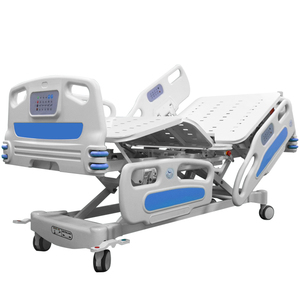
Longermay Factory Medical Hospital Bed Series
- Heavy-duty steel construction
- Ergonomic manual adjustment
- Factory-direct enterprise pricing
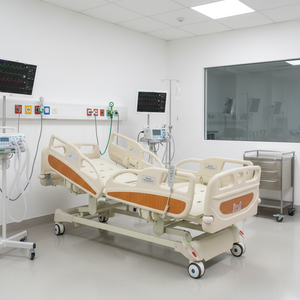
Hospital Furniture 3/5/7 Function Electric ICU Bed
- Advanced multi-function electric motor
- Seamless integrated side-rail control
- Trendelenburg & Reverse positioning
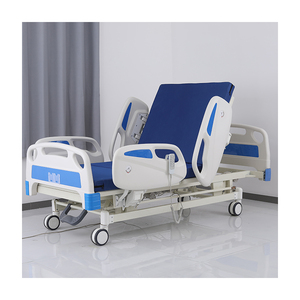
Chenhong CH-C8 Double-Shaking Stainless Steel Medical Bed
- Class II medical device classification
- Corrosion-resistant stainless frame
- Dual mechanical crank mechanism
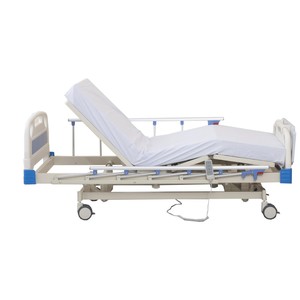
GRACEMED 3-Function Hospital Electronic Bed with L&K Motor
- High-precision German L&K actuator
- CE & ISO 13485 certified compliance
- 1-Year full factory warranty
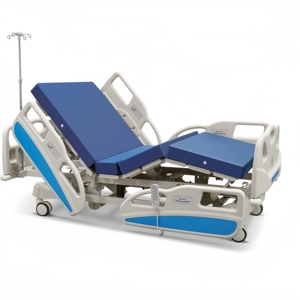
Cama Clinica 5 Function ICU Electric Hospital Bed
- Complete with pressure-relief mattress
- Emergency CPR release control system
- Central locking caster architecture
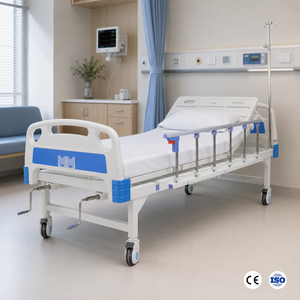
OEM Custom 2-Function Manual Medical Bed with ABS Headboard
- Anti-collision ABS removable headboard
- Flexible OEM hospital branding options
- Smooth manual backrest & knee tilt
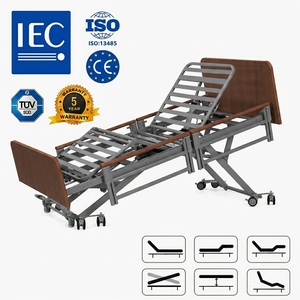
Electric Adjustable Home & Nursing Care Bed with Rails
- IEC 60601 safety standards compliant
- 5-Year extended structural warranty
- Homelike design with safety side rails
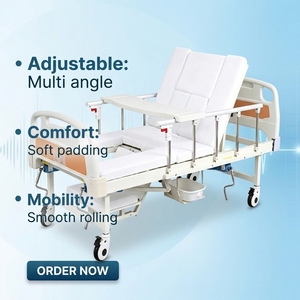
Multifunctional Manual Nursing Bed for Clinic & Ward
- Reinforced powder-coated steel frame
- Low maintenance clinical construction
- Dual IV pole attachment points
The Engineering Blueprint for CE Certified Overbed Tables
In modern clinical settings, overbed tables are no longer simple static dining boards; they are sophisticated, mobile patient support systems integrated into ICU critical care workflows, rehabilitation regimens, and infection prevention protocols.
When global procurement directors, hospital architects, and medical equipment distributors evaluate a CE Certified Overbed Table Manufacturer, technical compliance, ergonomic reliability, and material durability take precedence. Under European Union Regulation (EU) 2017/745 (MDR) and international medical quality standards like ISO 13485:2016, hospital furniture must maintain structural integrity under dynamic loading, resist harsh chemical surface disinfection, and offer effortless single-hand height adjustability for immobile patients.
Why CE Certification and Medical-Grade Compliance Matter
CE marking is a mandatory conformity mark for products sold within the European Economic Area (EEA), signifying that overbed tables meet strict safety, health, and environmental protection benchmarks. For Class I medical devices and hospital accessories, CE certification under MDR ensures:
Biocompatibility & Infection Control
Thermoformed ABS plastic tops and antimicrobial powder-coated steel columns eliminate seams where pathogens (such as MRSA and VRE) harbor, withstanding daily exposure to hospital-grade chlorine and alcohol disinfectant solutions.
Biomechanical Dynamic Stability
Gas-spring pneumatic lifting mechanisms engineered to prevent sudden tabletop drops under load. Designed with safety auto-rise features that instantly ascend if patient legs press against the underside of the table.
Universal Low-Clearance Base Integration
Ultra-low clearance C-shaped and U-shaped base chassis (under 95mm height) designed specifically to glide under electric ICU beds, patient stretchers, and reclining patient care armchairs.
Pneumatic vs. Hydraulic vs. Manual Overbed Table Systems
Understanding the mechanical actuation technology inside overbed tables allows hospital procurement officers to optimize lifetime ROI, lower maintenance overhead, and enhance patient self-care.
| Engineering Feature | Pneumatic Gas-Spring Table | Hydraulic Cylinder Table | Manual Gear & Screw Table |
|---|---|---|---|
| Height Adjustment Mechanism | Internal nitrogen gas-cylinder cartridge with quick-release counterbalanced lever | Hydraulic oil pump system activated via foot pedal or hand lever | Threaded spindle or manual locking knob gear train |
| Operation Effort Required | Effortless single-finger upward lift; controlled smooth downward pressure | Moderate manual pumping motion required for elevation | High physical effort; requires two hands to unlock and position |
| Safety Auto-Rise Function | Yes; ascends automatically if bumped by moving hospital bed frame | No; rigid lock requires manual valve release | No; rigid mechanical pin or clamp can trap patient legs |
| Weight Load Capacity (Static) | 25 kg - 40 kg (55 - 88 lbs) | 45 kg - 60 kg (100 - 132 lbs) | 30 kg - 50 kg (66 - 110 lbs) |
| Hygiene & Maintenance | Zero oil leak risk; sealed maintenance-free gas cylinder (100k+ cycles) | Occasional hydraulic fluid seal replacement needed over time | Spindle greasing required; mechanical wear on plastic gears |
| Target Hospital Deployment | ICU wards, VIP private suites, surgical recovery, rehabilitation centers | Heavy-duty bariatric wards, trauma emergency units | Economy nursing homes, general clinic observation rooms |
Future Sourcing & Tech Trends in Overbed Table Manufacturing
Driven by aging global demographics, smart hospital connectivity, and stringent environmental policies, overbed table design is evolving rapidly. Here are the four mega-trends shaping global hospital tenders.
Smart IoT & Telehealth Digital Surface Integration
Modern hospital overbed tables are transitioning into digital hubs. Next-generation prototypes feature embedded wireless device charging pads, USB-C power delivery channels, and integrated tablet holders with cable management channels, allowing patients to participate in telehealth consultations and digital entertainment seamlessly.
Advanced Silver-Ion Antimicrobial Materials
To battle Hospital-Acquired Infections (HAIs), leading factories are integrating silver-ion (Ag+) antimicrobial additives directly into the thermoformed ABS plastic resin during extrusion. This delivers non-leaching, permanent bacterial inhibition (99.9% reduction against E. coli and S. aureus) throughout the product lifetime.
Lightweight Eco-Conscious Carbon & Recycled Aluminum
Environmental, Social, and Governance (ESG) mandates in Western healthcare systems require suppliers to minimize carbon footprints. Manufacturers are replacing heavy solid steel frames with extruded anodized aluminum columns and recyclable high-density polymer composites, reducing shipping weight by 35% without sacrificing load rigidity.
Why Top Healthcare Providers Choose Our Manufacturing Network
Derived from over two decades of Taiwanese precision engineering and global medical factory operations, our medical furniture solutions strictly adhere to international medical device quality systems.
ISO 13485 & FDA Registered Quality System
Our manufacturing facilities operate under comprehensive ISO 13485 medical device quality management systems. Every overbed table undergoes over 30 quality inspections and 15 continuous load fatigue tests prior to packaging.
Precision Robotic Welding & Tooling
Fully automated robotic welding arms ensure 100% seam precision on heavy-gauge carbon steel chassis. High-pressure powder coating lines apply non-toxic, impact-resistant epoxy coatings designed for decades of clinical use.
Custom OEM / ODM Engineering Support
We support medical distributors and hospital brand owners with tailor-made product dimensions, custom color schemes, mold development for proprietary ABS top designs, and localized language packaging solutions.
Proven Export Footprint in 65+ Nations
With hundreds of thousands of medical beds and overbed tables deployed across Europe, North America, the Middle East, and Southeast Asia, our supply chain guarantees reliable lead times and tender compliance support.
Frequently Asked Questions (FAQ) for Hospital Buyers
Clear answers to technical, commercial, and regulatory questions regarding overbed table manufacturing and bulk orders.
CE compliance under EU MDR 2017/745 requires an official Manufacturer's EU Declaration of Conformity (DoC), technical documentation files (including mechanical safety test reports under EN ISO 14971 risk management), and ISO 13485 certification audit reports from an accredited Notified Body or Registrar.
Our high-end pneumatic overbed tables feature a dual-directional mechanical safety release mechanism. If an electric hospital bed is accidentally elevated while the overbed table is positioned above the patient, upward pressure on the underside of the table instantly disengages the downward lock, allowing the table to slide upward automatically without tipping or crushing the patient.
We offer three primary clinical tabletop materials: 1) Thermoformed ABS plastic with integrated liquid spill-retention rims; 2) High-Pressure Compact Laminate (HPL) with CNC rounded edges for superior chemical and flame resistance; and 3) Molded seamless polyurethane (PU) soft-touch surfaces ideal for premium VIP medical suites.
Yes. Our low-profile C-base and U-base chassis are engineered with a ultra-low floor clearance of 85mm to 95mm (including twin-wheel swivel casters), ensuring effortless movement under almost all standard electric ICU beds, hydraulic emergency stretchers, and dialysis armchairs.
Standard OEM factory production MOQs start at 50 units for custom frame powder-coating colors or private brand labeling. For complete custom mold development (such as proprietary tabletop geometries), MOQs are determined based on engineering tooling requirements. Contact our engineering team for project quotes.
Every production batch undergoes 100% pneumatic lift actuation testing, dynamic loading tests (1.5x nominal load rating held for 24 hours), caster swivel and brake endurance tests, spray salt resistance testing on metallic coatings, and packaging drop tests per ISTA standards.
Partner with a Certified Medical Overbed Table Factory
Whether you are equipping a new 500-bed tertiary hospital construction project or sourcing private-label hospital furniture for global distribution, our technical engineering team delivers uncompromised quality, competitive factory pricing, and full CE/ISO regulatory documentation.