Hospital & Clinical Furniture Portfolio
High-precision electric and manual hospital beds engineered for intensive care units, clinical wards, and long-term care facilities globally.
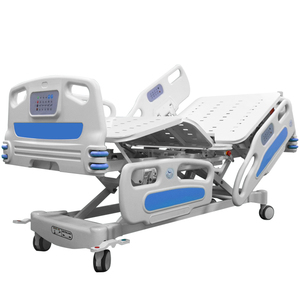
Longermay Factory Medical Hospital Bed Prices
- Heavy-duty steel construction
- Ergonomic manual crank system
- Anti-collision ABS head/footboards
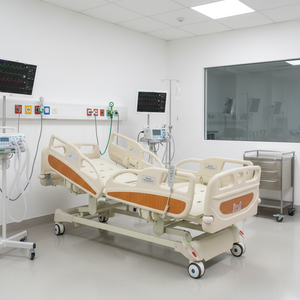
Hospital Furniture Patient Nursing Clinical Medical Bed 3/5/7 Function Electric Hospital ICU Bed
- Multi-function motorized adjustments
- Auto-chair & Trendelenburg mode
- IEC 60601-2-52 safety compliant
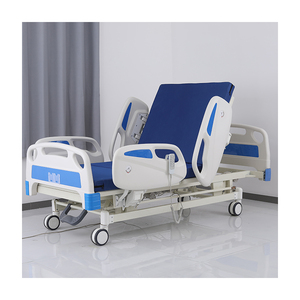
Chenhong CH-C8 Factory Supplied Double-Shaking Stainless Steel Class II Medical Beds For ICU & Hospital Wards
- Grade 304 stainless steel frame
- Double-shaking manual mechanism
- Class II medical device standard
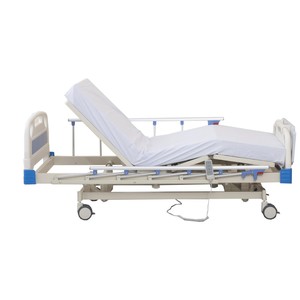
GRACEMED 3-Function Hospital Electronic Medical Bed with L&K Motor CE Certified 1-Year Warranty
- Whisper-quiet L&K linear actuators
- Full CE certification compliance
- Integrated side rail controls
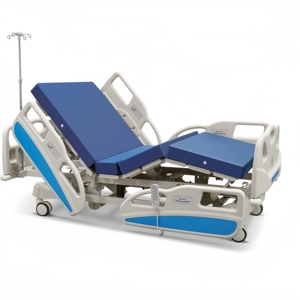
Cama Clinica Medical Patient Bed 5 Function ICU Electric Hospital Bed With Mattress
- 5-function motorized control
- Includes medical-grade mattress
- Central braking system casters
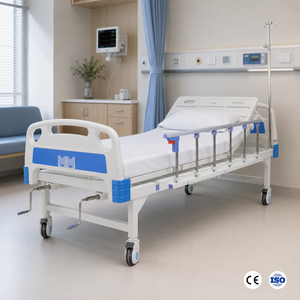
OEM Custom 2-Function Manual Medical Hospital Bed With Adjustable Anti-Collision ABS Headboard for Clinic Patient Care
- Tailored dimensions & colorways
- Foldaway aluminum side rails
- Impact-resistant ABS headboard
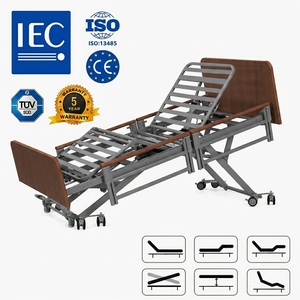
Electric Hospital Bed For Home Use Adjustable Patient Medical Bed With Rails 5-Year Warranty IEC 60601 Nursing Home Care Bed
- Ergonomic wood-grain finishes
- Ultra-low height positioning
- IEC 60601 home care safety certified
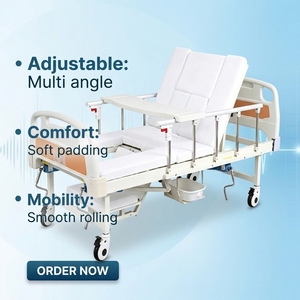
Hospital Grade Multifunctional Manual Nursing Bed with Steel Construction for Clinic Patient Care
- Powder-coated antibacterial steel
- Integrated IV pole sockets
- High-load capacity frame
Selecting a top-tier Chinese medical furniture manufacturer requires looking beyond basic price-per-unit metrics. Modern clinical governance demands verification of raw material metallurgy (e.g., Grade 304 stainless steel vs. cold-rolled steel tensile strength), electro-actuator duty cycles (Linak vs. TiMotion vs. L&K), and adherence to strict electromagnetic compatibility (IEC 60601-1-2) standards. This guide details technical benchmarks for procurement specialists, hospital engineers, and medical equipment distributors.
Why Partnering with a Tier-1 Chinese Medical Furniture Manufacturer Matters
The global healthcare furniture landscape has evolved dramatically. China’s advanced industrial manufacturing ecosystem now produces over 60% of the world's hospital beds, patient transfer stretchers, and clinical ward cabinets. However, the disparity between standard commercial furniture workshops and certified medical device manufacturers is significant.
Leading medical furniture factories operate under comprehensive quality control frameworks governed by ISO 13485 (Medical Devices Quality Management Systems), ISO 9001, and regional regulatory compliance mechanisms such as the European Union CE Mark (MDR 2017/745) and US FDA 21 CFR Part 820.
Robotic Metallurgy & Structural Integrity
Utilizing high-precision laser cutting, CNC tube bending, and robotic Panasonic welding systems guarantees zero-defect structural joint integrity, handling dynamic working loads up to 250kg (550 lbs) safely.
Advanced Antibacterial Powder Coating
All steel surfaces undergo a 9-stage pre-treatment wash and automated electrostatic silver-ion powder coating, resisting harsh hospital-grade chemical disinfectants and inhibiting 99.9% of bacterial colonization (MRSA/E. coli).
Actuator & Electrical System Reliability
Equipped with IPX4 or IPX6 water-resistant linear actuators (Linak, TiMotion, or L&K), featuring silent motor operation (<45 dB), emergency battery backups, and overload cut-off safety switches.
Engineering Benchmark & Specification Matrix
To assist healthcare procurement teams in making informed capital expenditure decisions, the matrix below outlines the critical engineering differences across standard manual beds, electric ward beds, and advanced ICU critical care beds.
| Feature Benchmark | Standard Manual Ward Bed | 5-Function Electric Ward Bed | High-End ICU Medical Bed |
|---|---|---|---|
| Primary Frame Metallurgy | Cold-Rolled Carbon Steel Frame | Robotic-Welded Q235B Steel | Grade 304 Stainless Steel & ABS |
| Safe Working Load (SWL) | 175 kg (385 lbs) | 230 kg (506 lbs) | 280 kg + (617 lbs) Bariatric Ready |
| Actuator & Motor System | Manual Foldaway Cranks | Dual/Triple Linear Actuators | 4-Motor System + Emergency Battery |
| Side Rail Architecture | Foldable Aluminum Alloy Rails | 4-Piece Drop-Down ABS Rails | Split ABS Side Rails with Angle Display |
| Radiographic Capabilities | Not Available | Optional Backrest X-Ray Cassette | Full-Bed X-Ray / C-Arm Translucent Deck |
| Infection Control Grade | Standard Epoxy Coating | Silver-Ion Anti-Microbial Coating | Seamless Molded ABS + Antimicrobial Shield |
| Compliance Certification | CE Standard, ISO 9001 | ISO 13485, CE, IEC 60601-2-52 | ISO 13485, FDA 510(k), IEC 60601-1/2-52 |
Future Sourcing Trends in Medical Furniture (2025–2030)
The global demand for medical furniture is shifting from basic patient accommodation toward intelligent patient care hubs. As hospital construction projects expand across North America, Europe, the Middle East, and Southeast Asia, procurement directors must anticipate key industry developments:
1. IoT Integration & Telemetry-Connected Smart Beds
Modern electric hospital beds are evolving into primary data gathering points. Future procurement specifications prioritize beds integrated with load-cell weight sensors, real-time patient out-of-bed warning systems, and continuous vital sign monitoring matrices. These systems connect directly to Hospital Information Systems (HIS) and Nurse Call networks via Wi-Fi or Bluetooth Low Energy (BLE), reducing nursing workloads and preventing accidental patient falls.
2. Ergonomic Nurse-Assist & One-Touch Positioning
Nurse burnout and caregiver musculoskeletal injuries are driving demand for automated positioning functions. Standard requirements now include one-touch Auto-Chair positioning, Trendelenburg / Reverse Trendelenburg tilt angles (up to 16°), electrical cardiac chair positions, and fast-release manual/electric CPR levers accessible from both sides of the bed.
3. Bariatric Engineering & Expansion Decks
With rising global obesity rates, hospital wards require flexible bed platforms. Modern medical bed factories produce models featuring tool-less width extensions (expanding from standard 90cm to 105cm or 120cm) and length extensions (+20cm) capable of safely supporting bariatric patients without compromising structural stability.
Key Innovations in Medical Bed Manufacturing
Leading manufacturers in China invest heavily in research and development to address hospital cross-contamination, operational downtime, and shipping efficiency:
Modular ABS Component Design
Blow-molded ABS head/footboards and tuck-away side rails feature smooth, seamless contours. This prevents blood and bodily fluid accumulation while enabling rapid disassembly for autoclave cleaning or replacement.
Central Locking & 5th Steering Castor
Intensive care and emergency stretchers utilize 125mm or 150mm dust-proof central braking casters. The addition of a retractable 5th directional wheel allows effortless single-nurse maneuvering through tight hospital corridors.
Flat-Pack & Knock-Down Logistics Optimization
To reduce international shipping costs, innovative factories engineer semi-knocked-down (SKD) frame structures. This increases 40ft HQ container loading capacity by up to 45%, significantly lowering freight costs per unit.
Frequently Asked Questions (Procurement FAQ)
Answers to common questions from hospital project managers, medical equipment importers, and healthcare procurement specialists:
What quality certifications must a Chinese medical bed manufacturer possess?
For global compliance, a reliable factory must hold ISO 13485 (Medical Device Quality Management System). For European exports, CE marking under the Medical Device Regulation (MDR 2017/745) and compliance with electrical safety standard IEC 60601-2-52 are mandatory. For North America, FDA registration and 510(k) clearance (for specific powered beds) are required.
How do motor brands impact the performance and warranty of electric hospital beds?
Linear actuators are the core component of electric medical beds. Premium tier-1 brands (such as Linak, TiMotion, or L&K) offer low noise level (<45dB), IPX6 washability, precise positioning, and failure rates below 0.1%. They typically come with extended warranties (3 to 5 years), ensuring long-term operational reliability.
Can we order custom dimensions, side rails, or branding (OEM/ODM)?
Yes. Leading original equipment manufacturers (OEM) provide custom powder-coating colors, customized side rail shapes, specialized mattress platform perforation patterns, private label branding, and customized control pendants tailored to regional tender requirements.
What is the average lead time for a tender bulk order of hospital beds?
Standard production lead time for a 20ft or 40ft container (approx. 40 to 120 units depending on assembly state) is typically 25 to 35 business days. Sample orders or emergency medical relief projects can often be expedited within 10 to 14 days.
How are warranty claims and replacement spare parts handled internationally?
Top suppliers maintain a 1% to 2% complimentary spare parts kit (actuators, control boxes, hand switches, casters, ABS latches) shipped alongside full container purchases. Critical defective components under warranty are replaced via express courier air freight.
Partner with China's Premier Medical Furniture Manufacturer
Whether you are equipping a new turnkey hospital construction project, participating in a government ministry tender, or expanding your healthcare distribution business, our engineering team provides complete technical support, factory-direct pricing, and ISO 13485 certified quality assurance.