1. Executive Summary & Biomechanical Principles of Scoop Stretchers
In modern pre-hospital emergency medical services (EMS), trauma management, and inter-facility critical transport, the scoop stretcher (also known as an orthopaedic scoop stretcher or split stretcher) represents an indispensable life-support accessory. Engineered specifically to immobilize patients suffering from suspected spinal column fractures, pelvic trauma, or acute musculoskeletal injuries, the primary biomechanical objective of a scoop stretcher is to eliminate sagittal flexion, lateral rotation, and axial distraction during patient lifting and transfer operations.
Traditional patient transfer techniques, such as the log-roll maneuver or direct manual lifting, introduce significant biomechanical shear stress across vulnerable vertebrae. Clinical trials in trauma orthopedics demonstrate that unassisted manual rolling can induce up to 12.4 degrees of unwanted spinal motion in unstable cervical and thoracic spinal fractures. Conversely, a high-precision, split-hinge scoop stretcher allows emergency responders to uncouple the device into two symmetrical longitudinal halves, slide each half beneath the patient from both sides, and re-engage the safety locking mechanism without altering the patient's anatomical alignment.
Clinical Insight: According to global trauma transport guidelines (EN 1865-1 compliant), using an ergonomically rated scoop stretcher reduces neuromuscular spinal deflection by over 87% during emergency extraction compared to conventional flat spine boards, directly mitigating secondary spinal cord trauma risks.
Zero-Shift Split Mechanism
Dual-end mechanical safety latches allow effortless decoupling, enabling non-invasive insertion underneath trauma victims without rolling or repositioning.
Telescoping Length Adjustment
Ergonomic multi-stage length selector mechanisms accommodate diverse patient heights ranging from pediatric demographics to 99th percentile adult males.
Structural Integrity & Payload
Manufactured from aircraft-grade anodized aluminum alloy or high-tensile HDPE polymer, supporting dynamic load weights exceeding 250 kg (550 lbs).
2. Material Engineering & Structural Metallurgy Comparison
As a leading Chinese scoop stretcher manufacturer and global exporter, manufacturing excellence relies heavily on advanced material science. Modern scoop stretchers are predominantly categorized into two material architecture archetypes: High-Strength Anodized Aluminum Alloys (such as A6063-T6 or A6061-T6) and High-Density Polyethylene (HDPE) / Carbon Fiber Polymer Composites.
1. Aluminum Alloy Scoop Stretchers: Extruded aluminum frames undergo specialized heat treatment (T6 temper process) to optimize yield strength and modulus of elasticity. The metallic surface undergoes anodic oxidation (15–25 microns thick), creating a non-porous, corrosion-resistant barrier capable of withstanding industrial-grade medical disinfectants, bloodborne pathogens, and severe environmental weathering. Aluminum models are revered for their mechanical durability, ultra-thin blade profiles (ensuring easy insertion beneath heavy patients), and extreme temperature stability (-20°C to +60°C).
2. Polymer & Carbon-Fiber Composite Scoop Stretchers: Engineered for full X-ray, CT, and MRI radiolucency, high-grade polymer stretchers eliminate image artifacting during diagnostic radiological scans. This material innovation allows emergency trauma teams to transfer patients straight from the ambulance bay into the Computed Tomography (CT) suite without offloading the patient, saving critical minutes during the "Golden Hour" of medical intervention.
| Performance Specification | Aircraft Aluminum Alloy (A6063-T6) | High-Density Polymer (HDPE) | Carbon Fiber Composite |
|---|---|---|---|
| Net Equipment Weight | 7.5 kg – 8.5 kg | 7.0 kg – 8.0 kg | 4.8 kg – 5.5 kg |
| Maximum Dynamic Load | 159 kg – 250 kg | 159 kg – 204 kg | 250 kg – 300 kg |
| Radiolucency (X-Ray/CT Translucent) | Partial (Frame interference) | 100% Translucent | 100% Translucent (Zero Artifacts) |
| Chemical & Disinfection Resistance | High (Anodized Coating) | Superior (Non-porous HDPE) | Ultimate Chemical Inertness |
| Operating Thermal Range | -35°C to +70°C | -10°C to +50°C | -40°C to +80°C |
| Primary Market Application | Military EMS, Disaster Relief, General EMS | Hospital ER, Trauma Bays, CT Rooms | Advanced Air Ambulance, Elite Medical Units |
3. Global Procurement & Supply Chain Trends (2025–2030)
The global medical equipment procurement landscape is experiencing structural shifts. Healthcare systems, ministry tenders, regional EMS agencies, and medical device distributors are re-evaluating supply chain resilience, cost-to-quality ratios, and regulatory compliance. China has consolidated its position as the world's primary manufacturing hub for emergency pre-hospital equipment and hospital furniture, driven by complete industrial supply chains, advanced CNC automation, and strict international quality management systems.
Trend A: Seamless Integration Between Pre-Hospital Stretchers & ICU Bed Ecosystems
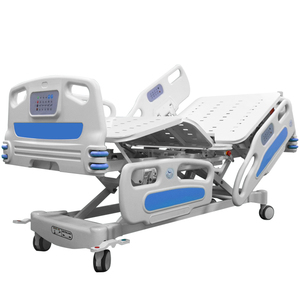
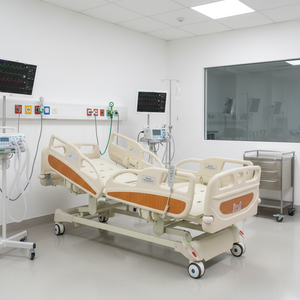
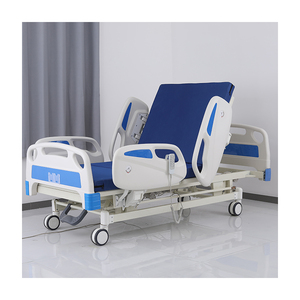
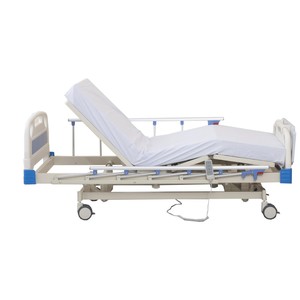
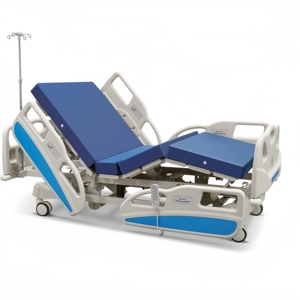
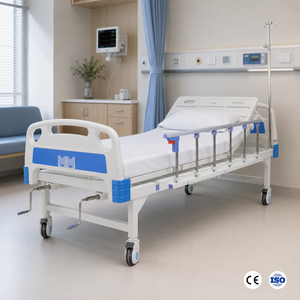
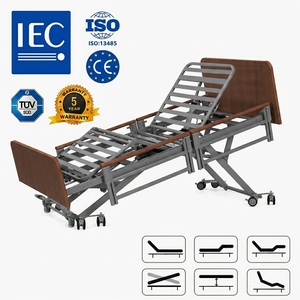
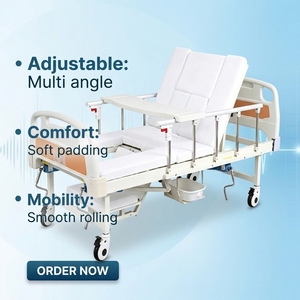
Emergency care protocols increasingly demand frictionless patient transfer workflows. Modern scoop stretchers are engineered to interface directly with emergency hydraulic stretchers, motorized ambulance cots, and multi-functional electric ICU beds (such as 3-function, 5-function, and 7-function nursing beds). Standardized width dimensions, patient restraint belt anchor points, and quick-release latching interfaces enable medical staff to lock a scoop stretcher securely onto hospital bed frames without destabilizing monitoring lines, ventilators, or IV drips.
Trend B: Stringent Regulatory Compliance & Quality Governance (MDR & FDA)
International buyers are moving away from uncertified suppliers. Medical procurement departments now require mandatory compliance with ISO 13485 (Medical Device Quality Management Systems), European CE Marking under the Medical Device Regulation (EU MDR 2017/745), US FDA 21 CFR Part 880 registration, and IEC 60601-1 electrical/mechanical safety standards for integrated care beds. Chinese original equipment manufacturers (OEMs) with robust in-house metallurgical testing, automated robotic welding, and 100% batch traceability dominate global tender awards.
Trend C: Customization, OEM Private Labeling, and Modular Component Sourcing
Global B2B importers increasingly demand tailored OEM options. This includes customized frame dimensions, specialized thermal powder-coating colors, localized bilingual branding badges, hydrophobic anti-bacterial safety belts, and modular accessory add-ons (such as integrated head immobilizers, adjustable IV poles, and carrying bags). Chinese direct-factory exporters who offer agile low-MOQ OEM engineering services provide a distinct competitive advantage over rigid European brands.
4. Comprehensive FAQ: Technical & Procurement Guide
5. Why Partner With Our Manufacturing & Export Network
As a premiere manufacturer and exporter based in China, our manufacturing facilities integrate over 25 years of specialized engineering in emergency stretchers, ICU electric beds, manual nursing beds, and clinical furniture systems. Serving healthcare distributors, ministry tenders, and private hospital networks across more than 65 countries, our core operational principles rely on four foundational pillars:
End-to-End Quality Assurance
Over 30 distinct quality inspection checkpoints, including ultrasonic weld integrity scans, surface anodizing thickness checks, and 1.5x dynamic overload stress testing.
Certified Global Compliance
Full technical documentation dossiers provided for seamless customs clearance and local medical device registration (ISO 13485, CE MDR, FDA, IEC 60601).
Rapid Global Logistics
Strategic proximity to major deep-water ocean ports enables expedited FCL/LCL container shipping, optimized freight packaging, and reliable delivery timelines.
Partner with China's Premier Medical Equipment Exporter
Whether you require bulk hospital bed tenders, specialized scoop stretchers, or custom OEM manufacturing, our technical team is ready to deliver certified excellence tailored to your specification requirements.
Get a Quote