Precision Cortical Screws & Trauma Fixation Systems
Engineered from premium medical-grade Titanium Alloy (Ti-6Al-4V ELI) and Implant-Grade Stainless Steel (316LVM). Designed for maximum pull-out force, optimized insertion torque, and flawless anatomical conformity.
Biomechanical Engineering of Cortical Screws in Fracture Fixation
An exhaustive analysis of thread pitch geometry, core diameter optimization, torque transmission dynamics, and metallurgical standards for global B2B medical procurement officers.
Morphological Principles & Cortical Bone Mechanics
Cortical screws are specifically designed for the dense, compact outer shell of diaphyseal and metaphyseal bone structures. Unlike cancellous screws which feature deeper threads and a wider pitch to anchor in porous spongy bone, cortical screws employ a finer thread pitch and a larger core-to-outer diameter ratio. This geometric configuration maximizes thread contact area per unit length, delivering superior shear stress distribution across dense lamellar bone.
$$F_{\text{pull-out}} = \pi \cdot d_o \cdot L \cdot \tau_b \cdot \left(1 - \frac{d_c}{d_o}\right)$$
Self-Tapping vs. Non-Self-Tapping Cortical Geometry
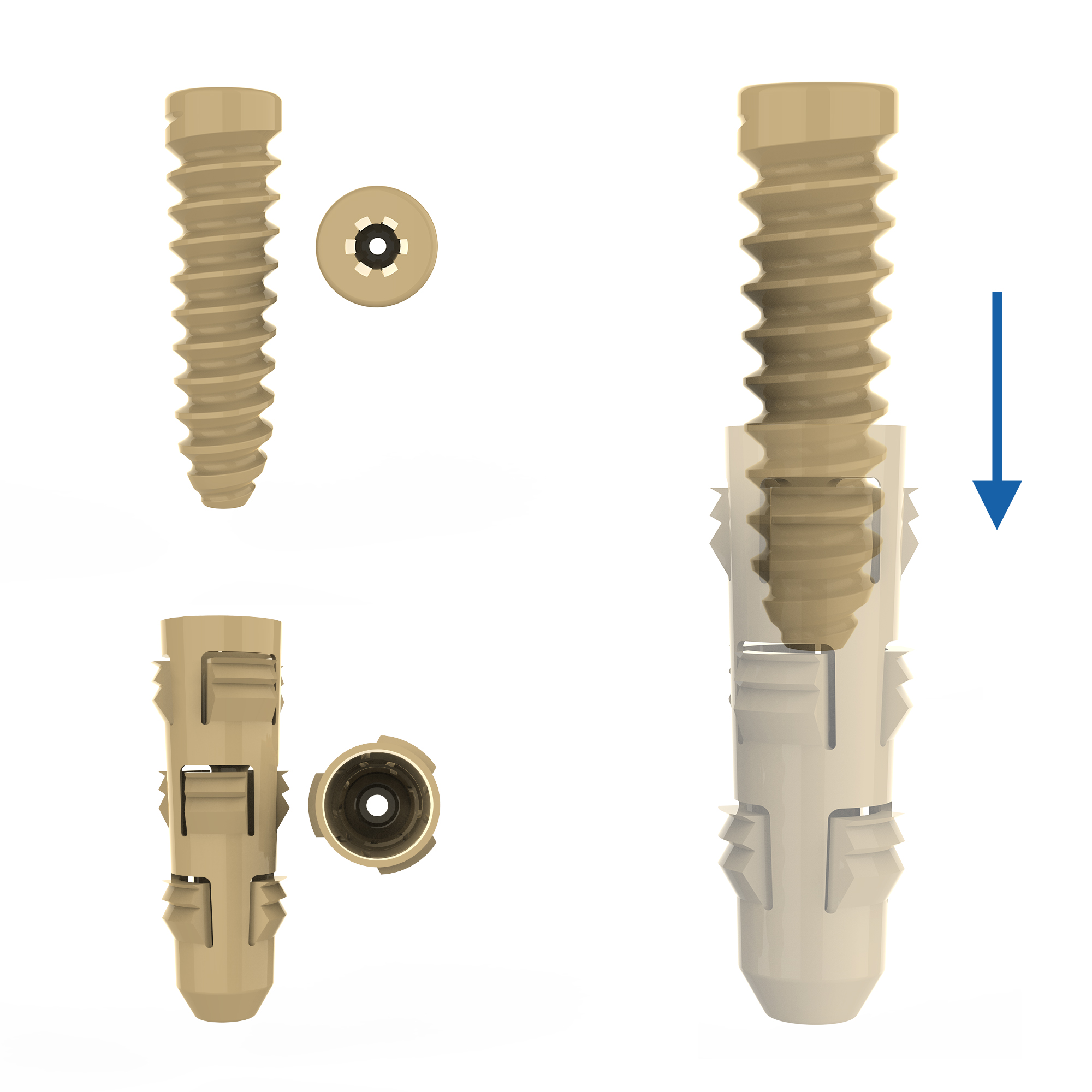
Modern trauma surgery utilizes both self-tapping and conventional non-self-tapping cortical screws. Self-tapping variants feature specialized cutting flutes integrated into the distal tip, eliminating the separate tapping step during surgery and reducing operative time. However, in extremely thick cortical bone (e.g., adult femoral shaft), non-self-tapping screws combined with explicit pre-tapping ensure minimal insertion torque spikes, preventing micro-fractures along the internal thread tracks.
Our state-of-the-art Swiss CNC lathes achieve thread profile tolerances within ±0.005mm, preventing thread binding and ensuring uniform axial compression across dynamic compression plates (DCP) and locking compression plates (LCP).
Standard Cortical Screw Dimensional Matrix (ISO 5835 & ASTM F543)
| Nominal Screw Diameter | Core Diameter ($d_c$) | Thread Pitch | Drive Recess Style | Pilot Drill Bit Size | Primary Clinical Indication |
|---|---|---|---|---|---|
| 1.5 mm Mini | 1.10 mm | 0.50 mm | Hex / Star T5 | 1.1 mm | Hand, Phalangeal & Maxillofacial Reconstruction |
| 2.0 mm Mini | 1.40 mm | 0.60 mm | Hex / Star T6 | 1.5 mm | Wrist, Scaphoid & Forearm Small Fragments |
| 2.7 mm Small Fragment | 1.90 mm | 1.00 mm | Hex 2.5mm / Star T10 | 2.0 mm | Distal Radius, Fibula & Ankle Malleolar Fixation |
| 3.5 mm Small Fragment | 2.40 mm | 1.25 mm | Hex 2.5mm / Star T15 | 2.5 mm | Ulna, Radius, Tibial Plateau & Clavicle Fractures |
| 4.5 mm Large Fragment | 3.00 mm | 1.75 mm | Hex 3.5mm / Star T25 | 3.2 mm | Femoral Shaft, Tibial Shaft & Pelvic Ring Reconstruction |
Technological Development & Design Trends in Cortical Screws
Exploring next-generation metallurgy, surface modification, and biomechanical optimization shaping the future of global trauma devices.
Hexalobular (Star Drive) Drive Systems
Transitioning from traditional hexagonal drives to Hexalobular (T-Drive/Star Drive) geometry is revolutionary. Hexalobular recesses significantly increase the contact surface area between driver bit and screw head, reducing cam-out forces and preventing recess stripping under high insertion torques in dense cortical bone.
Type II Anodization & Micro-Arc Oxidation
Advanced titanium surface treatments such as Type II Electrochemical Anodized coatings create a hardened, friction-reducing titanium dioxide layer. This drastically minimizes cold-welding risk when titanium cortical screws engage titanium locking plates, while enhancing fatigue life under cyclic torsional loading.
Dual-Lead & Variable Pitch Threads
Next-gen cortical screw architectures feature dual-lead thread structures where one complete revolution advances the screw twice the distance of a single-lead thread. This halves total insertion time while maintaining high torsional rigidity and micro-interlocking fidelity in cortical bone beds.
Future Procurement Trends for Cortical Screws & Trauma Hardware
Key strategic shifts hospital purchasing networks, medical device brands, and regional distributors must navigate over the next decade.
1. EU MDR Compliance & Strict Regulatory Traceability
With the full enforcement of the European Union Medical Device Regulation (EU MDR 2017/745), global procurement teams are shifting away from unverified suppliers. Importers now mandate comprehensive Technical Documentation (STED), Class III device biological evaluation reports (ISO 10993), raw material melt certificates, and permanent laser-etched Unique Device Identification (UDI) barcodes on every individual cortical screw.
2. Supply Chain Consolidation & Tier-1 Chinese OEM Partnership
Escalating healthcare costs worldwide are driving hospital groups to seek high-quality, cost-effective OEM alternatives to Western multinational brands. Leading Chinese manufacturers—equipped with imported multi-axis Citizen Swiss CNC machines and ISO 13485 cleanrooms—offer identical biomechanical performance at 30% to 50% lower unit costs, enabling brand owners to expand gross margins significantly.
3. Sterile Pre-Packaged Single-Use Procedure Kits
There is a rapid industry transition from bulk, non-sterile implant trays toward individually blister-packed, gamma-sterilized cortical screw kits. Pre-sterilized packaging reduces operating room turnaround times, eliminates hospital autoclave sterilization overhead, and eliminates nosocomial infection risks.
4. Customization (OEM/ODM) & Anatomical Color Coding
Distributors increasingly request custom anodization color coding (e.g., Gold for 2.7mm, Green for 3.5mm, Blue for 4.5mm) to streamline intraoperative screw identification. Flexible OEM/ODM capabilities allowing private label branding, specialized thread pitches, and proprietary driver recesses are now baseline prerequisites for global contract manufacturing contracts.
Zhejiang INAR Medical: Manufacturing Superiority & Trust
Over two decades of precision manufacturing excellence serving distributors, brand owners, and hospital networks across 60+ countries.
Certified Quality Management
Fully certified under ISO 13485 quality systems and CE marked under EU MDR & 93/42/EEC directives. Verified by SGS Group onsite audits with full batch traceability.
End-to-End In-House Manufacturing
From raw titanium bar stock cutting, Swiss CNC turning, ultrasonic washing, penetrant defect testing, and Type II anodizing, to Class 100,000 cleanroom packaging—zero outsourcing.
Advanced Mechanical Testing Lab
In-house fatigue endurance testers, axial pull-out testers, torsional torque testers, and optical 3D projectors guarantee every lot exceeds ASTM F543 benchmarks.
Full OEM / ODM Customization
Complete private-label laser marking, custom plate contouring, specialized instrument kit development, and bespoke packaging graphics tailored to your brand.
Robust Global Supply Chain
10+ years of export experience supplying major medical buyers in Europe, South America, Middle East, and Southeast Asia with complete customs and clearance files.
Rapid Prototyping & Turnaround
Dedicated R&D engineering team capable of delivering initial sample prototypes within 14 business days from CAD drawing sign-off.
Cortical Screws Sourcing & Procurement FAQ
Clear, authoritative answers to common technical, metallurgical, and regulatory questions asked by international B2B buyers.