Wholesale CPR & ICU Hospital Beds Lineup
Engineered to conform with International Electrotechnical Commission (IEC) medical electrical safety standards and emergency resuscitation operational protocols.
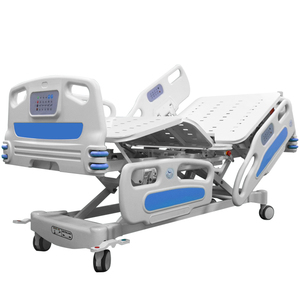
Longermay Factory Medical Hospital Bed Prices
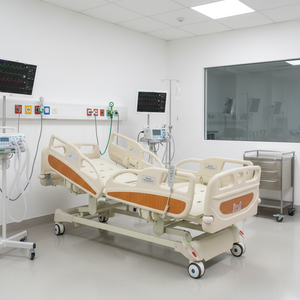
Hospital Furniture Patient Nursing Clinical Medical Bed 3/5/7 Function Electric ICU Bed
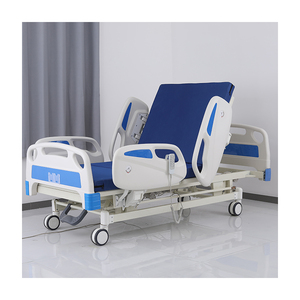
Chenhong CH-C8 Factory Supplied Double-Shaking Stainless Steel Class II Medical Beds
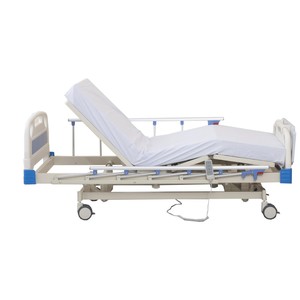
GRACEMED 3-Function Hospital Electronic Medical Bed with L&K Motor
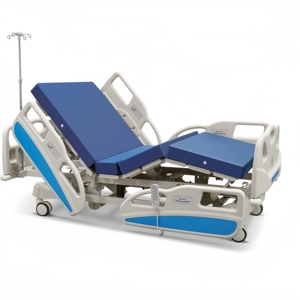
Cama Clinica Medical Patient Bed 5 Function ICU Electric Hospital Bed With Mattress
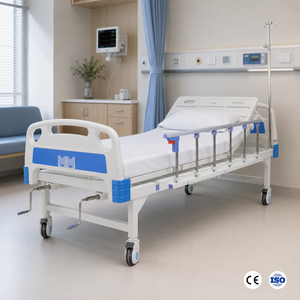
OEM Custom 2-Function Manual Medical Hospital Bed With Anti-Collision ABS Headboard
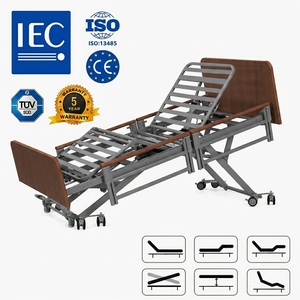
Electric Hospital Bed For Home Use Adjustable Patient Medical Bed With Rails
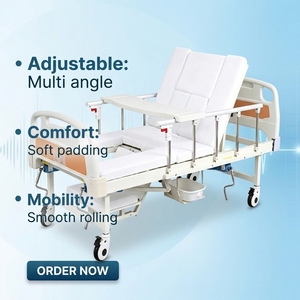
Hospital Grade Multifunctional Manual Nursing Bed with Steel Construction
1. Executive Summary & Clinical Imperative of CPR Beds in Critical Care
In modern intensive care units (ICU), emergency departments (ED), and long-term care wards, the speed and structural stability with which medical staff can perform Cardiopulmonary Resuscitation (CPR) directly dictate patient survival outcomes. As a primary global manufacturing hub, China's medical equipment sector has evolved from basic steel fabrication to high-precision, software-integrated, and compliance-driven hospital bed production. Sourcing from a premier China wholesale CPR bed supplier & exporter allows international healthcare procurement managers, hospital administrators, and medical device distributors to acquire clinical-grade equipment that satisfies rigorous global standards such as ISO 13485, CE, FDA, and IEC 60601-2-52.
Cardiopulmonary Resuscitation requires immediate positioning of the patient on a flat, unyielding horizontal surface while maintaining airway patency. Electric and manual medical beds without dedicated CPR mechanisms present severe clinical risks: motor gear resistance can delay backrest lowering by up to 20 seconds, and flexible bed frames absorb external chest compressions, dissipating vital kinetic energy. Professional medical CPR beds solve these issues through mechanical quick-release clutch mechanisms, rigid radiolucent backrests, and rapid electronic auto-CPR functions that drop the head section in under 2.5 seconds.
According to the American Heart Association (AHA) and European Resuscitation Council (ERC) guidelines, effective chest compressions require a depth of 5 to 6 cm at a rate of 100–120 compressions per minute. Standard hospital mattresses and flexible bed decks can absorb up to 40% of the applied compression force. High-spec CPR beds integrate a rigid cold-rolled steel grid or high-density X-Ray translucent laminate backrest paired with a dedicated CPR board slot, ensuring near-zero mechanical flexing during emergency resuscitation.
2. Engineering Architecture & Key Technical Specifications
To evaluate China wholesale CPR bed exporters, procurement officers must look beyond baseline pricing and analyze the core mechanical and electronic architecture. Below are the essential engineering components that define a high-performance CPR medical bed:
Bilateral mechanical handles located at the head end disengage the linear actuator drive nut instantly, allowing damped gravity descent in emergency scenarios.
Integrated nurse control panels feature a single-touch electronic CPR command that flattens backrest and knee sections while returning the bed to horizontal alignment.
High-grade phenolic resin or acrylic backrest deck enables C-arm intraoperative imaging and bedside X-Ray cassette insertion without moving critical patients.
Technical Comparison: Electric vs. Manual CPR Release Systems
When selecting hospital beds for varying clinical environments, procurement managers must evaluate the operational tradeoffs between mechanical quick-release clutches and fully automated electronic emergency systems.
| Technical Feature | Mechanical Quick-Release CPR | Electric One-Touch Auto CPR | Hybrid Dual-Mode CPR (ICU Grade) |
|---|---|---|---|
| Release Velocity | < 2.5 seconds (Gravity Damped) | 5.0 – 8.0 seconds (Powered Drive) | Instant Damped Mechanical + Auto-Electric |
| Power Dependency | 100% Independent (Zero Power Required) | Requires Battery Backup or Main Power | Dual Redundant (Failsafe Operational) |
| Leveling Function | Backrest drops to horizontal only | Flattens Backrest, Leg Section & Tilt | Flattens All Sections Simultaneously |
| Clinical Target | General Wards, Emergency Stretcher | Standard ICU Wards, Sub-Acute Care | Critical ICU, Cardiac Care Units (CCU) |
| Maintenance Profile | Low (Cable tension calibration) | Medium (Actuator relay inspection) | Comprehensive Scheduled Maintenance |
3. Global Healthcare Procurement Trends & Market Dynamics (2025–2030)
The global medical furniture market is undergoing structural shifts driven by aging populations, expansion of critical care infrastructure in emerging economies, and stringent safety regulations. Key procurement trends shaping supplier selection in China include:
A. Transition to IEC 60601-2-52 Compliance: International healthcare accreditation bodies (such as the Joint Commission International) mandate strict adherence to anti-entrapment guardrail gap dimensions, electromagnetic compatibility (EMC), and side rail structural integrity under lateral forces. Top-tier exporters in China have upgraded robot welding lines and automated powder coating processes to meet these standards natively.
B. Integration of IoT Telemetry & Weight Scale Systems: Modern ICU CPR beds are no longer static furniture pieces; they serve as digital patient care hubs. B2B buyers increasingly demand built-in precision load-cell weight scale systems (accuracy within ±0.1kg) with RS232 or Wi-Fi data streaming directly into Hospital Information Systems (HIS).
C. Decentralized Emergency Resuscitation Ergonomics: Ward layout ergonomics require dual-sided CPR activation handles accessible from either side of the bed, enabling nursing staff to initiate resuscitation instantly regardless of bedside medical equipment placement.
Why Partner With Our Manufacturing & Export Platform
Consolidating 25+ years of medical furniture manufacturing expertise, rigorous testing protocols, and direct factory wholesale value.
ISO 13485 & FDA Registered
Certified Quality Management Systems for medical devices ensure full traceability, audited raw material sourcing, and compliance with EU MDR & US FDA requirements.
30+ Inspection & Test Stages
Every production batch undergoes 15 mechanical stress endurance tests and 30 precision dimensional checks, including 10,000-cycle motor load trials.
65+ Countries Global Reach
Trusted by government health ministries, private hospital chains, and global healthcare distributors across North America, Europe, Asia-Pacific, and the Middle East.
Taiwan Excellence & R&D DNA
Combining advanced Taiwanese engineering design heritage with scale-driven factory production for unmatched cost-to-quality performance ratios.
4. Strategic Buyer Guide: Evaluating China Wholesale Suppliers
When executing bulk purchase orders for hospital beds from China, professional B2B buyers should conduct rigorous supplier verification according to the following framework:
- Frame Structural Integrity & Steel Density: Verify the gauge thickness of cold-rolled steel used in bed frames. Standard commercial beds use 1.2mm steel, whereas heavy-duty ICU beds require 1.5mm to 2.0mm robot-welded rectangular tubing to support dynamic loads up to 250kg during CPR compressions.
- Actuator System Quality & Thermal Protection: Ensure linear actuators (Linak, Dewert, or premium domestic brands like L&K) carry IPX4 or IPX6 liquid ingress protection ratings and feature internal thermal overload cutoff switches to prevent motor burnout during continuous adjustment cycles.
- Caster & Braking Performance: Inspect caster wheel materials. High-grade 125mm or 150mm central locking casters with polyurethane (PU) tires prevent floor marking and ensure rapid, effortless transport during hospital code blue emergencies.
- Surface Coating & Hygiene Standards: Confirm the application of electrostatically sprayed epoxy powder coating containing anti-microbial silver ion additives, capable of withstanding harsh hospital disinfectants (such as sodium hypochlorite and hydrogen peroxide wipes).
5. Wholesale Procurement FAQs for Global Buyers
Q1: What is the standard production lead time for bulk wholesale CPR bed orders?
Standard production lead time for custom OEM/ODM hospital bed orders is typically 25 to 35 days upon deposit confirmation and sample approval. For standard catalog models, expedited manufacturing cycles of 15 to 20 days can be arranged for full container load (FCL) shipments.
Q2: How does the manual CPR release handle function during a power failure?
The manual CPR release operates via a purely mechanical steel cable disengagement system connected directly to the backrest linear actuator clutch. It requires zero electrical power. When pulled from either side of the headboard, it immediately releases motor gear lockup, letting the backrest drop smoothly under controlled hydraulic damping.
Q3: Do your factory medical beds comply with European Union MDR and US FDA guidelines?
Yes. All medical bed lines manufactured for export are produced under ISO 13485 Quality Management Systems. Products carry CE declarations of conformity under Medical Device Regulation (EU) 2017/745, pass IEC 60601-1 and IEC 60601-2-52 safety testing, and maintain active US FDA device listings for seamless customs clearance.
Q4: What container loading options are available to optimize sea freight costs?
To maximize freight efficiency, our beds feature knock-down (KD) foldable head/foot boards and side rails, or fully assembled stackable packing configurations. A standard 40ft High Cube (40HQ) container typically holds 60 to 80 fully assembled electric beds or up to 120 knock-down units, significantly lowering per-unit landed freight cost.
Q5: Can we customize branding, color schemes, and side rail control panels (OEM/ODM)?
Absolutely. As an experienced OEM/ODM manufacturer, we offer full customization including custom frame colors (RAL spectrum powder coating), distributor branding stickers, localized membrane control keypads, customized side rail shapes, and integrated digital weight scale telemetry interfaces.
Request Direct Wholesale Pricing & Factory Specifications
Connect directly with our senior medical equipment export engineers. Receive comprehensive product catalogs, technical data sheets, and competitive FOB/CIF quotation within 24 hours.
Get Catalog