Recommended Orthopedic Trauma Implants & Systems
SGS-verified, CE MDR certified trauma plates, interlocking nails, and precision surgical instrument sets engineered for OEM/ODM brand integration.
Executive Summary: Engineering Excellence in OEM Tibial Intramedullary Nailing
Intramedullary nailing has stood as the gold standard for stabilizing diaphyseal fractures of the tibia for decades. However, the modern traumatology landscape demands far more than basic load-bearing rods. Today's clinical environment mandates anatomically pre-contoured geometries, sophisticated multi-planar proximal and distal locking configurations, and high-fatigue titanium metallurgy capable of accommodating both infrapatellar and suprapatellar surgical approaches.
For international orthopedic distributors, hospital procurement boards, and medical device brand owners, selecting a qualified custom OEM tibial nail manufacturer represents a critical strategic decision. A seamless contract manufacturing partnership requires strict compliance with international regulatory bodies (EU MDR Regulation 2017/745, ISO 13485:2016, US FDA 21 CFR 820), rigorous raw material traceability, advanced 5-axis longitudinal CNC Swiss-type turning, and certified aseptic packaging environments.
Biomechanical Engineering & Metallurgical Architecture
In-depth technical breakdown of tibial nail design mechanics, curvature dynamics, and structural integrity.
Anatomical Herzog Bend Geometry
Our custom OEM tibial nails feature a precise 10.5° to 12.5° proximal Herzog bend positioned precisely to facilitate insertion through both classical infrapatellar tendon-sparing portals and modern suprapatellar approaches without introducing anterior cortical impingement or malalignment.
Ti-6Al-4V ELI Metallurgy
Forged from implant-grade Titanium Alloy (ASTM F136 / ISO 5832-3 ELI - Extra Low Interstitial), our nails yield exceptional fatigue resistance, lower elastic modulus matching cortical bone (~110 GPa), and high bio-compatibility while minimizing stress shielding during primary callus formation.
Multi-Planar Locking Options
Equipped with advanced distal dynamic-static slotting and multi-angle proximal locking holes. Distal locking options include oblique, sagittal, and transverse orientation options to ensure rotational stability even in proximal or distal third metaphyseal segmental fractures.
Custom OEM Tibial Nail Dimensional & Specification Matrix
The table below presents standardized dimensional ranges available for OEM and ODM mass production customization:
| Parameter Specification | Standard Product Portfolio Range | OEM / ODM Custom Capability |
|---|---|---|
| Nail Diameter (Ø mm) | 8.0mm, 8.5mm, 9.0mm, 10.0mm, 11.0mm, 12.0mm | Custom diameters from 7.0mm to 13.5mm in 0.5mm increments |
| Nail Length Range (mm) | 255mm to 420mm (in 15mm increments) | Custom anatomical lengths up to 480mm for tall populations |
| Anatomical Curvature Radius | 1.1m to 1.3m continuous anterior bow | Specific bow radius matching ethnic patient anatomical databases |
| Proximal Locking Mechanism | 3 Multi-planar locking options + End Cap thread engagement | Custom compression slotting, PEEK bushing or locking sleeve inserts |
| Distal Locking Mechanism | 4 Multi-planar options (Transverse, Sagittal, Oblique) | Targeted radiolucent aiming frame compatible slot designs |
| Surface Anodization | Type II Electro-Anodization (Pink, Blue, Gold, Green) | Custom laser etching, barcode serials, and color-coded size branding |
| Cannulation Core | Fully cannulated for Ø3.0mm guide wire insertion | Solid nail core options for specific non-reamed trauma protocols |
Zhejiang INAR Medical: Enterprise Advantages & Manufacturing Rigor
Operating a 29,523 m² modern production base with 632 dedicated employees, Zhejiang INAR Medical Co., Ltd. (CANWELL Series) stands as a premier SGS-verified medical device manufacturer.
Our production facilities integrate state-of-the-art Japanese Citizen and Star Swiss-type 5-axis CNC longitudinal turning centers, high-precision surface finishing units, cleanroom environments, and exhaustive mechanical testing labs. OEM/ODM brand partners benefit from our comprehensive regulatory technical documentation and complete vertical integration.
13-Step Precision Manufacturing Process Matrix
Every single tibial intramedullary nail and associated locking screw passes through a strictly monitored 13-step quality controlled manufacturing workflow:
Future Sourcing & Global Procurement Trends (2025–2030)
Strategic insights for procurement directors navigating shifting regulatory frameworks, cost models, and clinical preferences.
1. Rapid Shift Toward Suprapatellar Surgical Instrumentation
Clinical preference has overwhelmingly pivoted toward suprapatellar tibial nailing. By maintaining the knee in semi-extension during reaming and nail insertion, surgeons significantly reduce anterior knee pain and decrease intraoperative fluoroscopy exposure. Procurement teams must now source OEM tibial nail kits that include dedicated suprapatellar cannulated trocar sleeves, protective soft-tissue guards, and extended insertion handles.
2. Regulatory Consolidation Under EU MDR & Technical File Rigor
The transition from the old MDD 93/42/EEC to EU MDR Regulation 2017/745 has disqualified many smaller tier-3 suppliers due to stringent clinical evaluation report (CER) requirements and Post-Market Clinical Follow-up (PMCF) mandates. B2B importers are increasingly consolidating orders with established manufacturers like Zhejiang INAR Medical, who maintain full CE MDR technical files and SGS audit credentials.
3. Demand for Turnkey "Implant + Custom Tray" Kits
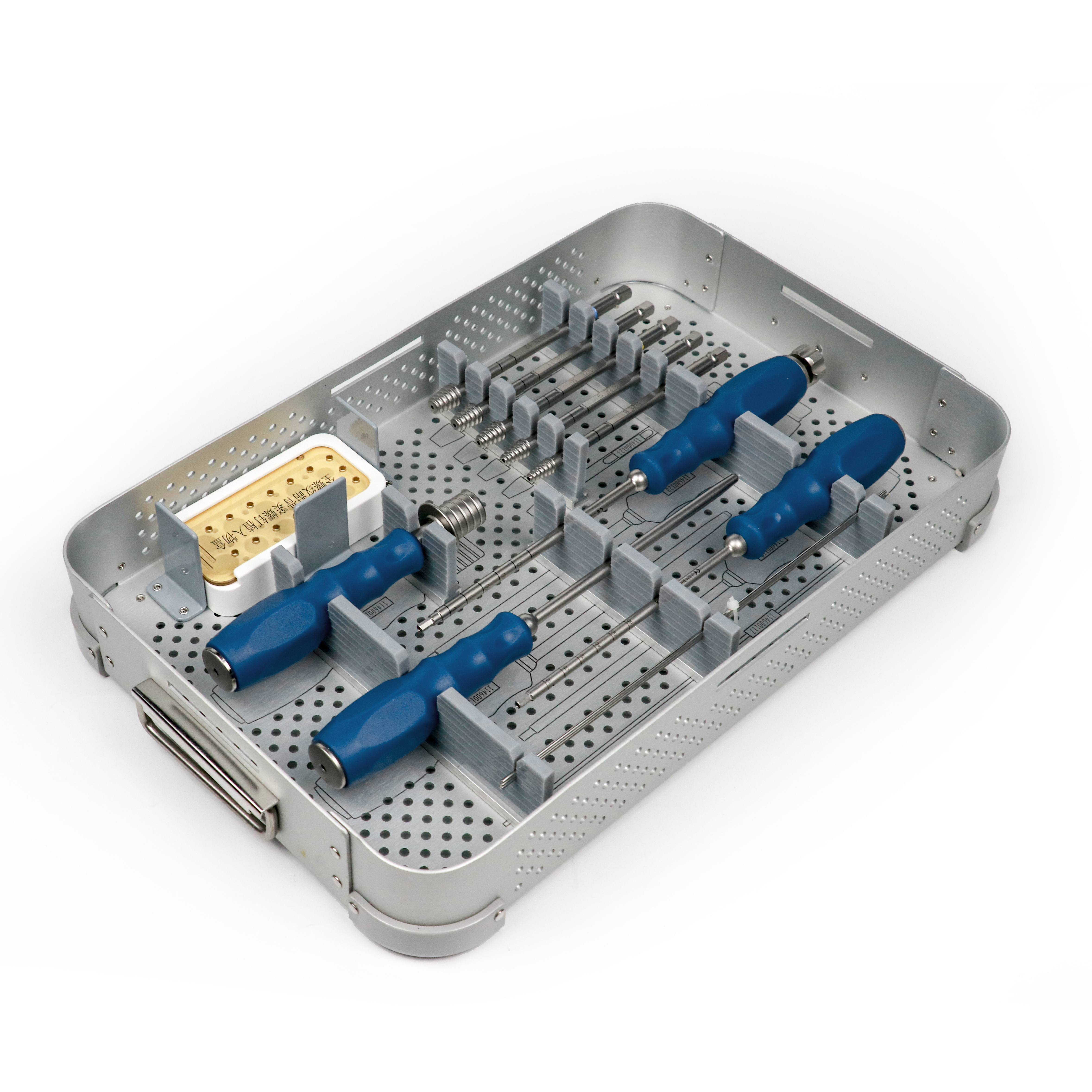
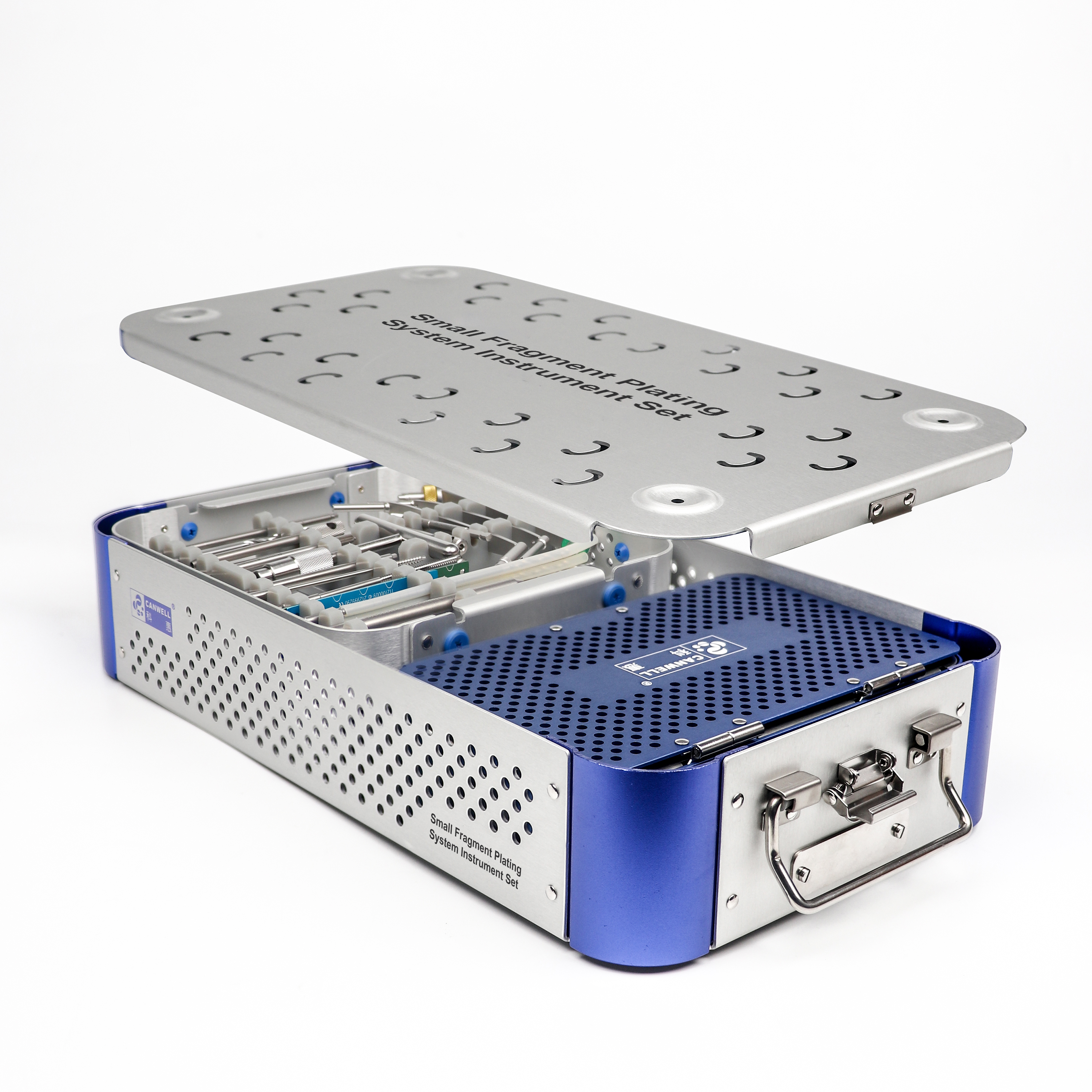
Hospitals and surgical centers are eliminating non-standardized instrument inventories. Modern procurement tenders favor OEM suppliers capable of delivering color-coded, anodized aluminum sterilization trays tailored precisely to the tibial nail system, including custom-calibrated depth gauges, flexible reamers, and radiolucent carbon fiber distal aiming guides.
Technological & Technological Development Trends in Tibial Nailing
Engineering advancements reshaping next-generation intramedullary fixation devices.
Smart Telemetric Sensors & Healing Monitoring
Emerging research focuses on embedding micro-telemetric strain sensors inside the hollow central core of titanium tibial nails. These micro-sensors measure intra-medullary axial load distribution during weight-bearing rehabilitation, transmitting real-time micro-strain data to orthopedic surgeons via smartphone applications to assess bone callus formation and detect non-union or delayed union early.
Additive Manufactured (3D Printed) Porous Metaphyseal Sleeves
For complex revision surgery or severe metaphyseal bone loss, hybrid tibial nail systems now incorporate 3D printed porous titanium metaphyseal cones and sleeves. These structural lattice sleeves feature pore sizes ranging from 400 µm to 600 µm (matching trabecular bone structure), encouraging rapid osseointegration and secondary mechanical stability.
Bio-Absorbable Composite Locking Mechanics
To eliminate the need for secondary surgical removal of distal locking screws after bone consolidation, next-generation research integrates bio-resorbable PLGA or magnesium-alloy sleeve inserts inside the nail apertures. This technology maintains high initial mechanical rigidity while gradually transferring stress loads back to the host bone structure over 12 to 18 months.
Frequently Asked Questions (FAQ) for Tibial Nail Sourcing
Clear, authoritative answers to common engineering, regulatory, and commercial procurement inquiries.
Partner with a World-Class OEM Tibial Nail Manufacturer
Elevate your orthopedic portfolio with SGS-verified, CE-certified intramedullary nailing systems. Contact our engineering and export team today for technical catalogs, OEM quotations, and sample evaluation packages.