1. Technical Executive Summary: Calcaneal Fracture Biomechanics & Internal Fixation Engineering
Calcaneal fractures account for approximately 60% of all tarsal bone injuries and up to 2% of all body fractures. Given that 75% of these injuries are intra-articular fractures involving the subtalar joint—frequently driven by high-energy axial loading (such as falls from height or motor vehicle accidents)—restoring the precise anatomical integrity of the os calcis is paramount to preventing post-traumatic subtalar arthritis, chronic hindfoot pain, and severe long-term gait dysfunction.
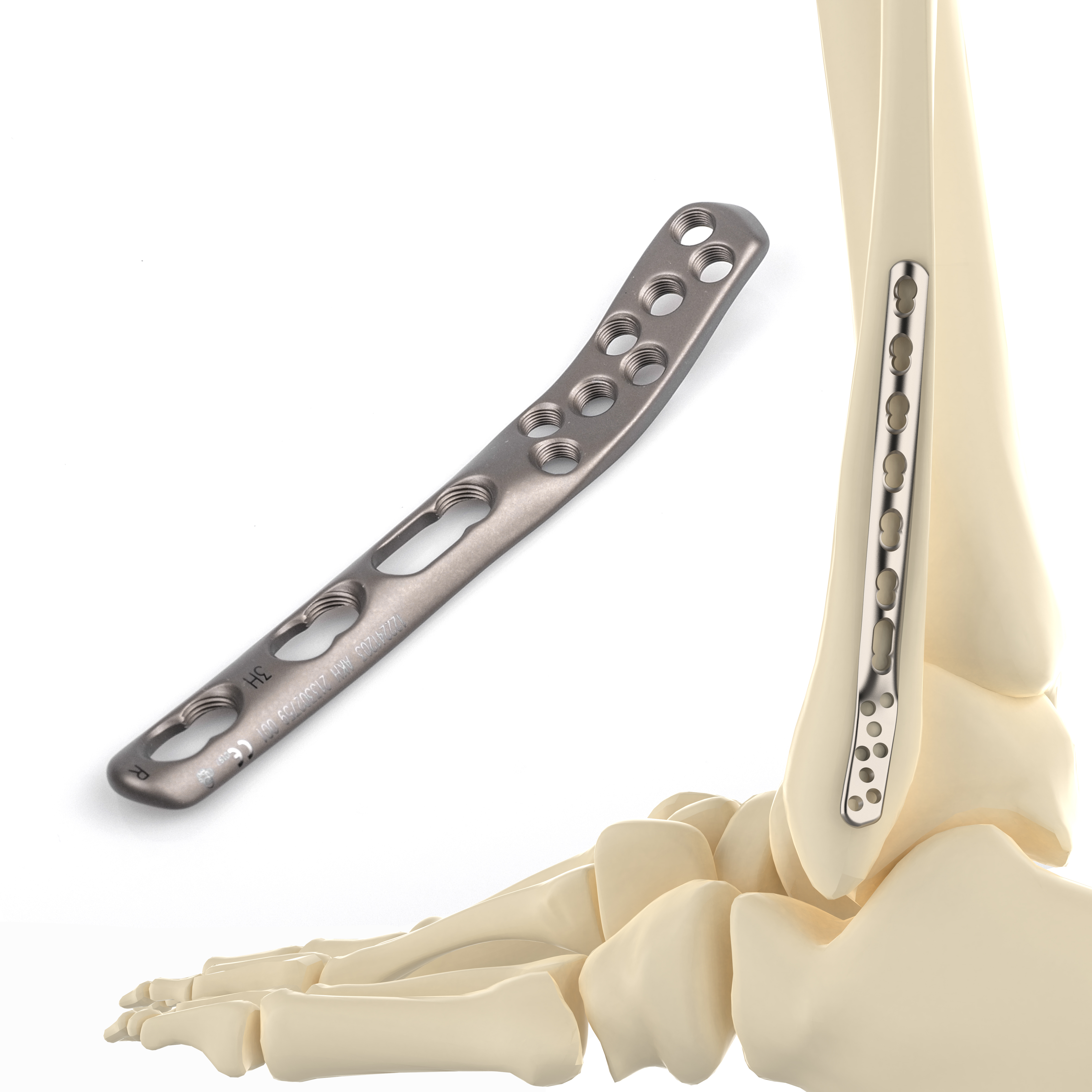
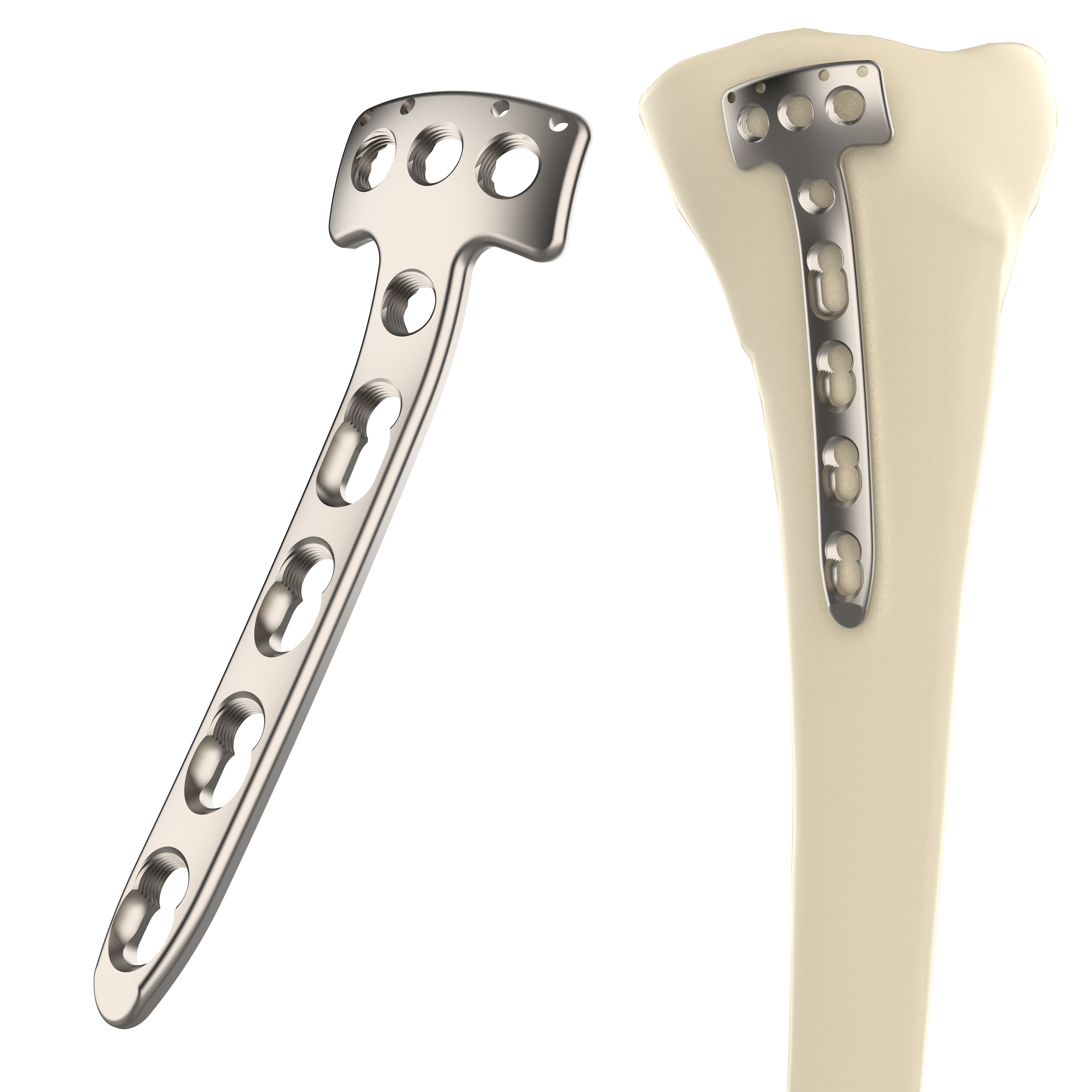
Effective open reduction and internal fixation (ORIF) as well as minimally invasive sinus tarsi surgical techniques demand calcaneal locking plate systems designed with precise metallurgical integrity, low-profile contours, and biomechanically optimized screw placement. As a primary OEM/ODM calcaneal plates manufacturer, our manufacturing frameworks integrate advanced multi-axis CNC milling, high-purity medical titanium alloys (Ti-6Al-4V ELI), and proprietary Type II anodic passivation to produce implant hardware that meets strict international mechanical testing standards (ASTM F382, ISO 9585).
Clinical Classification and Implication for OEM Plate Customization
In accordance with the Sanders Classification System based on coronal CT evaluation of the posterior facet:
- Sanders Type I: Non-displaced articular fractures manageable conservatively or with minimal percutaneous headless screw fixation.
- Sanders Type II & III: Two- and three-part displaced intra-articular fractures requiring anatomical articular surface reduction and structured perimeter locking plate support via extended lateral or minimally invasive sinus tarsi approaches.
- Sanders Type IV: Highly comminuted intra-articular fractures demanding multi-hole variable-angle locking plates that allow screw convergence toward the sustentaculum tali and anterior process for construct load distribution.
2. Enterprise Manufacturing Excellence & Factory Infrastructure
Operating a high-capacity production center across 29,523 m² of certified manufacturing space, Zhejiang INAR Medical Co., Ltd. serves as a tier-1 OEM/ODM manufacturing partner for global orthopedic brands, hospital purchasing syndicates, and regional surgical device distributors. Our complete in-house manufacturing loop eliminates outsourced quality risks and ensures absolute batch-to-batch consistency.
13-Step Closed-Loop OEM/ODM Production Standard
Every single calcaneal locking plate and trauma hardware unit manufactured in our facility follows a strictly audited 13-stage manufacturing and quality assurance sequence:
- Raw Material Traceability Verification: High-grade Ti-6Al-4V ELI (ASTM F136) titanium alloy bars inspected via spectrographic chemical analysis and tensile strength testing.
- Longitudinal Precision Cutting: Automated bar feeding into automated saws for uniform blank preparation.
- 5-Axis CNC Milling: High-speed contouring of anatomical plate curves, variable-angle thread machining, and beveling.
- Automated & Hand Surface Polishing: Deburring of internal screw threads and edge rounding to achieve an ultra-smooth finish that minimizes soft-tissue friction.
- Primary Ultrasonic Washing: Solvent multi-stage ultrasonic degreasing to clean particulate micro-residues.
- Surface Precision Grinding: Maintaining flat plate thickness profiles across anterior, posterior, and tuberosity regions.
- Sand-Blasting Treatment: Uniform surface texturing for reduced light glare under surgical theater lighting.
- Fluorescent Penetrant Defect Testing: 100% surface flaw detection to eliminate micro-cracks under load.
- Type II Electrochemical Anodization: Applying biocompatible color-coding (gold, blue, green, grey) to enhance anti-fretting resistance and simplify operative identification.
- Secondary Micro-Clean Wash: High-purity deionized water washing sequence inside automated lines.
- 100% Outgoing Quality Control (OQC): Optical coordinate measuring machine (CMM) dimensional verification and thread gauge testing.
- Class 100,000 Cleanroom Aseptic Packaging: Sealed double-pouch blister packaging prepared for gamma or EO gas sterilization.
- Controlled Warehouse Storage & Traceability Logging: Final laser-marked batch matrix code tracking from raw bar stock to packed carton.
3. Technical Product Specifications & Biomechanical Data Visualization
When sourcing OEM/ODM calcaneal plates, procurement managers must evaluate critical material properties and dimensional ranges to balance mechanical stiffness against soft-tissue envelope preservation.
| Feature Spec | Standard Low-Profile Calcaneal Plate | Minimally Invasive Sinus Tarsi Plate | Variable-Angle Locking Calcaneal System |
|---|---|---|---|
| Primary Material | Titanium Grade 5 (Ti-6Al-4V ELI) | Titanium Grade 5 (Ti-6Al-4V ELI) | Pure Titanium / Ti-6Al-4V ELI |
| Plate Thickness | 1.3 mm - 1.5 mm | 1.2 mm - 1.4 mm | 1.4 mm - 1.6 mm |
| Screw Compatibility | 2.7mm & 3.5mm Locking/Cortical | 2.7mm & 3.5mm Screws | 2.7mm / 3.5mm Variable-Angle Locking |
| Angular Trajectory | Fixed Direction (±0°) | Fixed / Polyaxial (±10°) | Polyaxial Cone (Up to ±15° Trajectory) |
| Surgical Approach | Extended Lateral Approach | Sinus Tarsi Approach | Versatile / Dual Technique Compatible |
| Targeted Fracture Types | Sanders Type II, III, IV | Sanders Type II & Select Type III | Sanders Type II, III, IV Comminuted |
| Surface Finish | Type II Anodized / Satin | Electropolished / Anodized | Color-Coded Type II Passivated |
4. Future Procurement Trends in OEM/ODM Orthopedic Implants
As global healthcare systems undergo structural fiscal adjustments and regulatory shifts, orthopedic purchasing departments and medical device OEMs face changing dynamics in vendor selection:
A. Supply Chain Resiliency & Direct-from-Factory Vertical Integration
The post-pandemic medical device landscape has exposed risks associated with multi-tiered outsourcing. Leading hospital groups and global brands are bypassing trading intermediaries in favor of vertically integrated factories that maintain complete control over titanium rod forging, CNC turning, testing, and sterile pouching. Direct factory engagement reduces lead times from 24 weeks down to 6–8 weeks and decreases unit procurement costs by 25% to 40%.
B. Regulatory Tightening under EU MDR 2017/745
The transition from MDD to EU MDR has created substantial regulatory entry barriers. OEM/ODM suppliers must now provide clinical evaluation reports (CER), rigorous post-market surveillance (PMS) frameworks, and complete material bi-compatibility testing (ISO 10993). Partnering with a manufacturer that possesses pre-established CE MDR documentation drastically shortens time-to-market for private-label lines.
C. Vendor Consolidation & Modular Trauma System Bundling
Hospitals are moving away from piecemeal vendors toward suppliers offering integrated trauma kits. Combining calcaneal locking plates with fibula plates, tibial locking systems, and universal orthopedic instrument trays optimizes hospital inventory management and lowers administrative overhead.
5. Innovation Trends in Calcaneal Fixation & Implant Metallurgy
Product developers and orthopedic R&D engineers must incorporate several key technical innovations when designing next-generation calcaneal implant lines:
- Anatomically Pre-Contoured Low-Profile Meshes: Modern calcaneal plates incorporate 3D anatomical scanning data to pre-contour plates to the calcaneal lateral wall, eliminating the need for extensive intraoperative bending that can induce residual stress and fatigue micro-fractures in titanium.
- Polyaxial Variable-Angle Locking Technology: Fixed-angle locking holes are being replaced by polyaxial threaded bushings allowing up to 15 degrees of screw insertion freedom. This enables surgeons to direct screws precisely into dense bone stock at the sustentaculum tali regardless of fracture line variations.
- Minimally Invasive (Sinus Tarsi) Plate Geometries: To avoid wound breakdown and soft-tissue necrosis—complications seen in up to 25% of extended lateral incision procedures—manufacturers are developing specialized narrow-profile plates that can be inserted percutaneously through small sinus tarsi incisions.
- Surface Modifications & Antibacterial Nanocoatings: Advanced R&D explores osteoconductive hydroxyapatite (HA) plasma spraying and silver-ion/titanium nitride surface coatings designed to improve bone-to-implant contact while reducing postoperative bacterial adhesion.