Precision Implants & Surgical Solutions
Explore our SGS-verified, ISO 13485 manufactured trauma, spinal, and sports medicine devices crafted for global surgical demand.
Engineering Standards & Biomechanical Performance of Interbody Spinal Cages
An authoritative guide for medical device brand owners, orthopedic procurement directors, and regulatory affairs specialists evaluating contract manufacturing partners.
The interbody spinal cage market represents one of the most mechanically demanding segments in surgical implant manufacturing. As an established OEM/ODM Spinal Cages Manufacturer & Supplier, Zhejiang INAR Medical Co., Ltd. combines advanced material science, multi-axis precision machining, and rigorous biomechanical validation to produce implant systems that fulfill stringent clinical and regulatory thresholds worldwide.
1. Biomechanical Imperatives: Modulus Matching & Subsidence Mitigation
The primary mechanical objective of interbody fusion devices—whether deployed via Posterior Lumbar Interbody Fusion (PLIF), Transforaminal Lumbar Interbody Fusion (TLIF), Anterior Lumbar Interbody Fusion (ALIF), or Direct Lateral Interbody Fusion (DLIF/LLIF)—is to maintain anterior column height, restore intervertebral lordosis, and facilitate solid osseous union while preventing cage subsidence into adjacent vertebral endplates.
Subsidence remains a major clinical complication. It is directly influenced by the construct's elasticity modulus, contact surface topography, and structural geometry. Medical-grade Polyetheretherketone (PEEK-OPTIMA®) exhibits an elastic modulus of approximately 3.6 GPa, closely mirroring human cortical bone (12–18 GPa) compared to traditional solid titanium alloys (110 GPa). This close modulus matching significantly reduces stress shielding, promoting radiolucency during radiographic follow-up while upholding Wolff’s Law to encourage dynamic bone remodeling.
Simultaneously, the integration of 3D-printed porous titanium scaffolds (Ti-6Al-4V ELI) with interconnected pore geometries (300–700 µm diameter, 60–80% porosity) has revolutionized osteointegration. These engineered additive structures emulate trabecular bone micro-architecture, allowing direct cellular attachment, vascular ingrowth, and secondary biomechanical stability without compromising fatigue strength.
Optimized Graft Window
Maximizes internal graft volume to accommodate autologous bone graft or synthetic bone graft substitutes, ensuring maximum endplate contact and accelerated fusion rates.
Radiolucent & Marker Guided
PEEK matrix allows artifact-free CT/MRI evaluation of fusion progress, while embedded medical-grade Tantalum markers provide exact intraoperative fluoroscopic positioning.
Pyramidal Anti-Migration Teeth
Aggressive superior and inferior surface serrations prevent retro-displacement or anterior expulsion under dynamic flexion, extension, and torsional loading.
OEM/ODM Interbody Fusion Systems Portfolio
Customizable spinal implants manufactured under cleanroom environments to suit regional anatomical variations and surgical preferences.
| Surgical Approach | Primary Material | Lordotic Angle Options | Key Design Engineering Features | Target Clinical Indication |
|---|---|---|---|---|
| TLIF Cage System | PEEK-OPTIMA / 3D Porous Titanium | 4°, 8°, 12° Lordotic | Bullet-shaped nose tip, dual tantalum radiopaque pins, optimized graft cavity | Degenerative disc disease, spondylolisthesis, lumbar spinal stenosis |
| PLIF Cage System | Medical-Grade PEEK / Ti6Al4V | 0°, 4°, 8° Lordotic | Parallel & lordotic profiles, anti-expulsion teeth serration, snap-on inserter interface | Posterior lumbar fusion, spinal instability, revision discectomy |
| ALIF Cage System | PEEK / Titanium Hybrid | 8°, 12°, 15° Lordotic | Integrated fixation screw holes, wide footprint for maximum endplate coverage | L4-S1 anterior reconstruction, severe disc height loss, sagittal deformity |
| DLIF/LLIF Cage System | 3D Printed Porous Ti / PEEK | 0°, 6°, 10° Lordotic | Extravagant lateral length span (up to 60mm), anatomical endplate contouring | Minimally invasive lateral fusion, adult degenerative scoliosis |
| Cervical ACIF Cage | PEEK / Plasma-Coated Titanium | 0°, 4° Lordotic | Anatomical concave superior surface, self-retaining inserter thread mechanism | Cervical radiculopathy, cervical spondylotic myelopathy, trauma stabilization |
Future Procurement & Technological Trends in Spinal Implants
Key market vectors shaping contract manufacturing, regulatory compliance, and device innovations over the next decade.
1. Convergence of Additive Manufacturing & Bio-Surface Coatings
Procurement teams are shifting away from smooth, non-coated PEEK implants toward advanced surface modification solutions. The market demands hydroxyapatite (HA) plasma-sprayed PEEK cages, titanium-coated PEEK composite devices, and porous 3D-printed titanium implants using Selective Laser Melting (SLM) technology.
These hybrid technologies eliminate the boundary layer between bone tissue and implant material, achieving rapid osteointegration while maintaining low modulus characteristics.
2. Supply Chain Consolidation & EU MDR 2017/745 Compliance
Global regulatory tightening under EU MDR and stringent FDA 510(k) auditing has accelerated distributor consolidation. Hospital procurement divisions increasingly prefer single-source contract manufacturers who offer integrated implant-and-instrument tray sets.
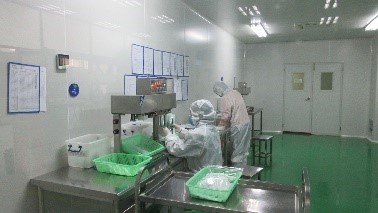
Collaborating with suppliers that maintain full batch traceability, raw material certified origin, and validated ISO Class 7 cleanroom packaging drastically cuts registration lead times and regulatory compliance overhead.
3. Patient-Specific Custom Cages & MIS Procedural Systems
The industry is transitioning rapidly toward Minimally Invasive Surgery (MIS). Modern surgeons require low-profile cages compatible with expandable tubular retractor systems and endoscopic spinal techniques. Concurrently, customized, patient-matched cages derived from 3D preoperative CT data are becoming mainstream for complex adult spinal deformity and revision cases. OEM/ODM suppliers must possess in-house CAD modeling, Finite Element Analysis (FEA), and rapid prototyping capabilities to support these specialized requests.
Enterprise Strengths & 13-Stage Precision Manufacturing Workflow
Combining 22+ years of orthopedic craftsmanship with SGS-audited quality infrastructure in Zhejiang, China.
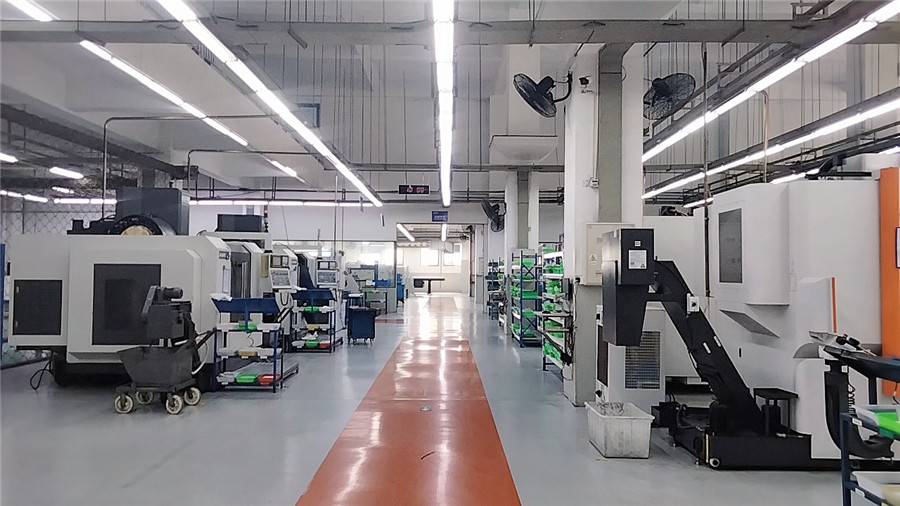
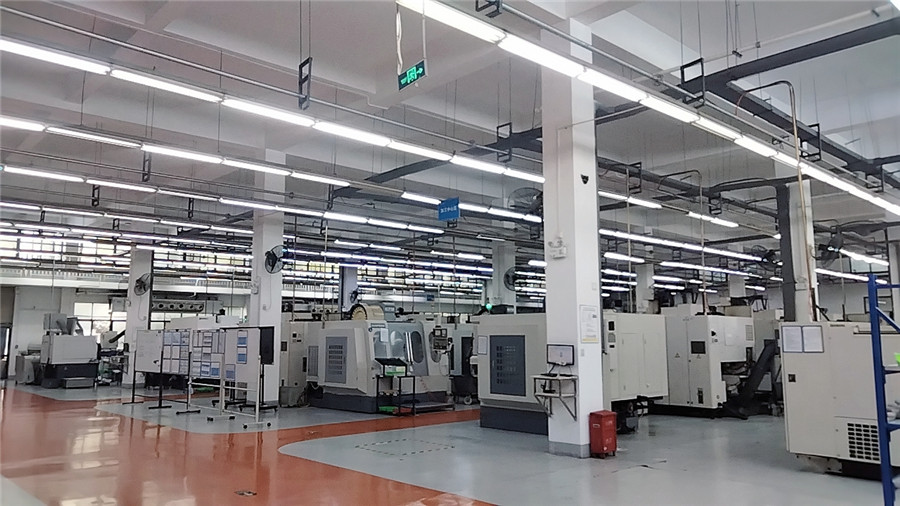
Zhejiang INAR Medical Co., Ltd. operates a modern 29,523 m² manufacturing complex staffed by over 632 dedicated employees. Operating under a rigorous ISO 13485 Quality Management System, our facility integrates full-cycle production, from raw bar stock inspection to aseptic sterile packaging.
The 13-Step Precision Manufacturing Process
Raw Material Verification
Certified Ti6Al4V ELI & PEEK-OPTIMA stock
Longitudinal Cutting
Precision billet preparation
5-Axis CNC Machining
High-speed Swiss precision milling
Micro Polishing
Deburring and surface smoothing
Ultrasonic Wash I
Multi-stage aqueous degreasing
Grinding & Profiling
Anatomical contour refinement
Sand-Blasting
Controlled surface texturing
Penetrant Testing
100% micro-crack flaw detection
Anodizing / Coating
Color coding & surface passivation
Ultrasonic Wash II
High-purity final cleaning cycle
OQC Inspection
CMM dimensional verification
Cleanroom Packing
ISO Class 7 aseptic double pouching
Sterilization & Vault
Validated Gamma/EO sterilization
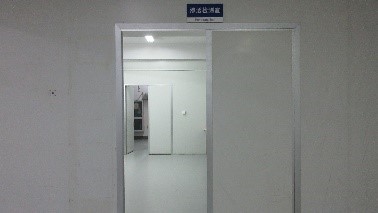
State-of-the-Art Production & QC Facilities
Frequently Asked Questions by Global Buyers
Essential operational, regulatory, and engineering details for contract manufacturing partners.
Partner with a World-Class OEM/ODM Spinal Manufacturer
Accelerate your product launch, reduce regulatory risks, and secure factory-direct pricing for high-precision interbody spinal cages and trauma implants. Connect directly with our engineering team today.