1. Executive Summary & Clinical Imperative of Hydraulic Stretchers
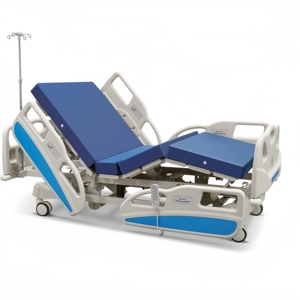
In modern hospital logistics and emergency medical services (EMS), the hydraulic stretcher acts as the central mechanical interface between trauma reception, diagnostic imaging, and surgical intervention. Unlike standard ward beds, an emergency hydraulic stretcher must withstand rigorous, high-velocity transport across diverse hospital terrains while enabling instant clinical re-positioning. Precision hydraulic pumps are fundamental to achieving rapid height adjustments, Trendelenburg, and Reverse Trendelenburg positioning without relying on external electrical supply lines—a crucial advantage during intra-hospital transport and power outage emergencies.
Healthcare procurement officers, biomedical engineering heads, and emergency room directors face growing complexity when selecting original equipment manufacturers (OEMs). Key technical variables include dynamic hydraulic cylinder pressure ratings, frame torsional rigidity, fifth-wheel directional tracking, radiological transparency, and strict adherence to international safety standard IEC 60601-2-52 and medical quality management system ISO 13485. This document outlines the definitive technical benchmarks for evaluating the top global hydraulic stretcher manufacturers and factories in 2025.
2. Comparative Evaluation Matrix of Top Global Manufacturers
The global market for emergency medical transport equipment contains both high-end tier-1 clinical brands and specialized high-precision OEM/ODM factories. When auditing a factory, purchasing entities evaluate manufacturing automation (robotic welding, powder coating uniformity), hydraulic pump seal integrity, structural steel grain density, and post-market clinical compliance.
| Manufacturer / OEM Factory | Primary Country | Core Hydraulic Tech | X-Ray Translucency | Safe Working Load | Regulatory Compliance |
|---|---|---|---|---|---|
| Joson-Care Enterprise | Taiwan | Dual-Pedal Heavy Duty Hydraulic System | Full-Length Radio-Lucent Top | 250 kg (550 lbs) | ISO 13485, FDA, CE, IEC 60601 |
| Stryker Medical | USA | Big Wheel & Hydraulic Glide | Optional Clear Platform | 317 kg (700 lbs) | FDA, CE, ISO 13485 |
| Hill-Rom (Baxter) | USA | Active Care Hydraulic Lift | Integrated Cassette Deck | 317 kg (700 lbs) | FDA, CE, ISO 13485 |
| Paramount Bed | Japan | Ultra-Smooth Hydraulic Actuation | Backrest Radiolucent Area | 230 kg (507 lbs) | JIS, CE, ISO 13485 |
| Stiegelmeyer | Germany | Precision German Hydraulic Cylinder | Segmented Radio-Lucent Board | 250 kg (550 lbs) | CE MDR, ISO 13485 |
| Arjo | Sweden | Ergonomic Hydraulic Transfer Assist | Standard High-Density Top | 250 kg (550 lbs) | CE MDR, FDA, ISO 13485 |
| Chenhong Medical | China | Double-Shaking Hydraulic Assist | Optional Upper Deck | 220 kg (485 lbs) | ISO 13485, CE |
| Linet Group | Czech Republic | Columns Hydraulic Activation | Full-Length X-Ray Deck | 250 kg (550 lbs) | CE MDR, ISO 13485 |
| GraceMed Equipment | China | Dual-Column Mechanical Hydraulic | Backrest Translucent Section | 200 kg (440 lbs) | CE, ISO 13485 |
| Longermay Medical | China | Standard Hydraulic Pressure System | Basic ABS Board | 200 kg (440 lbs) | ISO 9001, CE |
3. Detailed OEM & Industry Technical Deep-Dive
3.1 Precision Hydraulic Pump Architecture
The hydraulic pump assembly is the heart of an emergency transport stretcher. High-grade systems utilize dual-column hydraulic rams filled with high-viscosity, temperature-stable hydraulic oil that functions seamlessly between -20°C and +60°C. Foot pedals installed on both sides of the stretcher allow nursing personnel to execute vertical elevation, Trendelenburg (+18° tilt), and Reverse Trendelenburg (-18° tilt) without requiring manual lifting effort. Dual-column configurations distribute patient weight evenly, reducing structural deflection and preventing seal wear over tens of thousands of cycles.
3.2 Advanced 5th Steering Wheel Navigation
Navigating congested hospital corridors, elevators, and acute trauma rooms requires minimum rolling resistance and exceptional control. Leading hydraulic stretchers feature an retractable 5th wheel mechanism located under the center of the chassis. When activated, the 5th wheel engages the floor surface to provide a fixed pivot point, allowing a single nurse to steer the stretcher around sharp 90-degree corners with minimal push/pull force. When traversing flat surfaces or transferring across thresholds, the 5th wheel retracts smoothly via foot pedal engagement.
3.3 Full-Length X-Ray Translucency & C-Arm Access
In critical trauma care, moving a patient with potential spinal or polytrauma injuries to an X-Ray table introduces extreme clinical risk. Premium hydraulic stretchers feature full-length radiolucent phenolic resin bed decks. An integrated sliding X-Ray cassette tray system allows radiography technicians to insert imaging plates beneath the patient at any point from head to pelvis. Furthermore, low-profile hydraulic base frame designs ensure ample clearance for mobile C-Arm fluoroscopy units during bedside emergency procedures.
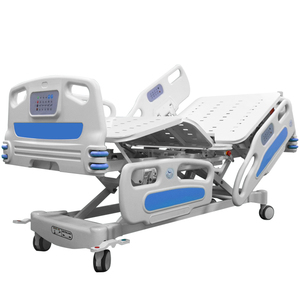
Fall Prevention Side Rails
Collapsible full-length side rails lock securely in the vertical position and drop flush below the mattress level for zero-gap patient lateral transfer.
Central Braking System
Four-caster central lock mechanism operated via pedal at all four corners, securing the stretcher instantaneously during emergency intubation or CPR.
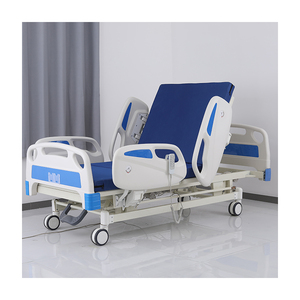
Immediate CPR Release
Gas-spring assisted backrest featuring a quick-release lever on both sides, lowering the patient flat in under 2 seconds for cardiac resuscitation.
4. Global Medical Stretcher Procurement Trends (2025–2030)
The global healthcare sector is experiencing structural shifts in emergency equipment procurement. Hospitals are moving away from fragmented purchasing models toward unified long-term OEM partnerships. Key macroeconomic and technical drivers shaping hydraulic stretcher procurement over the next five years include:
1. Shift Toward Total Cost of Ownership (TCO): Procurement committees are prioritizing life-cycle reliability over low initial purchase price. A stretcher with cheap hydraulic seals that fails during emergency transport creates massive liability and maintenance downtime. High-grade OEM stretchers with sealed hydraulic units and anticorrosive electrostatic powder coatings offer an operational lifespan exceeding 10 years, drastically lowering TCO.
2. Ergonomic Caregiver Injury Reduction: Occupational injuries among nursing and transport staff due to pushing heavy patients remain a major cost center for hospital systems. Procurement specifications now mandate 5th-wheel steering systems, low-friction anti-static casters (200mm diameter), and dual-pedal hydraulic elevation to meet strict occupational health standards.
3. Infection Control & Seamless Surfaces: Hospital-acquired infections (HAIs) demand that medical stretchers survive harsh chemical disinfection (including chlorine compounds and hydrogen peroxide vapors). Modern stretchers incorporate molded ABS base covers to shield hydraulic pumps from fluids, seamlessly welded steel tubing, and antimicrobial polyurethane mattresses.
5. Enterprise Advantage: Why Industry Leaders Partner with Joson-Care
Since 2000, Joson-Care Enterprise Co., Ltd. has established itself as Taiwan’s premier high-precision medical bed and hydraulic stretcher manufacturer. Winning prestigious accolades such as the Taiwan Excellence Award, Joson-Care integrates advanced robotic fabrication with stringent medical-grade quality control to supply healthcare distributors across 65+ countries worldwide.
Key structural reasons global hospital groups and OEM buyers specify Joson-Care include:
- Multi-National Medical Certification: Every hydraulic unit and care platform is fully compliant with ISO 13485 quality management, FDA registration, CE MDR standards, and IEC 60601-2-52 electrical and mechanical safety regulations.
- Rigorous 30-Point Inspection & Testing: Factory production lines subject every hydraulic stretcher to 30 quality inspections and 15 destructive endurance tests, including a 10,000-cycle full-load hydraulic pump test.
- Custom OEM/ODM Engineering: Complete modular customization options—from custom frame dimensions and specialized side rail latching mechanisms to custom brand powder coating and color schemes.
- Integrated Emergency Systems: Incorporating 5th-wheel directional tracking, continuous radiolucent backrest platforms, and dual-side quick CPR drop levers into a unified, heavy-duty framework.