Selecting a verified, highly capable patient bed factory is a critical strategic decision for healthcare procurement managers, hospital administrators, and international medical device distributors. Beyond simple hardware fabrication, modern medical beds serve as integrated patient-care platforms requiring strict adherence to global safety mandates (ISO 13485, IEC 60601-2-52, FDA, and CE MDR). This comprehensive industry report details engineering benchmarks, product recommendations, future procurement trends, technological shifts, and quality assurance frameworks essential for high-stakes healthcare environments.
Featured Medical & Patient Bed Innovations from Top Factories
Explore verified clinical-grade hospital beds engineered for critical care, ward nursing, emergency transport, and long-term home recovery.
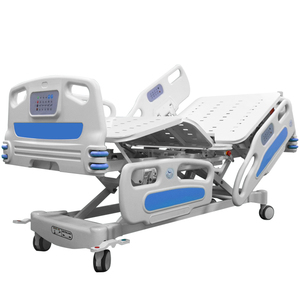
Longermay Factory Medical Hospital Bed Prices
Cost-effective, heavy-duty clinical patient bed manufactured with reinforced carbon steel frames, designed for high-throughput ward environments requiring high durability and reliable manual or motorized controls.
Get Catalog
3/5/7 Function Electric Hospital ICU Bed
Advanced critical care patient bed featuring full electrical articulation, including Trendelenburg, reverse Trendelenburg, cardiac chair positioning, and seamless side-rail control panels.
Get Catalog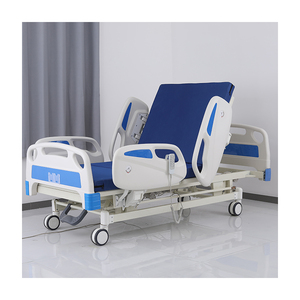
Chenhong CH-C8 Stainless Steel ICU Bed
Double-shaking Class II certified medical bed built with anti-corrosive stainless steel structures, offering smooth manual crank mechanics and high load capacities for intensive care wards.
Get Catalog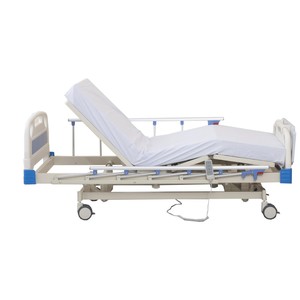
GRACEMED 3-Function Electronic Medical Bed
Equipped with ultra-quiet linear L&K electric actuators, CE certification, and anti-collision bumpers, ensuring smooth backrest, knee-rest, and height elevation controls.
Get Catalog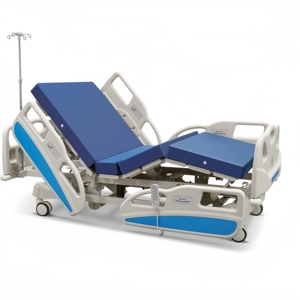
Cama Clinica 5-Function ICU Electric Bed
Comprehensive ICU bed package complete with a medical-grade anti-bedsore mattress, quick-release ABS head/footboards, and automated tilt-angle indicators for optimal clinical care.
Get Catalog
OEM Custom 2-Function Manual Patient Bed
Customizable manual care bed featuring foldable side rails, smooth dual-crank mechanism, and impact-resistant ABS headboards designed for general outpatient and clinic wards.
Get Catalog
IEC 60601 Certified Home Care Electric Bed
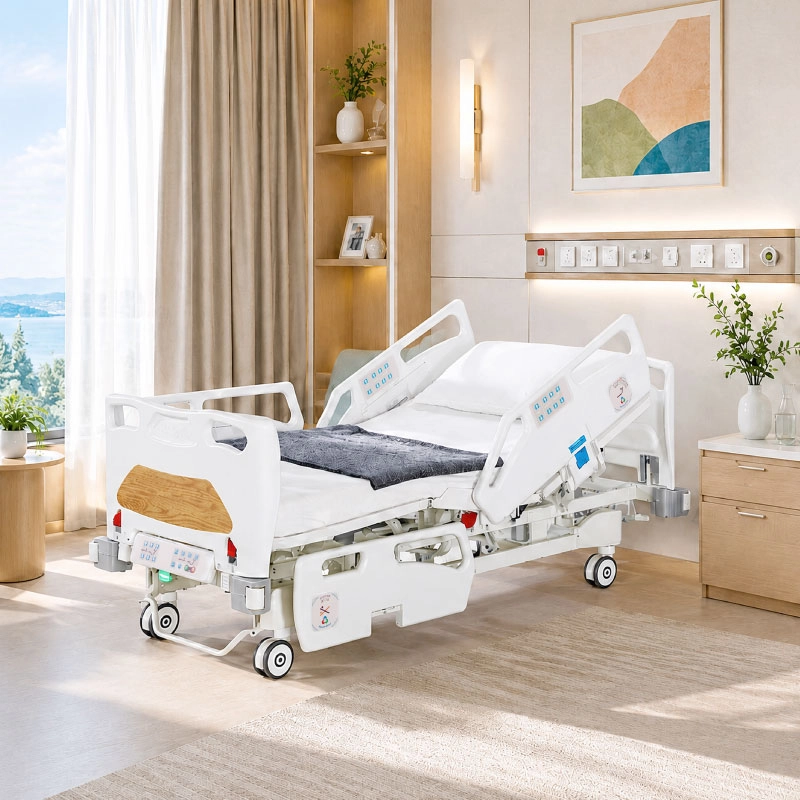
Engineered for long-term residential and nursing home recovery, offering warm wood-grain aesthetics, low bed height safety parameters, full electrical positioning, and a 5-year warranty.
Get Catalog
Multifunctional Heavy-Duty Manual Nursing Bed
Robust cold-rolled steel construction with electrostatic powder coating, integrated IV pole sockets, and central brake system tailored for rugged medical facility deployment.
Get CatalogEnterprise Strengths: What Distinguishes Top Patient Bed Factories?
When selecting a manufacturing partner for patient beds, institutional buyers must look beyond initial unit pricing. Long-term operating costs, patient outcome safety, and risk mitigation depend on the manufacturer's operational maturity, engineering standards, and quality management systems.
Precision Engineering & Structural Safety
Leading factories utilize automated robotic laser welding and precision CNC pipe bending to ensure structural integrity under heavy dynamic loads. Robotic welding guarantees zero weld voids, eliminating frame failure risks during high-stress emergency interventions.
30-Point Quality Verification & Stress Testing
Top-tier facilities apply strict internal quality controls comprising over 30 physical inspections and 15 dynamic stress tests—including 10,000-cycle side-rail durability tests, safe working load (SWL) over-capacity trials, and drop testing.
Global Regulatory Compliance & Traceability
Premier medical manufacturers maintain total traceability across raw steel sourcing, motor batches, and electrical PCB assembly. Complete adherence to ISO 13485 QMS ensures effortless audit trails for hospital tenders worldwide.
Future Procurement Trends: Where is Patient Bed Manufacturing Headed?
As global healthcare infrastructure pivots toward digital connectivity, caregiver safety, and patient-centered recovery models, procurement teams must align their tender specifications with upcoming technological developments. Below is an analytical roadmap of future procurement vectors.
1. IoT Integration & Real-Time Sensing
Modern hospital beds are transforming into edge-computing telemetry nodes. Integrated strain-gauge load cells provide continuous patient weight monitoring without painful bed-to-scale transfers. Sensor arrays built into the mattress deck dynamically transmit continuous heart rate, respiratory rate, and movement data to central nursing stations.
2. Smart Fall-Prevention Algorithms
Patient falls account for a significant portion of inpatient hospital injuries. Next-generation patient beds incorporate multi-zone pressure sensors that alert nurses before a high-risk patient exits the bed. Integrated side-rail angle indicators and automatic ultra-low height adjustments (lowering deck height to under 30cm) drastically minimize impact injuries.
3. Automated Lateral Tilting & Pressure Care
To prevent Hospital-Acquired Pressure Ulcers (HAPUs) and lighten caregiver workloads, advanced ICU beds feature programmable lateral tilting (up to 30 degrees). Automatic rotation cycles redistribute tissue pressure, enhance pulmonary repositioning, and streamline daily repositioning protocols for immobile patients.
4. Infection Control Hygiene Engineering
Nosocomial infection management is reshaping bed surface engineering. Modern factories are replacing traditional multi-piece metal bed decks with removable, seamless blown-PE (polyethylene) or ABS plastic platforms that can be rapidly disinfected. Antimicrobial powder coatings embedded with silver ions actively inhibit bacterial growth on steel side rails and headboards.
Technological Evolution: Manual vs. Electric Patient Bed Architecture
The global patient bed industry is experiencing a rapid technological transition. While manual crank beds maintain strong utility in rural clinics and disaster-relief infrastructure due to independence from electrical grids, electric hospital beds are now the benchmark standard for acute care, ICU environments, and premium home care recovery.
| Evaluation Parameter | Manual Crank Patient Beds | Standard Electric Hospital Beds | Advanced Smart ICU Patient Beds |
|---|---|---|---|
| Primary Application | General Wards, Field Clinics, Budget Facilities | Medical/Surgical Wards, Rehabilitation | ICU, CCU, High-Dependency Care Units |
| Drive Mechanism | Mechanical Lead Screws & Foldable Handles | DC Motors (Linak/Dewert/L&K Actuators) | Multi-axis Synchronized Servo Actuators |
| Caregiver Ergonomics | High physical strain; manual cranking required | High; push-button hand pendant / rail panels | Maximum; touch screens, foot switches, auto-chair |
| Special Positions | Basic Backrest (0-75°) & Knee-rest (0-45°) | Back, Knee, Hi-Lo, Trendelenburg (12-16°) | Auto-Chair, Trendelenburg, Lateral Tilt, CPR Quick Release |
| Patient Independence | None (requires nurse assistance) | High (patient operates hand pendant) | Maximum (integrated inner side-rail controls) |
| Diagnostic Capabilities | None | Optional scale attachment | Built-in X-ray cassette deck, weight scale, IoT telemetry |
| Regulatory Standards | ISO 9001, Basic Medical Device Class I | IEC 60601-1, IEC 60601-2-52, CE Class I | IEC 60601-1-2 (EMC), CE MDR Class IIa, FDA 510(k) |
Critical Safety Standard: Understanding IEC 60601-2-52 Compliance
When evaluating patient bed factories, the standard IEC 60601-2-52 is the single most important safety benchmark for medical bed design. Reversing older standard pitfalls, IEC 60601-2-52 explicitly specifies strict gap dimensions between side rail bars, headboards, and mattress frames to eliminate patient entrapment hazards. Top manufacturers design side rails with rigid anti-entrapment geometry, safety lockouts on nurse control panels, and fail-safe dual-battery backups to guarantee operational continuity during power grid outages.

Factory Case Study: Taiwan Manufacturing Rigor
Taiwanese medical device manufacturers like Joson-Care Enterprise Co., Ltd. represent the pinnacle of medical equipment reliability. Established in 2000, Joson-Care has dedicated over a quarter-century to refining medical bed architecture.
- Taiwan Excellence Award Engineering: Award-winning models like the ES-19HD incorporate integrated radiolucent backrests for instant bedside X-ray imaging.
- Customizable OEM/ODM Capabilities: Tailored dimensional adjustments, linear actuator selections (Linak, Dewert, L&K), customized color-coded side rail inserts, and regional electrical compatibility.
- End-to-End Quality Management: Certified ISO 13485 production lines backed by 100% functional testing of every motorized bed prior to export packaging.
Frequently Asked Questions (FAQ) for Patient Bed Sourcing
In-depth answers to common technical, commercial, and compliance questions asked by healthcare procurement officers.
Request Official Patient Bed Factory Catalogs & OEM Quotes
Elevate your medical facility or distribution portfolio with certified, engineering-grade patient beds built to international ISO 13485, FDA, and CE standards. Speak directly with factory specialists to evaluate technical datasheets, customized OEM options, and volume export pricing.