1. Demystifying the Cortical Bone Screw: Mechanical Principles & Biomechanical Intent
In modern orthopedic trauma surgery, the Cortical Bone Screw serves as the fundamental anchor for dynamic compression plates (DCP), non-locking neutralization plates, and interfragmentary compression systems. Unlike cancellous screws designed for spongy bone architecture, cortical screws are meticulously engineered to penetrate and grip dense, highly mineralized cortical bone walls (the outer shell of long bones such as the femur, tibia, radius, and humerus).
Global procurement teams and surgical evaluation committees frequently evaluate cortical bone screws based on four biomechanical parameters: thread pitch, outer-to-core diameter ratio, thread pitch angle, and drive recess torque resistance. A reduced thread pitch combined with a shallow thread depth maximizes the number of thread engagements within the thin cortical wall, generating superior pull-out force and rotational stability.
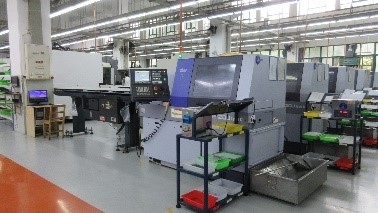
At Zhejiang INAR Medical Co., Ltd., our engineering team manufactures Cortical Bone Screws from medical-grade Titanium Alloy (Ti-6Al-4V ELI conforming to ISO 5832-3 and ASTM F136) and Stainless Steel (316L conforming to ISO 5832-1). Through Swiss-type precision CNC turning and micro-cutting technology, each screw delivers predictable insertion torque and exceptional fatigue strength under complex multidirectional bending loads.
| Screw Diameter | Core Diameter | Thread Pitch | Drive Recess | Clinical Indications |
| 2.7 mm Mini Cortical | 1.9 mm | 1.0 mm | Star T8 / Hex 2.0 | Metacarpal, metatarsal, and distal radius fractures. |
| 3.5 mm Small Fragment | 2.4 mm | 1.25 mm | Star T15 / Hex 2.5 | Ulna, radius, fibula, clavicle, and pelvic fractures. |
| 4.5 mm Large Fragment | 3.0 mm | 1.75 mm | Star T25 / Hex 3.5 | Femoral shaft, humeral shaft, and tibial diaphyseal fractures. |
2. Recommended Cortical Bone Screw Systems for Hospital Tenders
To support global medical device distributors and hospital procurement contracts, Zhejiang INAR Medical Co., Ltd. provides standardized and customized Cortical Bone Screw configurations. Our complete screw portfolio is fully compatible with international standard orthopedic instrument trays and dynamic compression plating systems.
3. Manufacturing Process & Quality Control Engineering (Enterprise Advantages)
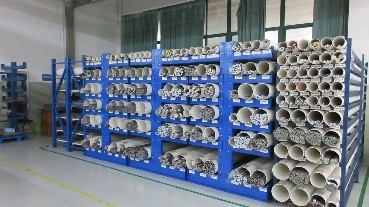
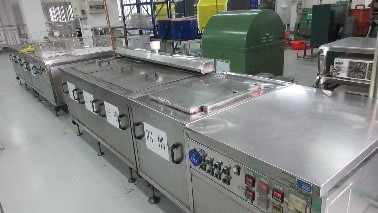
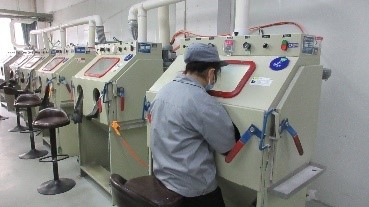
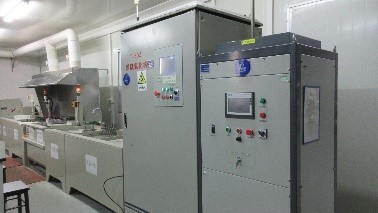
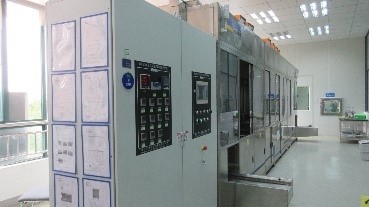
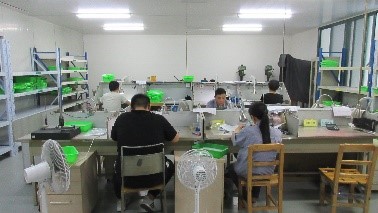
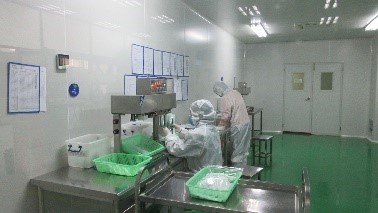
At Zhejiang INAR Medical Co., Ltd., quality is not an inspection step—it is built into every stage of manufacturing. Spanning over 29,523 m² with 632 dedicated personnel, our facility is equipped with state-of-the-art Swiss-type longitudinal cutting lathes, multi-axis CNC machining centers, and an automated surface treatment line.
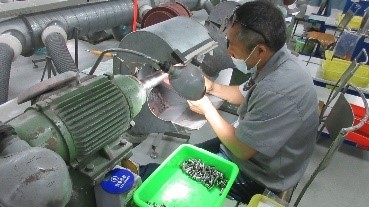
Each Cortical Bone Screw manufactured at our site undergoes a rigorous 14-step manufacturing process to guarantee zero structural micro-cracks, pristine thread profile fidelity, and absolute biocompatibility:
Testing & Validation Facilities at Zhejiang INAR Medical Co., Ltd.
To comply with ASTM F543 (Standard Specification and Test Methods for Metallic Medical Bone Screws), our quality lab operates dedicated fatigue testers, endurance equipment, and packaging integrity analyzers:
- Torsional Yield Strength & Breaking Angle Testing: Evaluates the maximum torque a cortical screw can withstand before mechanical shear occurs, guaranteeing a high safety factor during powered driver insertion.
- Axial Pull-out Strength Testing: Simulates dense cortical bone insertion in synthetic bone blocks (ASTM F1839 polyurethane) to quantify thread strip resistance under tension.
- Endurance Fatigue Testers: Tests screws under cyclic bending loads to verify fatigue life exceeding 1,000,000 cycles.
- Accelerated Aging Testers: Validates 5-year shelf-life stability for sterile-packaged implants stored in global distribution warehouses.
4. Future Procurement Trends for Cortical Bone Screws
As healthcare systems worldwide move toward value-based procurement and stricter regulatory oversight under EU MDR (Regulation 2017/745) and US FDA clearances, global procurement strategies for Cortical Bone Screws are evolving rapidly:
A. Shift Toward Star Drive (Torx-Style) Recesses
Historically, hexagonal drive recesses were standard. However, hospital procurement departments are aggressively transitioning to Star Drive (Torx-compatible) profiles. Star drive recesses provide a significantly larger contact surface area between driver tip and screw head, distributing axial insertion force evenly. This virtually eliminates "cam-out" driver stripping, reduces screw head burring during high-torque insertion, and speeds up operating room procedures.
B. Color-Coded Type II Electrochemical Anodizing
Modern surgical suites demand instant visual identification of screw diameters and lengths to reduce operative errors. Type II anodizing not only provides vibrant biocompatible color coding (e.g., Gold for 2.7mm, Blue for 3.5mm, Green for 4.5mm) but also hardens the titanium surface, reducing friction co-efficient during insertion and preventing cold-welding when used in combination with titanium locking plates.
C. Complete Supply Chain Traceability & Cleanroom Packaging Mandates
Procurement teams no longer accept bulk-packaged, non-traceable implants. Today’s international tenders demand individual UDI (Unique Device Identification) laser marking, lot-level material melt certificates, and validated sterile blister packaging sealed inside Class 100,000 cleanrooms. Zhejiang INAR Medical Co., Ltd. offers full UDI laser marking and customized OEM blister packaging tailored to regional hospital regulations.
5. Product Development & Technological Trends in Cortical Fixation
Looking forward, the orthopedic manufacturing sector is driven by innovations in biomechanics and material science. Emerging technical trends shaping the next generation of cortical bone screws include:
- Asymmetric Thread Geometries: Advanced thread profiles feature different pressure angles on the load-bearing thread flank versus the trailing flank. This asymmetric design increases pull-out strength by up to 22% in osteoporotic or thin cortical bone structures without requiring larger pilot holes.
- Self-Tapping Reverse-Cutting Flutes: Modern self-tapping cortical screws incorporate dual-directional cutting flutes at the tip. These flutes collect bone debris during forward driving and enable smooth, low-torque backing out during revision surgery or plate readjustment.
- Surface Micro-Texturing for Osseointegration: Advanced grit-blasting and micro-acid etching technologies applied to non-threaded screw heads minimize soft tissue irritation while encouraging micro-mechanical bone anchorage along the threaded shaft.
6. Frequently Asked Questions (FAQ) – Procurement & Engineering Intent
What is the key functional difference between a Cortical Bone Screw and a Cancellous Bone Screw?+
Cortical bone screws are designed for dense diaphyseal bone. They feature a finer thread pitch (smaller distance between threads), a lower outer-to-core diameter ratio, and threads running along the entire shaft length. Cancellous bone screws have a wider thread pitch, deeper thread depth, and higher pitch angle to grab spongy, trabecular metaphyseal bone.
Why choose Ti-6Al-4V ELI Grade 5 Titanium over 316L Stainless Steel for cortical screws?+
Titanium alloy (Ti-6Al-4V ELI) offers superior biocompatibility, higher strength-to-weight ratio, and a modulus of elasticity closer to natural human cortical bone, which minimizes stress shielding. Furthermore, titanium implants produce fewer MRI artifacts compared to stainless steel. However, 316L stainless steel remains a cost-effective option for trauma cases where post-healing implant removal is planned.
Does Zhejiang INAR Medical Co., Ltd. provide OEM custom labeling and tray packaging?+
Yes. We specialize in comprehensive OEM/ODM manufacturing. We offer custom laser marking (logo, reference numbers, lot numbers, UDI barcodes), anodized color customization, custom screw length development, and complete sterile or non-sterile OEM blister and tray kits according to your regulatory submission requirements.
How does your factory prevent driver cam-out and screw head stripping?+
We maintain ultra-tight machining tolerances on both our Star/Hex driver tips and screw recesses using Swiss CNC lathes. Additionally, all screws undergo optical dimensional inspection to ensure perfect recess engagement torque compliance according to ASTM F543 standards.
What documentation is provided to support medical device registration in our country?+
Zhejiang INAR Medical Co., Ltd. provides complete technical documentation dossiers including CE Certificates under EU MDR, ISO 13485 QMS certificates, Material Test Reports (MTRs according to EN 10204 3.1), ASTM F543 Mechanical Test Reports, Biocompatibility Test Reports (ISO 10993), and Sterilization Validation files.