SGS onsite-verified orthopedic manufacturer · CE (MDR / 93/42/EEC) implants · OEM & ODM
Send Inquiry

Bone Rasps Manufacturer & Factories Serving Japan

Precision-Crafted Orthopedic Rasp Systems, Broaches & Surgical Instrumentation for Joint Arthroplasty, Trauma and Reconstructive Procedures Across Japan’s Clinical Ecosystem

Surgical Instrument & Implant Matrix

Precision Engineered Solutions for Advanced Surgical Theaters

Manufactured under strict ISO 13485 cleanroom regimes, our medical devices, broaches, trauma implants and flexible surgical systems provide Japanese hospital distributors and orthopedic surgeons with ultra-consistent cutting profiles, anatomical congruence, and high fatigue resistance.

22+
Years Manufacturing Mastery
29,523 m²
Precision Production Base
632
Specialized Technicians & QC
100%
Batch Traceability & OQC
Surgical Localization Dynamics

Clinical Engineering Demands for Bone Rasps Across Japanese Operating Rooms

The operational landscape for orthopedic surgery in Japan is characterized by some of the most rigorous precision tolerances and material integrity benchmarks in the global medical device sector. Japanese orthopedists in major university hospitals, national medical centers, and specialized orthopedic clinics emphasize conservative bone stock preservation and tactile bio-feedback above all else.

Bone rasps—crucial for precise intramedullary preparation, femoral canal broaching in total hip arthroplasty (THA), tibial canal shaping in revision total knee arthroplasty (TKA), and vertebral endplate preparation in spinal fusion—must satisfy nuanced anatomical constraints distinct to East Asian skeletal morphology.

  • Anatomical Compaction vs. Calcar Milling: Tailored tooth geometries designed for high compaction of cancellous bone without cortical perforation, perfectly matching Japanese femoral bows.
  • Minimally Invasive Surgery (MIS) Adaptability: Offset broach handles and low-clearance rasp necks accommodating Direct Anterior (DAA) and SuperPATH surgical approaches.
  • Endplate Safety Profiles: Spine rasps crafted with rounded lateral borders to protect the anterior longitudinal ligament and prevent subsidence in cervical and lumbar interbody fusion.
Orthopedic Surgical Instrumentation and Manufacturing Precision
Industry Transformation

Emerging Trends Reshaping Bone Rasp & Broach Sourcing in Japan

Driven by an aging society and stringent PMDA (Pharmaceuticals and Medical Devices Agency) regulatory shifts, Japanese medical procurement is rapidly modernizing. Factories serving this market must align directly with the following technological frontiers.

Geriatric Bone Density Optimization

Japan exhibits the highest proportion of super-aged population in the world, with over 29% aged 65 or older. This demographic shift elevates the incidence of osteoporosis, fragile Dorr Type C femoral bone canals, and comminuted metaphyseal fractures. Bone rasps must transition from aggressive bone extraction to controlled progressive micro-compaction teeth, preventing intraoperative periprosthetic fractures during implant seating.

Robotic Integration & Hexagonal Couplings

Japanese surgical suites are rapid adopters of robotic-assisted orthopedic platforms (e.g., Mako, ROSA). Bone rasps and reamers now demand rigid rotational tolerance, anti-backlash drive stems, and indexed navigation tracking collars. As a dedicated manufacturing partner, our CNC 5-axis wire EDM and Swiss-machining centers mill precise quick-lock couplers that interface smoothly with automated broach drivers.

Biocompatible Hard Coatings & Passivation

In accordance with Japan’s MHLW Ministerial Ordinance No. 169 (QMS), surgical cutting tools endure aggressive central sterile supply department (CSSD) washings with alkaline cleaners and autoclaving. Our factories utilize medical-grade martensitic stainless steels (17-4PH, 420B) combined with vacuum heat treatment (52–56 HRC) and multi-layer PVD Titanium Aluminum Nitride (TiAlN) coatings to ensure corrosion resistance and lasting sharpness.

Manufacturing Integrity

22+ Years of Verified Contract Manufacturing & OEM Expertise

Founded on clinical engineering excellence, Zhejiang INAR Medical Co., Ltd. operates a vertically integrated 29,523 m² production base staffed by 632 dedicated medical machinists, metallurgists, and regulatory affairs professionals. We maintain complete operational control from certified raw material ingestion to finished cleanroom packaging.

Our infrastructure holds onsite verification by SGS Group and comprehensive CE (MDR / 93/42/EEC) product certifications, enabling seamless validation for foreign OEM registrations. Through rigorous penetrant testing, automated coordinate measuring machines (CMM), optical profile projectors, and high-frequency cyclic fatigue rigs, we eliminate structural failures in heavy-torque instruments.
INAR Medical Advanced Production Facility
Zero-Defect Quality Chain

End-to-End Processing Architecture for Japanese Import Standards

Every bone rasp, drill bit, and locking plate passes through a strict 13-stage manufacturing process audited for micro-structural purity, surface topography, and microbiological safety.

1. Material Verification & Wire EDM

Certified aerospace- and implant-grade titanium alloy (Ti-6Al-4V ELI) and custom surgical stainless steels undergo spectral chemical validation and ultrasonic defect scanning before entering high-precision Wire Electrical Discharge Machining centers.

2. Multi-Axis CNC Milling & Broach Profiling

Equipped with imported multi-axis machining centers, our rasp teeth are cut with micron-level consistency, maintaining uniform chip pockets, chip breakers, and precise taper ratios matching modern hip stem geometries.

3. Double Ultrasonic Decontamination & OQC

Components undergo initial and secondary multi-stage ultrasonic degreasing, passivation, penetrant crack inspection, and laser verification before moving into our certified ISO Class cleanroom for aseptic double-barrier packaging.

Procurement Intelligence

Frequently Asked Questions by Japanese Medical Importers & Hospitals

Addressing crucial regulatory, material, and logistics inquiries for hospital purchasing consortia, trading houses, and OEM brand holders sourcing instruments into Japan.

What documentation do you provide for PMDA Shonin / Ninsho filings in Japan?

We supply comprehensive technical construction files (TCF), material certificates (Mill Test Reports according to ASTM F136 / ASTM F138 / ISO 5832), biocompatibility validation reports (ISO 10993), sterilization validation packages (ISO 11137 / ISO 17665), and risk assessment files (ISO 14971) essential for Designated Marketing Authorization Holders (DMAH) in Japan.

Can you manufacture custom rasp tooth geometries based on Japanese anatomical data?

Yes. Our dedicated OEM/ODM R&D engineering unit specializes in customized canal preparations. Whether your requirement calls for cross-cut serrations for dense diaphyseal bone or unidirectional directional teeth for cancellous preservation in East Asian patients, our engineers build tooling directly from CAD files or CT reconstructions.

How do you safeguard against micro-burrs and surface fatigue failures?

Every bone rasp and broach tooth undergoes high-magnification optical deburring inspection, followed by electropolishing or automated bead micro-blasting. To guarantee structural safety under mallet impact, our QA lab subjects production samples to high-cycle dynamic fatigue testing and non-destructive fluorescent penetrant inspection (FPI).

What is the lead time for prototype sampling versus volume supply orders?

Precision functional prototypes (complete with custom laser markings and color anodizing) are typically completed within 15–20 business days. For container-scale contract manufacturing or routine distributor replenishment, batch production lead times range between 30 and 45 days, supported by expedited air-freight corridors directly to Narita, Haneda, or Kansai international hubs.

Are custom sterilization graphic trays and holding cases included?

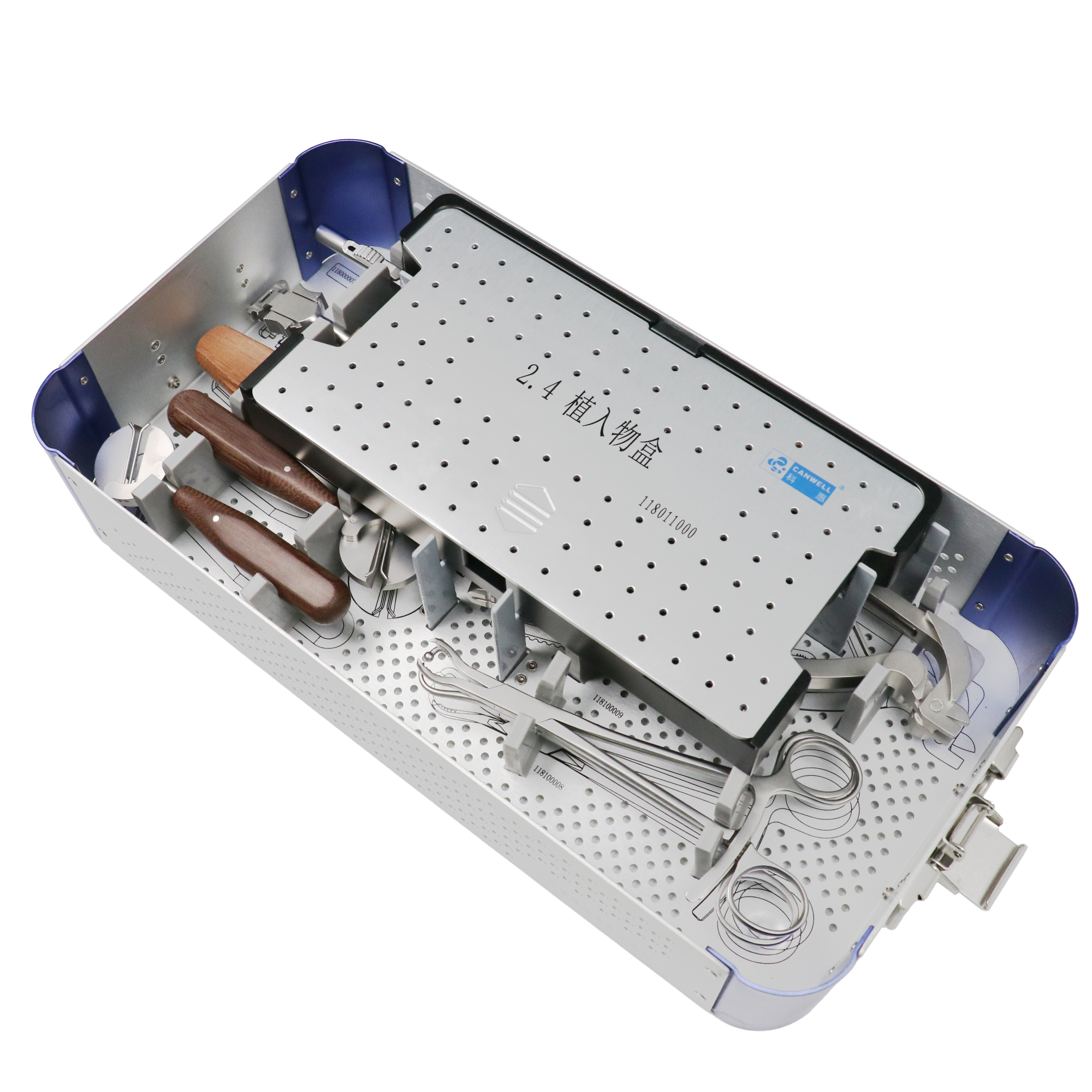
Yes. We design and fabricate custom modular instrument trays manufactured from anodized aluminum, polyphenylsulfone (Radel PPSU), or surgical stainless steel. Trays can be custom-milled with silicone brackets, matching Japanese hospital CSSD autoclaving workflows and minimizing instrument chatter during transport.

Partner with an SGS-Verified Orthopedic Instrument Factory

Whether you require standard CE-marked surgical rasps, specialized broach systems for Japanese anatomical profiles, or complete contract manufacturing services, our engineering and export team is ready to support your technical tender.