Featured Orthopedic Trauma & Surgical Instrument Sets
Precision-machined implant assemblies and traumatology instrument kits engineered for immediate hospital ward and emergency theatre dispatch across UK Trusts.
Biomechanical Engineering & Clinical Efficacy of Pelvic C-Clamp Systems in Resuscitative Surgery
High-energy pelvic ring disruptions—specifically categorised under the Tile Type C or Young-Burgess APC II/III and LC II/III classifications—represent some of the most lethal scenarios encountered by consultant trauma orthopaedic surgeons in UK Major Trauma Centres (MTCs). In these catastrophic injuries, the complete rupture of the posterior sacroiliac ligamentous complex precipitates massive internal retroperitoneal haemorrhage. Because up to 85% of retroperitoneal bleeding stems from the rich presacral venous plexus and exposed cancellous fracture surfaces, instantaneous volumetric reduction and rigid mechanical compression of the sacroiliac joint are paramount to promote tamponade and arrest exsanguinating haemorrhage.
Traditional anterior pelvic external fixators require extended surgical application times, rely on extensive pin corridors in the anterior inferior iliac spine (AIIS) or iliac crest, and exert negligible compressive vectors across the posterior sacroiliac joint. By contrast, a dedicated Pelvic C-Clamp Instrument Set delivers a targeted vector collinear with the posterior trans-iliac axis. Anchored directly against the lateral cortical ilium at the level of the posterior sacroiliac joint, the device allows rapid, controlled manual compression that can be locked rigidly under fluoroscopic guidance within 8 to 15 minutes of operating theatre entry.
Direct S1 Trans-Alar Compressive Vector
Our custom OEM Pelvic C-Clamp frames are constructed to establish a direct transverse line of action through the posterior iliac wing onto the sacral ala, transforming tension forces into stabilizing compression across unstable vertical shear ruptures.
Cannulated Pin Self-Limiting Penetration
Engineered with modular trocar sleeves and mechanically stepped shoulder pins, the system prevents cortical breaching of the inner pelvic table, drastically reducing the clinical risk of neurovascular insult to the superior gluteal bundle and lumbosacral plexus.
Laparotomy & Angio Access Window
The variable curvilinear geometry provides complete unobstructed access to the anterior abdomen, ilioinguinal corridors, and femoral triangle, allowing simultaneous pre-peritoneal pelvic packing (PPP) and emergency endovascular REBOA catheter placement.
Localised Clinical Practice: Major Trauma Centres (MTCs) and the NHS Damage Control Framework
Across the United Kingdom, trauma delivery is organised into regional Major Trauma Networks consisting of 27 adult and combined Major Trauma Centres (MTCs) alongside linked Trauma Units (TUs). Clinical management adheres strictly to guidance established by the British Orthopaedic Association Standards for Trauma (BOAST) and the National Institute for Health and Care Excellence (NICE NG37: Major trauma - assessment and initial management).
Within this infrastructure, the adoption of Damage Control Orthopaedics (DCO) over Early Total Care (ETC) is standard doctrine for 'in extremis' and borderline polytrauma patients presenting with hypothermia, acidosis, and trauma-induced coagulopathy (the lethal triad). Non-invasive pelvic binders (such as SAM Pelvic Sling or TPOD) serve as vital pre-hospital bridges; however, extended compression via pneumatic or binder devices beyond 24 hours induces skin maceration, severe pressure necrosis over the greater trochanters, and severely impedes secondary cross-sectional CT imaging and emergency laparotomy.

Surgical Positioning & NHS Ward Integration
The CANWELL / INAR Pelvic C-Clamp system provides consultant-grade reliability during emergency damage control manoeuvres in UK theatres:
- Anatomical Landmarking: Rapid pinpoint placement along the lateral ilium at the junction of the iliac tubercle and the posterior superior iliac spine (PSIS).
- Radiolucent Alignment Corridors: Minimal radiographic scatter during inlet, outlet, and Judet 45° obliques on modern Siemens and Philips C-arm fluoroscopes.
- ICU Compatibility: Ergonomic low-profile frame arms ensure seamless patient rollover, thoracic nursing, and transport to tertiary ICU/HDU suites.
UK Market Dynamics: MHRA Medical Device Regulations & Sustainable Procurement
Supplying surgical instrumentation to the UK healthcare ecosystem demands proactive alignment with dynamic regulatory frameworks managed by the Medicines and Healthcare products Regulatory Agency (MHRA). As the UK progresses toward its future standalone medical device regime, CE marking under the European EU MDR (Regulation 2017/745) remains recognised for placing devices on the Great Britain market, alongside transition pathways toward the UK Conformity Assessed (UKCA) framework.
Furthermore, under the Delivering a 'Net Zero' National Health Service mandate, NHS procurement teams increasingly scrutinise the environmental lifecycle of surgical devices. Single-use instrumentation models face stringent carbon taxation and hospital waste disposal surcharges. In response, high-precision reusable surgical grade instrument sets machined from corrosion-resistant aerospace alloys offer exceptional lifecycle resilience, supporting hundreds of standard autoclave cycles without mechanical degradation or loss of torque calibration.
22+
Years Manufacturing Heritage29,523m²
State-of-the-Art Production Facility632
Specialist Engineers & QC Staff100%
MHRA & CE MDR Documentation ReadyOEM/ODM Customization & Engineering Specifications
As a verified high-volume manufacturing exporter with more than two decades of precision orthopedic toolmaking experience, INAR / CANWELL engineers execute rigorous bespoke adaptations of the Pelvic C-Clamp set for hospital brands, distributors, and tender consortiums throughout England, Scotland, Wales, and Northern Ireland.
| Structural Frame Materials | High-tensile Grade 5 Titanium Alloy (Ti-6Al-4V ELI conforming to ASTM F136 / ISO 5832-3) or Medical-grade 17-4PH / AISI 316L Stainless Steel with passivated corrosion resistance. |
|---|---|
| Telescopic Rail Assembly | Dual-axis graduated metric rack with smooth-locking friction clamp, allowing span adjustability from 280 mm to 520 mm to accommodate diverse patient habitus. |
| Locking Bone Pins | Self-drilling, self-tapping threaded trocars (diameters: 5.0 mm and 6.0 mm; working lengths: 150 mm to 240 mm) with laser-etched depth gauges and high-hardness diamond points. |
| Torque Limiting Mechanism | Integrated ergonomic ratchet knob calibrated to prevent excessive over-compression across the pelvic brim, protecting against trans-alar sacral impaction. |
| Sterilization Compatibility | Validated for repeated Class B Pre-vacuum steam autoclaving at 134°C (273°F) for 18 minutes in compliance with HTM 01-01 and EN 285 standards. |
| OEM Private Label Services | High-resolution laser annealing for distributor branding, GS1 DataMatrix 2D barcodes for UDI compliance, anodized colour-coding, and custom CNC cut autoclavable silicone-lined trays. |
Integrated Production: From Raw Ingot to Aseptic Cleanroom Packaging
Operating out of our 29,523 m² facility, our manufacturing infrastructure is verified on-site by SGS Group. Every trauma instrument set passes through an uninterrupted, strictly audited 13-stage manufacturing and quality assurance sequence ensuring complete batch traceability for UK hospital audits:
1. Bar Stock & Cutting
100% spectral-analysed raw medical-grade titanium and surgical steel bar stocks undergoing multi-axis longitudinal cutting.
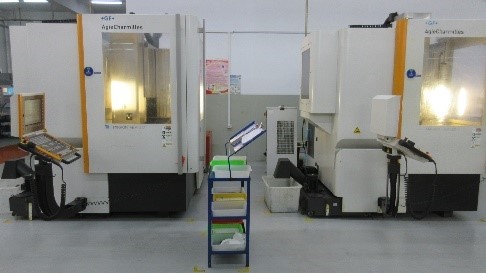
2. 5-Axis CNC Milling
Sub-micron tolerance contouring of C-clamp arms, locking sleeves, and ergonomic knurled dials using Japanese machining centres.
3. Finishing & Washing
Robotic micro-grinding and dual-stage ultrasonic wash baths removing all particulate contamination prior to anodization.
4. NDT & Penetrant Testing
Rigorous dye penetrant inspection and endurance mechanical fatigue testing validating structural integrity under extreme load.
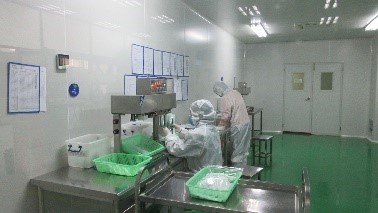
5. OQC & Cleanroom Pack
100% CMM visual inspection, UDI laser marking, and cleanroom barrier packaging ready for immediate export shipment.
Frequently Asked Questions: UK Orthopaedic Procurement Teams
Answers to essential clinical, regulatory, and supply chain queries encountered by NHS Trust Category Managers and private distributor buyers.
What regulatory documentation is provided for UK market entry and NHS supply chain tenders?
Can the Pelvic C-Clamp set be customized with OEM branding and specific NHS hospital tray layouts?
How does the clamp design mitigate the risk of cortical perforation during emergency application?
What are the lead times and logistical arrangements for export to UK freight hubs (e.g., Heathrow, Felixstowe)?
Are replacement parts, individual bone pins, and extension rods available separately?
Partner with an SGS-Verified Orthopedic Instrument Manufacturer
Whether you require a custom OEM instrument batch, tender quotation for an NHS Trust, or an exclusive private-label distribution line across the United Kingdom, our senior technical engineering team is ready to evaluate your CAD designs, surgical technique requirements, and regulatory submissions.