Featured Hospital Furniture Solutions for Ethiopian Medical Institutions
Certified clinical equipment engineered for high-patient volume resilience, infection prevention, and ergonomic care delivery across primary, secondary, and tertiary care facilities.
Executive Summary: Navigating Hospital Furniture Sourcing in Ethiopia
Ethiopia's healthcare sector is undergoing a profound structural transformation driven by the Federal Ministry of Health's (MOH) Health Sector Transformation Plan (HSTP-II). As Africa's second most populous nation, Ethiopia is rapidly expanding its clinical footprint across primary health care units (PHCUs), general regional hospitals, and specialized tertiary referral hubs such as Black Lion (Tikur Anbessa) Specialized Hospital, St. Paul's Hospital Millennium Medical College, and newly developed regional centers in Hawassa, Mekelle, Gondar, and Jimma.
However, procuring medical furniture in Ethiopia presents unique operational and technical challenges. Procurement authorities, hospital directors, and biomedical engineering teams must navigate stringent regulatory frameworks overseen by the Ethiopian Food and Drug Authority (EFDA) while partnering with supplier networks that understand the logistics through the Djibouti shipping corridor and Mojo Dry Port. Crucially, medical equipment deployed in Ethiopian wards must possess exceptional structural integrity to withstand intensive usage, environmental dust, fluctuating regional power supplies (220V/50Hz), and limited immediate access to local secondary replacement parts.
Information Gain Insight: Hospital furniture in East Africa cannot be evaluated merely as institutional room decor. It serves as an extension of clinical care delivery. Low-grade commercial steel beds fail within 12-18 months under high turnover patient loads in public facilities. High-grade cold-rolled steel treated with electrostatic anti-corrosion coating and certified to IEC 60601 electrical safety standards reduces total cost of ownership (TCO) by up to 42% over a 10-year facility lifecycle.
Essential Hospital Furniture Classifications & Regional Application Scenarios
To assist procurement committees, international funding bodies (such as USAID, Global Fund, and World Bank healthcare initiatives), and private medical facility developers in Ethiopia, we outline the vital performance specs across primary hospital furniture tiers:
1. Intensive Care & Ward Beds
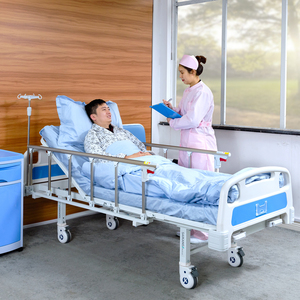
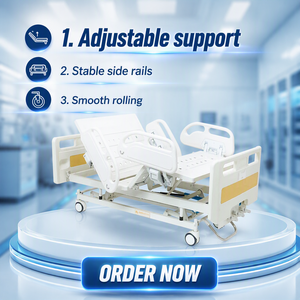
Ranging from 2-crank manual adjustable beds for primary care units to multi-function electric ICU beds equipped with Auto-Chair, Trendelenburg, and X-ray cassette translucent backrests for critical care suites in Addis Ababa.
2. Emergency & Patient Transfer Systems
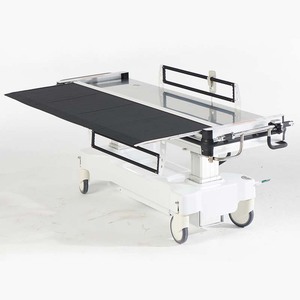
Heavy-duty hydraulic emergency stretchers and automatic transfer beds designed with 5th steering castors for rapid movement through congested emergency departments and narrow hospital corridors.
3. Maternal & Gynecological Exam Couches
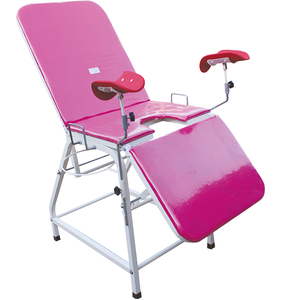
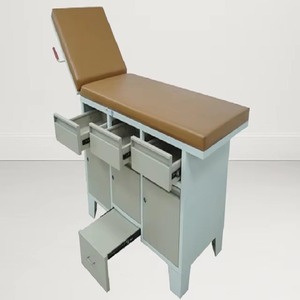
Detachable and multi-section obstetric delivery beds fabricated with medical-grade stainless steel or cold-rolled frames, essential for maternal health centers supported by Ethiopian MOH initiatives.
4. Ward Storage & Treatment Cabinets
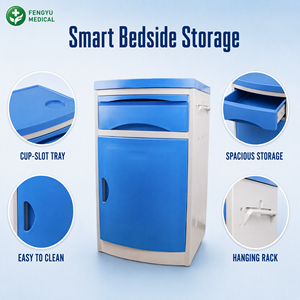
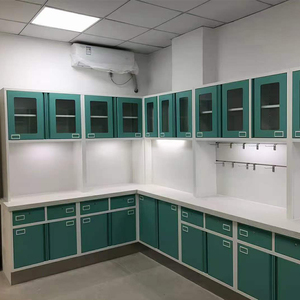
Infection-resistant ABS bedside lockers, stainless steel instrument carts, and modular treatment room cabinets configured for sterile medication dispensing and patient storage.
5. Specialized Diagnostic & Lab Seating
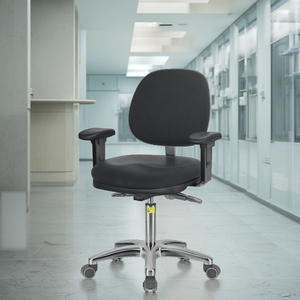
Anti-static (ESD) laboratory chairs with iron backrests and washable medical upholstery, engineered for pathology laboratories, diagnostic blood banks, and clinical workshops.
6. Modular Clinical Workstations
Integrated treatment room combinations that consolidate surgical prep tools, sterile linen storage, and waste segregation systems into space-optimized clinical environments.
Technical Evaluation Benchmark: Commercial Grade vs. ISO 13485 Certified Medical Furniture
When evaluating suppliers for public tenders issued by the Ethiopian Pharmaceuticals Supply Agency (EPSA) or private clinic investments, biomedical engineers must enforce strict technical matrix criteria. Below is a comparative technical benchmark:
| Evaluation Parameter | Commercial / Standard Grade | Joson-Care Medical Grade Standard | Impact on Ethiopian Operations |
|---|---|---|---|
| Structural Frame Steel | Standard welded mild steel (1.0-1.2mm) | Cold-Rolled Steel / Robot Welded (1.5-2.0mm) | Prevents structural sagging under continuous high weight loads |
| Surface Protection | Single-coat fluid paint | Electrostatic Powder Coating (Anti-bacterial) | Resists harsh chemical disinfectants & tropical oxidation |
| Caster & Braking System | Generic plastic double casters | Central Braking / German Tente Quality Casters | Smooth maneuverability across uneven floors or elevator thresholds |
| Electrical Components | Uncertified motor actuators | IEC 60601-1 & CE Certified Linear Actuators | Surge protection against regional electrical grid spikes |
| Side Rail Safety | Basic fold-down aluminum bars | 4-Piece Drop-down ABS Rails with Pinch-Protection | Eliminates patient fall risks and compliance failures |
| Regulatory Standards | None or local commercial license | ISO 13485, FDA Registered, CE MDR Compliant | Ensures 100% fast-track clearance via EFDA customs audits |
Why Joson-Care is the Preferred Manufacturing Partner for Ethiopian Healthcare Projects
With over 25 years of specialized medical bed engineering (established in 2000), Joson-Care Enterprise Co., Ltd. has established itself as an authoritative global manufacturer serving hospitals, medical supply distributors, and NGO healthcare initiatives in over 65 countries worldwide.
Rigorously Tested Quality System
Every single piece of hospital furniture undergoes 30 stringent quality inspections and 15 mechanical endurance tests before leaving our ISO 13485 certified facilities. From frame stress testing to actuator load limits, quality is guaranteed.
Full International Compliance
Our complete product portfolio holds primary global medical certifications including ISO 13485, FDA registration, CE Mark, IEC 60601-1, IEC 60601-2-52, and Taiwan Excellence Awards, streamlining local EFDA product registration.
Turnkey Tender & Bulk Order Support
We work directly with Ethiopian hospital procurement committees and import partners to provide complete technical dossiers, CAD ward layout planning, knock-down (CKD/SKD) shipping options for container optimization, and competitive factory pricing.
Tropicalized & High-Durability Engineering
Specially engineered for developing market health systems, our manual and electric beds incorporate reinforced cold-rolled steel structures, anti-dust sealed motors, and flame-retardant high-density polyurethane padding.
Localized Procurement Roadmap: Shipping & Clearance in Ethiopia
Successfully supplying medical furniture to hospitals in Addis Ababa, Dire Dawa, Adama, or regional health bureaus requires a streamlined logistics execution strategy. Joson-Care has perfected international freight protocols tailored to the East African maritime corridor:
- Port of Entry & Transit: Sea freight containers are dispatched to the Port of Djibouti, transferring seamlessly via rail or truck freight through the Ethio-Djibouti Corridor to Mojo Dry Port or Gelan Dry Port for customs assessment.
- EFDA Product Registration: We supply comprehensive Technical Construction Files (TCF), ISO 13485 certificates, Certificate of Free Sale (CFS), and batch test reports to facilitate rapid EFDA import verification.
- Container Load Optimization: Utilizing space-saving detachable head/footboards and stackable frame architectures, we maximize CBU (Completely Built Up) and SKD (Semi-Knock Down) container utilization to minimize shipping costs per unit.
- Spare Parts & Maintenance Packages: Every bulk shipment includes dedicated replacement parts kits (including spare cranks, casters, gas springs, and control handsets) to guarantee uninterrupted ward operation.
Frequently Asked Questions (FAQ) for Ethiopian Hospital Furniture Buyers
Answers to crucial regulatory, technical, and commercial questions asked by biomedical procurement managers across Ethiopia:
Partner with a World-Class Hospital Furniture Manufacturer
Contact our global engineering and sales support team today to receive detailed technical datasheets, container pricing, or formal proforma invoices for your Ethiopian healthcare project.
Inquire Now