Featured Precision Implants & Surgical Instrumentation
Alongside our premier lumbar interbody cage lines, INAR Medical manufactures CE-certified traumatology, sports medicine, and reconstructive systems deployed across Scandinavian and Northern European surgical suites.
Engineering Lumbar Interbody Cages for the Aalborg Surgical Sector
Addressing the rigorous clinical standards demanded by neurosurgical and orthopaedic spine faculties across Region Nordjylland (North Denmark Region).
Demographic Drivers & Lumbar Arthrodesis Demand in North Jutland
In northern Denmark, demographic shifts toward an active, aging populace have elevated the prevalence of symptomatic degenerative disc disease (DDD), degenerative lumbar spondylolisthesis (Grade I and II), recurrent lumbar disc herniation, and adult spinal deformities. Tertiary medical hubs such as Aalborg Universitetshospital (Aalborg University Hospital) demand uncompromising biomechanical fidelity from spinal fusion instrumentation. Surgeons require lumbar cages that not only restore lordotic alignment and intervertebral disc height but also actively combat graft subsidence—a frequent complication in osteopenic populations.
INAR Medical addresses these localized clinical challenges by deploying medical-grade polyetheretherketone (PEEK-OPTIMA® compliant) and additive manufactured 3D porous titanium (Ti6Al4V ELI) cages. Our lumbar cage portfolio encompasses specialized configurations for Transforaminal (TLIF), Posterior (PLIF), Anterior (ALIF), and Oblique/Lateral (OLIF/LLIF) approaches. Each implant is engineered with macro-porous endplate interfaces, wide central graft windows for autologous and allogeneic bone packing, and optimized bulleted noses that streamline insertion during minimally invasive surgery (MIS), reducing intraoperative fluoroscopy exposure and muscle retraction trauma.
Subsidence Mitigation & Modulus Compliance
Subsidence remains the primary structural failure mode in lumbar interbody arthrodesis. When an interbody device features excessive rigidity, stress shielding occurs, predisposing the inferior and superior vertebral endplates to microfracture and eventual device sinkage. INAR Medical's PEEK cages feature an elastic modulus of approximately 3.6 GPa, closely replicating the biomechanical properties of human cancellous and cortical bone. This ensures uniform axial load distribution across the fusion bed in accordance with Wolff's Law.
For cases demanding accelerated direct osseointegration, our 3D-printed porous titanium interbody cages utilize an interconnected lattice structure with 60%–70% porosity and 400–600 μm pore dimensions. This topology facilitates cellular migration, vascularization, and interlocking bone ingrowth without requiring biological coatings that could delaminate under sheer shear stress during distraction.
| Biomechanical Parameter | INAR Medical PEEK TLIF/PLIF | INAR 3D Porous Titanium | Conventional Solid Ti Alloy | Clinical Advantage in Aalborg Hospitals |
|---|---|---|---|---|
| Elastic Modulus (GPa) | 3.6 GPa (Near native bone) | 2.8 – 4.2 GPa (Lattice tailored) | 110 GPa (Excessively stiff) | Minimizes endplate stress concentration and prevents subsidence. |
| Radiographic Assessment | Radiolucent with Tantalum markers | Semi-radiolucent porous mesh | Radio-opaque (Scatter artifact) | Enables artifact-free CT/MRI postoperative fusion grading. |
| Bone Ingrowth Profile | Contact osteoconduction | Deep through-lattice osteointegration | Surface fibrous interposition | Shortens solid arthrodesis timeline in complex degenerative revisions. |
| Axial Dynamic Fatigue | > 5.0 Million cycles (ASTM F2077) | > 5.0 Million cycles (ASTM F2077) | Variable notch sensitivity | Guarantees permanent segmental stabilization prior to union. |
| Lordotic Angles Available | 0°, 4°, 8°, 12° anatomically contoured | 4°, 8°, 12°, 15° hyperlordotic options | Static fixed angles | Accurately restores sagittal balance tailored to Nordic spine registries. |
Targeted Surgical Application Scenarios in Northern Denmark
Precision interbody systems tailored for specialized orthopaedic protocols, university research settings, and ambulatory surgical pathways.
Minimally Invasive TLIF in Specialized Spine Clinics
In Danish ambulatory and specialized spinal units where Enhanced Recovery After Surgery (ERAS) protocols govern patient discharge, our bulleted MIS-TLIF cages facilitate gentle transforaminal passage without over-retraction of the exiting nerve root or the thecal sac. The self-distracting nose profile simplifies segmental height restoration even through 16mm tubular retractors.
High-Lordosis ALIF for Sagittal Plane Alignment
Correcting fixed sagittal imbalance at L4-S1 demands expansive footprint support and aggressive lordotic profiles (up to 15°). INAR ALIF interbody devices cover the dense apophyseal ring of the sacral plateau, significantly lowering interfacial loading stress while delivering maximal stability against shear forces under physiological bipedal loading.
Revision Arthrodesis in Osteopenic & Geriatric Cohorts
In revision cases where prior cage pseudoarthrosis or subsidence has compromised endplate integrity, our wide-footprint 3D porous titanium implants establish multi-point peripheral seating. The frictional coefficient of the 3D-printed porous contact surface provides exceptional primary mechanical purchase, eliminating micro-motion and promoting early biological consolidation.
Navigating Regional Procurement in the Danish Market
How medical device distributors and hospital consortiums in Denmark are reshaping spinal implant supply channels under EU MDR 2017/745.
Rigorous EU MDR 2017/745 Compliance Thresholds
The enforcement of EU MDR has significantly altered Danish hospital procurement. Public tenders managed across Denmark's healthcare regions (including Region Nordjylland) demand exhaustive Clinical Evaluation Reports (CER), verified Post-Market Clinical Follow-up (PMCF) plans, and unbroken Unique Device Identification (UDI) tracking. INAR Medical delivers comprehensive technical documentation, enabling regional distributors to submit compliant bids without regulatory bottlenecks.
Total Cost of Care & Value-Based Healthcare
Healthcare authorities in Aalborg operate within structured budget frameworks prioritizing implants that demonstrate zero failure rates, reduced operative duration, and minimized revision risks. By sourcing directly from INAR Medical's 29,523 m² audited manufacturing base, Danish supply partners eliminate multi-tiered intermediary price escalations while maintaining implant precision comparable to premier European brands.
Green Hospital & Sustainable Logistics Protocols
Environmental accountability is a crucial scoring metric in Scandinavian municipal tenders. INAR Medical utilizes clean, recyclable secondary packaging materials, low-emission CNC machining practices, and optimized volumetric carton design that reduces intercontinental logistics carbon footprints. Furthermore, our autoclaving-compatible, high-durability instrument trays withstand repetitive sterilization cycles without material degradation.
State-of-the-Art Production & Onsite Audited Excellence
Zhejiang INAR Medical Co., Ltd. stands as a premier orthopedic and spinal implant manufacturing enterprise with over 22 years of precision machining experience. Headquartered in Jinhua, Zhejiang, China, our 29,523 square-meter manufacturing campus is staffed by 632 dedicated engineers, machinists, and quality control professionals.
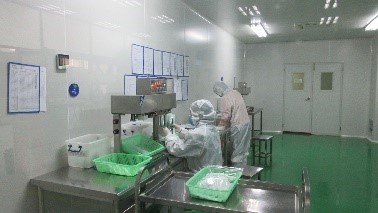
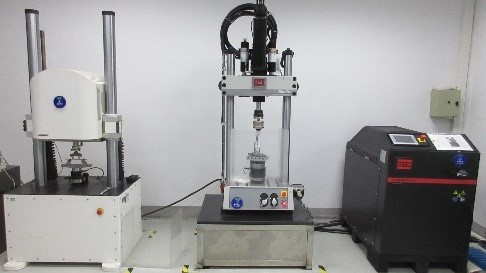
Our facility has been rigorously audited on site by SGS Group, confirming international benchmarks across CNC machining, cleanroom finishing, mechanical endurance validation, and aseptic packaging. We maintain Class III medical device manufacturing licenses and supply orthopedic distributors, healthcare groups, and brand owners across Europe, the Americas, and the Asia-Pacific region.

Frequently Asked Questions by Danish Buyers
Essential information covering regulatory documentation, sterilization compliance, logistics timelines, and OEM customization for the Aalborg market.