Specialized Trauma, Reconstruction & Fixation Systems
Complete CE-marked implant families and high-torque instrumentation engineered for operating theaters handling complex winter trauma and long-bone stabilizations.
Clinical Context: Diaphyseal Long-Bone Trauma in Northern Iceland
The Eyjafjörður region, anchored by the municipality of Akureyri, presents a clinically unique biomechanical challenge for orthopedic traumatology. As the home to Sjúkrahúsið á Akureyri (Akureyri Hospital - FSA)—the designated trauma center servicing Northern and Eastern Iceland—the local healthcare system faces seasonal surges in severe musculoskeletal injuries. The proximity to Mount Hlíðarfjall, Iceland's primary winter sports hub, combined with treacherous sub-arctic road corridors along Route 1 (Ring Road), creates an epidemiological profile characterized by high-energy diaphyseal fractures, multiaxial spiral shears, and complex segmental comminution.
In sub-zero alpine conditions, soft-tissue envelopes around the tibia and femur suffer compromised microcirculation due to hypothermia and prolonged pre-hospital transit times across remote mountain passes (such as Öxnadalsheiði). When surgical intervention is indicated, open reduction and internal fixation (ORIF) with extensive periosteal stripping significantly elevates the relative risk of delayed union, osteonecrosis, and deep surgical site infections. Interlocking intramedullary nail (IMN) systems represent the gold-standard biological fixation paradigm for this clinical landscape. By utilizing closed, reamed or unreamed percutaneous approaches, intramedullary stabilization preserves the extraosseous blood supply, promotes early callus formation via controlled axial micro-motion, and allows rapid weight-bearing—a crucial factor in preventing muscle atrophy and pulmonary complications during lengthy sub-arctic rehabilitation cycles.
Axial Load Transfer & Dynamization
The biomechanical axis is aligned with the anatomical centroid of load-bearing long bones. Our system features static and dynamic locking slots, facilitating controlled dynamization during secondary fracture healing without angular collapse.
Endosteal Perfusion Preservation
Engineered flute geometries and cannulated longitudinal clearances minimize intramedullary pressure spikes during insertion, dramatically reducing thermal necrosis and marrow-derived pulmonary embolization.
Multi-Planar Angular Stability
Multi-angle proximal and distal cross-locking configurations neutralize torsional shear vectors and multi-fragment toggling, providing rigid multi-planar retention in distal-third metaphyseal fractures.
Engineering White Paper: Interlocking Intramedullary Nail Systems
Modern traumatology demands exacting tolerances that reconcile high fatigue resistance with a biological modulus of elasticity. Zhejiang INAR Medical machines its intramedullary systems from medical-grade certified titanium alloy (Ti-6Al-4V ELI conforming to ASTM F136 / ISO 5832-3) and implant-grade high-nitrogen austenitic stainless steel (ISO 5832-9). The inherent modulus of titanium (~110 GPa) significantly diminishes stress shielding compared to standard surgical steel (~200 GPa), stimulating cortical remodeling and bone apposition along the entire diaphyseal shaft.
| System Component | Material Specification | Diameter / Length Spectrum | Locking Geometry & Features | Clinical Indication Spectrum |
|---|---|---|---|---|
| Tibial Interlocking Nail (Infrapatellar & Suprapatellar) |
Ti-6Al-4V ELI (ISO 5832-3) / 316LVM | Dia: 8.0mm – 12.0mm (0.5mm inc.) Len: 270mm – 420mm (15mm inc.) |
Multi-planar distal cross-locking; 10.5° Herzog anterior bend; Dynamic axial compression slot. | Proximal/distal third extra-articular fractures, diaphyseal shaft comminution, malunions. |
| Retrograde / Antegrade Femoral Nail | Ti-6Al-4V ELI / High-Nitrogen Steel | Dia: 9.0mm – 14.0mm (1.0mm inc.) Len: 320mm – 480mm (20mm inc.) |
Curved radius of curvature (ROC 1.5m); Reconstruction mode (twin lag screws); Transverse locking. | Subtrochanteric fractures, ipsilateral neck/shaft lesions, supracondylar femoral fractures. |
| Proximal Femoral Nail Anti-rotation (PFNA) | Ti-6Al-4V ELI (Cold Worked) | Dia: 9.0mm – 12.0mm Length: 170mm, 200mm, 240mm – 420mm |
Helical dynamic blade with compacted cancellous bone grip; Self-tapping distal static/dynamic hole. | Pertrochanteric, intertrochanteric (AO/OTA 31-A1/A2/A3), high-subtrochanteric osteoporotic cuts. |
| Humeral Interlocking Nail | Ti-6Al-4V ELI (Medical Grade) | Dia: 7.0mm – 9.0mm Len: 200mm – 300mm (20mm inc.) |
Proximal convergent screw array; Distal AP and ML threaded locking with thread-in-nail option. | Humeral shaft pathological fractures, non-union pseudoarthrosis, proximal metaphyseal lesions. |
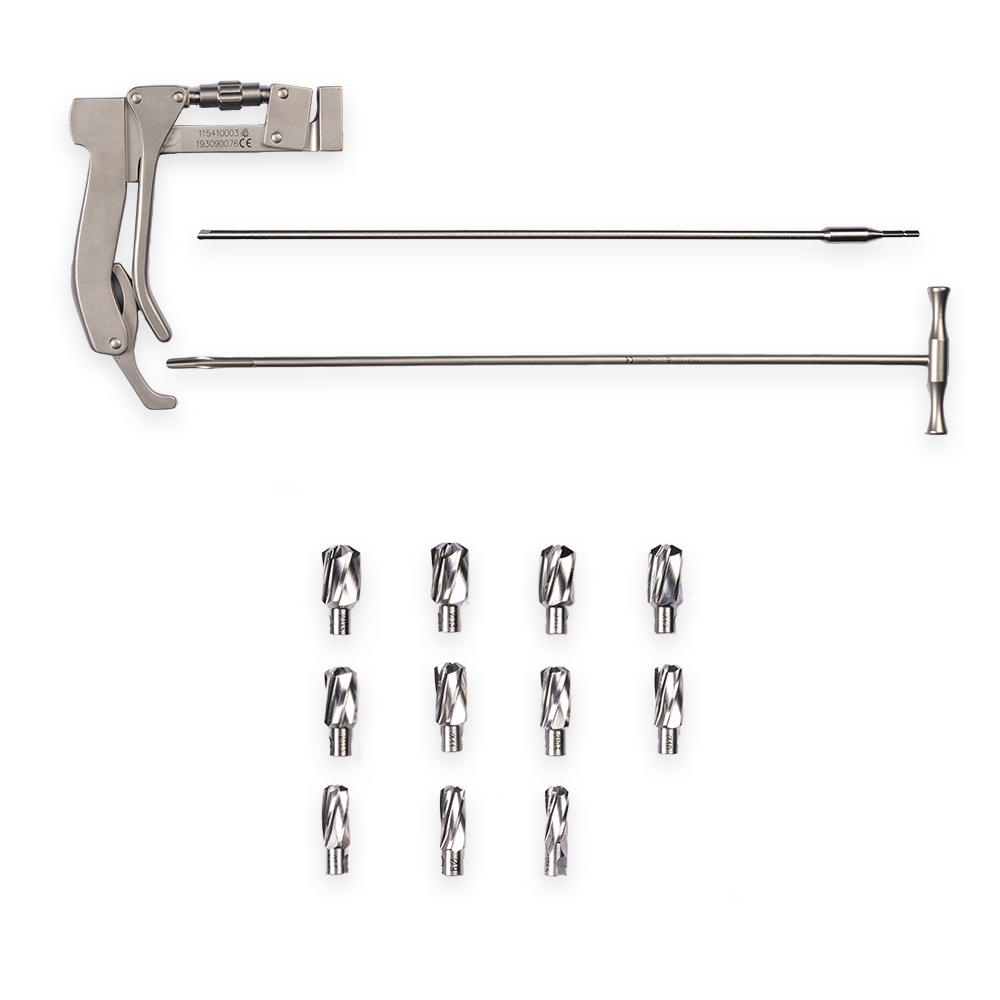
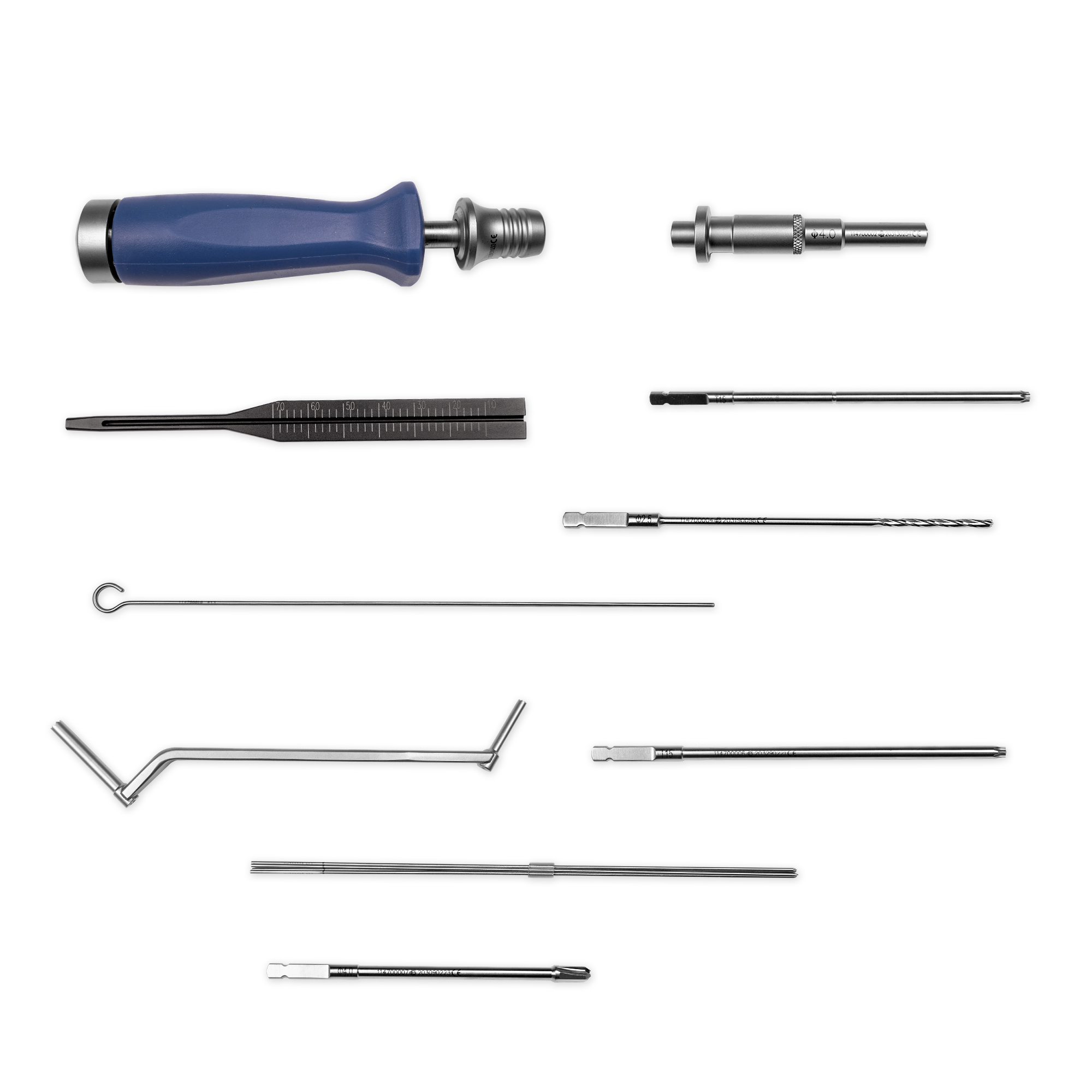
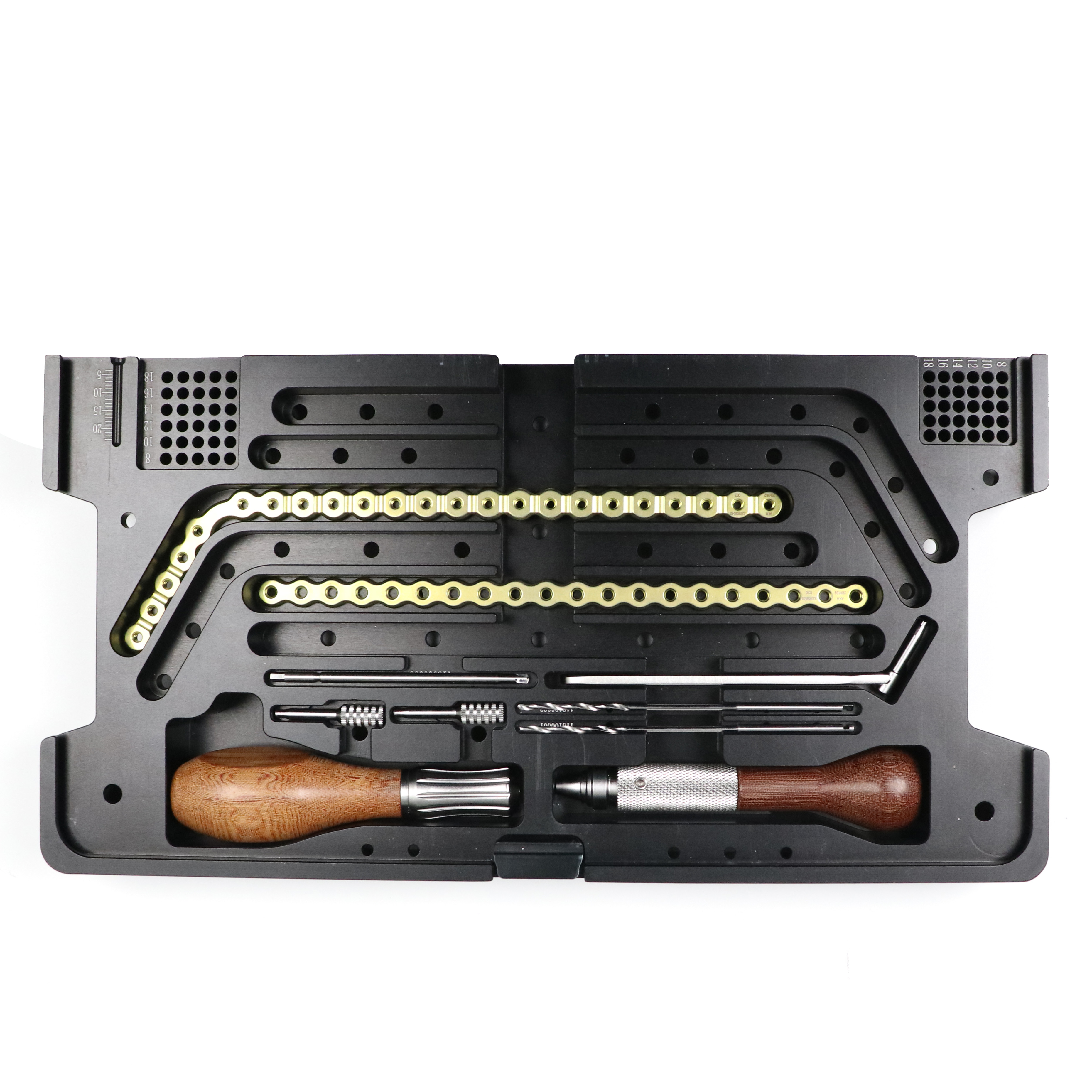
| Targeting & Reaming Instrumentation | 17-4PH / 420 Stainless & Carbon Fiber | Flexible shaft: 8.0mm – 14.0mm Modular Reamer heads: 0.5mm steps |
Radiolucent carbon-fiber insertion arm; Quick-lock torque limiters; Guided depth instrumentation. | Percutaneous guidewire passage, medullary canal preparation, freehand distal targeting reduction. |
The anatomical curvature of our femoral nails is modeled around a customized 1.5-meter radius of curvature (ROC). This prevents anterior cortical impingement during antegrade entry, a recognized surgical error in populations with standard Nordic stature. In addition, the Herzog bend in our tibial series is precisely machined at 10.5°, located 45mm from the proximal tip. This geometry facilitates both traditional infrapatellar approaches and contemporary suprapatellar semi-extended entry through the patellofemoral joint, maintaining exceptional alignment without soft-tissue traction deformation.
Procurement Dynamics & Clinical Evolution in Iceland's Health Service
Healthcare procurement in Iceland operates within the centralized framework overseen by the Ministry of Health (Heilbrigðisráðuneytið) and executed via regional bodies such as Sjúkrahúsið á Akureyri and Landspítali University Hospital in Reykjavík. Due to Iceland’s membership in the European Economic Area (EEA), regulatory conformity directly mirrors EU MDR (Medical Device Regulation 2017/745). For procurement managers in Akureyri, navigating logistics across the North Atlantic creates distinct supply chain realities: lead-time vulnerability, tight inventory management, and zero tolerance for instrumentation failure.
Transition to Suprapatellar Nailing
Orthopedic surgical teams at FSA are increasingly shifting toward suprapatellar tibial nailing. By positioning the knee in semi-extension, fluoroscopic monitoring is simplified and operative times drop significantly, reducing operative exposure in cold-stress trauma cases.
Full EU MDR & EUDAMED Traceability
Every implant shipped to Iceland carries verified CE markings under the EU MDR, with unique device identifiers (UDI-DI/UDI-PI) integrated onto sterile barriers for seamless entry into Icelandic national health electronic medical records.
Sub-Arctic Supply Chain Resilience
Air-freight redundancy via Keflavík (KEF) and Akureyri International Airport (AEY) backed by direct manufacturer consignments ensures that orthopedic instrument sets, backup sizes, and extraction tools remain perpetually accessible.
Moreover, the demographic trajectory of North Iceland indicates an aging residential cohort coupled with an influx of adventure eco-tourists. This polarization results in two dominant surgical scenarios: fragility fractures of the proximal femur requiring helical blade stabilization (PFNA) under osteopenic conditions, and high-velocity ski/snowmobile collisions requiring multi-segmental diaphyseal interlocking. INAR Medical’s modular tooling enables theater staff to manage both scenarios using streamlined, universal instrument trays.
Manufacturing Integrity: The Zhejiang INAR Medical Benchmark
Procuring surgical implants from Zhejiang INAR Medical Co., Ltd. provides clinical teams and hospital purchasing departments with direct manufacturer transparency. Headquartered in Jinhua, Zhejiang, INAR operates an expansive 29,523 m² production infrastructure backed by over 22 years of continuous manufacturing experience and 632 dedicated employees. The facility has undergone comprehensive onsite validation by SGS Group, verifying end-to-end production governance from raw titanium billet verification to final sterile packaging.
| Manufacturing Stage | Technical Equipment & Method | Quality Objective & Standard | Traceability & Verification |
|---|---|---|---|
| Raw Material Receiving | Spectrometric chemical analysis & ultrasonic flaw detection | ASTM F136 (Ti-6Al-4V ELI) & ISO 5832-3 physical conformance | Mill test certificate correlation; heat/melt number batch logging |
| CNC Longitudinal Machining | High-precision multi-axis Swiss longitudinal turning lathes | Tolerances within ±0.005mm; smooth cannulation bore finishing | Real-time laser micrometer inspection during cycle |
| Surface Engineering | Automated sandblasting & controlled electrochemical anodization | Elimination of surface micro-notches; standardized color-coding | Microscope cross-section audit; layer thickness verification |
| Non-Destructive Testing | Fluorescent penetrant inspection line (PT) | Zero toleration for micro-fissures, porosity, or mechanical laps | 100% individual inspection under controlled UV illumination |
| Biomechanical Validation | In-house dynamic multi-axis fatigue and endurance testers | ASTM F1264 intramedullary fixation fatigue standards | 5,000,000 cycle load-to-failure testing per production batch |
| Aseptic Cleaning & Packing | Multi-stage ultrasonic cascading wash; Class 10,000 cleanroom | Zero bioburden residues; medical-grade double Tyvek pouch heat seal | Packaging aging tests; dye penetration barrier verification |
Unlike trading intermediaries, INAR retains complete ownership of internal tooling, wire EDM, fluting, polishing, and passivation lines. For OEM and institutional hospital tenders in the Nordic region, this direct control translates to rapid technical modifications—such as custom nail dimensions, tailored locking drill guides, or specific private-label laser etching for national health authorities.
Akureyri Sourcing FAQ: Critical Inquiries from Icelandic Healthcare Buyers
How do INAR interlocking nail systems fulfill Icelandic and EU MDR regulatory requirements?
What are the freight routes and delivery schedules to Akureyri (FSA)?
How does the material perform in extreme cold weather trauma conditions?
Are INAR insertion instruments compatible with existing hospital autoclave sterilization protocols?
Does INAR Medical support suprapatellar tibial nailing techniques?
Can Icelandic hospitals or Nordic distributors request custom OEM instrument branding?
Partner with an SGS-Verified Orthopedic Manufacturer
Whether you are outfitting regional trauma suites in Northern Iceland, coordinating hospital tenders for the Akureyri healthcare district, or expanding medical distribution across the Nordic region, INAR Medical delivers documented European compliance, unmatched metallurgical precision, and rapid global supply logistics.