Certified Orthopedic Trauma & Reconstruction Solutions
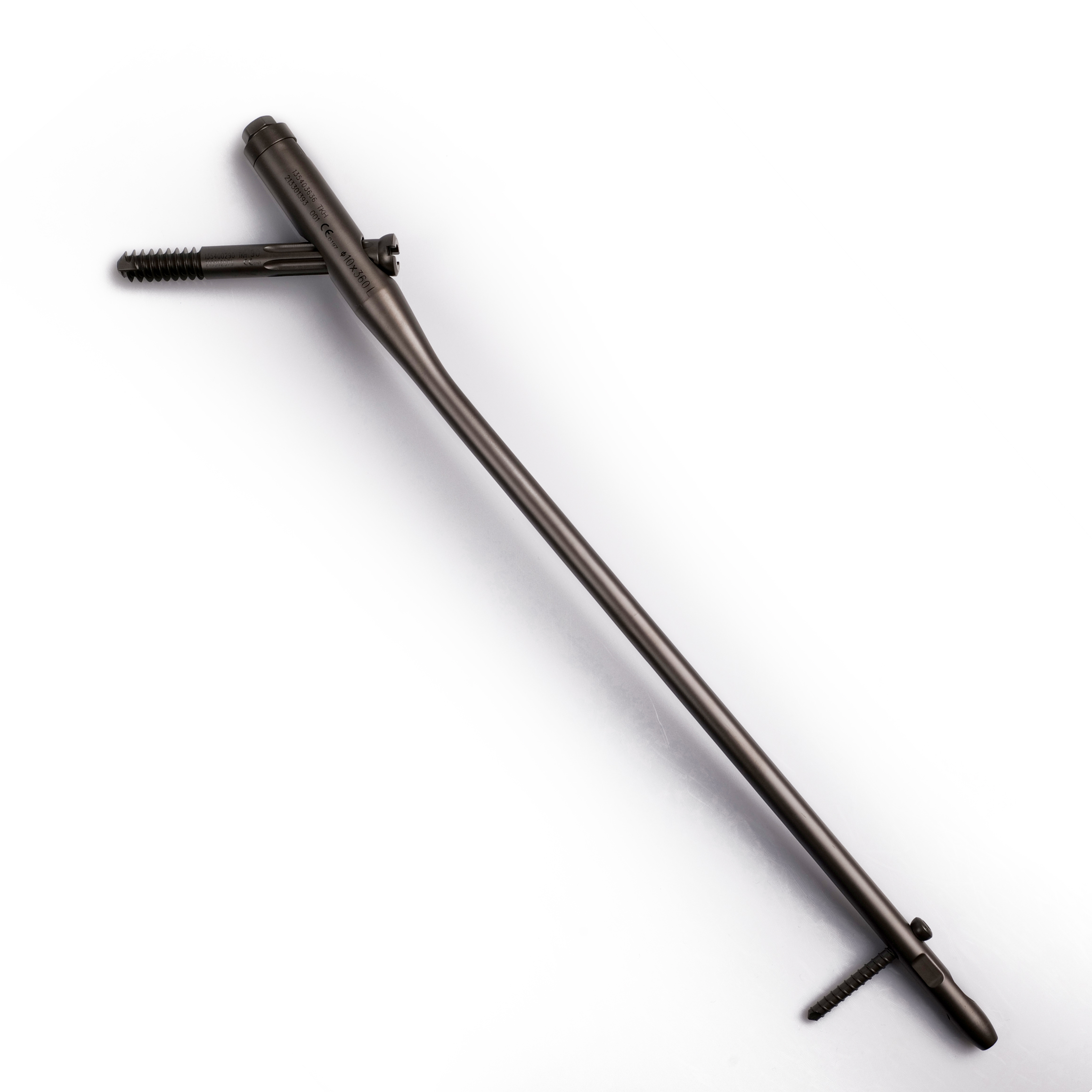
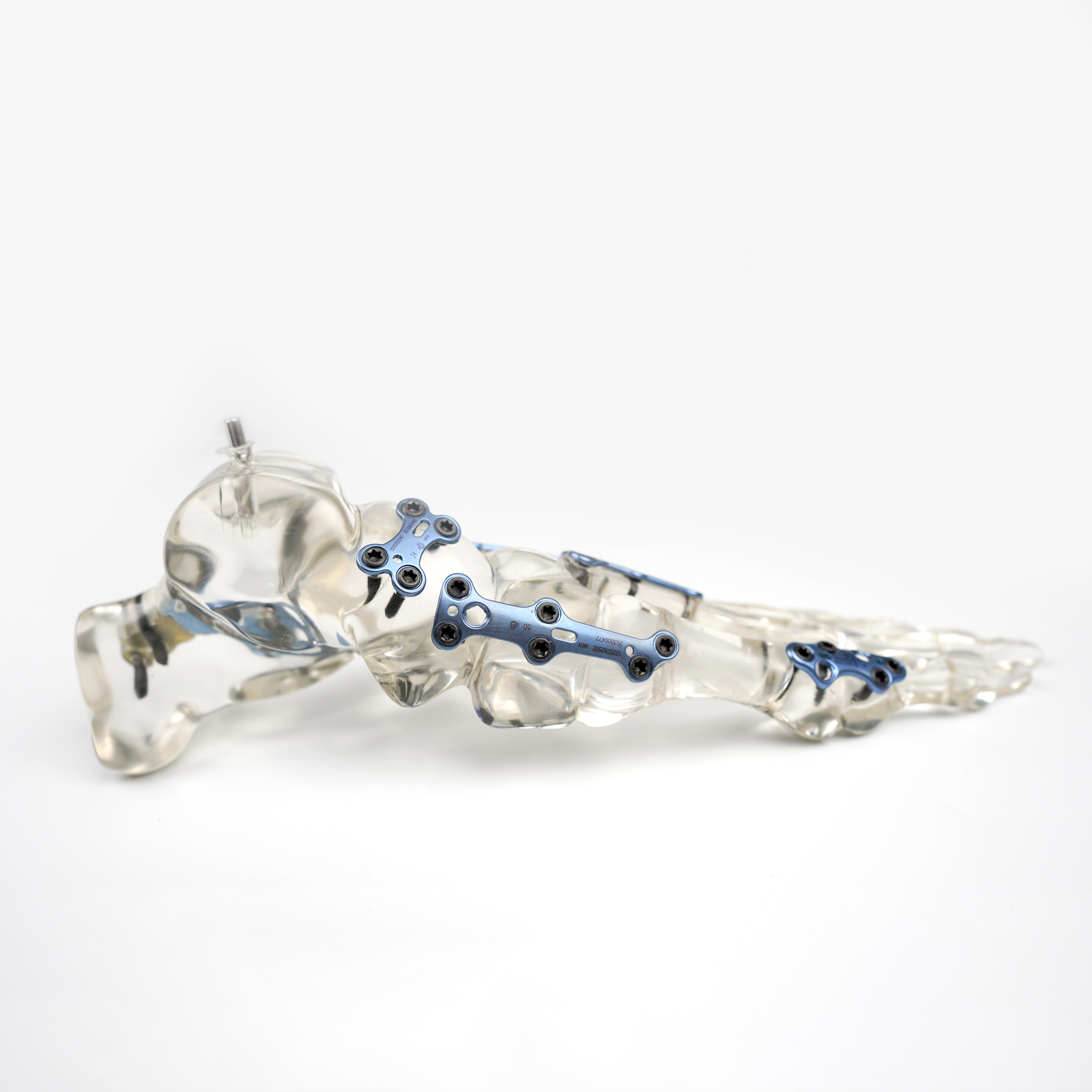
Direct from verified cleanroom manufacturing: titanium interlocking tibial systems, pediatric intramedullary nails, locking plates, and precision instrumentation for Italian clinical trauma protocols.
22+
Years Industry Experience
632
Specialized Employees
29,523 m²
Facility & Cleanroom Space
100%
EU MDR / CE Assessed
Comprehensive Strategic Whitepaper: Tibial Intramedullary Nailing in Italy
The Italian orthopedic trauma sector presents one of Europe's most rigorous clinical and procurement landscapes. As hospitals operating within the Servizio Sanitario Nazionale (SSN) seek to balance aggressive budget rationalization with elevated clinical outcomes, intramedullary tibial nailing has cemented its status as the absolute gold standard for shaft (diaphyseal), proximal, and distal extra-articular tibial fractures (AO/OTA Classification 41-A, 42-A/B/C, and 43-A).
Italian trauma centers in key regions—ranging from the high-volume public emergency hubs of Lombardia, Veneto, and Emilia-Romagna to major southern regional centers—face specific demographic challenges. Italy is home to one of the world's most rapidly aging populations. Concurrently, high-energy polytrauma cases stemming from alpine winter sports in the north and motor scooter collisions in dense metropolitan centers (Rome, Milan, Naples) demand versatile implant solutions capable of addressing both osteoporotic comminuted bone geometries and dense cortical fractures.
This report examines the top factories, manufacturers, and supply channels serving Italian clinical demands, detailing technical adaptations, clinical workflow trends (such as the widespread shift toward the suprapatellar surgical approach), regional purchasing dynamics, and full compliance with Regulation (EU) 2017/745 (MDR).
Localized Clinical Application Scenarios in Italian Trauma Hubs
How modern intramedullary tibial nailing systems interface with specific demographic and anatomical demands across Italy's healthcare network.
Alpine & Sports High-Energy Trauma
Northern orthopedic hubs (e.g., Bolzano, Trento, Turin) manage severe rotational, spiral, and comminuted fractures induced by alpine skiing and downhill cycling. Modern titanium alloy (Ti-6Al-4V ELI) tibial nails provide the required torsional rigidity and multi-planar distal locking configurations to resist rotational de-anchoring without excessive stiffening, promoting secondary callus formation.
Geriatric Osteoporotic Fracture Fixation
Italian life expectancy exceeds 83 years, generating a surge in fragile osteoporotic tibial fractures with enlarged intramedullary canals and thin cortices. Modern tibial nails utilize multidirectional angular-stable distal and proximal locking screws, cancellous end-caps, and biocompatible nail geometries to prevent screw cut-out, implant migration, and valgus/varus deformities in low-density bone beds.
Metropolitan Urban Traffic Trauma
Motorcycle and vehicular accidents frequently seen in Naples, Rome, and Milan yield high percentages of Gustilo-Anderson Grade I-IIIB open fractures. Treatment relies on low-profile, canulated titanium designs enabling rapid closed intramedullary insertion without disrupting precarious periosteal blood flow, substantially mitigating the risk of deep infection and compartment syndromes.
Technological & Clinical Evolution in the Italian Market
Italian trauma surgeons affiliated with the Società Italiana di Ortopedia e Traumatologia (SIOT) and the Associazione degli Ortopedici e Traumatologi Ospedalieri d'Italia (A.T.O.O.I.) have pioneered sophisticated trauma algorithms. Suppliers seeking long-term supply agreements must align their engineering capabilities with these evolving operational paradigms:
1. The Transition to the Suprapatellar Approach
While the infrapatellar entry point (transtendinous or paratendinous) historically dominated Italian operating suites, over 65% of specialized trauma centers have embraced or transitioned toward the suprapatellar approach. By positioning the knee in semi-extension (15° to 20° flexion), quadriceps muscle forces that pull proximal fragments into apex anterior (recurvatum) deformities are minimized. Implementing this approach demands specialized, extended instrumentation: long semi-rigid trocars, robust cannula soft-tissue protectors to shield patellofemoral cartilage from reamer abrasion, and extra-long calibrated driving guides.
2. Advanced Locking Geometry: Multiplanar & Angular Stability
Standard static and dynamic distal locking no longer satisfies demanding clinical tenders. Italian regional health authorities specify configurations that integrate:
- Multiplanar Distal Screws: Coronal, sagittal, and oblique screw pathways spaced as close as 5 mm to the nail tip for ultra-distal meta-diaphyseal stability.
- Internal PEEK/Threaded Bushing Systems: Polyaxial locking mechanisms or end-cap compression options that lock the screws to the nail, creating a rigid fixed-angle construct comparable to angular-stable plates.
- Dynamization Slots: Oblong proximal and distal slots allowing 5 to 7 mm of controlled axial telescoping during partial weight-bearing to bridge delayed unions.
3. Material Biomechanics: Titanium Alloy vs. Biodurable Stainless Steel
The Italian procurement landscape has decidedly shifted toward Ti-6Al-4V ELI (Grade 5, ASTM F136 / ISO 5832-3). The modulus of elasticity of titanium (~110 GPa) is roughly half that of stainless steel (~200 GPa), significantly closer to human cortical bone (~18 GPa). This substantial reduction in stiffness reduces stress-shielding at the osteotomy site, accelerates callus remodeling, minimizes postoperative anterior knee pain, and offers superior MRI compatibility for post-trauma soft tissue evaluation.
| Performance Dimension | Legacy Stainless Steel (316L) | Ti-6Al-4V ELI Interlocking System | Next-Gen Hybrid Multiplanar Ti Nail |
|---|---|---|---|
| Modulus of Elasticity (GPa) | ~190 - 210 (High stress shielding) | ~105 - 114 (Optimized biomechanics) | ~105 (Biocompatible stress distribution) |
| Distal Fixation Window | 2 coronal planes (20-35mm from tip) | 3-4 holes multiplanar (12-25mm from tip) | 4-5 multi-directional holes (<6mm from tip) |
| Cartilage Protection | Infrapatellar only (Tendon strain) | Infrapatellar standard | Dedicated suprapatellar sleeve + sleeve system |
| EU MDR Ready Technical File | Often under phase-out MDD | CE certified (93/42/EEC & MDR transition) | Full MDR Class IIb technical compliance |
Top 10 Tibial Nails Factories & Suppliers Serving Italy
A benchmark evaluation of production capabilities, cleanroom validation, MDR compliance, and field presence across Italian regional healthcare consortia.
01. PREFERRED OEM/ODM PARTNER
Get a Quote
Zhejiang INAR Medical Co., Ltd. (CANWELL)
Headquarters: Jinhua, Zhejiang, China | Scale: 29,523 m² facility, 632 staff, 22+ years experience.
An SGS onsite-verified industrial manufacturer delivering world-class titanium interlocking tibial, femoral, and pediatric TEN systems alongside specialized trauma locking plates and instruments. Operating high-precision Swiss-type CNC centers, penetrant testing, automated ultrasonic lines, and Class 100,000 aseptic cleanroom packaging suites.
Italy Market Fit: Supplies major Italian hospital distributors and OEM private labels with CE (MDR / 93/42/EEC) documentation, custom laser marking, validated anodizing, and custom instrument trays engineered for suprapatellar and infrapatellar workflows.
02. MULTINATIONAL MARKET LEADER
Get a Quote
DePuy Synthes (Johnson & Johnson MedTech)
Headquarters: Raynham, MA, USA / Zuchwil, Switzerland
Widely represented across Italian regional tender lists with their Expert Tibial Nail (ETN) and RIA systems. Renowned for clinical training under the AO Foundation, offering deep hospital penetration across Lombardia and Lazio, though typically operating at the highest procurement price tier.
03. GLOBAL TRAUMA SPECIALIST
Get a Quote
Stryker Trauma & Extremities
Headquarters: Kalamazoo, MI, USA / Selzach, Switzerland
Developer of the T2 Alpha and standard T2 Tibial Nailing platforms. Features advanced guided targeting systems and magnetically assisted aiming devices. Widely adopted in academic hospital trusts across Italy for polytrauma and periprosthetic fractures.
04. INNOVATIVE FIXATION LEADER
Get a Quote
Smith & Nephew Orthopaedics
Headquarters: Watford, UK / Memphis, TN, USA
Engineers the TRIGEN Meta-Nail system, which established early benchmarks for suprapatellar insertion techniques and retrograde tibial nailing. Retains significant market share within the Piedmont and Tuscany public hospital networks.
05. RECONSTRUCTION & TRAUMA GIANT
Get a Quote
Zimmer Biomet
Headquarters: Warsaw, IN, USA
Supplies the Natural Nail and Affixus systems across European healthcare tenders. Recognized for curvature geometry optimized for multi-ethnic bone morphometry, backed by comprehensive regional distribution hubs in Northern Italy.
06. DOMESTIC ITALIAN PIONEER
Get a Quote
LimaCorporate (An Enovis Company)
Headquarters: San Daniele del Friuli, Udine, Italy
A flagship Italian medical device powerhouse with strong historical roots in extremity reconstruction and trauma osteosynthesis. Offers excellent national logistics, direct surgical ties with Italian clinicians, and advanced proprietary additive manufacturing technologies.
07. ITALIAN TRAUMA MANUFACTURER
Get a Quote
Citieffe S.r.l.
Headquarters: Calderara di Reno, Bologna, Italy
A dedicated Italian manufacturer specializing in trauma, intramedullary nails, and external fixation. Highly attuned to Italian tender mechanics (Consip, Sintel) with modular locking nail designs and agile delivery across Emilia-Romagna and central regions.
08. LIMB SALVAGE & FIXATION
Get a Quote
Orthofix Medical Inc.
European Base: Verona, Italy / Lewisville, TX, USA
Deeply entrenched in the Italian orthopedic culture due to its Verona R&D heritage. Known for intramedullary limb lengthening, bio-absorbable components, and interlocking trauma nails designed for complex reconstruction and deformity correction.
09. CENTRAL EUROPEAN SUPPLIER
Get a Quote
Medgal Sp. z o.o.
Headquarters: Księżyno, Poland
A respected European producer of osteosynthesis implants featuring proprietary carbon and Si-DLC coatings. Medgal has expanded into Southern European distributors, offering competitive pricing models for mid-tier European tenders.
10. PRECISION OEM EXPORTER
Get a Quote
Taiwan Development & Medtech Co.
Headquarters: New Taipei City, Taiwan
High-precision manufacturing partner delivering FDA and CE-marked titanium long bone systems. Acts primarily as an OEM/contract manufacturer for independent European distribution houses seeking reliable alternative supply chains.
Navigating Italian Public Tenders & Regulatory Mandates
Supplying the Italian market requires more than clinical efficacy; it mandates mastery of the country’s decentralized healthcare procurement infrastructure. Medical device distribution in Italy is governed through distinct purchasing tiers:
Consip & Regional Aggregation Centers (Centrali di Committenza)
Procurement within the SSN has largely migrated from individual hospital-level purchasing to regional aggregated tenders managed by central purchasing bodies. Prominent platforms include ARCA / Sintel (Lombardia), SCR (Piemonte), Intercent-ER (Emilia-Romagna), and So.Re.Sa. (Campania). These regional tenders mandate:
- Consignment Inventory Systems (Conto Deposito): Suppliers must establish local warehousing and logistics to maintain comprehensive nail diameter/length sizes and instrument trays continuously in hospital central sterile supply departments (CSSD).
- Mandatory UDI & Traceability: Immediate electronic registration on the Repertorio dei Dispositivi Medici (RDM) operated by the Italian Ministry of Health (Ministero della Salute), with full Basic UDI-DI tracking as mandated by EU MDR.
- Instrument Set Sterilization Validations: Providing autoclave compatibility certifications under ISO 17664 for reusable stainless steel instrumentation trays.
The Stringency of EU MDR (Regulation 2017/745)
Class IIb surgically invasive long-term implants, such as intramedullary tibial nails and locking screws, face rigorous Notified Body surveillance. For Italian procurement managers, supplier dossiers must contain comprehensive Post-Market Clinical Follow-up (PMCF) data, biomechanical fatigue test reports conforming to ASTM F1264 (Static and Fatigue Bending for Intramedullary Fixation Devices), and biocompatibility cytotoxicity reports under ISO 10993. INAR Medical / CANWELL’s dual CE compliance provides seamless security for regional tender participants.
Enterprise Strengths: Why European Importers Partner with INAR Medical
Combining the cost efficiency of high-capacity precision manufacturing with rigorous European quality and compliance standards.
SGS Audited & Dual CE Certified
Backed by an extensive onsite supplier audit performed by SGS Group, INAR Medical operates under certified ISO 13485 quality systems. Implants carry CE marking under EU MDR and Directive 93/42/EEC, supported by complete Declarations of Conformity and biocompatibility records.
Integrated 13-Step In-House Production
Zero critical outsourcing: raw material bar stock undergoes longitudinal cutting, high-speed multi-axis CNC machining, precision grinding, sand-blasting, automated fluorescent penetrant crack testing, robotic anodization, dual ultrasonic wash stages, and Class 100,000 cleanroom packaging.
Comprehensive OEM / ODM Customization
Full support for Italian orthopedic brands and hospital consortia, including custom anatomical curvature contours, proprietary laser-etched scale calibrations, custom anodized color-coding systems, custom instrument trays, and sterile private-label blister packaging.
Frequently Asked Questions by Italian Procurement Directors
Essential guidance covering regulatory filing, logistics, lead times, and clinical instrumentation compatibility.
How are INAR Medical implants registered on the Italian Ministry of Health database (RDM)?
Our products carry full CE conformity certification issued by European Notified Bodies. Italian distributors or European Authorized Representatives (EC REP) can register the implants directly onto the Repertorio dei Dispositivi Medici (RDM) using our Technical Files, Declarations of Conformity (DoC), ISO 13485 documentation, and assigned Basic UDI-DI codes without administrative delays.
Can INAR supply complete suprapatellar and infrapatellar instrumentation trays?
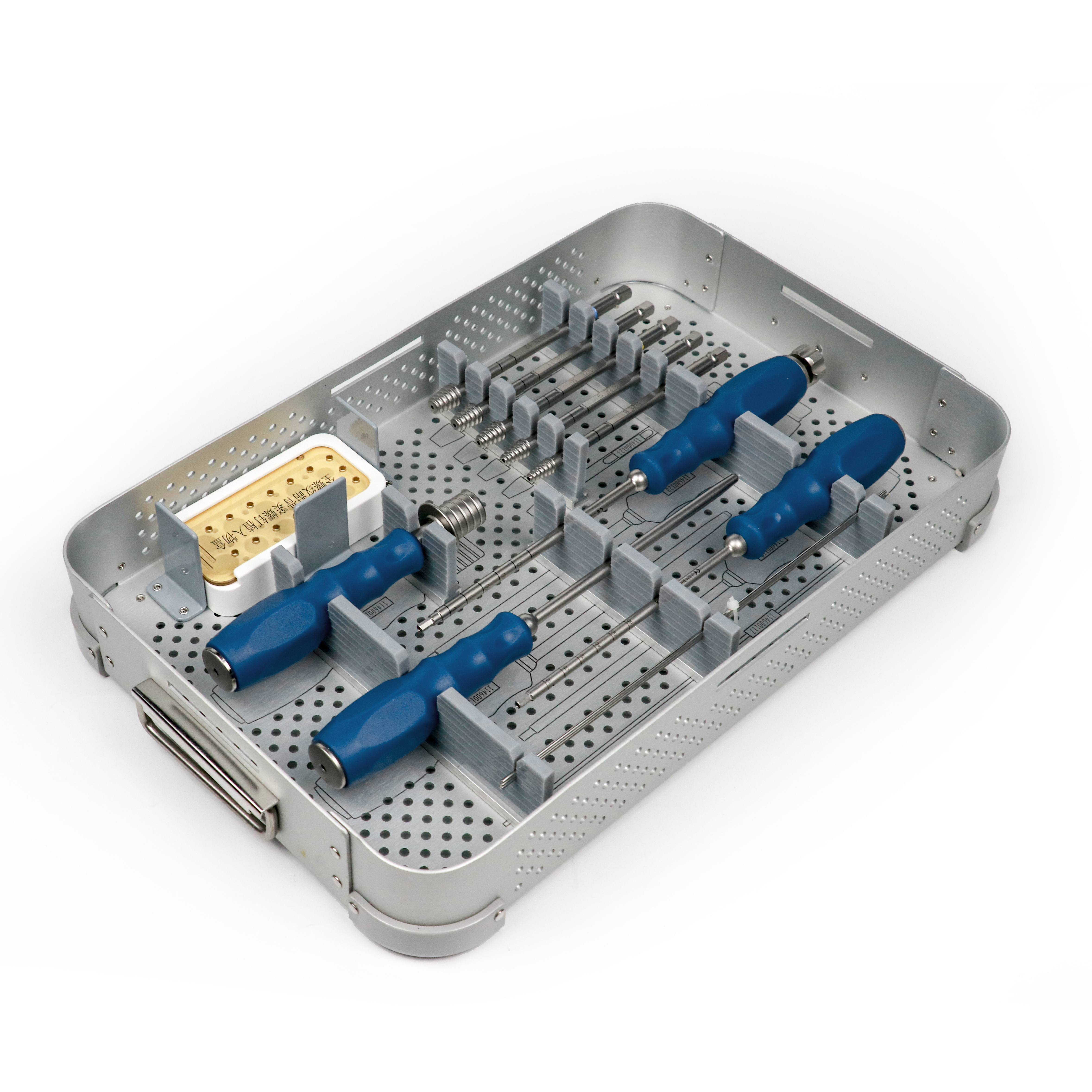
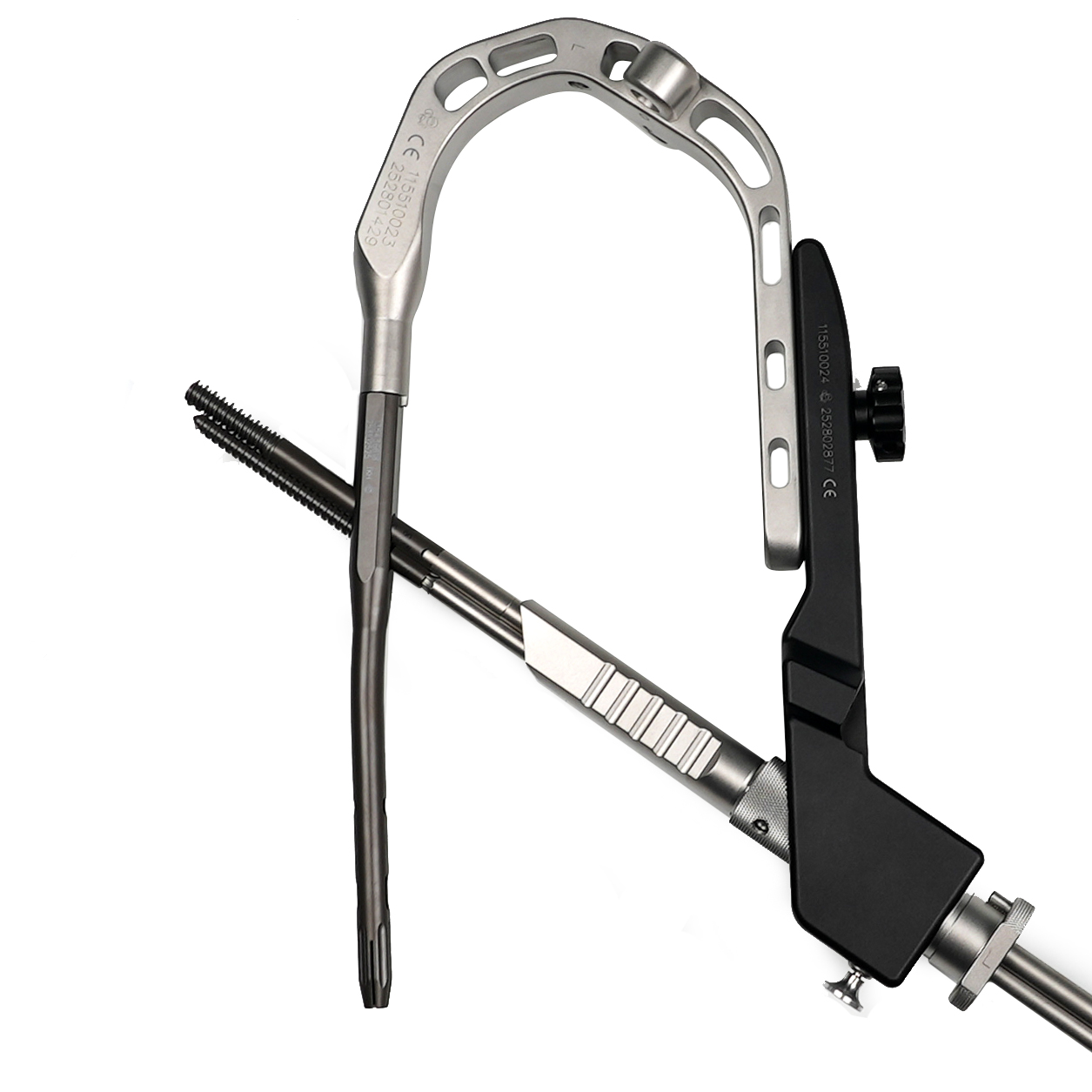
Yes. We manufacture matched stainless-steel (17-4PH, 304, 316L) surgical instrument sets containing radiolucent carbon fiber insertion handles, precision cannulated entry trocars, soft-tissue protective sleeves, flexible intramedullary reamers, calibrated depth gauges, and distally guided targeting jigs. All trays feature anodized aluminum or PPSU autoclave-safe cases validated for hospital steam sterilization cycles.
What medical-grade raw materials are utilized in INAR Tibial Nails?
We exclusively machine medical-grade Titanium Alloy Ti-6Al-4V ELI (Extra Low Interstitial) conforming strictly to ASTM F136 and ISO 5832-3 standards. Each delivery of bar stock is accompanied by original mill test certificates (MTR) detailing chemical composition, tensile strength, yield stress, and ultrasonic clean material verification.
What are typical production lead times and Minimum Order Quantities (MOQs)?
For standard catalog items, inventory is maintained for immediate rapid dispatch. For OEM custom-branded batches or bespoke geometric contours, initial sample verification requires 20-30 days, followed by batch production in 30-45 days. We offer flexible MOQs tailored to accommodate regional tender launch requirements.
What quality assurance measures guarantee zero defect rates in long bone nails?
Our 29,523 m² facility incorporates continuous in-process CMM inspections, fluorescent dye penetrant non-destructive testing for micro-fissures, automated wall-thickness measuring along the cannulated lumen, multi-cycle fatigue testers simulating millions of loading cycles (ASTM F1264), and 100% Outgoing Quality Control (OQC) prior to cleanroom barrier sealing.
Upgrade Your Trauma Portfolio for the Italian Market
Connect with our technical engineering and regulatory export team to receive our complete CE product portfolio, surgical technique manuals, and competitive factory-direct supply terms.
Get a Quote