Clinical-Grade Trauma & Arthroplasty Implants
Direct manufacturer distribution for Philippine hospital bidding consortia, provincial health boards, and orthopedic distributorships across Luzon, Visayas, and Mindanao.
Audited Production Capabilities for Global Demands
Verified on-site by SGS Group. Zhejiang INAR Medical operates one of China's most comprehensive medical device campuses, engineered specifically for high-volume trauma implants.
Biomechanical Integrity of Dynamic Compression Plates (DCP)
Understanding the transition from traditional rigid compression to biological fixation via Limited Contact Dynamic Compression (LC-DCP) and Locking Compression Plate (LCP) systems.
Spherical Gliding Ramp Mechanics
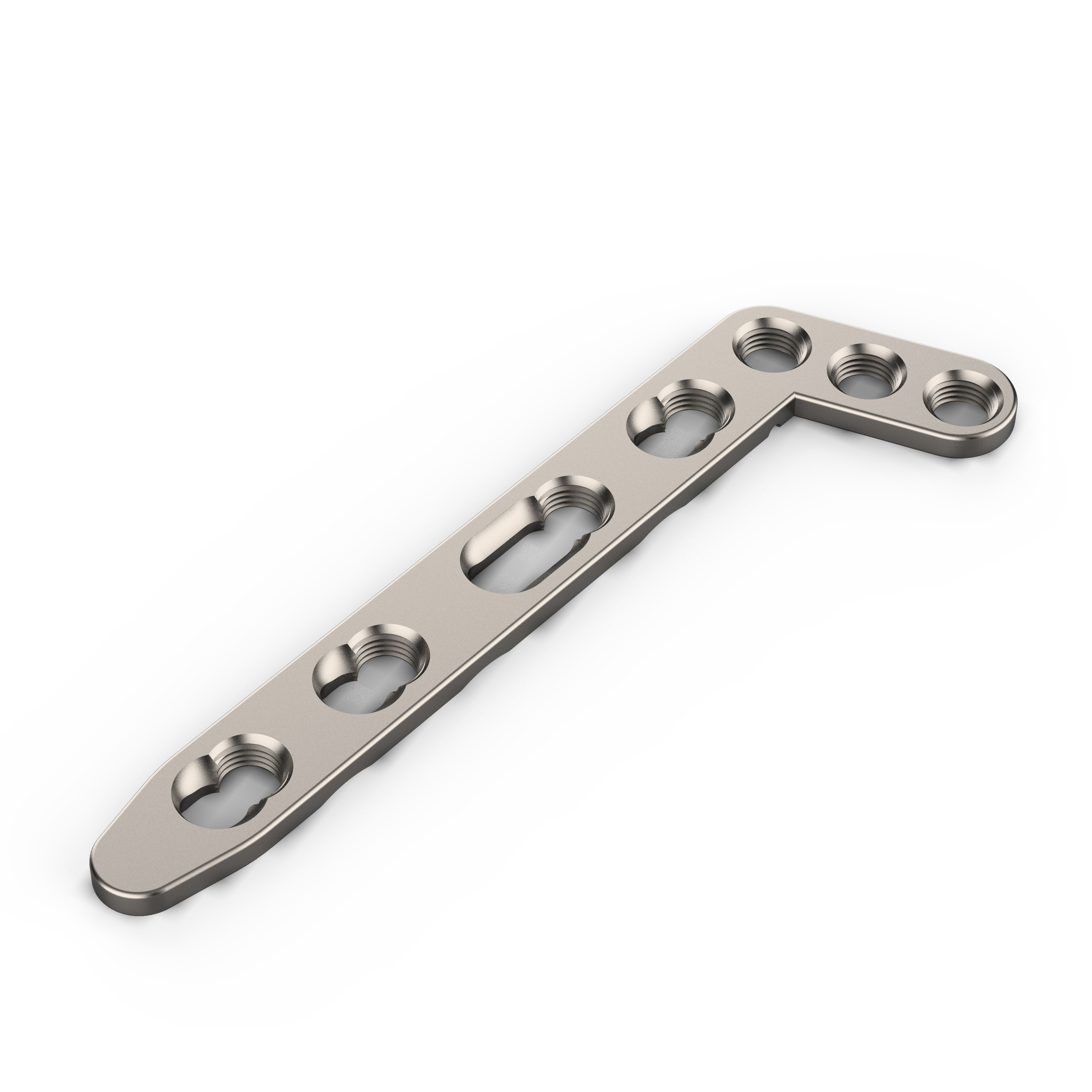
The core mechanism of dynamic compression plates lies in the oval hole with an inclined floor. When an eccentric cortical screw is driven into the plate, the screw head slides downward along the incline, translating vertical insertion torque into horizontal axial bone displacement. This generates up to 300 to 450 N of interfragmentary compression, promoting direct primary bone healing without periosteal callus formation.
Vascularity Preservation via Under-Cuts
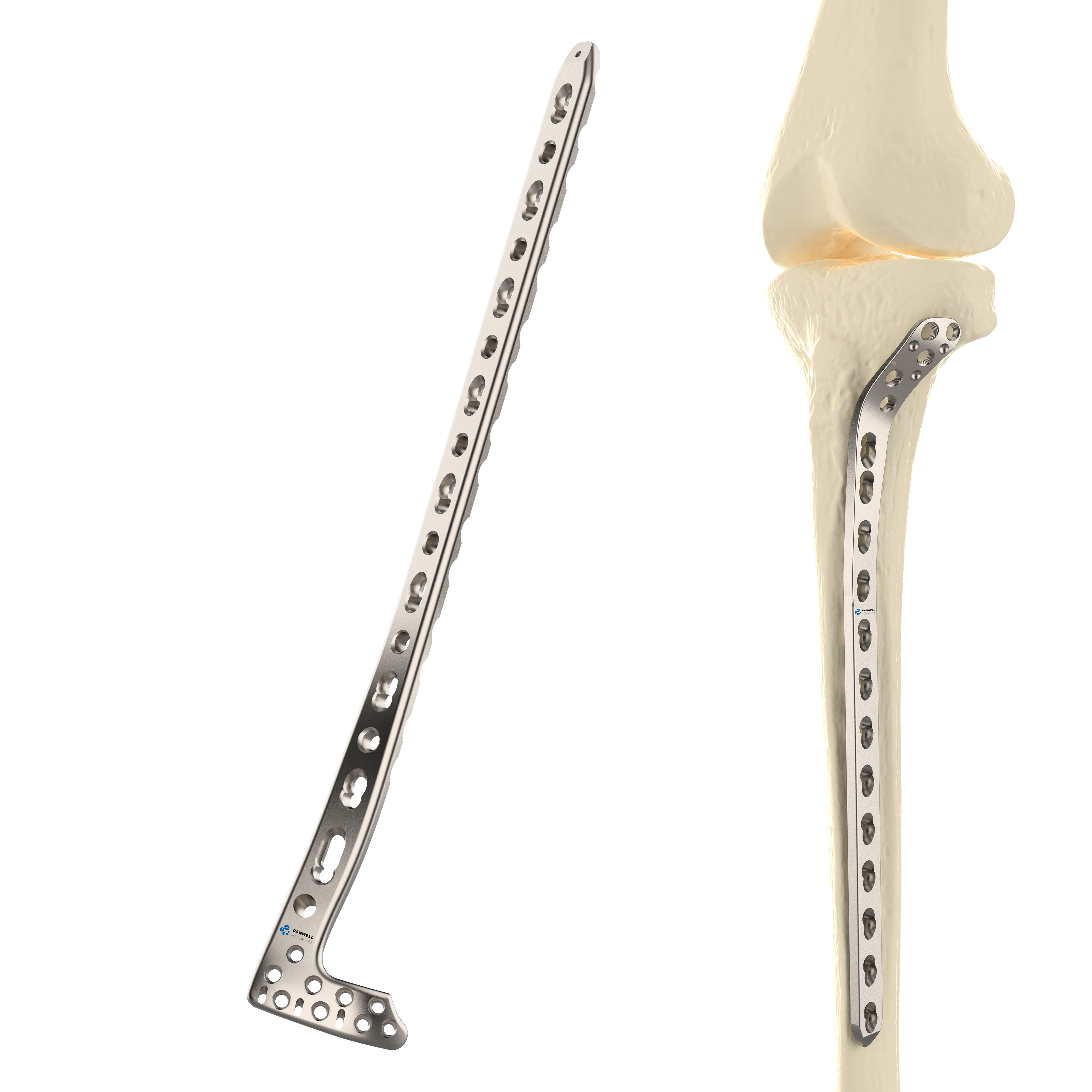
Traditional round-hole plates create intense compression across their entire contact surface, occluding the capillary beds of the periosteum and inducing cortical osteopenia underneath. Our advanced LC-DCP and Combo-Hole systems utilize micro-grooved, contoured under-cuts that reduce periosteal contact surface area by over 48%, significantly maintaining local blood supply and accelerating structural union.
Grade 4 Pure Ti & Ti6Al4V ELI Alloy
Corrosion resistance and elastic modulus compatibility are critical for tropical climates. INAR plates are fabricated from medical-grade ISO 5832-3 Ti6Al4V (Grade 5) and implant-grade 316LVM Stainless Steel (ISO 5832-1). Titanium offers an elastic modulus (105-110 GPa) much closer to human cortical bone (18-20 GPa) than stainless steel (200 GPa), drastically reducing stress shielding and refracture rates post-hardware removal.
| Fixation Parameter | Standard Dynamic Compression (DCP) | Limited Contact DCP (LC-DCP) | Combination Locking Compression (LCP) |
|---|---|---|---|
| Primary Mechanism | Axial compression via eccentric screw insertion | Axial dynamic compression with reduced bone contact | Hybrid: dynamic compression + fixed-angle locking stability |
| Periosteal Perfusion Rate | Standard reduction (extensive contact surface) | High preservation (up to 50% contact minimization) | Maximum preservation (floating plate internal fixator mode) |
| Screw Configuration | Standard Cortical & Cancellous Screws (3.5 / 4.5 mm) | Symmetrical LC-DCP screw spacing | Dual function: Left side locks, right side dynamic glide |
| Osteoporotic / Comminuted Use | Requires healthy bone stock for screw purchase | Moderate holding force in osteopenic profiles | Superior pullout resistance in low BMD & comminuted shafts |
| Clinical Applications | Simple transverse diaphyseal fractures (Hum/Rad/Fem) | Forearm, fibula, and tibia non-complex fractures | Complex peri-articular, comminuted, and osteoporotic trauma |
Clinical Scenarios & Road Trauma in the Philippines
Analyzing the anatomical fixation demands across Metro Manila tertiary hospitals, regional trauma hubs in the Visayas, and rural provincial medical centers under PhilHealth case rates.
Motorcycle & Tricycle Traffic Trauma Fixation
According to Philippine Metro Manila Accident Recording and Analysis System (MMARAS) and DOH epidemiological studies, over 62% of blunt musculoskeletal trauma results from motorcycle and vehicular accidents on major expressways (EDSA, C5, Commonwealth) and provincial bypasses. These incidents frequently cause open, displaced diaphyseal fractures of the femur, tibia, and forearm. Our 3.5mm/4.5mm LC-DCP dynamic plates offer the requisite fatigue strength to resist bending stresses in active working-age patients.
PhilHealth Z-Benefit & Regional Public Hospital Tenders
Provincial hospitals governed by the Department of Health (DOH)—such as Vicente Sotto Memorial Medical Center (Cebu), Southern Philippines Medical Center (Davao), and Philippine Orthopedic Center (Quezon City)—face stringent budgetary caps under PhilHealth All-Case-Rate packages. Healthcare procurement boards require high-tier biocompatible implants (ISO 13485 & CE marked) delivered at competitive FOB/CIF rates that maintain hospital operating margins without compromising surgeon confidence.
Archipelagic Logistics & Tropical Corrosion Resistance
Transporting surgical inventory across 7,641 islands involves challenging humidity and transport conditions. Implants delivered to island hospitals (Palawan, Bohol, Leyte, Zamboanga) often undergo multiple autoclave cycles in varied steam sterilizers. INAR’s rigorous Type II hard anodization and electrochemical passivation prevent surface micro-pitting, corrosion, and galvanic degradation when stored in tropical archipelago warehouses.
Emerging Trends Shaping Philippine Orthopedic Procurement
Key clinical and regulatory shifts defining medical device supply chains in the Republic of the Philippines for 2025–2030.
FDA Circular No. 2021-017 Enforcement
The Philippine Food and Drug Administration (FDA) has enforced stringent guidelines aligning with the ASEAN Medical Device Directive (AMDD). Trauma plates entering Class C and D tiers require comprehensive Certificate of Medical Device Notification (CMDN) or Registration (CMDR), full technical documentation dossiers (CSDT), and biological safety data.
Universal Health Care (UHC) Expansion
With Republic Act No. 11223 (Universal Health Care Act), local government units (LGUs) are consolidating provincial hospital networks. This creates unified bulk procurement frameworks where local biddings award vendors based on consistent bulk supply stability rather than piecemeal surgical set rentals.
Rapid Shift to Combination Dynamic Plates
Philippine orthopedic surgeons (Philippine Orthopaedic Association - POA fellows) are shifting away from standalone conventional DCPs toward hybrid LCP combo systems. Having the flexibility to alternate between compression gliding and angular stability within the same plate provides intraoperative versatility in complex fractures.
OEM Customization for Distributors
Leading Philippine importers in Binondo, Quezon City, and Pasig are investing in proprietary private-label instrument boxes and color-coded titanium trays to differentiate in competitive DOH tenders, avoiding margin degradation from standard non-branded generic listings.
Why Top Medical Distributorships Partner with INAR
Full traceability, modern multi-axis CNC machinery, and complete regulatory support engineered for frictionless customs clearance at Manila Port (MICP) and Clark International.
Aerospace-Grade Raw Materials
Certified Ti6Al4V ELI (ASTM F136) and 316LVM (ASTM F138) billets with verified chemical composition and metallurgical tensile strength certs.
Swiss Longitudinal CNC Lathes
Sub-micron tolerance micro-machining of dynamic ramp angles, burr-free screw hole countersinks, and ultra-smooth plate contours.
Double Ultrasonic Washing
Rigorous multi-stage degreasing and particulate extraction ensuring zero chemical residue or hydrocarbon oil contamination on implant surfaces.
Fluorescent Penetrant Testing
100% surface inspection under ultraviolet illumination to identify micro-fractures, stress cracks, or surface irregularities prior to packaging.
Class 100,000 Cleanroom Packaging
Medical blister thermoforming and Tyvek sealing ready for Ethylene Oxide (EO) sterilization, accompanied by biological indicators.
Frequently Asked Questions by Philippine Importers & Hospitals
Addressing Philippine FDA regulatory registration, customs tariff codes, PhilHealth compatibility, and OEM/ODM private labeling terms.